
Translated material
"Go wherever you want"
The Ministry of Health will be asked to cancel the ban on the entry and stay of migrants with HIV in Russia
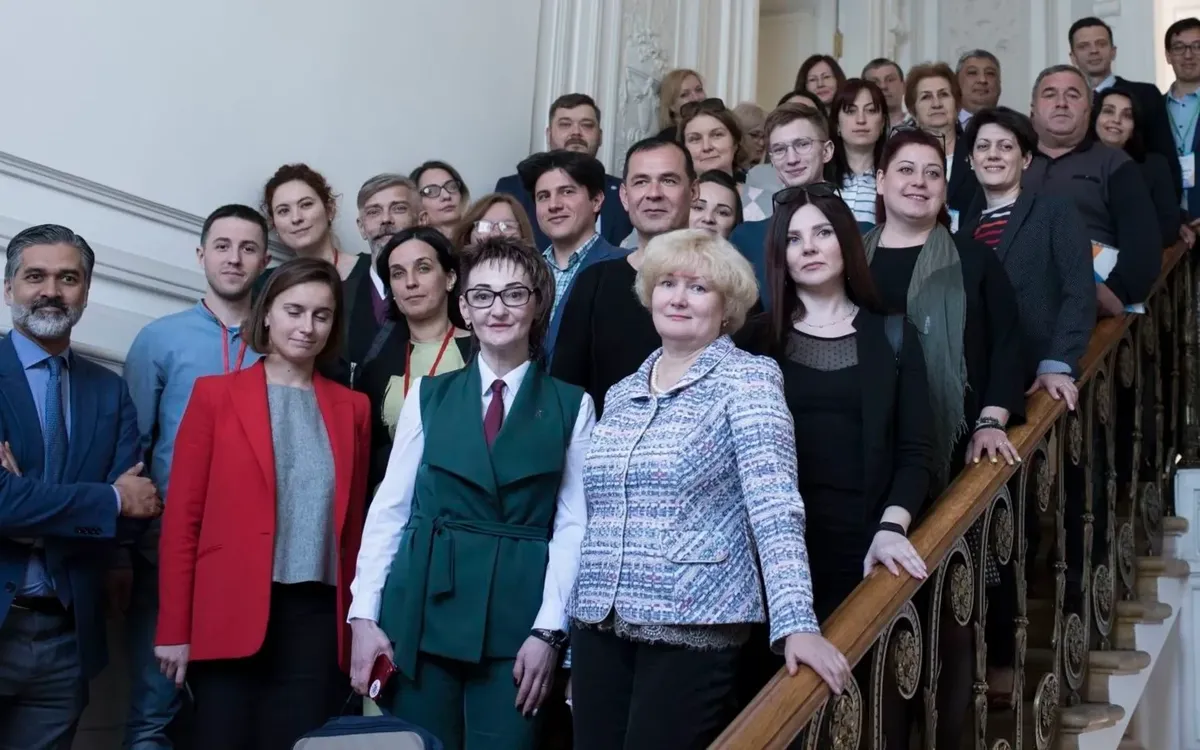
At a three -day meeting in Moscow at Easter weekend, representatives of civil society organizations based on the regional group of migrant health (and with the support of the Shags Foundation) from the countries of Eastern Europe and Central Asia systematically compiled a draft resolution. It contains a proposal for a global revision of the ban on entering Russia by migrants with HIV.
In 2017, about 2.5 million foreign citizens located in Russia were tested for HIV. A little more than 700 people were with HIV-positive status (approximately 100/100 thousand people).
According to Rospotrebnadzor, since 2007, as a result of an examination of more than 19 million foreign labor citizens, the HIV has been discovered in 21 thousand of them.
Previously, such people were almost immediately pointed to the door: they were subject to expulsion from the country. About a year ago, the ban was mitigating: there was hope to stay with those whose close relatives are Russian citizens. Today, such decisions are mostly made in court, however, there are more and more positive outcomes and cases of reunification of families.
There is no need to apply for significant assistance to HIV migrants in Russia: they face a whole series of prohibitions, oppression and problems. First of all, medical. From the banal impossibility of contacting a dentist who should report his status to the lack of access to therapeutic therapy.
“This legislative norm about the undesirable stay of foreigners with HIV in Russia breaks fate to people,” says Daniil Kashnitsky, a HSE junior researcher, who is engaged in research in the field of migrant health, and one of the organizers of the meeting. - A person comes here, learns that he has HIV, and, instead of being treated normally or considering the available options that he is, he understands that he must either urgently change all his life plans and leave home, or stay in Russia in an illegal position.
And this is very dramatic, because you become, in fact, illegal, undercured migrant, and already in every official official you begin to see a potential threat that you will be handed over to the migration service.
This is not only about HIV treatment, this is about the whole complex of medical services. In general, about the self -awareness of a person: he did not violate anything, he is absolutely not to blame for anything, but he is already stamped by this stigma of the criminal in fact. This is a lifelong ban on staying in the country. If from tuberculosis or other sexually transmitted infections, you have been cured, brought a certificate, then that's all - you can legally be in this country, then with HIV, even with a zero indicator, this does not work. ”
At the meeting, they say that the problem is just in the Russian medical system itself: they do not want to encourage medical tourism, so they are in force of this ban. Someone from the speakers Kolko replies: “But as a result, Muscovites themselves are engaged in medical tourism, when they go to the Vladimir region to treat in the Vladimir region.”
But the arrived activists and doctors from other countries (most of them, the countries of the post -Soviet space) of Stigm and discrimination within the country no less than in Russia. But sometimes help - more. The purpose of their meeting is a cross -border dialogue, an attempt to explain to the government and the Ministry of Health of Russia that assistance to migrants is not a tourist service.
“Russia is the last country in Europe, where there is such a norm relative to the unwillingness of a foreigner staying with HIV,” says Daniil.
Moldova
Karina Popa, "Union of organizations working in the field of HIV and reducing harm"
“We used to have HIV-infected parents to announce their status at the school, since the parents of other children were immediately opposed to their child to study in the same class with their child (although often their child was absolutely healthy).
Previously, an HIV-infected person who did not even reveal his status himself, but he became known from third-party people, could not get a job.
Now the situation has improved a little.
In Moldova, for a very long time, projects to reduce harm from HIV were funded from the global fund. Currently, the global fund reduces its financing in order to ensure that the state allocates its own funds. And the state gradually adopts these obligations of financing: from last year, some of the projects are financed by the state: it also provides free antiretroviral therapy and psychosocial assistance.
Migrants from Moldova in Russia with HIV-positive status also face primarily with stigma and discrimination: they are afraid, firstly, to speak and seek medical services. Secondly, they are afraid of deportation.
In Moldova, of course, there is no such stream of migrants as in Russia. But legal migrants from us receive the whole complex of medical services. Illegal migrants can also get these services, but by more bypassing ways. For example, we can say that this is a person without a specific place of residence, but not focusing on the fact that he is a migrant. ”
Kyrgyzstan
Ekaterina Artemenko, Social Worker
I have been working in the field of HIV prevention for 20 years [since 2011-in Russia], including I worked in this area and in Kyrgyzstan since the year 99. And, when I began to work in the south of Kyrgyzstan, 9 people were registered in the region. To date, there are about 6 thousand. Then, of course, there was no such level of detection: less tested, they were detected, respectively, less.
But, unfortunately, the level of stigma and discrimination is still extremely high. HIV-positive woman cannot get married.
There were cases when nosocomial infection, including women, occurred - so husbands refused them, they were kicked out of the family.
There was a very high -profile story in 2006 or 2007, when the nosocomial mass infection of children in two areas of Kyrgyzstan occurred [in 2007 about 40 children were infected in children's hospitals of the cities of Osh and the Noocat in southern Kyrgyzstan - approx.]. - Today, the country has about 600 children who were infected with HIV in hospitals. Most of the children, unfortunately, died, again due to Stigma: parents, fearing publicity, did not even register the children. Despite the fact that it was not their fault.
Among the others, there were families where husbands left women, despite the fact that a woman of HIV-negative, and the child became infected.
Unfortunately, it is believed that HIV infection is the destiny of the most dysfunctional, let’s say, people, so many are afraid to associate themselves with this group in order to avoid unnecessary problems.
In Kyrgyzstan, a lot of non -profit organizations now provide assistance and support to people living with HIV. There are associations throughout the country for such people. HIV-positive patients receive treatment at the expense of not the state, but the global fund. But the state provides all kinds of support.
My compatriots who come here, and even with HIV-positive status, cannot have access to any medical care here. Naturally, they do not want to return to their homeland, as there are guys who have a real threat to life. First of all, these are groups of men who practice sex with men. Therefore, they come here [to Russia] for salvation, but here they cannot get legal status and are literally between heaven and earth.
Azerbaijan
Kamran Rzaev, organization "Gender and Development"
Our organization mainly works with the MSM (Man-EX-Man) group, and these people have double discrimination: they are gays and HIV-positive people. In the medical institutions for HIV and AIDS prevention itself, there are no discrimination on the part of doctors, since we have been working in this topic for many years, including doctors. The main discrimination, of course, is at the home and social level.
At home they do not know what HIV or AIDS is. Parents do not know, the environment does not know. Or they know that this is a very poor disease, ashamed, because it is transmitted sexually.
You can hear: “It would be better if you are sick with cancer. Cancer is not ashamed. Cancer is once, and died. And HIV is ashamed. ” And if they find out that a person is also gay ... So double discrimination is already happening.
People mainly hide their HIV status, very rarely anyone reveals it, because they are very afraid of dismissal from work.
In Azerbaijan, free antiretroviral therapy, the country is 100 percent purchased by medicines itself, without the help of international organizations. If you have an HIV-positive status, then you go without problems and get therapy. There is a dental office special for HIV-infected people.
However, there were some unpleasant cases with pregnant women. We must have tests for HIV before childbirth. And there were cases when HIV-infected women in paid clinics refused to take birth because the doctors were afraid. They said: “Go wherever you want. You won’t give birth in our clinic. ” It seems to be a medical staff, but it is so far from all this that they are in the same public consciousness - “Oh, HIV is bad. We will become infected, even if we touch. ”
The most important problem for migrants from Azerbaijan in Russia is to obtain antiretroviral therapy. A person, if he does not know that he is HIV-infected, then he is either deported, or he is forced to return to Azerbaijan himself. If people know about their HIV status, then they usually take medicines for six months in our AIDS centers (make concessions), come to Russia, but six months later they are again forced to return.
The Azerbaijani government gives everyone treatment for free. Even HIV-infected migrants in their country. Your citizenship or the legality of stay does not matter.
Armenia
Gayane Martirosyan (name changed), has an HIV-positive status
13 years ago I got married. The husband was a citizen of Russia, I was a citizen of Armenia. We moved to live in Russia. I submitted documents for a residence permit. He studied, we had enormous plans ... And then I was in the third month of pregnancy.
And at the same time in the clinic and in the analysis when applying for a residence permit, I revealed an HIV infection. Then I did not understand what it was. Then they told me that they were obliged to give me prevention. I was not deported, they just said that it was better for me to move back to my country.
We moved back to Armenia.
The husband also found HIV. He had to move to Russia and receive therapy here. Then he returned back. In Armenia, the medicines were not given to migrants then. Now it doesn’t matter what country you are from. They give everyone.
In Armenia, we live with a closed status. We have two children. They go to school, kindergarten. Open your status - means subject to discrimination and children.
In the organization where I work, they know about my status and relate normally. But there were cases when people learned about their status at work and asked to leave at their request, although there are no prohibitions on their positions by law.
In Russia, it is scary that they can deport you. Migrants prefer not to talk about their status.
Belarus
Boris Sergeev, researcher from the International Migration Organization
The main problem in Belarus, and in Russia, too, perhaps: they have the provision of medical care for HIV is based on bilateral agreements between Belarus and the country from where the person came. And no one knows these agreements (from doctors, at least). That is, this is a very confusing system-each time the order will change: for someone it can be completely free help, for example for Russian citizens. And for citizens of Ukraine, Turkmenistan, the order will be completely different and will vary depending on the content of these bilateral agreements. There is a very great confusion: who can receive this help and on what grounds.
Basically, all medical care for migrants is carried out on a paid basis, and the people themselves do not have funds in order to pay for this help.
Something in Belarus is probably being done more than in Russia: they have state assistance programs forced immigrants from Ukraine. Most of the medical services are provided at the public account.
A serious problem is that many healthy people do not consider HIV a problem. They believe that this problem does not concern them, they are invulnerable and cannot become infected, so there is nothing to take any safety measures here.