
Translated material
"We screwed up"
The site De Correspondent, which raised $ 2.6 million for launching in the United States, admitted that he misled his subscribers
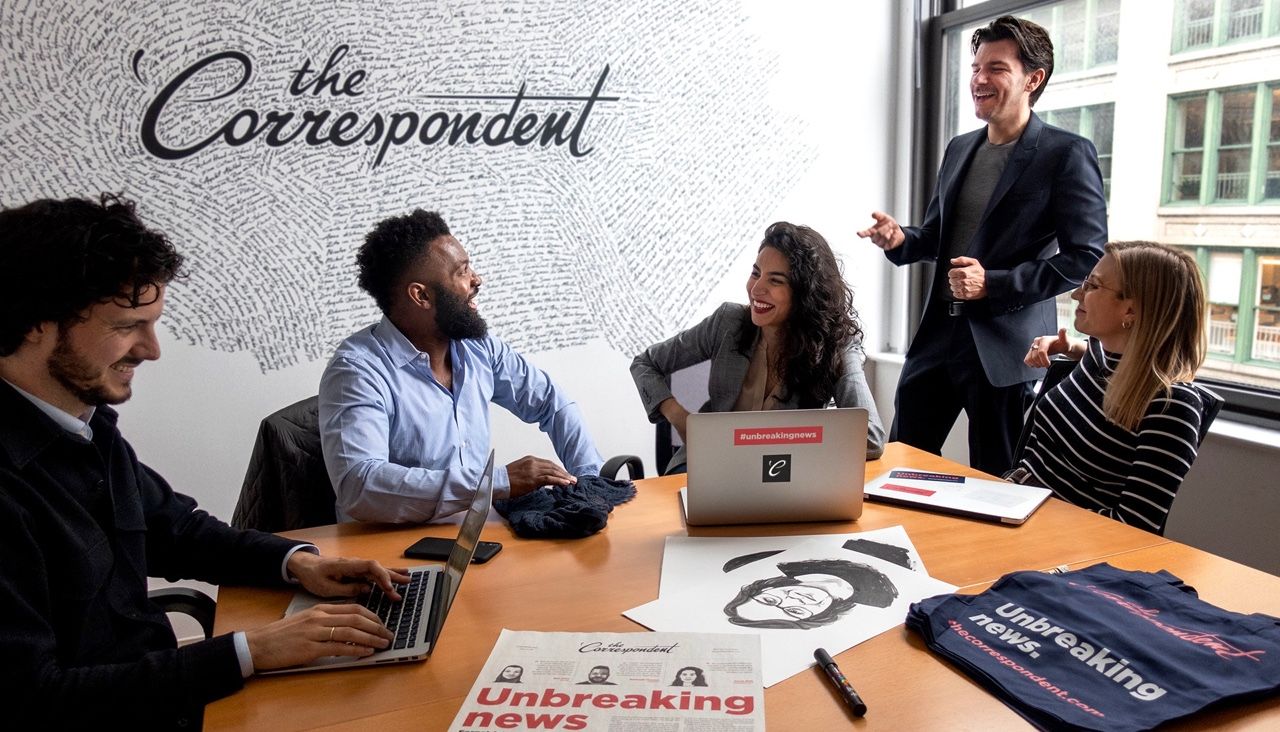
The Dutch site De Correspondent advertises itself as the future of journalism and a medicine for clickbeat: there is no news and advertising on it, subscribers, not investors, finances it, and it is engaged only in serious journalistic investigations. In 2019, the site plans to enter the international market with an English -language version and raised $ 2.6 million in a crowdfunding campaign in a month. However, many of his supporters considered themselves deceived when it turned out that the site in the United States was not going to open.
How does De Correspondent work?
De Correspondent is a journalistic project from the Netherlands, which launched in 2013 according to the signature model. The advertising slogan of the project is Unbreaking News, which can be translated as "looking up from the news agenda." In a practical sense, this means that de Correspondent offers readers not reinforced news from the tapes of information agencies, as traditional news sites, and a more thoughtful analysis of those in the media race for viewing and viral content are given less attention. The proposal of De Correspondent was convincing with their target audience: the site scored 15 thousand annual subscriptions even before the launch, and last year De Correspondent had already 60 thousand subscribers. The site content is entirely behind Payvol, there is no advertising, except for the promotions of the project itself, and the subscription costs 7 euros per month or 60 euros per year. In the editors of De Correspondent, about 50 people work in Amsterdam, the site produces two or three notes per day.
On the site dedicated to the future launch of the English version of De Correspondent (the project was called The Correspondent), it says: “We will not chew sensational, confusing and depressive headlines that you see in the news every day. Instead of telling only what happened today, we will analyze what is happening every day. Our goal is to help you better understand the reality in which we live, asking the following questions: what determines the cost of our treatment and how do we fundamentally improve the healthcare system? How does artificial intelligence affect our future and do we want such a future? Why did innovations give us 20 different offers for ordering pizza, but we still have not figured out how to cure cancer or ride through the streets without killing 1.25 million people a year? ”
Here are a few examples of the investigations of De Correspontent from their Dutch site:
- The hacker shows the project reporter how easy it is to steal from users of publicly available Wifay all their personal data, passwords and other information
- The Research Institute for Risk Assessment in Germany copied its analysis of the carcinogenic properties of glyphosate from advertising materials provided by the concern of manufacturers, which includes Monsanto
- Difficulties with the Law on Euthanasia: is an elderly patient with severe dementia to confirm that he really wants to die?
- Since 1986, Shell has known its role in the global climate change, but hid it from the public
- Soldiers and secretary employees accidentally opened their places of work using the runner application
DE Correspondent subscribers are not just sponsors and passive consumers of their content. The involvement of readers in the editorial process is an important part of the publication strategy. Subscribers of the site can act as experts in the preparation of articles, so they are divided into expert groups: doctors, scientists, teachers and so on. The expert must confirm his status, for which the editors of De Correpondent checks their diplomas and even calls to work. In confirmed experts, their status is reflected in the heading of comments on the site. The themes of articles are often born in the dialogues of the editors of De Correspondent with readers: for example, an investigation about the role of Shell in a global climate change began with a question to its employees: what do you think about this? Let's talk!
"Entering the International Market"
Although few people outside the Netherlands knew what exactly De Correspondent writes about, a combination of the visible success of their crowdfunding campaign, the subscription model and efforts of the Momkai marketing agency led to the fact that the site became an example of the salvation of the world media industry from the reader's crisis. The editor of De Correspontent Rob Weinberg and publisher Ernst-Yang Pfout spoke at numerous media conferences around the world, where they talked about their experience with getting rid of toxic dependence on clickbeat and an imposed agenda. This experience, as the creators of De Correpondent assured, are easily scalable, especially since it has an urgent market need not only in the Netherlands. In evidence, they cited the success of the campaign to launch the English -language site The Correspondent, which should start in September 2019: a year before the planned launch, without publishing a single article, the site for one month raised $ 2.6 thousand from 45 thousand subscribers - a record amount for a non -existent publication, collected within a record term for such campaigns.
Throughout the campaign to enter the international market, The Correspondent received exceptionally positive reviews in the professional community. Articles in traditional media and industry publications such as Columbia Journalism Review scattered praises to journalism of a new type, independent of the need to exploit the fears of readers to satisfy investors to show the constant growth of income. The Correspontent in the United States became Jay Rosen, a well-known mediacritic and journalism at the University of New York. In November last year, he was invited to talk about The Correspondent on the Show of Trevora Noah The Daily Show - after which the subscriptions crawled up sharply. So the site received a powerful impulse from those very traditional media, which he was going to destroy the monopoly.
What went wrong?
After five years of almost continuous praise in the public image of De Correspondent and his future American branch, the first cracks began to appear. The first was the public scandal between the Amsterdam edition and the American correspondent of the site Sarah Kenjior, who wrote on Twitter in November 2018 that De Corospondent deleted all her articles from the site, allegedly frightened by President Trump's critics, and in addition, fees were still not paid by gonorary for the amount of several hundred dollars. To this, the editor of De Correspondent Rob Weinberg answered with a statement : the articles disappeared as a result of a technical error when transferring materials from the Dutch site to the English-speaking, now they are restored, the editors are paid to the author-and they ceased to cooperate from Kenjior in January 2018 due to “ineffective contradictions about the reliability of sources in its the last, unpublished article. "
And in August 2017, an anonymous post from (supposedly) of the former DE Correspondent employee appeared , in which he sharply criticized the inconsistency between the progressive statements of the creators of the project and the policy of the company itself: they say, despite its democratic ideals, the company is managed by the rigid hierarchical structure of the owners, in the spirit of the very corporations that the publication criticizes. Quite a lot of De Correspondent began to criticize in the Dutch media, mainly for an unfulfilled promise to build a truly inclusive edition. In fact, critics of the publication write , most editors and authors of De Correspondent, writing on “serious” topics are still white men, graduates of prestigious universities and main national publications, and a minority of articles on “light” themes like family and culture falls on the share of female referee.
But most of all questions for De Correspondent, their future American audience arose in connection with the opening of the bureau in the United States - which, despite the obvious hints of the creators of the project, not only did not take place, but even did not even plan.
In July 2018, The Correspondent hired the first American employee. They became Zeynab Shah, former BuzzFeed Strategy Director. The tasks of the Shah included the deployment of the American “base” The Correspondent, including hiring the control editor and the correspondent network. Less than a year later, in March 2019, the Shah announced her dismissal, and the managing editor never appeared. After that, the publisher of De Correspondent Ernst-Yang Pfout announced in a post on Medium that the editors would remain in Amsterdam, and their office in New York served only the basis for the crowdfunding campaign and will soon close. As a result, shortly before its launch, the site, which raised two and a half million dollars to the radical reform of the world media industry (not counting grants from various funds ), hired a total of two correspondents throughout North America.
"I feel devoted"
Many of those who supported The Correspondent - and 47 percent of the participants in the crowdfunding campaign to launch the English -language version of the site live in the United States - considered themselves deceived , because they supported the campaign, including from the promises of the creators, that the site will have their own American edition. Zeynab Shah herself, in an interview with the industry publication, was announced that she perceives what happened as a betrayal: according to her, the leadership of De Correspondent collected money to launch, giving false promises, and she failed to get a rather significant budget for the startup. “Everyone wrote that we“ come to the USA ”. But then, in the midst of the campaign, the authorities said: oh, maybe you should not talk about the United States, let's just say that we will go out in English. When I asked why, they answered me that people would think that we will only write about the United States, but we must make it clear that we are interested in the whole world! ”Says Shah in an interview with Nieman Lab. The fact that the editors will still remain in Amsterdam learned from one of the Dutch employees only in December 2018.
After the article released on Nieman Lab, which many “depositors” and public ambassadors of The Correspondent shared, the leadership of De Correspondent released an unsigned press release with the heading “We screwed up”. In it, the creators of the site listed their mistakes in public communication and promised to avoid them anymore: they failed to convey to their employees and supporters a change in the concept, which did not involve the opening of the office in the United States, and did not provide sufficient financial transparency.
However, despite all the scandals and public apologies, The Correspondent, it seems, is not going to cancel his launch scheduled for September 30, 2019. On May 9, the project announced the hiring of a managing editor for an English -speaking site. True, there will be an English -speaking edition in Amsterdam.
Alexey Kovalev