
Translated material
How Trump helped Maduro
Aggressive support of President Guydo by the US leadership plays with the opposition of Venezuela an angry joke
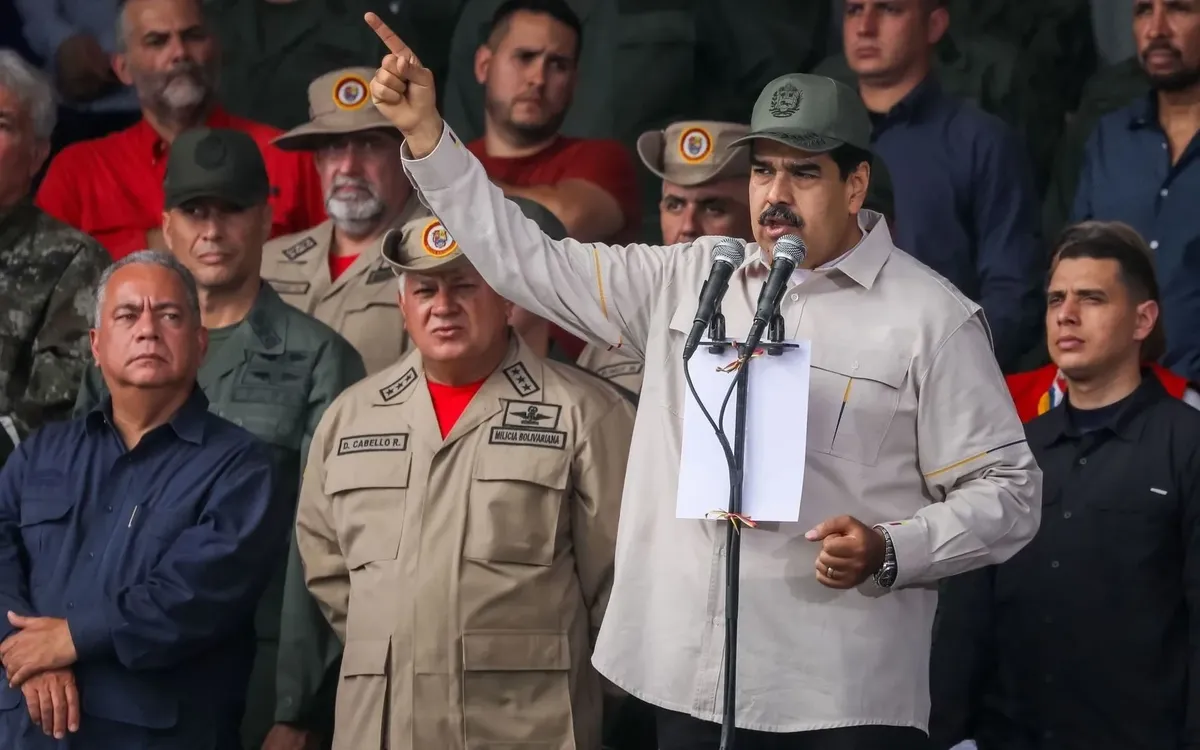
For three months Venezuela lives in conditions of the deepest political and institutional crisis. There are two presidents in the country, one of which, Juan Guydo, is recognized by more than 50 countries of the world, but only the parliament, while the other, is really controlled by Nicholas Maduro, recognized as incomparably smaller than the number of countries, retains real levers of power and, first of all, control over the armed forces.
The strategy of Guaido, who was chosen at the beginning of the year by the chairman of the National Assembly and proclaimed himself on January 23, the acting president of Venezuela, is aimed at achieving three goals: to end the usurpation of power, create a transition government and hold free elections. At the same time, Guydo relies on the Constitution of the country, according to which the newly elected president must take the oath to parliament, otherwise the president is considered officially absent, and his place is occupied by the chairman of the parliament.
Maduro was re -elected for the second term on May 20, 2018 in falsified, in the general opinion, elections that the opposition boycotted, since the regime did not allow all the most influential opposition leaders to participate in them. The parliament chosen in December 2015 is fully controlled by the opposition, so Maduro chose to take the oath not before the parliament, but to the Supreme Court subordinate to it.
Mass protests
Having proclaimed himself the president before the supporters of the opposition gathered in one of the central squares of Karakas, Guido called on the people to mass protests to achieve the peaceful overthrow of the usurpator. Hundreds of thousands of people in all major cities of Venezuela responded to this call. It seemed that Guaido (a very young, practically unknown politician who had become the chairman of the parliament, largely due to the fact that the increasingly well -known opposition leaders were able to turn the political situation in Venezuela by that time or in conclusion, or in exile).
The mass protests of 2017, when hundreds of thousands of people went outside almost daily for three months to prevent the election of the so -called constitutional assembly, which Maduro sought to put over the opposition parliament, turned out to be unsuccessful. A huge tension of forces, one and a half hundred killed, thousands of wounded and detainees ... But the anti -constitutional elections took place, Maduro remained in power. After the sensation of the “last battle”, the opposition’s supporters felt the deepest disappointment and apathy, the opposition coalition broke up, the most active Venezuens began to “vote with their feet”:
For two years, about three million left a population of 31 million people - every tenth.
The appearance of Guaido and his decisive actions destroyed this cemetery calm. Guydo turned to the armed forces, urging them to speak on the side of the Constitution, stop maintaining the dictatorial regime, promising an amnesty for previously committed crimes to those military who will go to his side. The most important role in strengthening the positions of Guaido was played by international support: the USA, the leading countries of Europe and the majority of Latin American countries recognized him as the legal temporary president of Venezuela.
On February 23, developing a peaceful attack on the regime, Guydo tried to organize delivery to Venezuela, experiencing economic and social catastrophe, American humanitarian aid. However, the trucks could not cross either the Brazilian or the Colombian borders: the National Guard and the police did not let them into the territory of Venezuela, despite the fact that thousands of oppositions gathered on both sides of the border crossing.
Unstable equilibrium
After this failure, an unstable balance occurs in the political situation. Guydo still calls on the people to go outside, and the military-to stand on his side. Maduro again addresses the tactics of delaying previously previously the tactics: despite threats and prohibitions, Guydo acts freely, including traveling to other countries of Latin America and, most importantly, returns to Venezuela. Maduro does not arrest him, understanding which explosion will cause this in the country, hoping (not without reason) that the tension will inevitably be “blown away” by itself, as happened in 2014 and in 2017. In addition, the US administration officially warned of serious consequences in case of any troubles with Guydo.
Two months later, it becomes clear that Guydo could not achieve the mass execution of people out into the street, despite more than 50 killed; That, despite the several hundred soldiers who deserted from the National Guard and the police (mainly during the February clashes on the Colombian border), to the statements in support of the Guaido from several retired military, not one of the Venezuelan generals who had real control over personnel and weapons, did not support the opposition.
"Chronicle of a pre -declared coup"
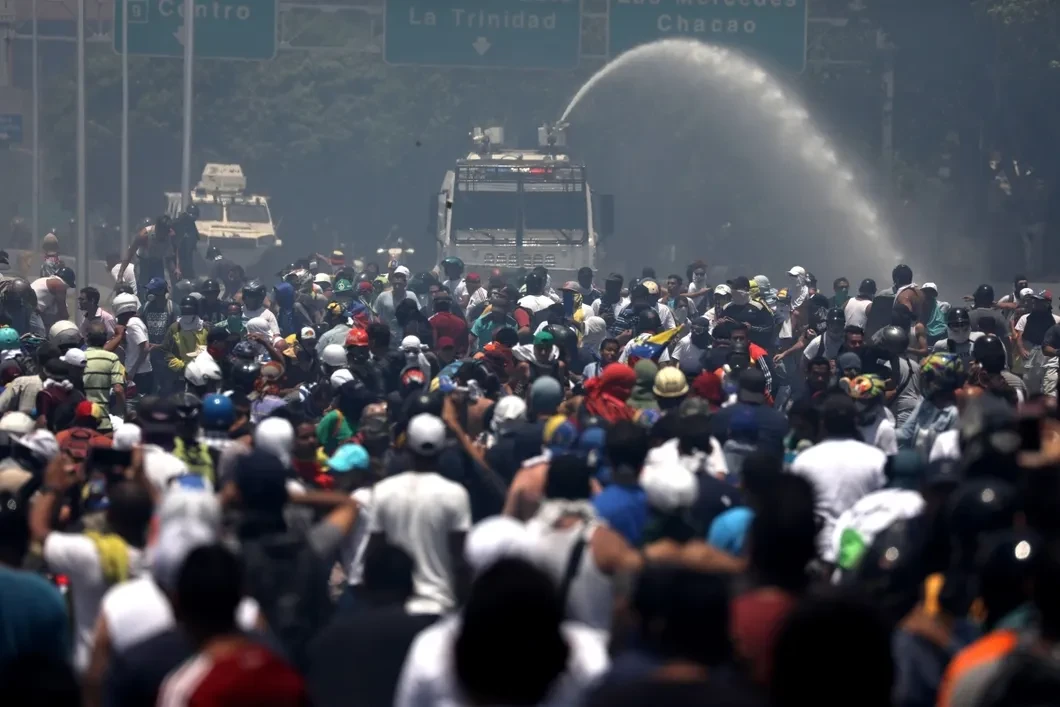
At the end of April, Guydo makes a desperate attempt to get out of this quagmire of endless uncertainty. If there were not five dead and dozens of wounded and there was no general tragic situation in the country, then this attempt would be in many ways a comic character. Moreover, as they developed, the events of April 30 were increasingly reminiscent of the tonality of the famous novel by a native of the neighboring Colombia Gabriel Garcia Marces “Chronicle of a pre -declared death”. The external chronology of a pre -declared coup is quite simple: Guydo appoints on May 1 the beginning of the final phase of the Freedom operation and once again calls for the people to go out into the streets, surrounding the military barracks.
However, on the eve of the unforeseen: Guydo, accompanied by two dozen soldiers of the National Guard, frees one of the two main leaders of the opposition-Leopoldo Lopez from the house arrest, while not meeting any resistance from the state security officers-terrible Sebin (the Bolivarian National Intelligence Service). Lopez is the founder and coordinator of the national will, it belongs to Huado, who is the youngest ally of Lopez, who, according to many testimonies, had, under house arrest, a real influence on the opposition strategy.
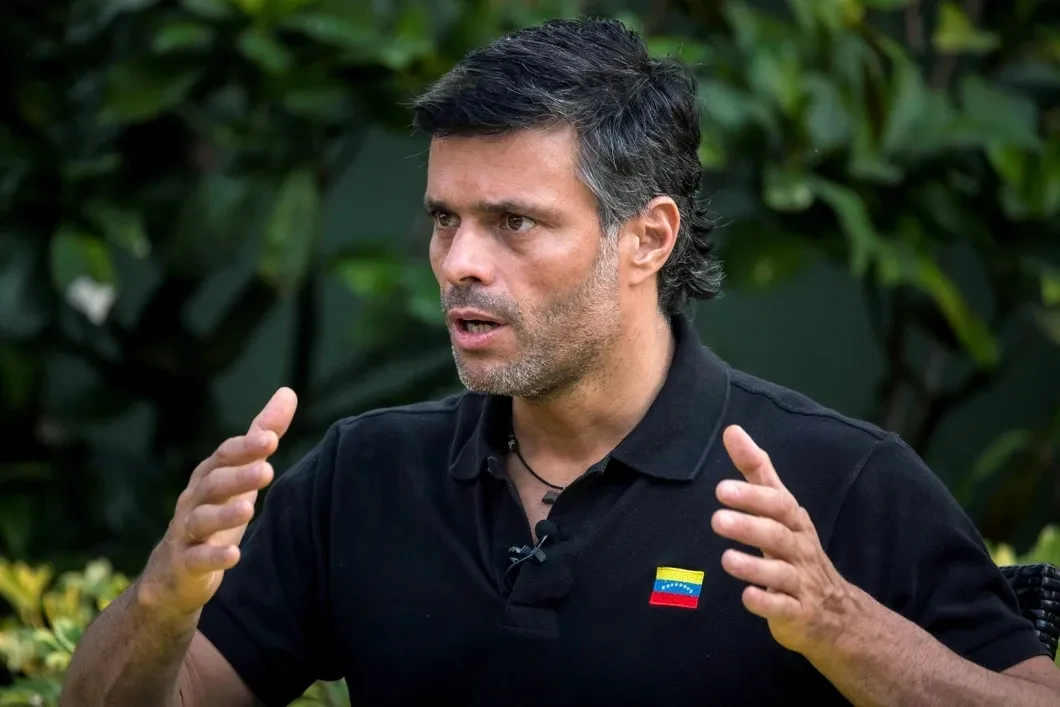
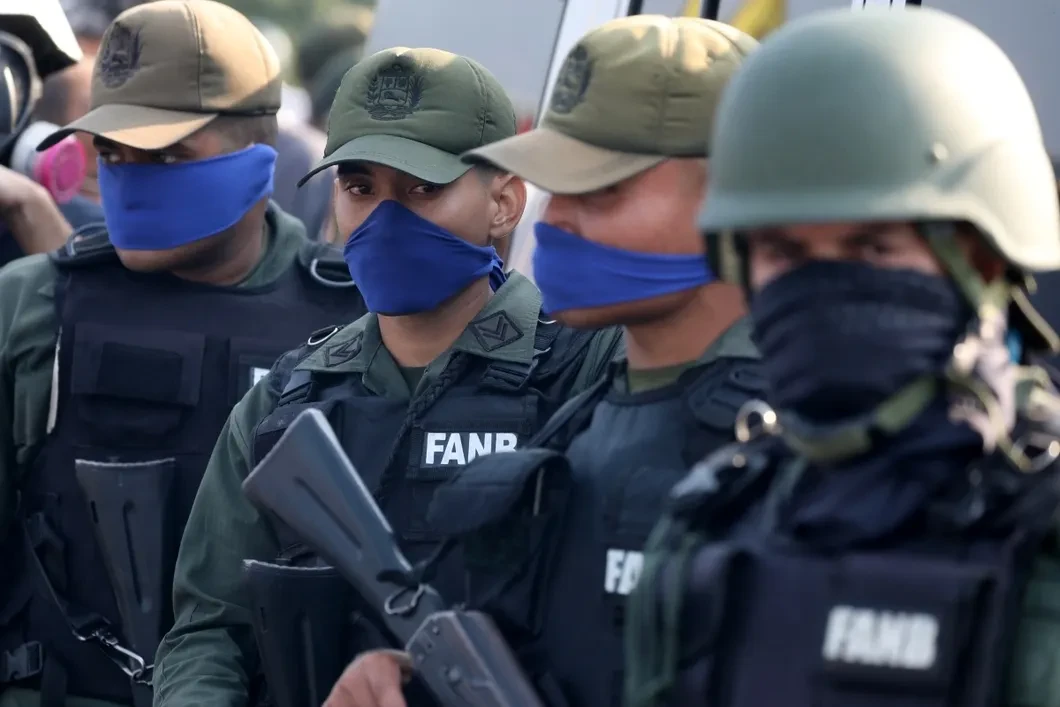
Having been released, Lopez, accompanied by Guydo and several soldiers of the Bolivarian Armed Forces, goes to the La Carlota military base, also urging citizens to go out and the military to speak on the side of the people and remove Maduro from power. However, only a few hundred people responded to this call, and Lopez (with his wife and younger daughter), after a couple of hours, finds himself first at the Chilean embassy, and then in the residence of Spain’s ambassador in Karakas. Guydo calls for a mass demonstration the next day, May 1, but by the end of April 30 it becomes clear that the attempt of a military coup failed. With the exception of the disappeared and then emigrated by the head of Sebin, General Christopher Figer, not a single influential military opposed Maduro.
The role of Americans
Meanwhile, the plans, as it turned out very quickly, were grandiose. Their clarification and publication was decisively facilitated by the senior leaders of the Trump administration. Secretary of State Mike Pompeo announces that the aircraft for evacuation Maduro from the country was already ready, but at the last moment it was disconnected by the Russians from this step. At noon on April 30, in the midst of events in Karakas, the assistant to the US President in National Security John Bolton, speaking on the lawn in front of the western wing of the White House, says that the key figures of the Maduro regime have been negotiating with the opposition for three months and that they are ready to go to the side.
According to Bolton, Minister of Defense Vladimir Padrino, the chairman of the Supreme Court, Michelle Moro and the head of the personal guard of the President of Venezuela, Ivan Ernandes, “agree that Maduro must leave,” he calls them out (at the conference press!) “To act this afternoon or evening to bring other military forces to the side of Guydo. A little later, the special representative of Trump for Venezuela Elliott Abrams publicly explained that there was also a 15-page document that ensured Maduro's “worthy departure”.
All this shocks the imagination and, in my opinion, testifies to the extreme unprofessionalism of those who determine the US policy towards Venezuela.
It is necessary not to understand anything in Latin America at all, in order to publicly call from the United States the most influential leaders of the Chavist regime (apparently considering themselves men) to take a lively participation in the midst of the alleged military coup. The magazine "Economist" suggested that, publicly announcing the lack of a regime of these persons, Bolton believed that he would thereby force them to act against Maduro. Naturally, the Minister of Defense immediately confirmed his unconditional fidelity of the Constitution and the legal President of Maduro.
I must say that representatives of the American administration from the very beginning of the current aggravation of the political crisis in Venezuela did not miss the opportunity to publicly recall their direct involvement in the activities of the Venezuelan opposition and personally Juan Guydo. So, on the eve of his proclamation by the President of Venezuela, January 23, US Vice President Michael Pence wrote on Twitter: “Tomorrow will be a very good (and important!) Day for democracy and constitutional order in Venezuela!” He personally called Guydo and assured him in the full support of the United States, which, of course, immediately became known. In addition, the United States through the lips of its senior leaders (and President Trump himself) constantly repeat that they are ready for all options for actions against the Maduro regime, including a military man.
This political style, which Latin America has forgotten over the past few decades, returns to the time of Reagan and Nixon.
It is natural that people from about the same times pursue this policy. Elliot Abrams in the Roagan administration held the post of deputy Secretary of State on the problems of the Western Hemisphere and was one of the organizers of the infamous Iran -Contrass operation 1985-1986, when the administration, contrary to the legislative prohibition of the Congress, secretly sold weapons to Iran, directing the received funds to those who fought against the Sandinated government in Nicaragua.
The threat of invasion
Obviously, the constant (albeit not too concretized) mention of the possibility of American military operations in Venezuela helps primarily Maduro’s regime, allowing him to rally the population and the army before the threat of “invasion of American imperialism”, which for decades scares the Venezuelans for decades. And now-finally came true! These threats are annoyed by the Latin American supporters of Guydo, few of which are ready to maintain US intervention. They are no less annoyed by European governments that supported Guydo and advocated for the immediate start of negotiations and holding elections in Venezuela. The Spanish Foreign Minister Josep Borrel accused the US of acting in Venezuela in a cowboy style, that is, constantly threatening to “cleanse” the weapon.
I must say that from constant use, these threats were devalued by order, especially since the Elliot Abrams in response to the open calls of the most radical part of the Venezuelan opposition to finally send the marine infantrymen, replies that "the situation has not yet matured." As one former high -ranking American military said: “We are driving ourselves in a corner. We need to either do something or shut up (Shut Up). ”
However, both Juan Guydo, and recently, Leopoldo Lopez not only rejects the possibility of American intervention to overthrow Maduro, but also emphasize that the Venezuela constitution directly admits the invitation of foreign troops if necessary. (We must think that the author of the Constitution of the Bolivarian Republic of Venezuela, Paru Chavez, inserting this article, thought about the possibility of inviting the Cuban troops. And he would have turned into a coffin, having learned how it is now interpreted.) In my opinion, such a meager position significantly limits the number of supporters of Guidido: Venezuela was never a “banana republic” and was used to being proud of this. However, hunger, constant deficiency of everything, large -scale disconnection of electricity and water supply, street crime, the growing number of deaths in hospitals from the lack of elementary drugs and hygienic agents, the general situation of complete hopelessness - all this leads to the fact that the growing number of Venezuelars are ready for everything: the coming of the Americans, the devil, the devil, anyone would, if only this nightmare. Rather, it ended.
And they can be understood: several generations of the Venezuelans do not know another life, except for the constant struggle for elementary survival. It is obvious that it is these moods that take into account the leaders of the Venezuelan opposition, when they refuse to publicly reject the possibility of American invasion, despite its complete counterproductivity from the point of view of the unification of the majority of the people around the opposition.
What happened April 30
According to the anonymous sources of the Spanish newspaper PAS, the Maduro removal plan really existed from power and prepared over the past two months, that is, immediately after the split forces did not take place in connection with the unsuccessful delivery of humanitarian aid to Venezuela on February 23. All the people named by Elliot Abrams, as well as the Minister of Internal Affairs of Venezuela Nestor Riverol, somehow participated in the discussions of this plan. At the same time (according to the same sources), they clearly made it clear that they were opposed to the open military coup (un Cuartlazo) that the removal of Maduro from power and the purpose of new elections should be institutional.
These negotiations went within the country with the participation of military and civilian officials of the regime, as well as abroad, where many Chavists were in exile. At the same time, it seems that the specific date of the speech against Maduro was not scheduled, since military actions were not supposed. Everything was mixed by the premature liberation of Leopoldo Lopez, his unexpected appearance at the La Carlota military base surrounded by soldiers and crowds of few civilians. Apparently, they did not agree on this: “We were thrown” (nos Madrugaron), numerous anonymous participants in the failed conspiracy say.
Why did Guydo hurried to the liberation of Lopez through a "presidential" pardon? Now only assumptions can be built about this. One of them lies in the well -known personal ambitiousness of Lopez, which throughout the history of the confrontation was first Chavez, and then Maduro, always took a special and usually personalist position, which often was the cause of internal schisms among the opposition.
Obviously, Lopez sees himself precisely the next president of Venezuela. Meanwhile, his figure always caused the greatest hatred of the Chavist supporters of Maduro.
It seems that the premature breakthrough of Leopoldo Lopez to the forefront of Venezuelan politics was not included in the plans of other conspiracy participants. Lopez himself explains his liberation by the fact that Maduro became known for the coup, and it was necessary to rush, since his threat and guaido were created. Against this background, they become more explained, but no more professional, desperate calls for high -ranking conspirators from Washington.
Snow
One way or another, but this phase of the cruel political crisis in Venezuela is over. The denouement seems to have come, although not the one for which many hoped. The regime of Nicholas Maduro resisted, his tactics - to weaken the enemy with reinforced concrete resistance once again worked. The regime, of course, is also weakened: the internal cracks that appeared in it became the subject of discussion in the media, although Maduro seeks to appear in public surrounded by soldiers and officers as often as possible. But, it seems that the opposition is weakened more: in 100 days of crisis and direct confrontation with the Guido regime, he could not receive sufficient support from either the population or from the military in order to force Maduro to retire. In recent days, Maduro went on a counterattack: on May 8, the first deputy chairman of the parliament, Edgar Sambrano, headed by the new head of SEBIN; He and 10 more deputies of parliament after deprivation of deputy inviolability were charged with a conspiracy and treason.
Watch, as Vladimir Vysotsky said, “for the sick and the dead”, and not only in the opposition camp. It seems that by chance it can easily get Maduro himself.