
Translated material
Blue Origin introduced a prototype of the lunar module (photo, video)
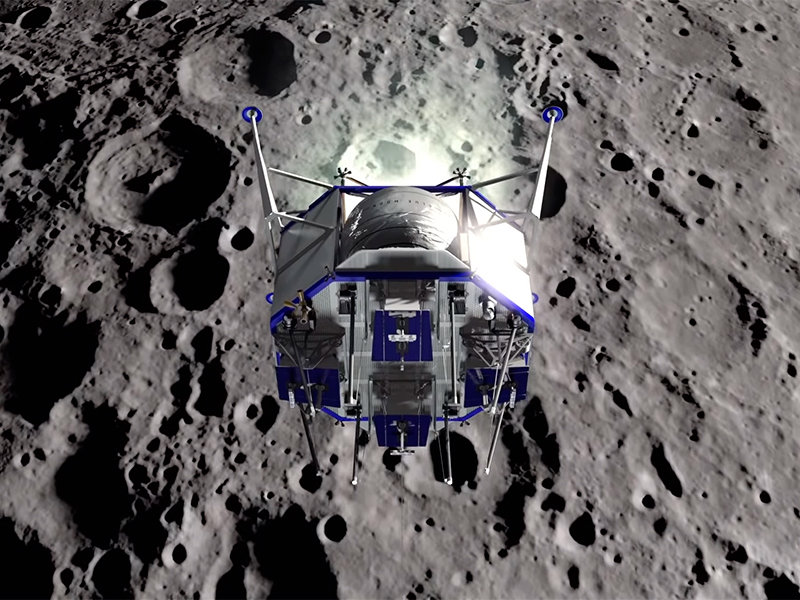
The founder of Amazon and the Blue Origin space company Jeff Bezos presented the lunar landing module Blue Moon. The prototype of the module, which Blue Origin has been developing for three years, was demonstrated at a special event on May 9.
According to N+1 , the development of the Blue Moon module is carried out as part of a larger Blue Origin program for organizing flights to the moon. Blue Moon can be used to deliver people and goods to the surface of the moon, but so far the Bezos has only introduced a prototype of the cargo version of the module, which, according to him, can deliver goods weighing up to 3.6 tons to the moon. According to the businessman, Blue Origin engineers have developed a more lifting version of the module, which can carry cargo weighing up to 6.5 tons and can deliver people to the moon.
According to Bezos, the future lunar model will be equipped with a BE-7 engine (liquid oxygen and hydrogen will become fuel for it). The first firing engine tests are planned to be carried out in the summer of 2019. Blue Origin believes that they will be able to send Blue Moon to the moon by 2024, which corresponds to the deadlines for sending the manned NASA mission.
Today, OUR Founder Shared Our Vision to Go to Space to Benefit Earth. We Must Return to the Moon - This Time to Stay. We're Ready to Support @nasa in Getting There by 2024 with #bluemoon . pic.twitter.com/uqqyma9zcn
- Blue Origin (@blueorigin) May 9, 2019
The presentation of Blue Origin was commented on in his microblog, the founder of SpaceX, Ilon Musk. He published a picture on which the name of the Blue Moon module was fixed on Blue Balls ("Blue balls"). “Oh, stop teasing, Jeff,” Musk wrote.
Recall, recently, an attempt by the private Israeli company Spaceil to deliver to the moon the “Bereshit” probe ended - the apparatus, the name of which repeats the first word of the Book of Genesis (“at the beginning”), crashed when landing on the surface of the satellite. Soon, Spaceil reported that the project team will develop and launch a new landing lunar apparatus "Bereshit 2".