
Translated material
Big course differences
Why the United States accused Russia of currency manipulation and what does China have to do with it
A month ago, Donald Trump wrote on Twitter that Russia and China are "playing the devaluation of the currency." And last week it became known that the American Ministry of Finance is preparing to accuse the Russian authorities of manipulating the ruble course in order to gain trade advantages. According to Bloomberg, the list of countries that allegedly use non -market practices to weaken their currencies can add Russia, Vietnam, Thailand, Indonesia, Ireland and Malaysia. And then what will happen?
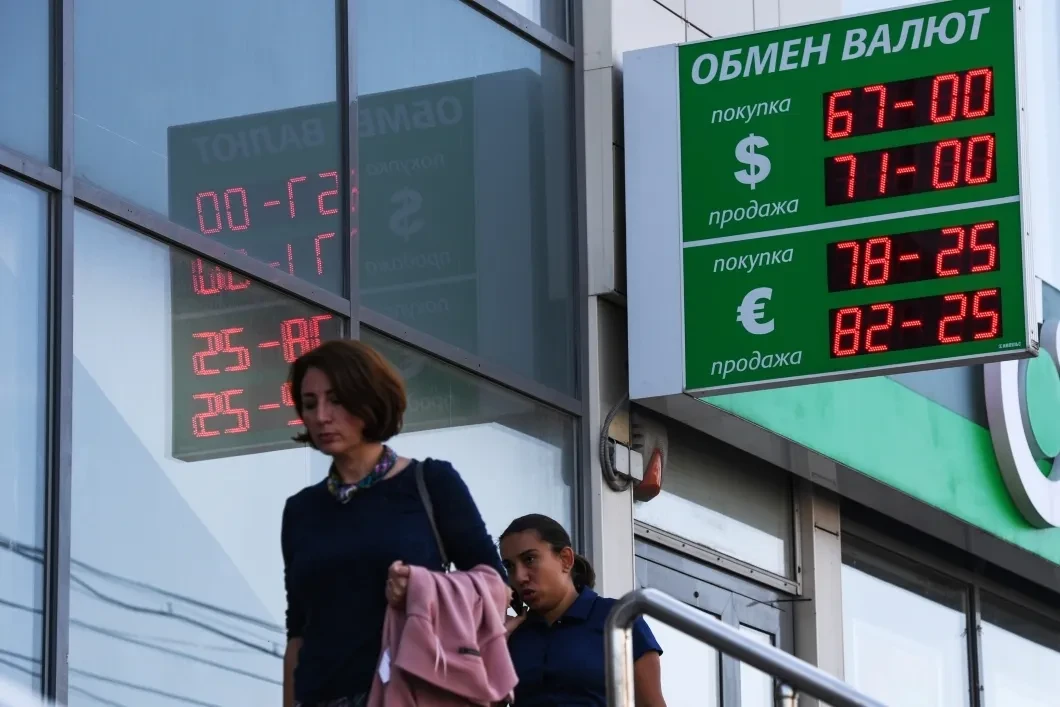
In itself, getting into this list, updated by the American authorities twice a year on the basis of observations of the foreign exchange policy of the largest trading partners, has no legal consequences. This is a warning signal, after which negotiations with the “violator” usually follow. If he remains deaf towards the arguments of the United States - as in the case of China, who has been charged with artificial weakening of the yuan for years - this may be the reason to use various pressure mechanisms against him. Being the largest economy in the world, America has a rich arsenal of tools for a convincing report of its position.
However, not all countries are equally susceptible to American economic diplomacy even in its most stringent expressions. The same China proved itself as a very complex rival, not inferior to the United States in economic power and stubbornness. For the past few months, markets have waited for the results of the US-Chinese trade negotiations. The expectations were positive - until last week, when Trump unexpectedly announced the disruption of the transaction.
As a result, the trade war entered a new circle. On May 10, the United States raised tariffs from 10 to 25% for Chinese imports by $ 200 billion and put the ultimatum to China. Now Beijing has 3-4 weeks to approve the parameters of a trading agreement (the United States require reducing the shortage of trade balance with China, protecting the intellectual property of American companies and refusing to manipulate Yuan), otherwise the entire remaining import will fall under the duty (another $ 325 billion). However, China said that he would take response and will not make concessions “on fundamental issues”. Two economic heavyweights have already provided a lot of headache for the entire world economy and, it seems, are not going to stop.
Paradoxically, Russia also belongs to a group of countries that are difficult to surprise with American pressure.
Here we are in the company of Iran, the DPRK and other states, accustomed to life in partial or complete international isolation.
The rates in this league are much higher than getting into the club of currency manipulators: a trading embargo, a ban on dollar operations, disconnecting from SWIFT. Therefore, the Russian authorities most likely simply ignore the suspicions of the American Ministry of Finance and focus on more serious threats that come from Congress.
If we talk about the essence of the claims, then the accusations of the Russian authorities of artificial weakening of the ruble are quite justified. Although since the end of 2014, the Russian monetary policy involves the floating course of the ruble and the lack of regular foreign exchange interventions, this scheme contains several laser, with which the Central Bank continues to have a strong influence on the foreign exchange market. The main channel of this influence is the budget rule, within the framework of which, from February 2017, the Russian Central Bank, on behalf of the Ministry of Finance, has been purchasing currency in reserves. Oil and gas out -and -offs, calculated as the excess of the actual price of oil from the cutting price (now a little more than $ 40 per barrel), are sent to the National Welfare Fund.
On the ruble exchange rate, this turns out to be both direct and indirect effects. Firstly, the removal of currency from the market prevents the strengthening of the ruble course with a favorable situation in the energy resources market. It is with the action of the budget rule that the abnormal fluctuations of the ruble falling against the background of an increase in oil prices are associated. In 2018, the authorities sharply increased the pace of currency purchases, spending 4.2 trillion rubles or about 4% of GDP on them per year, despite the fact that the American Ministry of Finance considers purchases by more than 2% of GDP one of the signs of course manipulation.
Secondly, the mechanism of the budget rule leaves space for verbal interventions. In early 2017, Igor Shuvalov dropped the ruble “dropped”, making an application for upcoming purchases. And in a situation where the ruble falls too quickly, as in September last year, the Central Bank may declare temporary departure from the foreign exchange market to stabilize the course.
Of course, this practice is far from unique and is used in many countries. According to the weekly The Economist, the leader in foreign exchange manipulations is Switzerland, which carries out large -scale state purchases of the currency to weaken the Frank course.
However, if someone can teach a master class on market manipulations, it is Donald Trump himself. American economists even introduced a special term (“Coll-Option Trump”) to describe the situation where the Twit of the American president becomes the main factor in the market movement-for example, it unfolds an increase in oil prices or brings the capitalization of some billion dollars. Let's see whether Trump will help the activity on social networks to defeat China in the trading war and create 25 million new jobs in America.