
Translated material
My besieged memory
Essay Elena Chizhova, whose publication brought to an application to the Investigative Committee
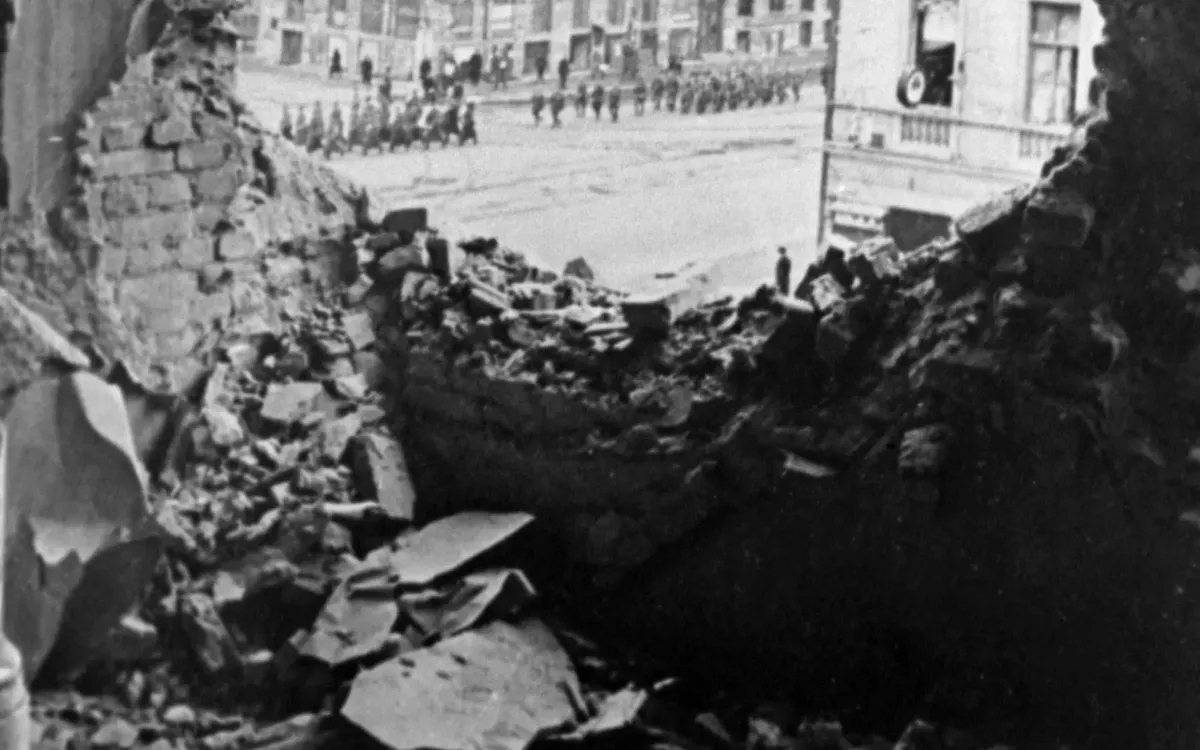
From the editorial office
Before you is the essays of Elena Chizhova, written for the Swiss Neue Zurcher Zeitung. Both the text is acute, and the topic is acute: the role of Stalin in the tragedy of the besieged Leningrad. In the State Duma, the text of Chizhova was called falsification of history, "disgusting provocation and blasphemy." Political analyst Natalia Eliseeva sent a statement to the Investigative Committee with a request to initiate a case against Chizhova. According to the article “Rehabilitation of Nazism” - and this, by the way, is up to five years.We believe that the topics of the blockade, war, the cult of personality, even the most controversial and uncomfortable, should not be silent, but to become the subject of a wide public discussion. And certainly this is not a reason to complain about the authorities. If you want to argue - argue, the text is in front of you.
Department of Culture
From the author
Elena Chizhova - "Novaya Gazeta"
- Honestly, I have no desire to give a detailed comment on this. The only thing I have to recall: this is not a dissertation, not a scientific article, but an essay in which I write about my blockade memory. My ideas about how Stalin treated Leningrad and Leningraders developed when I read the memoirs of L. K. Chukovskaya and N. Ya. Mandelstam; diaries O.F. Bergholz; Books by A. I. Solzhenitsyn and D. A. Granin, S. V. Yarov and N. A. Lomagin. She listened to the Leningraders who survived the blockade. Their evidence, evidence of people who knew that time firsthand, became my memory.
I suppose this is the “mechanism” of memory. If you like, the "mechanism" of culture. Human memory is addicted. Perhaps that is why as one of the epigraphs to my novel “A city written from memory” I took the words: “You can argue with the truth. With memory - no. ”
My besieged memory
One of the most unbearable scenes of world cinema: “Sophie's choice”, those few seconds when the heroine herself chooses who - the son or daughter - send to death. I was able to survive this scene only once. Then, reviewing the film, she turned off the image and sound. Those who want to imagine what the Leningrad blockade is to understand: in the winter of 1941-1942, many Leningrad mothers had to make a choice: which of the children to feed?
In our families, the memory of the blockade is passed down from generation to generation. This memory is insatiable pain and general trauma to the Leningrad consciousness: each family has its own martirologist: a list of those who died or died.
On July 3, 1941, my mother turned 10 years old. Her mother worked in a shoe factory. Grandmother - in the emergency room of the Konyashin hospital. They left to the Urals in the evacuation in August 1942, having survived what Leningraders still call the “mortal time”. They survived for the only reason: going to the front, mother's father bought firewood and scored windows in the room with plywood. And even earlier, in May, he dismantled a large stove and folded a new, small one: to focus it, there were 2-3 logs. That winter, they suffered only from hunger. Leningraders know: hunger and cold together - guaranteed death. But for me, born after the war, this means that my mother’s father and my grandfather, who died near Leningrad on January 27, 1944 (this date is the day of the blockade of complete removal), did not believe the official propaganda that he could not last long, the deadline until the fall, when the fascist troops would be discarded.
My childhood passed under the sign of silence.
Now I understand that the blocked memory of my relatives was locked with double constipation: outside and inside.
From the inside, because the blockade is pain that is difficult and scary to talk about; Outside, because they were tormented by the fear of saying “something superfluous”: even during the war, the theme of the blockade became the censored-the Soviet state did everything to hide the truth. It was for this purpose that in 1946 the authorities ruined the People’s Museum, where Leningraders passed their block diaries and personal belongings, in the hope that the memory of their suffering would not disappear. People of the older generation remember the fire in the courtyard of a ruined museum, in which these diaries and things burned. The genuine number of victims among the civilians remained under the ban. Only after perestroika was said about this openly: from 1,000,000 to 1,200,000.
Like all the big numbers - this figure cannot be imagined. But you can look at the faces. In our family archive, a pre -war photograph has been preserved: a ten -year -old mother and her girlfriends with whom she played in the yard. The photo has nine girls. Six died in the blockade. There are three left. (Of the boys who lived in their yard - they called to the front gradually, a year after year - not one returned back).
The silence of my mother and grandmother does not mean that in childhood I did not know anything about the blockade. They could not hide from their memory. I remember: when they remembered, their voices changed. They became defenseless, as if they were embarrassed by their suffering. They spoke slowly, among themselves. And sometimes they spoke.
Then suddenly mom will say: “Boys do not live in our family” - and I, a four -year -old girl, sit and guess: what boys, why do not live?
That grandmother will mention some "soft parts". He will say: “In the morning you approach the hospital, they lie whole; In the evening you go - all the soft parts are cut out. ” (What is blockade cannibalism, I guessed before my grandmother told me about it.)
It so happened that everything is the main thing that I know about the blockade, I overheard. I mean, not information that can be gleaned from books or from diaries. I also read them a lot. But what is the Leningrad blockade, I understood, it seems, about five years old. Since then, no official myths have acted on me - I am still sure: they, my mother and grandmother (with their quiet conversations), put a special blockage tuning fork in me, which made it easy to distinguish the truth from lies.
The blocked memory of my generation is a slow, long process of rethinking, when you gradually come to the conclusion that Hitler and Stalin are to blame for the tragedy of the Leningrad blockade: this tragic fugue, they, the two most terrible dictators of the XX century, played four hands. The party of Hitler is obvious: in order to avoid his own losses in manpower and technology, inevitable in battles in a large city, he made a “scientifically based” decision: to be mad Leningraders with hunger and cold - all, including the elderly and children.
In the eyes of Stalin, Leningrad is an object of crystal, without any extraneous impurities of hatred.
I think that its reason is a sense of self -esteem of Leningraders, the ability to independently think, which should be pulled out with the root to strengthen their God -like power. Destroy once and for all. It is impossible to explain to anything else why, in conditions when in block times, compositions with military equipment went on large land, which was produced by Leningrad plants, Stalin and his minions did not organize regular supply of food products. At least in quantities compatible with life. But back from the large land, these railway compounds went loaded with raw materials (thousands of tons of metal of the desired brands), components and tools. According to historians, at least 100 echelons were involved. I am not a historian, but I think that even a small part of these echelons could save dozens, if not hundreds of thousands of human lives.
Now, after 75 years, when the archives are open (far from all!), Things related to the blockade, more than answers. But I'm sure - sooner or later the truth will find a way. Both the general and personal, which is stored in every Leningrad family.
My modest contribution to the common blockade memory is the novel "A city written from memory." It was based on his mother’s stories (about two years ago, realizing that then it could be too late, I wrote them on film), family photographs, grandmother’s stories and painful stories that I experienced myself.
Imagine. The doorbell. You open and see the old man. Next to him, a woman is your middle, years old. The old man stands silently, relying on her hand. She says: “You’re sorry, we arrived from afar, my father lived here as a boy here in a blockade, in the 44th they left, but never returned, he asked for a long time, but everything somehow didn’t work, you know how it happens: then there is no money, then time ...” She falls aside to give you time and be confused to retreat, trying to keep it, that you should not do anything, that it is not worth it, To realize what he had dreamed about all his life. He goes without relying, from the room to the room. You are next, muttering: sorry, everything is different here, repairs, doors, windows ... “No, his fingers tremble when he puts his hand on the wall. - Everything is left as it was. Now you can die. ”
My blocked memory is when you read the Essay of Vinfried Zebald about Celn’s carpet bombing, and a relentless thought revolves in your head: “There, they also had hell.”
And my memory is shame: for how the Russian state relates to the surviving blockade.
On the one hand, a military parade on Palace Square on the day of removal of the blockade. And on the other hand, the “Blockade Society” (the official organization financed by the city authorities) gave my mother three packs of crackers, dry cookies as a congratulation on the New Year; Moreover, expired. The fact that at that moment my mother felt, I, sparing her, did not ask. Just threw a gift in the trash.
The theme of the blockade is still cracking on Russian society. Even now, after decades, fights are underway around the “Blocent Truth”. For the question: "Was it more reasonable to surrender Leningrad to avoid the horror of the blockade?" - The Rain TV channel was on the verge of closing. For such a question asked publicly, you can get an accusation of “falsification of history” or “extremism”. At the same time, on occasion, the official authorities use this issue to discredit their political opponents. So, the temporary (before the autumn elections) the governor of St. Petersburg accused the opposition deputy: he allegedly stated that the city should have been surrendered. When the insulted deputy, defending honor and dignity, tried to sue, his lawsuit was not accepted for consideration.
You do not have to be especially perspicacious to see: the matter is not in the question itself, but that the current authorities, the heirs of Soviet ideology have any thoughts about the blockade that go beyond the framework of official discourse (including the true role of Stalin), cause blind rage. Their “memory” is not the suffering of Leningrad children who have been dying in the hungry torment, but majestic monuments and solemn events, during which the feat of Leningraders who defended the city from the Nazi hordes is sung in all ways. Against the backdrop of the current militaristic rhetoric, it is customary to mention casually about torment and suffering.
I am sorry that in the European consciousness the theme of the blockade - unlike the Holocaust and the Stalinist Gulag - remains marginal. Meanwhile, the blockade is a mirror in which today's Russia looks. If you look at this mirror, you can understand a lot.
Elena Chizhova, writer