
Translated material
Sun, wind and water
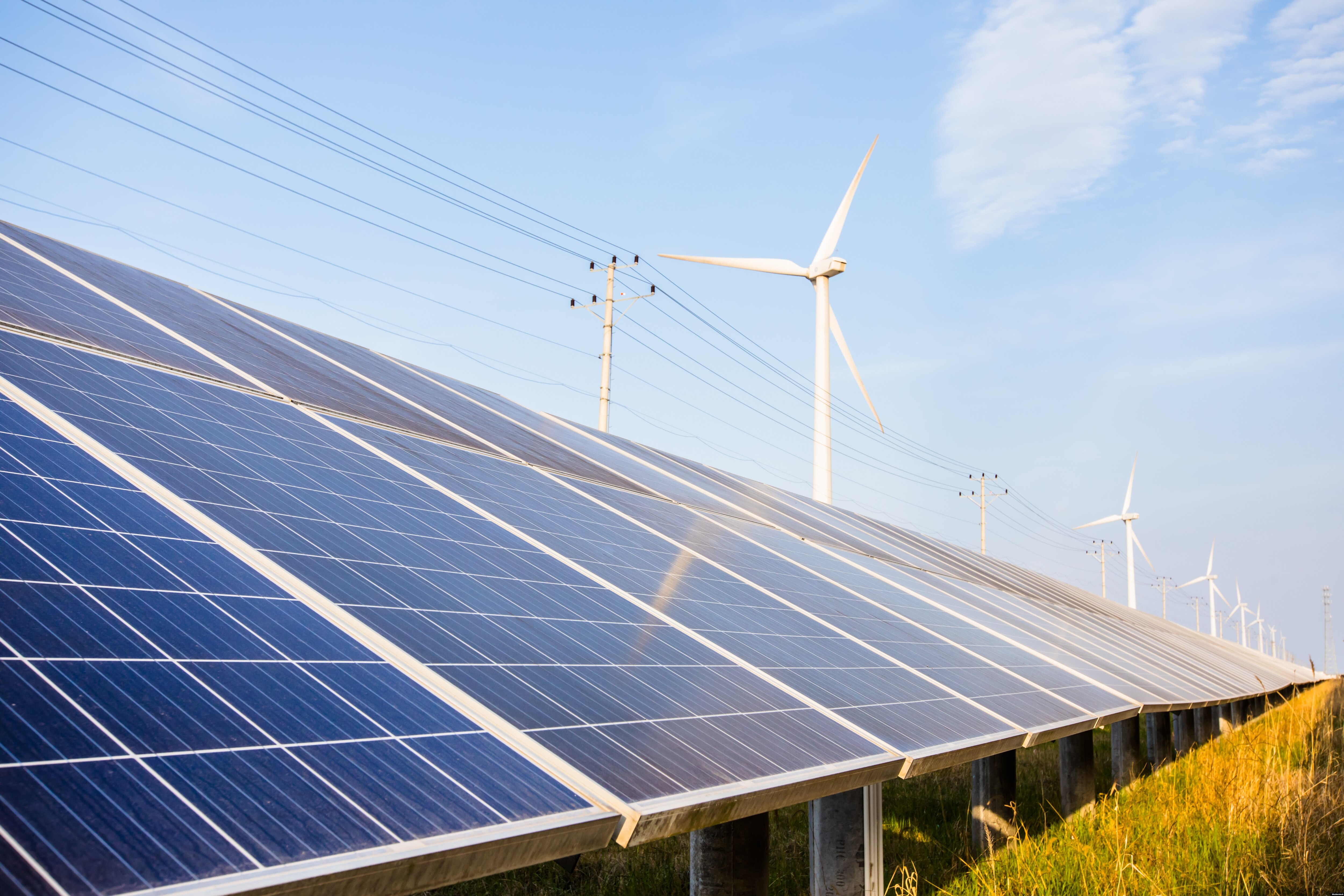
What is the future of renewable energy?
- More and more countries, regions and corporations report plans to transition from fossil energy sources to renewable.
- According to some expert forecasts closer to the middle of the current century, renewable sources will become the main supplier of electricity in the world.
- These trends are unlikely to have a serious impact on the global climate change: there are already enough greenhouse gases in the atmosphere.
- Now a forestry and proper forest use, expansion of renewable energy sources, and increase energy efficiency are necessary.
Sergey Medvedev: The future occurs in the form of optimistic forecasts of individual companies, regions and countries. Either IKEA, then California, then Sweden promise to switch to renewable energy sources in 2020, 2030, 2040. Is there a new energy revolution? As the coal once changed firewood, and the oil and gas changed coal, will renewable energy sources will now change their renewal: the sun, wind and water?
Vladimir Klimenko , Climatologist, corresponding member of the Russian Academy of Sciences, the head of the global Energy Institute of the Moscow Energy Institute , and Igor Bashmakov , Director of the Center for Energy Efficiency, XXI century , came to us to discuss these problems.
The magazine "Spiegel" is the alarm: all optimistic expectations for Germany have not yet been justified. Farmers protest: solar batteries and solar batteries take up too much space. In essence, over the past five years, the volume of emissions has not declined. How justified is this skepticism?
Igor Bashmakov: In Germany, as in many European countries, the share of electric energy generation using renewable sources, of course, is growing. It is clear that any new technology has pros and cons. At first, skeptics and especially people who produce competing energy resources pay more attention to shortcomings and problems. Today, sociologists who are engaged in this problem determine the optimal distance to the places of residence, find such geographical solutions that would allow people without preventing people to engage in their normal life, to develop a sufficient number of renewable energy sources. Politics in this regard takes into account the negative points that can be eliminated and thereby remove restrictions on the development of renewable sources.
Sergey Medvedev: In general, the “revolution” is inevitable, as the death of capitalism?
Vladimir Klimenko: The “revolution” has already begun 10-15 years ago, it is developing. Several important events coincided. Firstly, the shale revolution. It turned out that the scale of available gas resources practically doubled as a result of the implementation of the shale revolution. To those two hundred trillions of explored, extracted, proven gas resources were added about the same, which are now intensively mastered by three countries - the USA, Canada and China.
Sergey Medvedev: Does the Slantsy Revolution somehow affect the prospects of renewable energy, pushes the deadlines for the transition to green energy?
There was an era of firewood, the era of coal and the era of oil, and now the era of diversification has come
Vladimir Klimenko: The radical difference between today's situation is that there was an era of firewood, a coal era and an era of oil, and now the era of diversification has come. Now there are three sources of organic fuel, which give about the same share of world energy consumption. But at the same time, with a high speed, 15-17% per year, the role of renewable sources is increasing, which is equivalent to a doubling of energy production with the help of renewable sources every five to six years. In 2018, renewable sources, that is, the sun, wind, geothermal springs and bio-sources, developed two and a half trillion of kilowatt hours of electricity. This is almost as much as the atomic stations of the world produce. This year, the production of electricity with renewable sources will exceed the production of energy at nuclear power plants. If the pace that has been observed for the past 20 years will remain at least another 10-15 years, then immediately after 2030, renewable sources will become the main supplier of electricity in the world.
But since they cannot completely occupy the niche that organic fuels still occupied, in the next decade it will decrease (and is already very noticeably reduced literally every year) the relative role of coal in the global energy balance, and the relative role of oil to a lesser extent, but also decreases. The role of gas will increase significantly. In general, a gas bridge is leading a gas bridge in an energy bright future on a relatively short historical scale of two to three decades, and after 2030, renewable sources should take a dominant role in the production of electricity, in the global energy, they will become the main only by the end of the current century. In this transition period, the role of gas will grow.
Igor Bashmakov: There are different opinions on this subject. Previously, such a point of view dominated that 100% of the electricity is impossible to generate on renewable sources for a number of reasons, including due to the fact that these are variable sources with unstable production. And today there are already several studies that prove that it is technically possible by 2050 to switch to 100% production of electric energy using renewable sources.
Sergey Medvedev: Due to the new battery technologies?
Igor Bashmakov: Due to the fact that there will be more competent management of sources, networks will develop, and from those places where excess production, energy will be transmitted to where it can be consumed. Accumulation technologies will develop, there will be battery systems. And a very promising direction, which is now beginning to develop fantastically rapidly, is hydrogen. That is, if you have some renewable energy source works in mode when there is an excess of power in the system, and the system does not require it, then you can produce hydrogen based on this energy using hydrolysis or some other technology. If you create buffer fuel in this way, then you can use hydrogen for very different purposes, not only in energy, but also in road transport, and most importantly in industry. Previously, it was believed that it is very difficult to decarbonize industry, ferrous metallurgy, cement industry, plastic production, fertilizers. It was believed that there only one technology will save us from global warming - it is the capture and burial of carbon. There are already technologies now (so far they are two times more expensive than traditional ones), when in many cases hydrogen will replace carbon sources. There will be an opportunity to produce large volumes of hydrogen, and there will be great demand for it.
Sergey Medvedev: Roughly speaking, is hydrogen new oil?
Igor Bashmakov: Hydrogen is new oil, gas and much more. Perhaps we are moving to energy, where in the second half of this century they will dominate or at least play a very large role renewable sources of electricity and hydrogen. It is clear that everything will not happen so quickly, and by the middle of this century we are unlikely to switch to one hundred percent production of renewable energy sources. But in most forecasts, the share of renewable energy sources in the production of electricity in the middle of the century will be somewhere in the range of 50–86%, that is, it will already be the main source of energy production.
If we talk about fossil fuel, the situation will most likely look like our forecasts show: we will pass the peak of coal production somewhere until 2030. Maybe in the early 2020s we will reach the maximum volume of coal consumption, and then it will decline. The peak of oil will most likely be passed in the area of the 2040s. The development of electric vehicles plays a very large role here: if they develop rapidly, then the peak will be lower, if slower, then slightly higher. The peak of gas is possible in the area of 2050. Gas consumption will grow until the middle of the century, but then, most likely, the demand for gas will decrease. The main sources of the income of our economy from exports that we have today are sources for a relatively short period of time, 30–35 years. Moreover, these sources will not grow, they will most likely give income of about the same level that have been given in recent years.
Sergey Medvedev: Here are all these trends that we are talking about now, decarbonization, for example, how quickly can it have an impact on the global climate?
Vladimir Klimenko: What will happen to the climate in the next 30 years is predetermined by the already accumulated concentration of carbon dioxide and other greenhouse gases in the atmosphere. And whatever the development scenarios are considered in the next 20 years, the scale of the temperature increase is the same, the difference is 1.2 degrees.
I'm talking about more or less real scenarios, and not about those fantastic ones that quite often walk along the pages of not just world media, but even, especially anxious, scientific publications. The scale of 90% of those hypothetical disasters that are predicted must be reduced by two or three times: fever and, accordingly, consequences.
In fact, the climate is much more stable than we thought 10, 20 and 30 years ago. The main supplier of all kinds of forecasts, including disturbing, is the well -known organization - an intergovernmental group of experts on climate change. This group during all 30 years of its existence supplies the world public with false forecasts about the scale of future warming. Every 5-10 years, she updates her ideas about the future, supplies the interested public with a spectrum of all kinds of scenarios. Now there are four scenarios that earned in 2010. Ten years have passed, and now it can already be said that the real climate heats more slowly than in the mildest of the scenarios. Articles are written on this occasion, but they are not allowed into the most important scientific publications.
Sergey Medvedev: Because there is a certain global request for Alarmism regarding warming?
Vladimir Klimenko: Humanity has it. It is known that the only and most reliable means to make a person move in some direction is fear. Therefore, to a certain extent, this redundant alarmism is justified. For our models until the end of the century, even if you want to fulfill the goals of the Paris Agreement and keep warming within two degrees, total decarbonization is not needed at all, it is redundant.
Sergey Medvedev: In any case, Alarmist forecasts in one way or another influenced the growth of renewable energy sources, on government programs.
Vladimir Klimenko: That rainbow future, which was painted by Igor Alekseevich ten minutes ago, is not feasible for at least one reason. Now in the world about two thousand gigavatts of coal stations, about half of which have age less than 15 years: in China and in India. They must work out (and work out) for at least 40-60 years.
Sergey Medvedev: How quickly does the cost of alternative energy fall, including sunny?
Igor Bashmakov: If we talk about solar energy, then specific investment and expenses have decreased by ten years by about seven times. In wind energy, the decrease is somewhat slower, because it was more significant in previous years. Here there is a very dynamic decrease in specific expenses for the production of electricity. In some countries where the solar component is very significant, auctions have already been held at the cost of two cents per kilowatt hour. We come to a situation more and more, which contradicts the previous opinion that renewable energy sources are always more expensive. Today, another opinion may turn out to be correct: those who refrained from the development of renewable energy sources and their large -scale use will pay much more for the next decades compared to those who have significantly invested in these technologies.
In many countries of the world, renewable energy sources in the coming decades will paratite with coal stations
According to expert estimates, in many countries of the world: in China, and in India, and in Europe, and in the USA, renewable energy sources in the coming decades will paratite with coal stations. The refusal of coal generation, which today began mainly for environmental reasons, will continue for economic reasons. Moreover, it is the economic competition that will give very significant impulses between generation on coal and generation on renewable energy sources. If we talk about the accumulation system, then the cost over the past 70 years has decreased by about 5 times, and in the coming years it is expected to have a three more reduction.
Sergey Medvedev: Do you share technological optimism regarding the fact that purely economically everyone will beat renewable sources?
Vladimir Klimenko: In general, of course, yes. When we talk about the prices of coal, gas or renewable generation, you need to understand that we are talking about very wide ranges. If we talk about the best places of location, about the best technologies, then now the renewable, first of all, wind energy has indicators better than fuel oil, better coal and at the gas level.
Sergey Medvedev: Where are the most effective windmills?
Vladimir Klimenko: In Denmark, Portugal, Germany. But there are limits of improving renewable energy. The main organization in the world in renewable energy, publishes annual reviews, from which it can be understood that the potential for improving wind energy has almost been exhausted, in the next 10 years it is possible to reduce the cost of 5-10%. The potential of solar energy has not been exhausted, therefore, in the next decade, a much faster development of solar energy has been predicted, while in the modern world almost 60% of renewable generation is wind energy.
Sergey Medvedev: Solar energy depends on the region? They showed: on the Chukotka, Yarangi has a sunny battery.
Igor Bashmakov: There is a polar night there, but on a polar day the sun shines around the clock, and in the summer these energy sources can be constantly used there. Today we have solar power plants in Yakutia, there are quite good coefficients of electricity production per unit of installed power. There are a lot of places in Russia where solar energy has a fairly large potential. This is very interesting for the northern territories. Diesel generation works on isolated energy systems, and we have 70% of the country's territory is not attached to the centralized energy supply system-these are remote places where there are not many people, but still they are there, and diesel generation costs from 22 to 240 rubles per kilowatt-hour. We made such a program for five Kolyma villages and for one Yakutsk. Despite the fact that we have accumulated little experience and technologies are not very developed, today we have a generation in the sun and wind are cheaper than diesel generation.
It is important to understand: when we talk about the development of renewable energy sources, we should not develop them with the existing low level of efficiency of electricity. In the future, great attention in all countries, including Russia should be paid to increased energy efficiency. If today we are in Russia all the energy consuming technologies that we have, we replaced the most energy -efficient installations in the world in one night, we would reduce energy consumption by half. But this process requires investment and time.
Sergey Medvedev: How will a new energy be organized? Will more energy be made at the place of its consumption?
Vladimir Klimenko: We started our conversation with the words "Energy Revolution" - it is a triune. This is a gas revolution: it has already happened. This is a revolution in the field of renewable sources, and it is distributed energy, that is, the energy of the future will largely be determined by distributed sources. This has already been implemented not only in the countries of the European Union, but also in South Africa, where there is a pole next to each housing, on which several solar panels are located - this is enough to satisfy the minimum needs of living in this small house. In England, a law has already been adopted, according to which 10 or 20% of energy needs, newly introduced housing must satisfy at the expense of its own autonomous sources.
Sergey Medvedev: But will it not be cheaper here centrally produced energy than if you put the generation in every house? Or are the energy currents to transfer energy more?
Igor Bashmakov: Of course, the losses that today in Russia make up 10% of the generated electricity is an important component (in the world it is 5-6%). В децентрализованно распределенной энергетике этого не будет. Если мы говорим о перспективе, то здесь появляются два компонента. У нас возобновляемые источники до счетчика – это те, которые вырабатывают централизованную энергию и поставляют ее, и возобновляемые источники после счетчика – те, что вы можете вырабатывать локально на промышленных предприятиях и у себя в домохозяйстве. При этом часть этих источников может агрегироваться в виртуальные электростанции. Понятие электростанции в том смысле, в каком мы сегодня себе привыкли ее представлять (некоторая площадка, на которой расположен некоторый комплекс оборудования), здесь меняется. Есть распределенная система генерации – это много мелких производителей и некоторые агрегаторы, которые управляют всей этой системой. Электростанция становится распределенной по достаточно большой территории. Появляются люди, которые одновременно потребляют и производят электроэнергию. Существенно меняется структура самого рынка электроэнергии. Появляются новые функции хранения электроэнергии, зарядные инфраструктуры, электромобили, которые нужно заряжать, системы хранения энергии, новые услуги. Из-за того, что растет доля возобновляемых источников энергии с переменной выработкой, в отличие от гидроэлектростанций, где можно хорошо регулировать выработку электроэнергии, здесь ее сложно регулировать, и растет доля системных услуг генерации, которые позволяют сохранять частоту, регулировать работу энергосистемы таким образом, чтобы надежность и все другие параметры соблюдались.
Таким образом, если на первых стадиях трансформации рынка электроэнергетики разделялись генерирующие компании, сбытовые компании и сетевые компании, то сегодня идет еще и другой водораздел: выделяются компании, которые вырабатывают электроэнергию с помощью возобновляемых источников. Меняется структура рынка, его функции. Сегодня не найдено идеальной модели нового рынка, идут поиски. Появляются периоды с отрицательной ценой за электроэнергию, потому что в этот период возобновляемые источники в локальных системах вырабатывают так много электричества, что оно никому не нужно, а хранить его негде, и сетевые системы недостаточно развиты, чтобы кому-то его передать.
Сергей Медведев: Получается, что здесь совершенно другие принципы. Если классическая энергетика была основана на иерархическом принципе, особенно нефтяная и газовая: централизованная добыча, распределение и так далее, то новая образована по принципу интернета, и это ведет к своего рода политическим изменениям.
Децентрализованная энергетика может больше развиваться в более демократической системе координат
Игорь Башмаков: Это очень серьезные изменения. Централизованная энергетика всегда является основой централизованного общества. Децентрализованная энергетика может больше развиваться в более демократической системе координат.
Сергей Медведев: Насколько изменяют этот баланс электромобили?
Владимир Клименко: История электромобилей пока еще покоится в колыбели, хотя и есть такие страны-пионеры, как Норвегия, где уже около 20% парка – это либо электромобили, либо гибриды.
Сергей Медведев: Это потому, что Норвегия вся зеленая и возобновляемая?
Владимир Клименко: Норвегия уже сто лет зеленая и возобновляемая, потому что 97% электроэнергии там вырабатывается на ГЭС. Норвегия чудовищно богатая страна, потому что там очень мощное природоохранное законодательство. Вообще, наличие политической воли, политических решений в этой области в современном мире имеет решающее значение.
В ближайшие 30 лет электромобили не спасут климат, не будут являться одним из пяти главнейших факторов, которые способны реально сократить эмиссию парниковых газов. Они где-то в десятке, но ближе к концу. Номер один – это возобновляемые источники. А в первой пятерке такие аспекты, как судьба лесов, например. В лесах планеты содержится больше углерода, чем во всех разведанных и извлекаемых источниках нефти и газа вместе взятых, то есть от того, какова динамика лесного и тем более почвенного резервуара углерода, зависит очень многое.
Сергей Медведев: Задача в том, чтобы сократить поставку углерода?
Игорь Башмаков: Это не леса, а сведение лесов поставляет.
Владимир Клименко: Сведение лесов поставляет более миллиарда тонн углерода в год. Леса являются не только источником, но и важнейшим стоком углерода, то есть в настоящее время нетто-поток между биосферой и атмосферой отрицательный. Биосфера является стоком углерода. Леса в тропической зоне вырубаются больше, чем высаживаются, но в умеренных и высоких широтах северного полушария уже много лет идет интенсивное лесовосстановление, где-то по воле человека, как в Китае и Индии, Канаде, Америке или Европе, а где-то как у нас, когда просто зарастают брошенные земли.
Биосфера, по сути, единственный шанс когда-то в будущем осуществить выведение избыточного и уже запасенного в атмосфере углерода. Сейчас в атмосфере 410 частей на миллион – это значит 850 миллиардов тонн углерода, и это практически в полтора раза больше, чем 250 лет назад. Из-за этого происходят многие несимпатичные нам вещи. Наша глобальная задача – лесоразведение и лесопользование, правильный менеджмент лесов наряду с расширением возобновляемых источников.
Игорь Башмаков: На первом месте, конечно, повышение энергоэффективности.
Сергей Медведев: Что еще мы можем вставить в этот топ-лист?
Владимир Клименко: Неэффективное использование еды. В мире выбрасывается огромное количество еды, для производства которой потребовалось энное количество энергии.
Игорь Башмаков: Сейчас интенсивно развивается новое направление, которое пытается выяснить возможности повышения эффективности материалов. Недавно в Европейском союзе было проведено исследование, которое показывает, что использование цемента при возведении строительных конструкций можно сократить почти в два раза.
Второй момент – это циркуляционная экономика. У нас есть некоторые материалы, например, сталь, при производстве которой 70-80% – это лом. Металлолом используется в некоторых странах, но не во всех. Эту долю можно по крайней мере троекратно повысить.
Сергей Медведев: Я делаю вывод, что речь идет не только о возобновляемых источниках энергии, но гораздо шире – о возобновляемой земле, о возобновляемой природе, об устойчивом развитии, к которому мы либо придем, либо человеческая цивилизация прекратит свое существование.