
Translated material
"Just live a little"
The "Home" project returns former prisoners of women to normal life
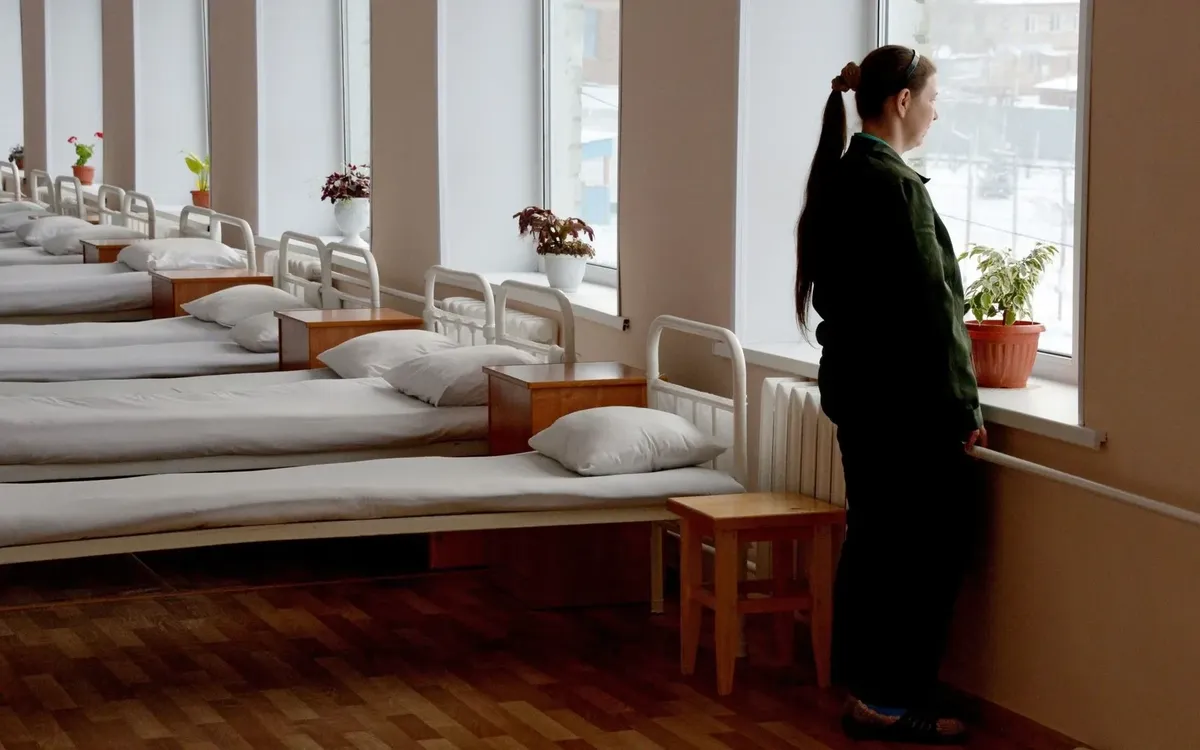
Russian prisons (according to the FSIN) contain more than 47 thousand women. Many of them remained at large parents, husbands, children - people who, after the expiration of the term of imprisonment, will be returned. Is this possible if the colony not only crosses out the present, but also falls on the future with a heavy load?
Inna
“I am 39 years old, 25 of them I use drugs,” Inna says ( name changed. - N.P. ). - After school, she began to work in a nightclub Marker, the first money appeared, and with them - pleasure. At 16, you still do not understand what is “good”, what is “bad”, but you already know for sure that “fashionable”. In the late 90s, among young people it was considered fashionable to smoke and prick.
Inna is a pretty, thin, low woman. Sports suit, sneakers, a short haircut, a calm look. She is not embarrassed by questions, Inna answers them directly and quickly:
- For the first time, I was in jail at 20 years old for the storage and use of drugs. I served for six months, went out, took up the old. Again sat on the same article and again for six months.
She freed herself in 2003, in 2005 she was convicted again, came out and was again imprisoned in 2006, then in 2009. At first the terms were small: six months, a year. And in 2010, Inna was given for three years, then-in 2016-two years ten months. In the wild, she left her mother, a disabled father, a seriously ill brother and a lifting daughter (now she is 13 years old).
- The deadline I was serving in the “tough” colony in Mordovia, all previous ones compared to it - the pioneer camp. Before the release, she seriously thought: more than half of my life - searching for a dose, an injection, buzz, a new dose, a prison. Nothing behind and ahead too. Meaningless existence. Tired! I realized that I can’t do it anymore, I'm tired.
Lisa
Elizabeth ( name changed. - N.P. ) is almost the same age as Inna, she is 40. Not only age, but fate is similar. Lisa also met drugs early - at 16, at a disco, tried with friends for the company and came to taste. “These are now the consequences of layering, but in his youth everything was fun and cool!” After the 9th grade, the girl entered the school. The family did not lack funds, so Lisa spent the scholarship as she wanted. Having learned on the baker, she began to work at the bakery. The salary to the penny went to drugs.
“And then I wanted easy money,” Elizabeth recalls, “and I began to sell drugs.” And this is the right path to the zone, because sooner or later you will get caught.
Bright, interesting, dark -haired Lisa discusses her life as a stranger. Self -justification is zero.
In 1998, she sat down for the first time under the “drug article”. Freed freely, but not for long. Friends who returned from the colony sent a stolen cell phone. An inexperienced trading was detained and condemned under the article “Fraud” for 9 months. The next period - 3 years - gave for drugs in 2003. By this time, her parents died. Lisa alone raised her son. After her imprisonment, the grandmother from her father made out custody of a two -year -old boy:
- Then I still did not understand that I was losing Mitenka. It seemed to me that this is a short separation, and we still have so many things ahead!
The parting dragged on. Today, the son is 18 years old, of which much less is lived with mom than without her. Other people became closer to the child, and Lisa does not have illusions.
“You can’t return anything and you can not fix everything,” the woman sighs. - Dima and I have for a long time established a relationship. Naturally, over the years, his son has accumulated resentment. I understand. Each child needs a mother nearby, not in prison. Now Mitya visits me, but still lives with my grandmother.
Relapse
Lisa returned from prison 8 years ago, Inna - at the end of last year.
“The release for the prisoner is the state of a person who drowned, but escaped, only lost everything,” says Lyudmila, who has been having a 6 years for murder by negligence and during this time having lost housing, family, work.
- It seems that you are alive, intact - and these are good, but there are questions around: will you be healthy and will you treat you, where to live, what, do relatives will accept, how to find a job, what to put on?
Free - will. And what else does a person out of the prison gate have? Money for the cheapest ticket to the place of residence and the output allowance - 820 rubles. Further - himself.
“Rarely, one of the former prisoners smiles good luck,” Inna enters the conversation. “Usually they fear you, they don’t believe you.” Even after the first release, I got a job as a cleaner. I didn’t even work for a month - they fired. They said directly: "Sorry, you have a criminal record."
In other places, both Inna and Lisa, with the same formulation, were refused immediately.
“As a result, they don’t take a criminal record to work, in the family, there are nales, on the neck of the rent on rent,” Lisa lists. - Failure for failure - the risk of breaking is great. You begin to use drugs again. At first you reassure yourself - “this is all once, just to relieve stress,” and then everything goes along the bent.
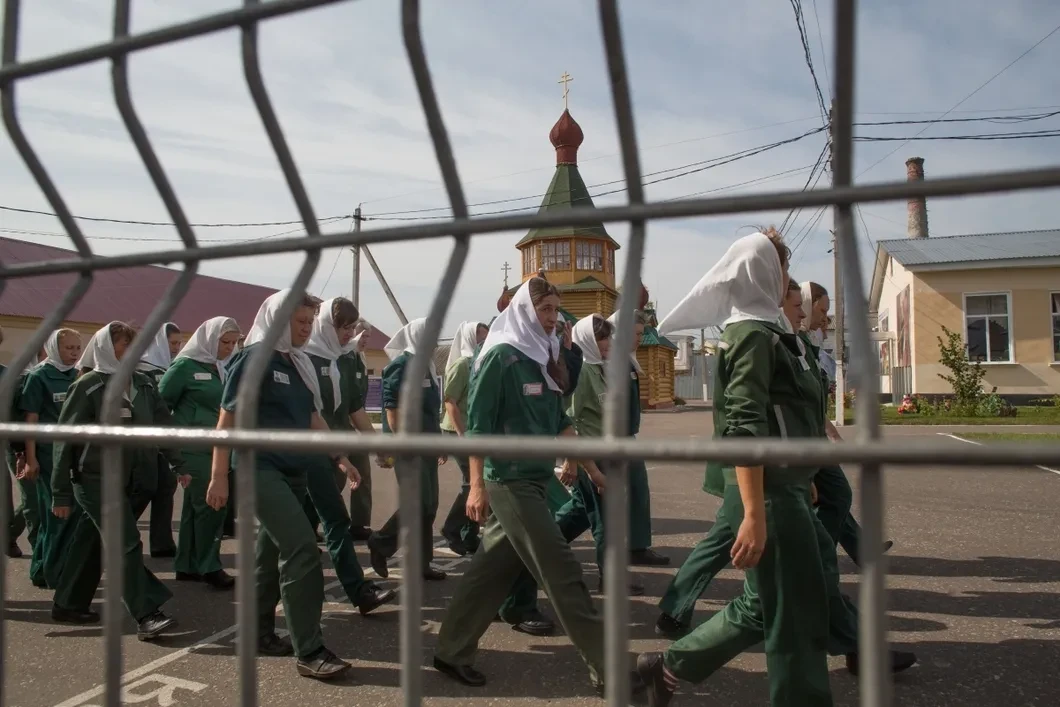
According to the Institute of Problems of Modern Society, the level of relapse among previously convicted over the past ten years has been growing steadily and now reaches 44–45% - an absolute record in the history of modern Russia. According to this sad statistics, almost every second liberated woman soon gets into the colony again. Moreover, most often women re -commit crimes in the first year after liberation. Unstability, poverty, forced isolation, a sense of hopelessness are the main causes of relapse.
“The convicted people are abandoned by the state and rejected by society,” Inna states. - Nobody needs us. Someone has relatives, someone has no. Some will not leave, feed, warm, and others have nowhere to go.
Did anyone think how many former prisoners were among the homeless? The “Home” project is hardly the only chance to return to a normal life.
Outcasts
On the eve of their last walker, Inna and Lisa learned about the interregional public organization “Doctors to Children”, whose experts (social workers, psychologists, narcologists, lawyers) have been conducting the “Home” project for several years - they have helped women preparing for liberation and liberated from the places of imprisonment, as well as their families.
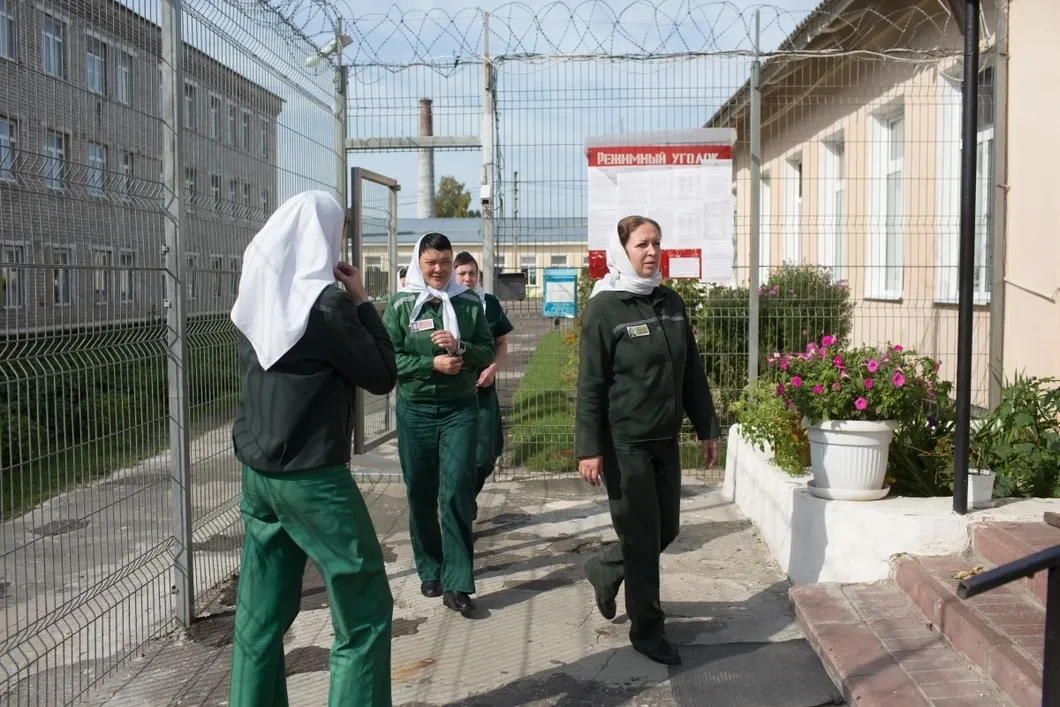
“Extend a hand to the person from whom everyone turned away is not everyone is ready,” says Konstantin Zakharov, the head of the project “home” to the “doctors of children”. - The people we help are not accepted to regret. It is more difficult to raise money on them. The “Home” project exists both for private donations ( not only monetary ones, the organizations accept clothes, toys, things, children's furniture, etc. - N.P. ), and on budget subsidies. This year we received a presidential grant for the implementation of the project not only in St. Petersburg and the Leningrad region, but also in other cities of Russia. Over the past year, more than 500 women who were released received support.
“Our ward needs both material assistance and moral support,” adds Elena Karaseva, coordinator for public relations “Doctors to Children”. - They have no money for anything. With the help of donors and sponsors, we collect food sets, clothes, and essential items for former prisoners and their families. Women who have been in prison for a long time are disoriented and need social adaptation.
Often, they are afraid of elementary things: a descent in the subway, a trip to the store, a call by phone to a stranger, etc.
“Help begins in the colonies, where we regularly conduct“ schools of preparation for liberation, ”says Social Worker Elena Efimova. - Experts meet with women, explain what documents are needed for release, where and how to collect them, where and for what help to apply for free, how to protect their rights, how not to make new mistakes.
The curators of the “Home” project helped Inna and Lisa to tie with drugs, change the circle of communication, return the trust of children and parents, find a job. Inna now lives with her mother, father and adopted daughter. Lisa recently married and gave birth to a daughter.
“In December, I was driving from Mordovia home with the mood that I would no longer return to my previous life,” Inna recalls. -Although I was a little afraid: suddenly something will happen, and I will break. But gradually she learned not to despair, completely changed the way of life: work, friends, hobbies, habits. I even think differently. And I just want to live humanly.