
Translated material
"Not all wounds are treated"
Interview with the director of the film "Dylda" about Leningrad after the blockade shown yesterday in Cannes
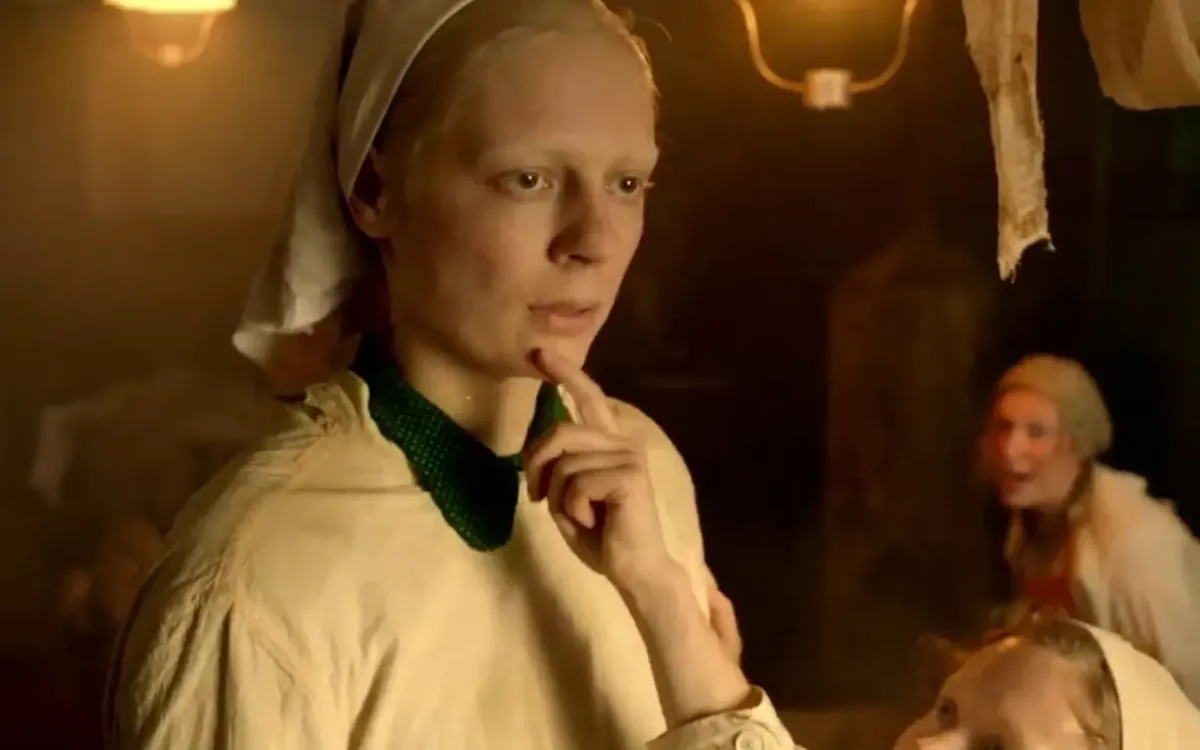
In the Cannes, the premiere of the film “Dylda” took place - about two girls crippled by the war. Larisa Malyukova talked with his author, director from Nalchik Kantemir Balagov, graduate of Sokurov's workshop.
1945. Leningrad. Time is between the war and the world. The place is between the blockade and the normal life. Two young front-line front-line soldiers are trying to set themselves to the world after a tectonic disaster-war. It turns out not very. The war dug into the stomach, flows with blood from the nose, it changed consciousness, distorted her personal life. Long, whitish, almost albino Iya (Victoria Miroshnichenko) with the amazed eyes of the donkey and with a frozen look. An awkward white heron among the scurrying nurses and nannies of the hospital. And a little strong Masha, whose eyes burn with painful fire (Vasilisa Perelygin).
Both destroyed. They are drowning, who do not wait for help from the outside. So they try to save each other's crippled friends in a crippled city. A film with an increased degree of temperature, ultra -circular plans, a well -thought -out artistic color scheme is an attempt to talk about a war with a different intonation, another cinema. The film that will cause fierce disputes, but will not leave anyone indifferent.
- You decided on a difficult one, and in our country there is also a sacred theme of war, blockade. Why?
- In me there was a significant revaluation of what happened more than seventy years ago. Like many of my peers, I had a superficial understanding of war and victory, which I perceived as a holiday with balls and salutes. It's more complicated, more painful. I read military prose, diaries, studied archives. The book of Svetlana Aleksievich “The war is not a female face” opened the whole world. I realized how little I knew about people, about the women who had this test. I tried to transfer my impressions into a movie language.
- War is always unknown. Because each of the multimillion -dollar people had its own war. This is not only operations, the movement of the fronts, but also the personal space of each - the occupied territory.
- This personal aspect was primary for me. And another space of the city. It was important to show people's attempt to return what could no longer be returned. That life with her air, which was "before." Show the damage that the war caused. Indeed, in fact, our Iya and Masha are young girls. Lost youth. Sharply matured. This is a huge irreparable, terrible gap.
- Not only those who have lost youth. All from the war are returning shell -shocked. Physically. Mentally. Emotionally. Is it possible to find a balance of peaceful life crawled out from under this giant tank? Return to yourself intact after these heavy concussions?
- Not sure. It seems to me that not all wounds are treated, dragged on. I think our heroines will come to this ... But we will not see this.
- What filmmakers did you focus on, besides Herman and Sokurov? Have you watched military cinema? There are parallels in the film - emotional and semantic - with the history of a traumatic family from the Bellocchio painting ...
- Yes, "fists in your pocket." Military cinema was a lesser to a lesser extent. Before shooting, I did not specifically watch military films. But the Cranes are “flying” Kalatozov, “my friend Ivan Lapshin” German, “Wings” Shepipiko penetrated me so much that they can unconsciously affect the register of paintings.
- The influence of Herman is felt in the episodes of a huge communal apartment with multi -sized kitchen. And at the beginning of the film, in the matte-milk stage of the hospital washing, I saw the effect of Faust Sokurov, his picturesque manner. In general, it is not clear in what time everything happens in this episode. Maybe in 1945, or maybe in the century before last.
- If in the “crowded” when working on the image I relied on photojournalism, then here with the operator Ksyusha Sereda, we tried to go into painting. The main source of inspiration is small Dutch.
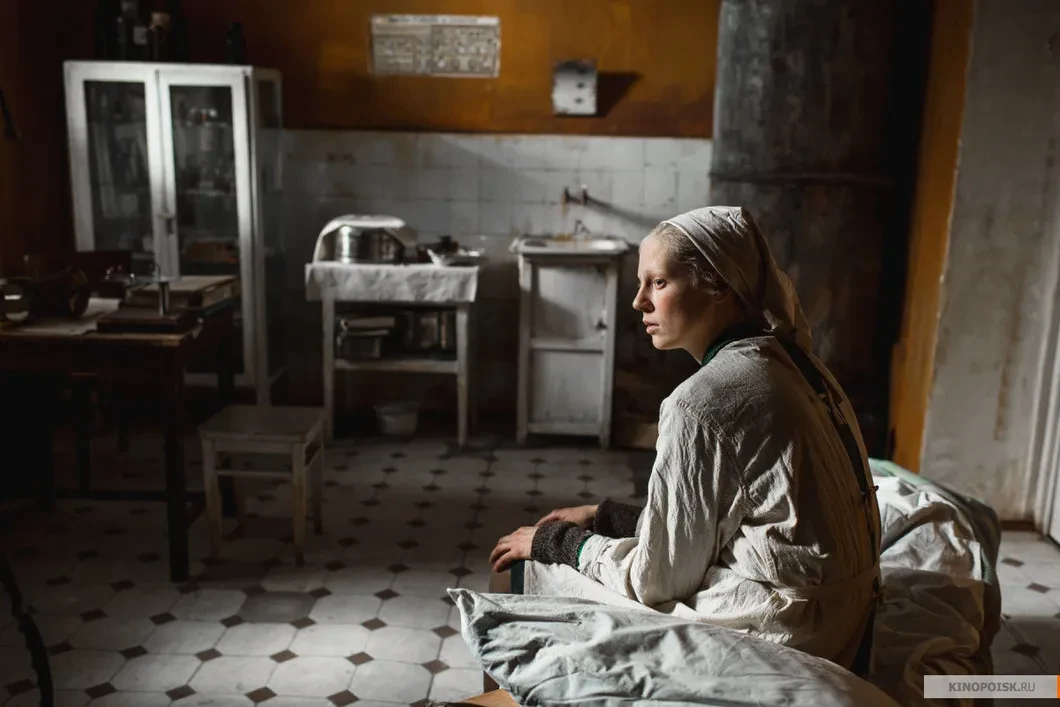
- 1945 - the burned time of the borderland. The war is crawling, but the world has not yet felt full -fledged, flies up wounds. It passes, as a high -ranking Leningrad official (Ksenia Kutepova), for peaceful rails, says in the film. ”
- In one of the diaries I read the remark that struck me:
“In the war, at least you have a goal - to survive. And after - you have to survive. This is much more difficult than in war. ”
I realized that for them “this” life was no easier than “that”.
“ In your story about the war at all temperament, the intonation is somewhat detached, different from other modern“ combat films about heroism ”. The camera carefully looks into the eyes of the heroines; “Sews” how the vein twitches on the girl’s neck, which is trampling like a bird in a fit of a shell -and -out contusion; He feels a brick warming his hands, grabbed in a stove and wrapped in a rag. How can you feel, understand a person in the mid-20th century from the 21st?
- Through literature and nothing more. It gives life experience, the exchange of life experience, the details that make up the substance of life. And internal changes occur through literature. From this - the mood, the intonation of the film, his voices, consonant. People have no time for years. In addition, monstrous fatigue has accumulated. The voice of an infinitely exhausted person sounds different: wilderness, quieter. The gait is less plastic, dry. The look is inhibited. Of course, there was an indescribable joy of the end of the war. But people were so saturated with fatigue - not everyone had enough strength to joy. I tried to convey this feeling of accumulated exhaustion in the film.
- Despite all the details of life, this movie has some conventionality, stylization. Especially in the stage with the boss, “as if Zhdanov” and his wife Lyubov Petrovna, the full namesake of Lyubov Orlova in their Dvorz house with an unearthly snow-white greyhound.
- The greyhound was needed for the looping of the story of a small blockade child, whom the wounded at the beginning of the film taught to bark: like a dog. To remember him emotionally, so that it hurts. And in the scene in the mansion there is also barking. In this episode, Alexander Mikhailovich Terekhov (writer and co -author of the script) and I tried to reflect on this. Yes, then there was class inequality. The blockade was worried in different ways. But among the highest ranks there were people who are not alien to nothing human. We did not want to condemn anyone. On the contrary, to show the community of people who fell into this long -term misfortune.
- And yet this modern movie history is about that time. Take at least an invented color scheme .
- I wanted everything to look modern, but also realistic for that time. If about color ...
Reading diaries, archival documents, letters, I realized that the time was actually not so monochrome, but color. And transport. And stalls. And people tried to let in the color into black and white life.
Therefore, I abandoned the initial idea of making monochrome cinema. As soon as you hear about historical cinema about the war, the first thing that comes to mind is “black and white”. We need things that are on the surface, to disconnect. That would be a mistake.

-You have two dominant colors: emerald green-AI and brick-rusty, the color of the dried blood-Masha.
- Yes, this is the color of the injury, the color of the wound, rust, which people and space are saturated. And in green - hope ... superficially, all this sounds when describing. But the color should have some kind of dramatic, sensual role in the film.
- Today it is necessary to find a new language in a conversation about the war. Moreover, with the new generation, for which the second world is the same as the Trojan one. But we have been rattling with weapons and aircraft on the screen, and the holiday on May 9 takes some frightening cyclopean paramilitary scope. With planes over Moscow, tanks on the streets. With the motto, “we can repeat” instead of “if only there was no war”.
- It is surprising that the parents themselves dress their children in military uniform. Consider as you want, but it seems to me blasphemous. Maybe they do not quite understand what was happening in the war with people? And God forbid, this will happen to them, with their child.
There is some kind of tragic paradox. As if everything went without a trace. No injuries. No conclusions were made. Waping with weapons, intimidation.
For what? Whom? I extremely negatively perceive such slogans, military parades. It seems to me that we must take care of sorrow on May 9. To the grief of the survivors of the dead.
- Your film recalls that, in addition to tens of millions of those killed, women and their unborn children were victims.
- Lost generations are not only those who have not returned. But those who were deprived of the happiness of motherhood and paternity. And their hypothetical descendants.
- When you compose a movie, conduct an internal dialogue with your teacher Alexander Nikolayevich Sokurov? I know that in your debut “crowded” there was the initial titer “I, Kantemir Balagov. I come from Nalchik. This story happened ... ”, which appeared thanks to the proposal of Alexander Nikolaevich. And the film gained a completely different intonation. Conference first -person appeal. Did you show him a new job?
- No. But if you are talking about internal connection, I want to hope that it exists between us. It happens that before shooting some scenes I enter a stupor ... And suddenly something helps me, there is a solution. I want to believe that this power, this understanding comes from it.

- “Testamus” is told by you as if from the inside. And in "Dylda" there is a feeling of some distance.
- Here is rather a story from a third person. In the "cramped" I talked about my small homeland, was not an observer, almost an accomplice. Included my personal experience. In “Dylda” I am an observer: I have no right to intervene in history.
- Did you think about the reaction to the film of the audience, with which you say that war is injuries, mourning, inner hell. That you do not need to "repeat" all this.
- I hope I shot an anti -war film. I don’t really believe that the movie can teach something, to change someone. It is unlikely that the cinema is able to move the established cliches formed by propaganda. And still I want to believe.
- Alexander Nikolaevich spoke of some disappointment of the results of training in your workshop. He would like his graduates to create a center of culture in Nalchik, national cinema, would be more united. It didn't work out. You didn't think to return?
- No help. I do not see interest from the government. I was recently in Nalchik. There is practically nothing changed. In my opinion, young people became less. The feeling that my peers are leaving one by one. I feel that it sucks me there, there is no way to do something. Nevertheless, I want to do the next movie about the place that I love, about the people who surrounded me. It remains only to come up with a story. It will be a modern story.