
Translated material
In 2019, real incomes of the population of the Russian Federation will continue to fall, suggest in the Accounts Chamber
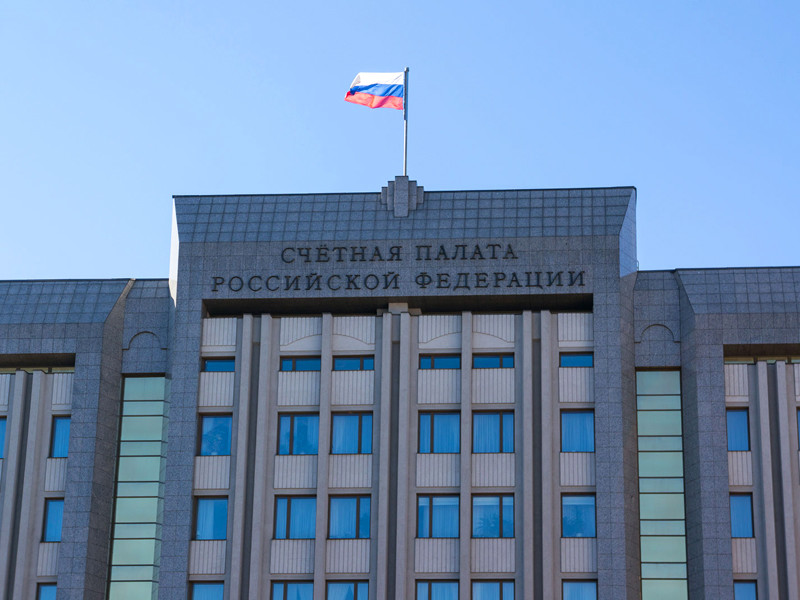
The Accounts Chamber of the Russian Federation sees the risks that the real incomes of the population of the Russian Federation in 2019 will continue to fall against the backdrop of the authorities of the plans for monetary social support of citizens, the department said TASS.
According to the Federal State Statistics Service, the real disposable income of Russians in 2018 decreased by 0.2% compared to 2017, taking into account a one -time cash payment to pensioners in January 2017.
"The real disposable monetary incomes of the population in the first quarter of 2019 compared to the first quarter of 2018 decreased by 2.3%. In order to generally record the minimum growth (100.1%), the real disposable income should grow in the second to the fourth quarter -quarter, in order to reach the level of the forecast indicator, in order to reach the level accounted for in the calculations of the federal law?
They emphasized that there are practically no grounds for optimistic forecasts. "Given the current trends and taking into account that during 2019 it is not expected to introduce new significant monetary measures of social support for citizens, there are risks of maintaining the dynamics of this indicator in the negative field," the agency’s interlocutor said.
The Ministry of Economic Development of the Russian Federation, in turn, predicts the growth of real disposable incomes of the population by 1% in 2019. In subsequent years, according to the ministry, growth will continue and amount to 1.8% for the period 2019-2022, and for 2019-2024. - 2%.
Contrary to optimistic forecasts of officials, polls indicate an increasing impoverishment of Russians who are more difficult to pay in accounts and have to “tear it away from themselves” . According to the RANEPA, among Russians passive strategies for adaptation to difficult economic conditions prevail: 81% of respondents saved, 39% were spent savings, 33% took money, 30% took a loan, 8% sold property. An active adaptation strategy - obtaining education - can afford only 13% of the population.
Earlier, more than half of the families (53%) reported that they could not cope with unexpected expenses, for example, costs for urgent housing repair or replacement of long -term items, urgent medical services. To afford to eat meat, poultry, fish (or equivalent vegetarian food) at least once every two days is not able to 10.1% of families, to use fruits at any time of the year do not have the financial capabilities of 21.1% of families.
35.4% of families have no financial opportunity to purchase two pairs of a suitable shoe for each family member. Every fourth Russian family cannot afford to invite guests to a family celebration, almost half (49.1%) is not able to go somewhere for annual weekly leave, and 11% of families do not have enough funds to buy vital drugs.
In the Kremlin, an indicator of a shortage of shoes among Russians caused only bewilderment . “I would still not be inclined to consider these studies from an applied point of view, they are more academic in nature,” said Dmitry Peskov, spokesman for President of the Russian Federation.
The income of Russians has steadily falling for the past five years. This happens against the background of stagnation in the economy and the increase in sanctions pressure. At the same time, the country's leadership does not have a clear way out of the situation, and all the work boils down to an increase in tax burden and the accumulation of reserves with the calculation of "wait difficult times" .
Unlike the population, the authorities do not spend accumulations, but rather, create them with an accelerated pace. So, since 2014, since the accession of Crimea and the introduction of the first sanctions against the Russian Federation for aggression in Ukraine, Moscow is rapidly increasing its gold reserve. In total, for 2014-2018, the Central Bank bought 1076 tons of gold, wrote an independent newspaper . In February 2019, the Bank of Russia purchased about 31 tons of gold, follows from the materials of the Central Bank. As of March 1, the volume of monetary gold reserves as part of international reserves reached 2149 tons. Russia has become a world leader in the purchase of gold, even despite the fact that it is a little -faced and expensive in storage with a monetary equivalent.
It is also characteristic that gold is purchased in the domestic market. At the same time, the state retains reserves in foreign currency. And those tools that could go on social support of citizens are spent on the purchase of precious metal.
It should be noted that developed states (for example, the United States and the EU countries) have almost no gold and foreign exchange reserves. Zoloto usually actively buy countries with a backward economy and authoritarian regimes that need a “air pillow” in case of a sharp socio-economic and political crisis.