
Translated material
I continue to read Yuri Sleykin

I read the “Government House” Yuri Sleykin, realizing in time that this book should not be tried to read in a row , that is, following the author’s presentation 1 . It is hoped that, collecting the text in the “blocks” necessary for my personal understanding, I still approached the author’s plan, and did not leave it.
However, asserting the reader's right to my own modus of perception , I nevertheless agree with the thesis fundamental for the author. First of all, this is the understanding of the structure and functions of the Socialist Party in Russia proposed by Slezkin.
The party - how it has developed in our country - is defined and described by Slezkin as a sect . Of course, such an installation itself is a strong rhetorical move, but to implement this installation “in the material” is the task of a different level of complexity. To discuss the consequences from this installation, not just erudition and not only freedom of interpretation, but a conscious rejection of ideological cliches , are needed. (Alas, we were taught to think mainly in cliche terms, so we do not really know how to do without them.)
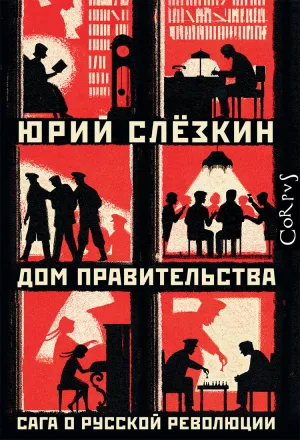
Slezkin analyzes - more precisely, dissects - cliches adopted in the authoritative texts of the historical period he studied, and does it convincingly. That is why the reader has something to think about. Indeed, from the design being postulated by the author, regarding the individual’s belonging to the sect , a certain type of personality and its relationship with the world follows - primarily in the field of ideas and value attitudes.
This work is replete with material that allows you to plunge into plots based on the actual data relatively known to us. Note that it is relative fame that often serves as a source of information to which the now resilient “reading” generation either demonstrates indifference or is content with random sets of “facts” - not significantly with which sign.
If you are not located to read the book of Slezkin in a row, I would advise to start choosing a plot regarding the fate of Tatyana Myagkova and her husband, Mikhail Poloza. Of all the places of many years of imprisonment - judging by the letters, mainly solitary - Tatyana Svolkova constantly wrote to her husband (from a certain moment also prisoner), mother -in -law and her daughter's growing up. At the same time, Softkova remained a Soviet man even in the most inhuman conditions; Accordingly, the events important for Soviet society, for example, the achievements of Soviet aviation, became such in its life.
To master - albeit partially - the complex material of the book by Sleykin, it is worthwhile for a start to “turn off” some cliches familiar from the school years and use a rich reference apparatus given at the end of volume.
Rebekah Frumkin
1 Rebeka Frumkin. Reading Yuri Sleykin // Trav-hunger No. 276 of April 9, 2019.