
Translated material
About Kolyma, about the Motherland and our fear

Artistic reality:
For or against the public?
Yuri Dud recently raised on the Internet another wave of disputes about repressions in the USSR. Someone admires his new film, and someone is deeply outraged by the Pump on the Soviet system and Stalin himself. To the indignant Zakhara Prilepin, Dmitry Puchkov and Klim Zhukov are joined by a choir of supporters who claim that there were no repression or they were insignificant, and the heroes of the film “Kolyma - the Motherland of our Fear” mislead the audience.
Of course, this film is not a documentary, but a travel film. It is not built on documents and sources, but on the set on the road and numerous interviews. The film does not explore the topic of repression, but only translates the thoughts of the author and his interlocutors about them. Therefore, Yuri Dud speaks a language that is understandable to his audience, on which the film is oriented, although this language can annoy someone. The director is accused of the fact that he and his heroes are unfounded, express opinions, and do not give facts. In part, it is - not everything in the film meets the standards for historical research. But he is not such a study. Provinging their point of view, critics strive to choose only convenient facts for themselves, not knowing how and not wanting to work with facts and sources. However, sometimes they choose information that seem completely implausible or strange to the uninitiated person. Some such plots should be commented.
Fear in the Soviet Union
Critics: “Who was afraid of something in the USSR? I generally did not close the door to the key! "
When adults begin to say: “There was no fear, everyone freely read the forbidden literature, they did not punish anyone for dissent,” - this is funny, but not funny. The concept of “Kolyma” in our mentality is firmly overwhelmed by the meaning that the Dud speaks about, and firmly entered the culture. Remember at least the immortal: "You will be in Kolyma ..."
Nothing threatened? Suppose Stalin's repressions may not remember other contemporaries, but Academician Sakharov, presumably, was exiled to Gorky to rest, but the “wrong” authors, like Solzhenitsyn or Galich, were not sent abroad to a tourist trip. And in the 1980s, healthy people still fell into psychiatric hospitals for "conversations." Freely confess religion without risking? It is publicly to say: “I am against the entry of troops into Afghanistan!” Can you imagine? You can love the Soviet past, to personally adore Stalin or Brezhnev, but the fact that the USSR was a totalitarian state with tough control of ideology and punishment for dissent is impossible to deny.
Parents said: "Do not stick out." When I retold at home the jokes heard at the school about Gorbachev and Reagan, very popular in the late 1980s, mother, member of the party, noticed: “Very funny, but do not tell anyone outsiders. Now is the wrong time, but your great -grandfather for a joke was building a white -shit. ”
On Kolyma for ice cream
Critics: “The girl treated friends with ice cream, and she for this is on Kolyma? Rave! There is no such thing. Show the girl and her business! "
This is not nonsense. I don’t know how true the story itself is about the ice cream, but any of us can easily find information about the resolution of the CEC and Council of People's Commissars of the USSR of August 7, 1932 “On the Protection of Property of State Enterprises, Collective farms and Cooperation and Strengthening Public (Socialist) Property” adopted on the initiative of the Secretary General of the Central Committee of the All -Union Communist Party of Bolsheviks I.V. Stalin. This is the same “law on three spikelets” (aka “Law on five spikelets”, the law of “seven eighths”, “law from the seventh-eighth”, the Decree “7–8”), according to which the ice creammate was convicted.
This law tightened the punishment for crimes related to public and state property. According to it, for the theft of collective farm and cooperative property, as well as cargoes in transport, execution was provided. In mitigating circumstances, he could be replaced by imprisonment for a term of at least 10 years with confiscation of property. In cases of the protection of collective farms and collective farmers from violence and threats from the “Kulak elements”, imprisonment for a term of 5 to 10 years was provided. In mild cases, it was possible to get only three years. Convicts under this law were not subject to amnesties. It would seem that what is it? He stole a wagon of state felt boots, leaving barefoot a thousand conquerors of Siberia - suffer a severe punishment. Because of the enemy, people froze their legs, why regret him? Let the forest falls now for 10 years. Maybe a small overkill, but what can you do: harsh times are harsh punishments.
But in reality, the law was not applied at all. In less than a month later, Stalin himself was indignant at how and for what was punished by this decree, and on September 1, 1931, by his decision, a special commission was formed. To mitigate cruel punishments, the categories of the stiffers and punishment measures were established, painted in the “Instructions for the application of the Resolution of the CEC and the Council of People's Commissars of the USSR dated 7.VIII.1932”.
However, this did not stop the punitive car. On February 1, 1933, the resolution of the Politburo was issued, which demanded to stop the court under the law of August 7 "persons guilty of small single thefts of public property, or workers who committed thefts of need, in case of insignificance and in the presence of other mitigating circumstances." No, it was not anti -Soviet who came up with what small crimes were punished too cruelly.
It is not so easy to drive out of the jinn bottle back. On December 11, 1935, the General Prosecutor of the USSR A. Ya. Vyshinsky turned to the Central Committee, the SNK and the CEC with a note, in which he reported that these requirements were not fulfilled, and proposed to make a new decision, now about the revision of the cases of convicts under this law. Showing the brutal absurdity of its application, he cited examples: “According to decree on August 7, a whole family was convicted for the fact that it was engaged in the removal of fish from the river flowing past the collective farm ... The accountant of the collective farm Alekseenko for a careless attitude towards agricultural welfare, which was expressed in a partial abandonment of the inventory after repair under the open air, sentenced by the Narsud under the law of 7/ VIII 1932 by 10 g/s. At the same time, it was completely not established for the inventory to receive complete or partial unusual (d. Narsud of Kamensky r. No. 1169 18/II-33). ”
And here are the same spikelets: “Narsud 3 sections of the Shakhtinsky district 31/III 1933 sentenced the collective farmer Ovcharov for the fact that“ the latter gained a handful of grains and ate due to the fact that he was very hungry and depleted and did not have the strength to work ”... under Art. 162 of the Criminal Code to 2 g/s. ” Two years of camps for a handful of grain! Not Solzhenitsyn wrote this, not Shalamov, but the prosecutor of the USSR Vyshinsky in 1935.
Finally, on January 16, 1936, the decision of the CEC and the Council of People's Commissars of the USSR “On the verification of the affairs of persons convicted by the decision of the CEC and the Council of People's Commissars of the USSR of August 7, 1932”, according to which it was necessary to verify the correct application of this law “in relation to all persons convicted before January 1, 1935”.
In the memorandum of the completion of the revision of cases addressed to Stalin, Molotov and Kalinin, which Vyshinsky presented on July 20, 1936, it was said that more than 115 thousand cases were verified, and more than 91 thousand cases were recognized as incorrect. 37,425 people were immediately exempted from imprisonment.
Let's talk this again: the prosecutor of the USSR, the Politburo and personally Comrade Stalin agreed that 80% of the convicts under this law were punished incorrectly and excessively. The cases of several thousand executed according to this law were not revised before the start of the audit.
The enemy is not asleep!
During the Great Terror, every day in the USSR, an average of a thousand people were killed, innocent and inconsistent. Their innocence was obvious to every more or less reasonable person, but the murder was not easy to stop.
Critics: “Yes, they repressed. But only for the matter, exclusively enemies, spies and counter -revolutionaries who resisted. Indeed, in 1937-1938, due to the conspiracy of traitors, the fate of the USSR hung in the balance. The internal enemy was ready to destroy all the achievements of the new state. In fact, there was a civil war. ”
War, say? According to the confirmed documents of the calculations, in two years of the Great Terror of 1937-1938, 680 thousand people were executed. Losses are really like in war. For comparison, in the Soviet-Finnish war, the Red Army lost about 120 thousand people from all reasons, and the Wehrmacht on the Soviet front reached 670 thousand killed only by the end of September 1942. The irretrievable losses of white forces in the civil war, according to some estimates, amounted to about 600 thousand people.
But if during the war, 680 thousand people were destroyed with the “enemies of the people”, then how many NKVD employees died in this war? Not at all. During the arrests, almost no one resisted, despite the rumors of the "firing generals." If during the period of collectivization and dispossession someone else took on the cut and attacked activists, then then people hoped until the last that “soon the mistake would be clarified” and they would be released.
By our sins
Critics: “They can’t just plant it. Korolev probably didn’t have a deadline in vain. At first he wrecked, and in the camp he took up the mind, and see what successes he achieved. And the father of Efim Shifrin is also surely to blame. His son will justify in every way. What do we know? "
We know the main thing - both Sergey Pavlovich Korolev and Zalman Shmuilovich Shifrin in 1956-1957 were rehabilitated by the decision of the Military Collegium of the Supreme Court of the USSR in accordance with Soviet legislation. Soviet criminal law defined rehabilitation as "restoration in the previous state of an innocent person who was prosecuted unreasonably." So, Korolev and Shifrin-father, and hundreds of thousands of people were rehabilitated with the wording "for the lack of corpus delicti." The same state admitted that they were initially innocent.
Spies are everywhere
Critics: “Zalman Shifrin was convicted as a Polish spy. How do we know, maybe he really spied. To spy in the USSR, you do not need to know the Polish language. ”
Spying is a very frequent sentence. During the years of repression, hundreds of thousands of people were convicted of him, from peasants and workers to government members (by the way, Beria was also shot for espionage). These accusations were often completely absurd, but the “Polish spies”, which became a victim of older polonophobia, stand out even against the backdrop of large -scale spyingomania in the prewar USSR. Relations between Poland and the young country of Soviets were initially tense, the Polish government considered the communism of one of the main dangers and was afraid of a new war. In Poland, as in any other country, there were intelligence services, and of course, real Polish, German, Japanese, English and other spies and agents were present in the USSR. Sometimes they were also caught.
But if you look at the statistics of sentences, it turns out that for the period from 1935 to 1939, on charges of espionage in favor of Poland, 101,965 people were convicted! Most of them were shot. You can imagine that at least one country in the world could recruit so many spies and agents, especially relatively small and poor Poland? She could not: according to the declassified archive of Polish intelligence, the entire state of foreign residency in 1938 was about 200 people for the whole world.
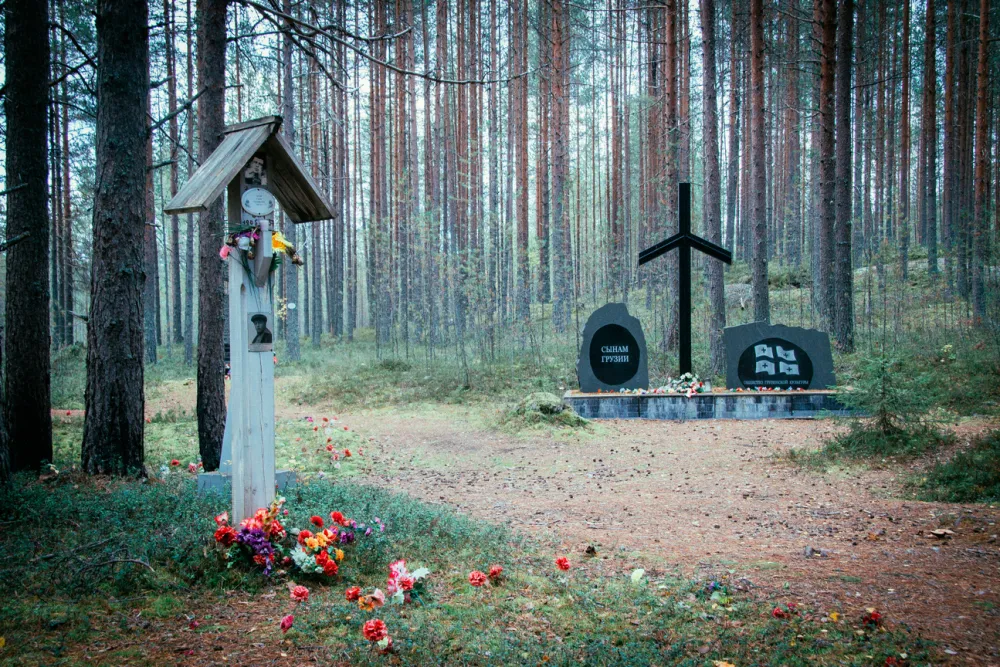
Photo by P. Shelkovnikov
Dissidents against the system
Critics: "About the repressions against the innocent, everything was invented by the damned Solzhenitsyn, dissidents who hate the Soviet system, and the traitors that Stalin did not give."
Some believe that absolutely innocent people were spoke about executions and sending to the camps only in the 1960s. But no, everything was clear almost immediately. What Vyshinsky spoke of lawlessness that was created according to the "Law on Three Spikelets" is written above. But the events of the 1929-1930s-a kindergarten compared to the campaign of great terror in 1937-1938. For two years, only about 680 thousand people were shot.
Every day in the USSR, an average of a thousand people were killed, innocent and inconsistent. Their innocence was obvious to every more or less reasonable person, but the murder was not easy to stop.
However, immediately after the resignation of the People's Commissar of the NKVD Yezhov and the arrival of Beria, the mass release of the arrested still unrequited. In 1939-1940, from 100 to 200 thousand people were released. They were simply released by lifting all the charges. Yezhov himself was shot, including on charges of a factory of cases of innocent, but mass revision of cases was no longer carried out.
Feeling the concessions, party figures began to criticize investigators for the use of torture. For example, the first secretary of the Central Committee of the Communist Party of Belarus Ponomarenko demanded that the head of the Republican NKVD of Sysedkin remove from the performance of the official duties of all employees who took part in the beating of the arrested. However, he replied that "if you go along this path, then it is necessary to remove 80% of the total of the NKVD of the BSSR from work and put on trial." But Stalin decided that such simple and effective methods cannot be neglected. On January 10, 1939, the secretaries of the regional committees and the leadership of the NKVD was sent the Stalin’s encryption -telegram, which practically demanded the use of physical impact measures (see on the right on the right).
<...>. The Central Committee of the All -Union Communist Party of Bolsheviks explains that the use of physical impact in the practice of the NKVD has been allowed since 1937 with the permission of the Central Committee of the All -Union Communist Party of Bolsheviks. At the same time, it was indicated that the physical impact is allowed as an exception, and moreover, with respect to only such obvious enemies of the people who, using the humane method of interrogation, brazenly refuse to give the conspirators, do not testify for months, try to slow down the exposure of the conspirators who remained in the will of the will, therefore, continue to fight the Soviet regime in prison. Experience shows that such an attitude has given its results, far accelerating the work of exposing the enemies of the people. <...> It is known that all bourgeois intelligence applies physical impact in relation to representatives of the socialist proletariat, moreover, they use it in the most ugly forms. The question is why socialist intelligence should be more humane in relation to avid agents of the bourgeoisie, sworn enemies of the working class and collective farmers. The Central Committee of the CPSU believes that the method of physical impact should necessarily be applied in the future, in the form of an exception, in relation to the obvious and unarmed enemies of the people, as a completely correct and appropriate method. <...> 1 (the original is stored in the archive of the President of the Russian Federation)
1 AP RF. F. 3. Op. 58. D. 6. L. 145-146
When people were required after the German attack, in the first months of the Great Patriotic War, about 600 thousand people liberated their imprisonment. This amnesty did not concern convicts for counter -revolutionary crimes. But among others, for example, students of craft and railway schools and schools of factory education, convicted for violation of discipline and unauthorized departure from the school were freed. That many people are sitting at all nonsense was obvious.
After the war, a new wave of terror began, not so massive, but striking with its senseless cruelty (see information about the murder of Solomon Mikhoels). The affairs of "Leningradskoye", "Aviation" and many others began. Mass terror and, in particular, the case of “killer doctors”, who promised to turn into large-scale cleaning, stopped the death of Stalin on March 5, 1953.
After Stalin
Beria, having become the head of the Ministry of Internal Affairs of the MGB, already replaced almost all the leaders of the Ministry of Internal Affairs in all union republics and in most regions of the RSFSR on March 19, 1953 and began to turn repression. He published:
- Order on the creation of commissions on the revision of the “doctors' case”, a conspiracy in the MGB of the USSR, Glavvardender of the USSR Ministry of Defense, and the MGB of the Georgian SSR. All defendants in these cases were rehabilitated in two -week periods.
- An order to revise the "aviation case". Within two months, all his defendants were completely rehabilitated and restored in positions and ranks.
- A note to the Presidium of the Central Committee of the CPSU on an amnesty. On its basis, the Presidium of the CPSU Central Committee on March 27, 1953 approved the Decree “On Amnesty”, according to which 1,203,000 people were to be released from the places of conclusion, as well as terminating investigative cases in relation to 401,000 people .
- A note to the Presidium of the Central Committee of the CPSU “On the rehabilitation of persons under the“ doctors' case ”. It admitted that the innocent largest figures of Soviet medicine were represented by spies and killers, and, as a result, objects deployed in the central press of persecution on anti -Semitic grounds. The case from the beginning to the end is the provocative fiction of the former deputy MGB of the USSR Ryumin, who, having embarked on the criminal path of deception of the Central Committee of the All -Union Communist Party of Bolsheviks (b), to obtain the necessary indications, secured Stalin’s sanction to use the measures of physical impact to the arrested doctors - torture and brutal beating. The defendants in the case were rehabilitated, Ryumin was arrested.
- A note to the Presidium of the Central Committee of the CPSU on bringing to criminal liability of persons involved in the death of S. M. Mikhoels and V.I. Golubov.
-The order "On the prohibition of the use of any measures of coercion and physical impact to the arrested." Последующее постановление Президиума ЦК КПСС «Об одобрении мероприятий МВД СССР по исправлению последствий нарушений законности» от 10 апреля 1953 года гласило: «Одобрить проводимые тов. Берия Л. П. меры по вскрытию преступных действий, совершенных на протяжении ряда лет в бывшем Министерстве госбезопасности СССР, выражавшихся в фабриковании фальсифицированных дел на честных людей, а также мероприятия по исправлению последствий нарушений советских законов, имея в виду, что эти меры направлены на укрепление Советского государства и социалистической законности».
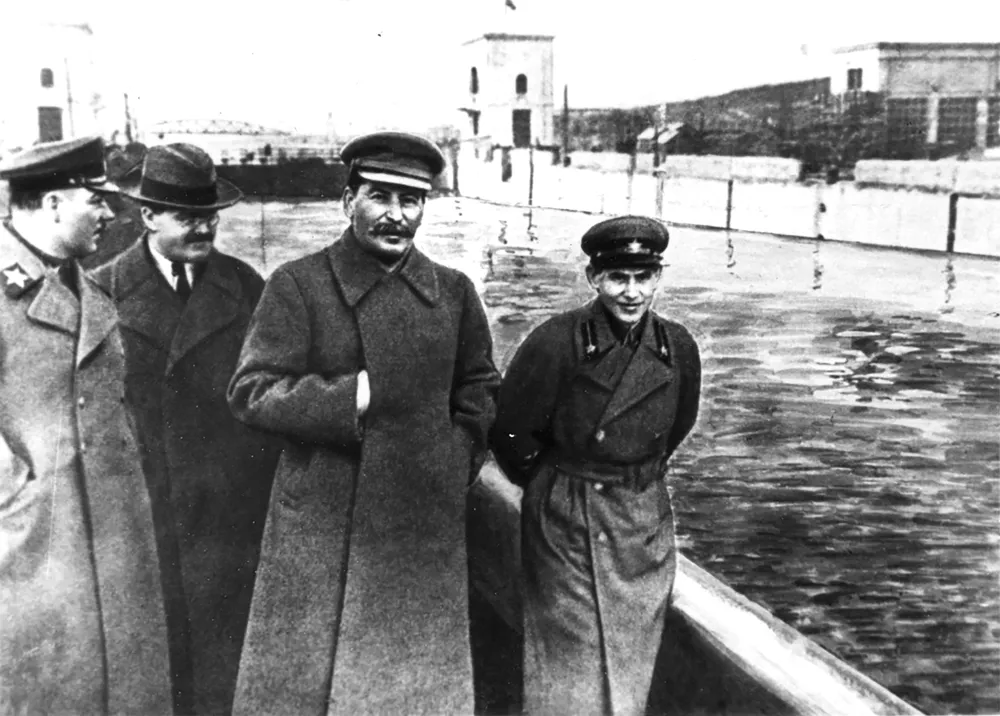
Факты и документы доказывают, что сталинские репрессии — жестокая реальность
Rehabilitation
Обратите внимание: стоило лишь Сталину умереть, сразу начинают пересматривать дела, запрещать пытки, отпускать арестованных и готовить амнистию. Возглавляет это Лаврентий Берия, многолетний вернейший соратник Сталина, а Центральный комитет партии поддерживает и одобряет. То есть все всё знают и понимают. Самого Берию эта деятельность, однако, не спасла. Вскоре он и его соратники были арестованы и казнены как шпионы, организаторы репрессий и враги народа.
С 1954 года началась массовая юридическая реабилитация. В 1954–1961 годах за отсутствием состава преступления были реабилитированы 737 182 человека и еще 208 448 было отказано. Государство фактически сказало: «Извините. Мы посмотрели и поняли, что вы невиновны. Ошибочка вышла — претензий к вам больше не имеем».
Потом режим снова ужесточился, дела стали рассматривать реже. С 1962 по 1983 год были реабилитированы только 157 055 человек , отказы получили 22 754 человека .
С приходом Горбачева началась новая волна пересмотров. В 1988–1989 годах были рассмотрены дела на 856 582 человек , из которых реабилитировано 844 740 человек .
А с 1991 до 2004 года было рассмотрено еще 970 тысяч заявлений и реабилитировано свыше 630 тысяч человек.
Всего примерно 2,5 миллиона человек были официально, юридически признаны «необоснованно привлеченными к уголовной ответственности, невиновными лицами».
Pavel Kolosnitsyn