
Translated material
Controlled braking
National projects will prevent a recession, but this will not help the income of citizens: the opinion of the economist
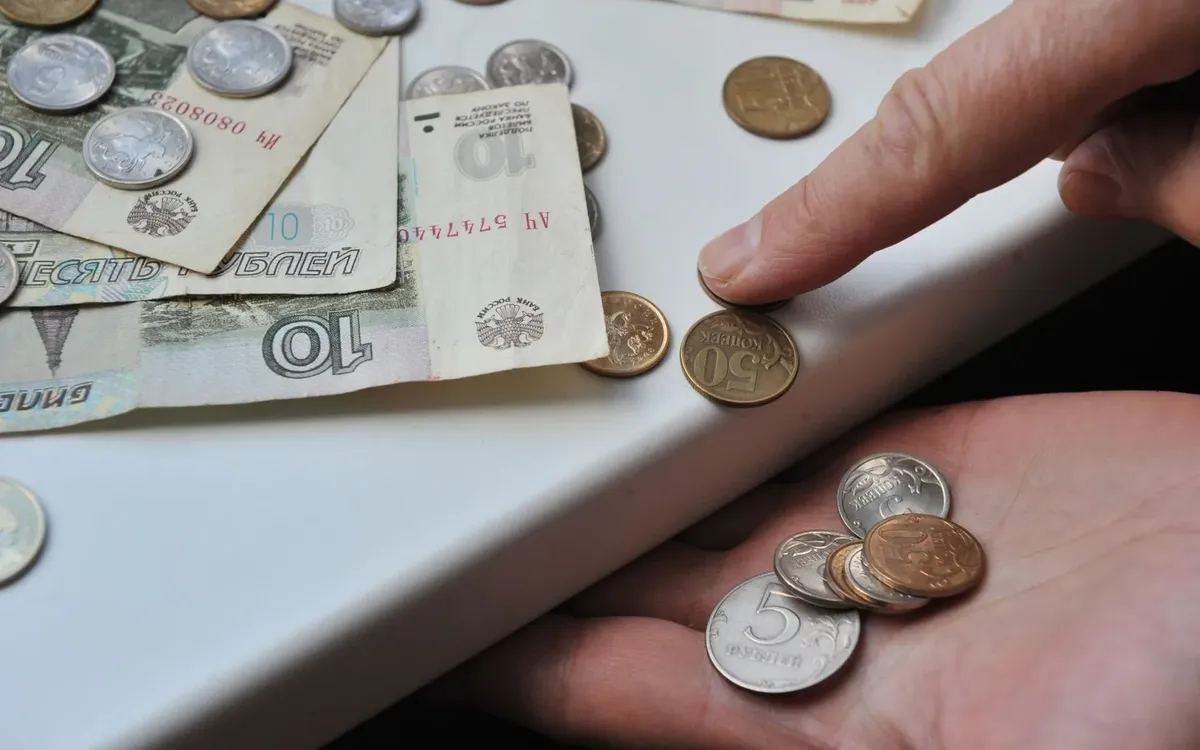
Data on Russia's GDP in the first quarter showed a completely expected slowdown in the growth of the Russian economy. Two factors worked: the growth of VAT (the process of adaptation of the economy will require at least a quarter) and an extremely tough budget policy (budget surplus - 665.9 billion rubles, or 2.7% of GDP). That is, the state collected money in the form of VAT growth, but spending them in no hurry, has been accumulating reserves.
The further dynamics of the Russian economy will mainly depend on government departments: if they grow, then the pace of economic growth and vice versa will grow.
This state of affairs is a logical consequence of the state -owned economy, which is approaching the Soviet level: the share of the state is over 70%
(In the USSR, the collective farm and cooperative form of property was formally considered non-state). With such a structure of the economy of other growth drivers, except for government departments, it is simply not visible.
Until 2014, which largely became a turning point, a simple and understandable dependence was observed in the Russian economy: oil prices caused proportional growth. This dependence lasted almost from the collapse of the USSR until 2014. This period reflected the functioning of a very simple model of economic growth, which can be called the “Restois-raw” model, when the economy was tightened after growth, first of all, oil prices.
However, the stormy geopolitical events of five years ago led to a revision of the relations of global investors to Russia. The outflow of capital increased radically, and the assessment of potential risks of investing in Russia has increased greatly. Investors replaced speculators. The planning horizon has sharply reduced. Investment decisions began to be made for purely tactical considerations: interest rate and ruble exchange rate.
So far, the level of interest rates in Russia is very high (much higher than in developed countries), and the ruble is stable, foreigners will be invested in Russian sovereign bonds. Carrie Trade (earnings on the difference in interest rates) is a rather powerful factor in maintaining the stability of the ruble. However, the behavior of speculators a priori is not a factor in stability, rather the opposite: it is speculators who most often violate it.
The problem is that maintaining economic growth only due to building state expenses is very costly. And the very ability of the state to form reserves is greatly dependent on the level of oil prices.
It is worth it to fall or restrictions on the Russian export of oil, and the state will not only lose the opportunity to form reserves, but also encounter such a formidable phenomenon as a budget deficit. However, while in the global oil market there is no excess of offers comparable to Russian exports (and it will take a lot of time to create such an excess of capacities), this can not be afraid.
Large accumulated reserves - both budget, due to the surplus and international ones, which exceed external debt - can easily avoid technical recession. Most likely, a small, dosed growth of government departments (probably through national projects) will be produced, and it is in such a volume that the country's GDP does not go into minus.
This is important, since the recession would provoke speculators to get out of Russian assets (public debt sale, shares discharge, strong pressure on the ruble). Such a scenario is extremely undesirable, and since it is not difficult to avoid it, it is very likely that measures will be taken, and the recession will not happen in the near future.
However, as they say, do not confuse your wool with the state.
The lack of recession is not a guarantee of the growth of the well -being of citizens. Money from the national projects almost does not go into an ordinary economy: only a strictly selected and very narrow circle of firms is allowed for their implementation.
These same firms are implemented by national projects, they also earn on this. The renewal to a regular economy is limited to the salary of employees of these companies, which, as a rule, is small compared to the cost of the national projects themselves. This means that the tendency to reduce the real income of citizens, which started five years ago, will continue further.
Sergey Khestanov, economist, - especially for "new"