
Translated material
"Tigers" against "al-cadia"
What is happening in the Syrian Idlib, where the most fierce battles have been going on lately
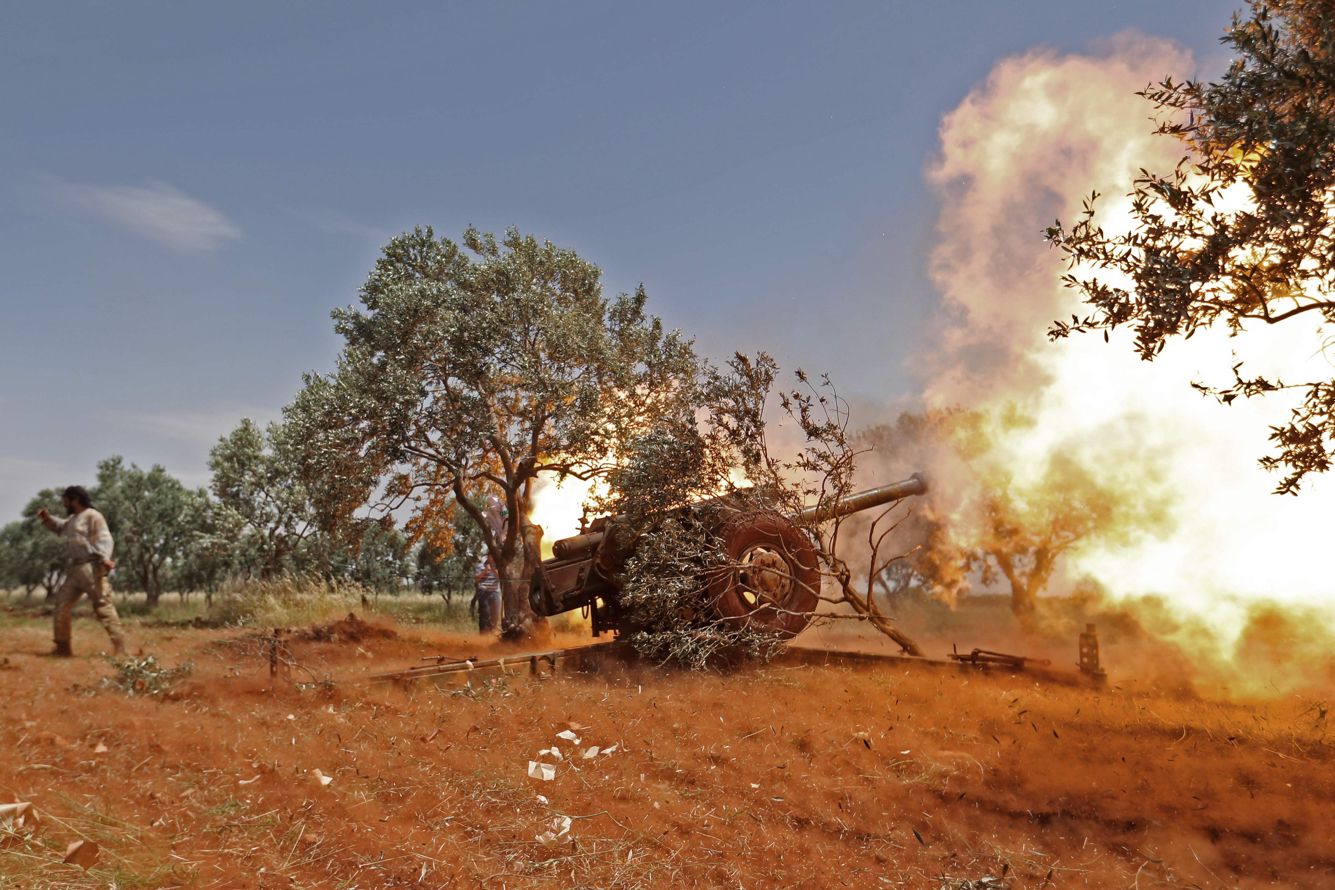
In May in Syria, the largest battle began over the past year: government forces are trying to destroy the last stronghold of the Islamists in the province of Idlib. So far, the situation is not very successful for Damascus-the opposition led by the HTS movements (collaborates with Al-Kadya) has passed into the counter-offensive. "Medusa" says that it caused a new exacerbation of the Syrian crisis and what is the alignment of forces in the region.
With whom are the Syrian authorities fight Idlib?
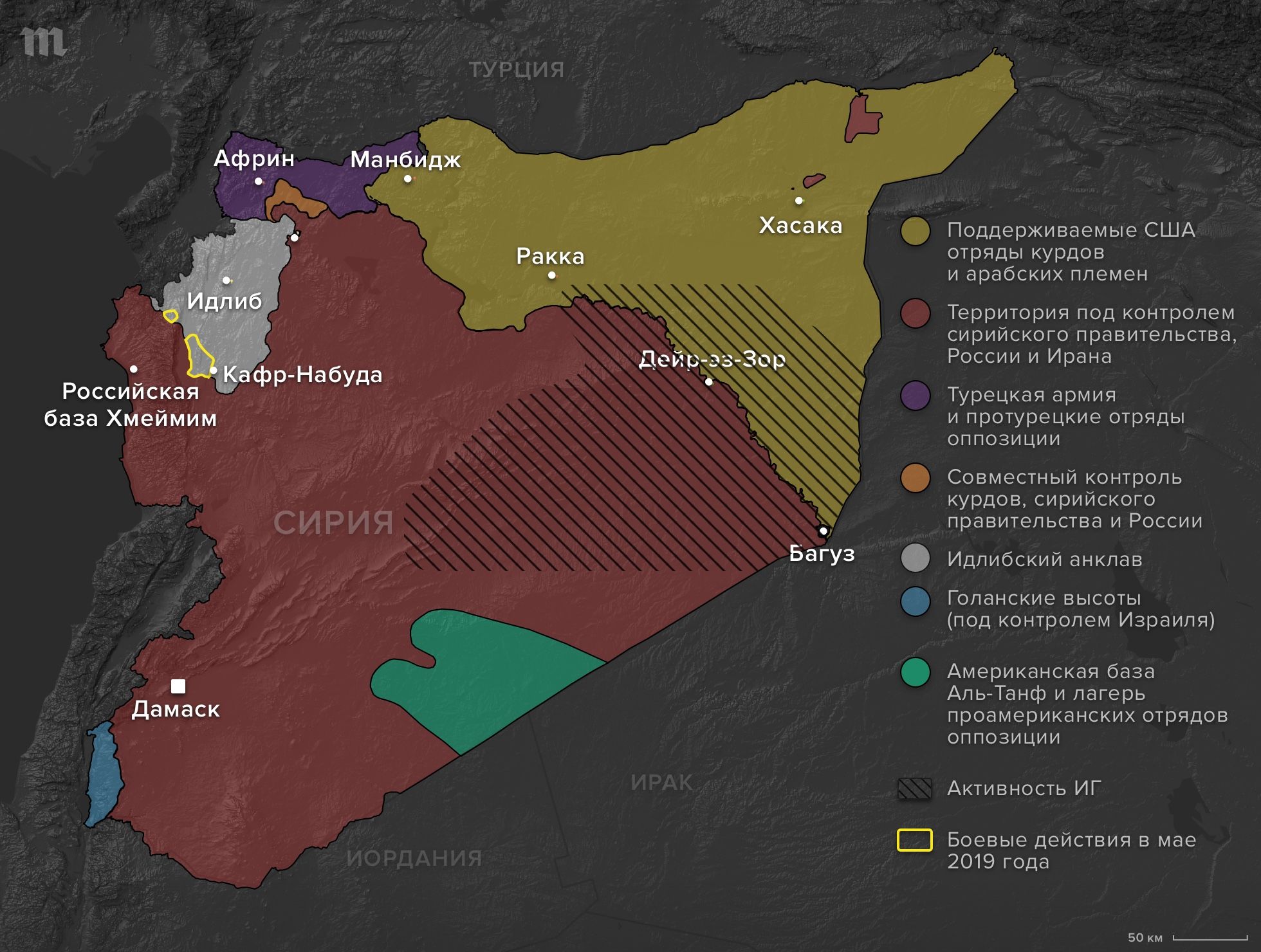
Idlib is a province in the north-west of Syria, which borders on Turkey. The region was captured by the opposition during the battles of 2015, when the Syrian army suffered a severe defeat there. Even then, the opposition movement consisted of various forces-from the former military to the Islamists who collaborated with Al-Keda, and before that with the Islamic State. When Russia entered the war in the fall of 2015, it immediately took part in the battle on the borders of Idlib - exactly in the same area where hostilities are underway now; Then the offensive ended in failure .
In 2016 and in 2017, the opposition coalition, which was based in the Idlib enclave, consisting of al-Kedi branches, militants from the North Caucasus and Central Asia, Uyghurs from China (Islamic Party of Turkestan), as well as “moderate” Syrians who were guided by Turkey, suffered several defeats: they were knocked out of the largest of the largest. The cities of Syria Aleppo and the coastal province of Latakia , their forces were twice defeated while trying to advance deep into the province of Ham. But the core of movement in the Idlib province itself remained untouched and it became the main center for all people - regardless of ideology - which opposed the authorities of President Bashar Assad.
Since then, the forces of the Idlib coalition only grew: each offensive of government forces in other areas of Syria ended that the government concluded an agreement with the militants to surrender heavy weapons and sent them on buses to Idlib . So there were several tens of thousands of militants and hundreds of thousands of refugees.
In early 2018, government troops began an offensive in the east of Idlib and after a few weeks of heavy battles were able to break through the defense of the HTS and the opposition detachments. However, the offensive was unexpectedly stopped after negotiations between Turkey and Russia; The government managed to capture only about a quarter of the province. Then Russia, Iran and Turkey agreed on the demilitarization regime in Idlib and Northern Hama. Under the terms of the contract, Türkiye pledged to arrange its observation posts in the province and cleanse it from HTS and other radical Islamists; “Moderate” oppositions were supposed to take part in negotiations on the future of Syria after that.
Despite the presence of Turkish observers, the HTS by force cleared Idlib of a moderate opposition; They were forced to evacuate on the territory of Northern Syria, controlled by Turkey. There was a coalition of the "moderate" opposition of NLF . Russia stated that the conditions of a truce in Idlib are not fully executed. Turkey promised to “take measures” against HTS, but did nothing. The authorities in the province finally passed to the HTS militants and the Islamists sympathetic to them from other organizations.
From Idlib, HTS continued to take a break from volley installations and attack the Russian base “Khmeimim” in Latakia and controlled by the city government in the boor of the Russian base. Russia and Damascus applied air strikes on the positions of Al-Kedi militants. Since the beginning of the year, it has been announced many times that the operation to destroy Islamists in Idlib is inevitable. Türkiye and Western countries opposed the operation.
Damascus decided to finally knock the Islamists from Idlib? What are the results of the operation?
It is not known - the objectives of the operation were not declared. The scope of the offensive was still insignificant: for example, in May only the Shrivey Army of the Tiger Syrian army came, almost without the participation of other units; Russia supported the Tigers with air strikes and the actions of special forces . The offensive is on the front of the next to the Russian base “Khmeimim”-in the area of the al-Gab valley on the border of Hama and Idlib and in the mountains on the border with the province of Latakia. It was from these areas that the Islamists fired at the Russian base. That is, the operation may be limited to creating a security zone for the base.
In the mountains of Latakia, government forces did not succeed , but in Al-Gaba they managed to capture the city of Kafr Nabud in early May, advanced a dozen kilometers along the valley and recapture the first attacks of the Islamists, breaking out several tanks and destroying several dozen HTS fighters. Further the offensive was stalled, and a new truce was announced for three days. You can see a map of the offensive of the Tiger forces here .
By the 20th of May, the detachments of moderate oppositionists from the territory controlled by Turkey sent reinforcements to Idlib. Together with them, perhaps , anti -tank missiles and shells for volley fire systems came from Turkey. After that, the Islamists and their “moderate” allies went on a counterattack to the Kafr-Nabudu and took most of the city after two days of heavy battles. On the morning of May 22, government troops, fearing the encirclement , left the city. At the same time, the colonel of the Tiger forces was captured . The Islamists managed to knock out several government tanks on the outskirts of the Kafr Nabuda. The Russian Ministry of Defense reported that during the battle, Islamists lost 140 people killed. The counterattack map is here .
After that, the Islamists again fired at Khmeimim volley fire installations, and their drones attacked the airport and a power station in the boom with home -made bombs. The power station received damage, but was quickly restored.
So, the offensive of the Syrian troops failed?
No, such a development of events is typical of the last years of the Syrian war. The government struck, then waits for the opposition to pull up all reserves and even retreats, losing important positions, but then, with the support of airstrikes on these reserves, goes into a general offensive; So it was in 2016 in Aleppo and in 2018 in the east of Idlib.
Russian and Syrian planes and artillery after the loss of the Kafr Nabuda began shelling all the surrounding cities; On May 23, government helicopters scattered leaflets over Idlib with an appeal to the population to evacuate until the inevitable offensive is soon.
The offensive is hindered by adverse conditions of the terrain. Immediately behind the Kafr Nabuda, low mountains begin, where the Islamists have equipped defense for years. Until now, all the advance of the Syrian army has been choking at the foot of the mountains: the opposition, using their positions on the hills, each time with counterattacks pushed government forces.
A large international policy can be observed to continue the operation: the situation in Syria depends on the position of Turkey and the USA, which oppose the seizure of Idlib. On May 23, the US State Department said that the “progress on Idlib” was reached in negotiations with Russia.
What do Russia, Türkiye and USA achieve
Russia wants to oust from Syria and ensure the safety of its bases in Latakia. At the same time, Moscow still would like to solve the problem of Idlib, without quarreling with Ankara. Russia is also trying to agree with Turkey on the rules for the use of its armed forces against the Kurds in Syria.
Turkey is concerned that in the event of a full -scale war in Idlib, a new stream of refugees will pour in the country (more than three million people live in the province). But most of all, Ankara is caring for Kurdish formations in Northern and Eastern Syria, which support the United States. The Turks consider them supporters of the Kurdish Workers' Party operating in Turkey (considered a terrorist organization).
The United States would like to preserve the opposition Idlib in order to leave a counterweight to the Syrian government and Iran. But the main thing for them is to preserve the independent Kurdish territory in the east of Syria, which now does not allow Iran to establish a reliable message with the Mediterranean coast of Syria and Lebanon. Therefore, the United States cannot allow Turkey to attack the Kurds. Therefore, American troops are still in Eastern Syria, despite the promises of President Donald Trump to bring them out. Ankara and Washington have been negotiating from last year on how to solve the Kurdish issue peacefully - for example, to hand over part of the Kurdish territory on the border with Turkey.
Damascus used chemical weapons in Idlib?
It is unknown. The fact that “militants are preparing provocations using chemical weapons” have been reported several times over the past month by Russian military and officials. Last week, members of the Islamic Party of Turkestan, who defend themselves in the sparsely populated mountains of Latakia, announced the attack using chlorine; They did not present any details and documentary evidence. A few days after that, the United States said that weapons might have been used; If this is proved, the answer will be "immediate." The Russian Ministry of Defense called these statements "the political cover of the desperate attempts of terrorists to shake the situation in the Idlib de -escalation zone."
What does the Islamic State do?
After the final defeat in the Euphrates in the winter of this year, the Islamic State passed to the partisan war. The militants arrange ambushes and burn crops in Iraq and Syria.
Dmitry Kuznets