
Translated material
It is too early to bury one Europe
Even right -wing populists, having increased the representative office in the new composition of the European Parliament, removed the slogans about leaving the EU
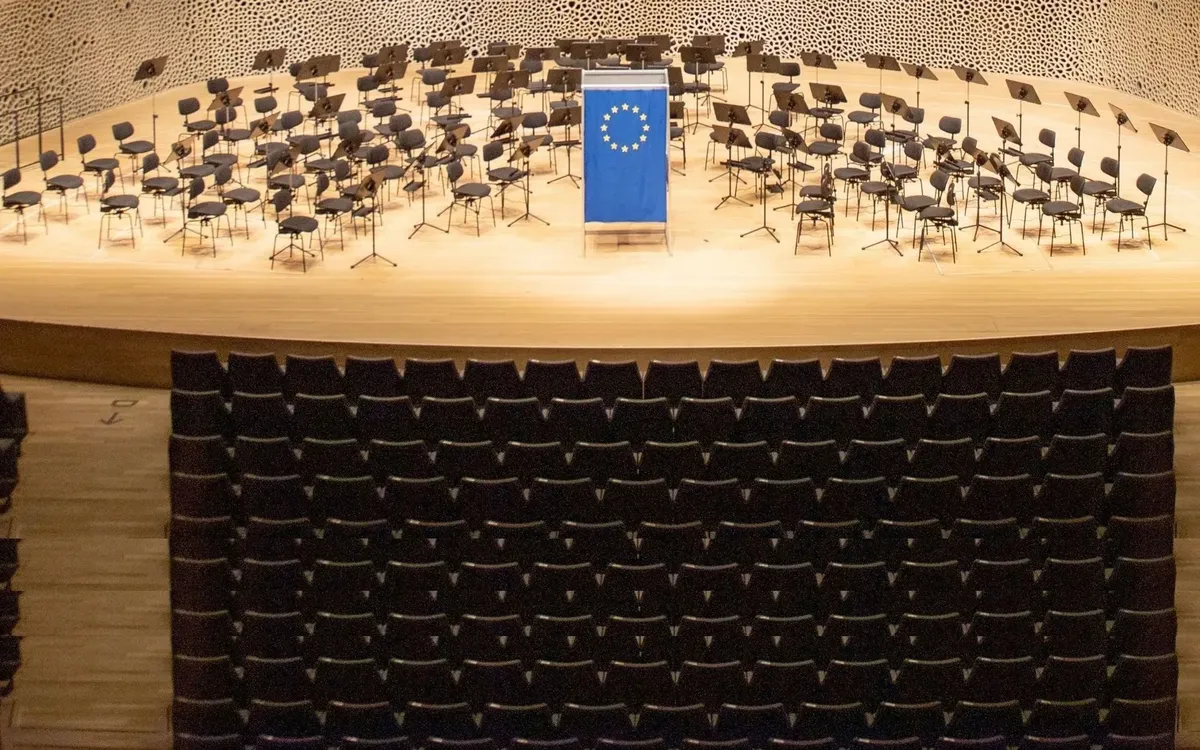
The amphitheater of plenary meetings of the European Parliament in Brussels from the evening of Sunday turned into a press center, just like the halls of Anna Politkovskaya, Jehudi Menukhin, Anna Lind and wide corridors, where the journalists of dozens of television companies made points for standpers. Preliminary data on voting in 28 countries of the European Union appeared on a huge screen. Most of them were expected and calculated by political scientists (for example, the victory of the right populists in Italy and France). But there were some surprises.
When the first summary data of Ecci-Pols on the square in front of the Luxembourg Station appeared, exclamations were heard: “Europe has returned!”. There, before the European Parliament, supporters of the strengthening of a united Europe, like sports fans at a large championship, arranged a camp with tables under tarpaulin awning and buffets with beer and snacks. Waving with the blue gold -star flags of the EU, they welcomed the victory of the pro -European democratic parties, despite the significant rise of nationalist and populist.
Elections to the European Parliament do not change presidents and government. Emmanuel Macron will not resign, although his Renaissance party, however, with a minimal score, lost the championship Marine Le Pen. The same leaders of states elected in their national elections will make decisions on summits in Brussels, and the implementation of these will also be provided by the EU bureaucratic institutions from representatives of the political mainstream.
But the 2019 European political landscape has shown the elections to the European Parliament of 2019. Europe is on a fracture. It is no accident that citizens showed increased interest in them. For the first time in 20 years, the turnout reached 51%.
There was a feeling of a breakthrough of the ultra -right, which mobilized the electorate of pro -European forces. What conclusions can be drawn from the results voted in space with a half -billion population?
First of all, Europe turned out to be very different, citizens of different countries put priorities differently and cast votes to the relevant parties that formulate them. So, if in Germany the Social Democrats performed, to put it mildly, it doesn’t matter, then their single-party socialists won convincing victories in Spain, Portugal, the Netherlands and took second place after the right-wing populists in Italy. Even in two parts of one country, Belgium, voter preferences are different to the opposite. The Flemish North chose nationalists - moderate and not very. The franco -speaking south voted for the socialists.
Traditional parties, which in post -war Europe replaced each other at the helm, noticeably weakened the former influence. In Germany, the HDS/XSS Angels Merkel with some losses retained first place. But the Social Democrats rolled up on the third, and the second pantally occupied the "green". Every fourth German younger than 30 years voted for them. In recent months, a wave of youth demonstrations for the more active actions of governments to protect the environment and in the Borba with a climatic change has swept through Europe.
Even less enviable fate among traditional parties that ruled in France. The first place in the National Association Le Pen is almost a par with him a new party - the Renaissance Macron. And the recent owners of the country - Republicans and Socialists - far behind.
Sarkozy and Hollande will be forgotten soon. Their electorate ran to Le Pen, Macron, partially to the "green" and radically left.
The access to the stage of new parties is a trend. Old Europeans are tired of, because they cannot solve the most pressing problems. There are at least some hope for new ones.
Parties, which are considered to be far -right, nationalist, populist, Euro -digital, advanced significantly more than the extreme left -wing, communist sense.
If the party Marine Le Pen in France showed a convincing result in the last elections to the European Parliament five years ago, then the League Championship of Matteo Salvini in Italy (almost 29%) has become a phenomenon. The electorate of the party Silvio Belskoni (“Forward, Italy”) passed to her, which this time did not reach 10%. Democrats returned to politics, who in past national elections suffered a crushing defeat. Now they are the second, only a little yielding to the League.
In the north of Belgium, the Flemish Interest “Flemish interest” rushed forward. But the “alternative for Germany”, which grew out of the migration crisis, retreated in fourth place, barely gaining 11%.
Populistic parties called in the wake of the migration crisis. His solution is really the main problem that concerns Europeans. It needs to be solved by everyone, and this is in the center of the agenda. So far, only in Germany voters switched to other priorities, considering migration not by the most urgent care.
Populists offer simple solutions to any difficult issues, and this is pretty to the layman who is tired of enduring. Therefore, in their ranks there are many "friends of Putin." He, they say, cuts out complex nodes, without a strong -willed technique, without incomprehensible people in politics, democratic procedures and developed by the European establishment on the experience of dozens and hundreds of years of such concepts as rights, individual freedoms and tolerance.
In crisis time, longing for a hard hand appears. And the leaders of the populists promise her.
It is not for nothing that Salvini chose the same balcony for his election performance on which the chronicle captured the speaker Mussolini.
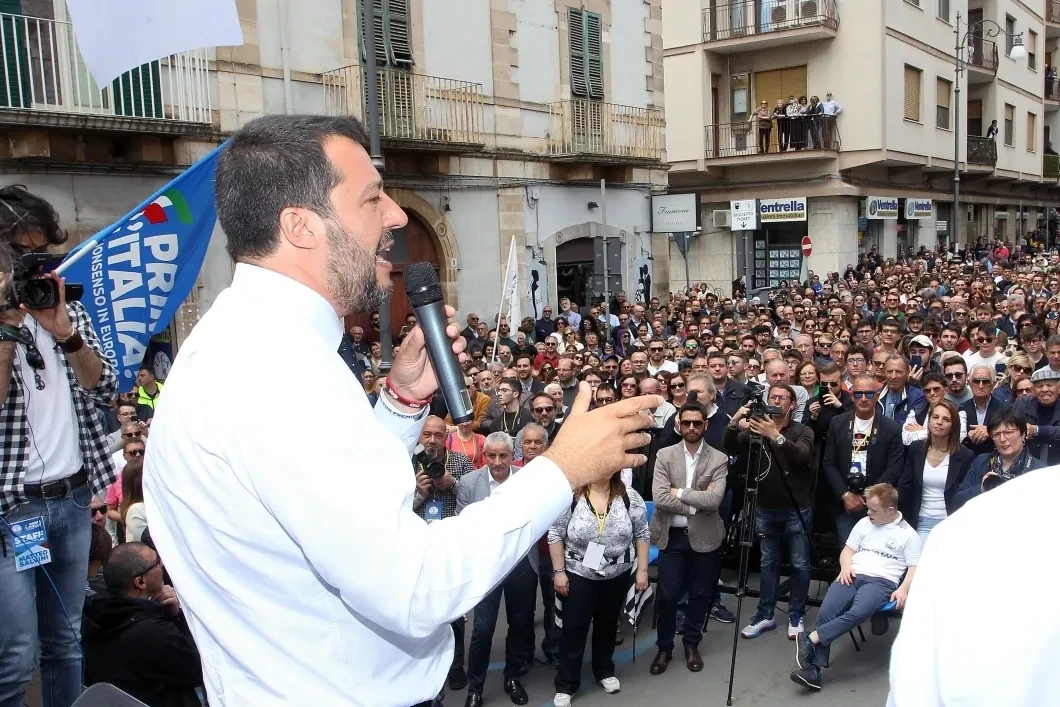
The League leader is not only against migration, but also intends to withdraw Italy from a difficult economic situation, insists on a sharp reduction in taxes in violation of the EU budget rules. Italy has a high level of unemployment, especially among young people, business runs from the country. "League" blames the EU.
The ruling in Greece radically the left batch of Siriza Alexis Tsiprase also came to power, promising to end the "dictate of Brussels." But her “unsystematic” leader was soon forced to accept the conditions of the EU and the Navy for saving Greece from bankruptcy. There was no alternative. In the elections to the European Parliament, the Tsipras party lost to traditional legal entities (“New Democracy”).
And most importantly. Elections showed that the European Union is too early.
No serious political power wants his end, even with his actions objectively weakening him.
Populists in France, Italy and the Netherlands for the sake of winning the election shot slogans about the withdrawal of their countries from the EU.
Salvini does not agree with the label of Euroskeptics. “It is now Europe is ruled by EuroSceptics,” he said, promising that parties like the League will build a truly united Europe of free nations.
Hungarian prime minister Viktor Orban, whom the EU accuses of violating the principles of democracy, celebrates victory. His party Fides left far behind all opponents. But he does not set the purpose of leaving the EU. Like other leaders of the countries of Central and Eastern Europe. Membership in the Union is profitable. And President Andrzej Duda, representing the National Conservative Party “Law and Justice” (PIS), which was very negative to Brussels, proposed to record Poland membership in the EU in the country's constitution.
The composition of the European Parliament will become more diverse, which promises to make it a place for even more lively discussions.
As before, the European People’s Party (UNP), uniting the party of the right center , will be the largest faction. She receives 182 places (out of 750) , losing 32 places compared to past elections.
The socialists , the second largest faction, according to the latest data, - 147 seats (lost 39 mandates).
Liberals and democrats, thanks to the infusion of “fresh blood” in the person of the Renaissance movement, French President Emmanuel Macron receive 109 mandates , and become the third political force.
In conditions when the first two lose their usual majority, the adoption of important decisions depends on the liberals configured to reform and strengthen the EU. And the former will not be blocked from ultra, but by liberals. And also with the "green" , which made a breakthrough in Germany and in a number of countries. They expect 69 mandates .
The ultra -rights increase their representativeness in the European Parliament. But do not imagine this as "the triumph of the extreme right."
Despite tectonic changes in some countries, the “average hospital temperature” has not changed so much.
- The European and Freedom faction, in which there will be deputies from the Le Pen and Salvini parties, receives 58 votes. Another Euroskepic faction “Europe of Freedom and direct democracy”, in which the Italian “five stars” and the scandalous Briton Nigel Faraj with his “temporary” party “Brexit” will have 54 places. That is, EuroSceptics, having disagreements among themselves, will receive about a quarter of places together. In the outgoing composition, they had 20%. But then more. Most likely, the United Kingdom will leave the EU on October 31 together with the deputies.
And when Faraj leads his people from the assembly, only memories will remain from the breakthrough of Eurosceptics.
The strengthening of liberals and “green” can lead to the fact that the EU leadership will carry out a tougher line in the regulation of “dirty” industry, taxation of transnational corporations or will become more demanding on trading partners, preferring more accommodating in terms of climate change. Pressure on EU members may increase, especially in the East, so that they strictly comply with democratic principles and human rights. Liberals and “green” are tougher than traditional parties are approaching present -day Russia and European sanctions against it and, quite likely, will be able to balance “Putin's friends” from the ultra -right camp.
The next stage after the election is the selection of candidates for the heads of the EU institutions. It is expected that the leaders of the Member States will complete in June the appointment of the successors of the chairman of the European Council Donald Tusk, the head of the European Commission Jean-Claude Junker and the head of the EU diplomacy Federica Mogherini.
Brussels