Translated material
Tuva gold for a Swedish playboy
In the fourth year of a full-scale war against Ukraine, foreign companies continue to operate in Russia, including in the mining industry. One of them is the Swedish Auriant Mining, which mines gold in the Republic of Tyva and also provides “support to SVO participants” through a local company it owns.
How a Swedish company manages to remain in Russia, having beneficiaries from Europe and the UK, is in a joint article by the publications “Asians of Russia” and From the Republics.
In 2021, the High Court of London considered the high-profile divorce case of former model Alesya Haskell and millionaire Preston Haskell.
Alesya Haskell, a style consultant from Belarus, filed for divorce in 2016. As a result of many years of proceedings, the court ordered Haskell to pay his ex-wife more than 5 million pounds (about 530 million rubles), despite his statements about debts and lack of liquid assets.
How is Haskell connected with gold mining in the Republic of Tyva?
Directly. This is one of the sources of his enrichment.
The divorce proceedings shed light on the real extent of the businessman's fortune. Alesya's lawyers proved that Haskell is still rich and leads a luxurious lifestyle - for example, he visits his vineyards in South Africa and regularly posts photos from there on social networks.
British tabloids also reported that the businessman called his now ex-wife a “gold digger,” hinting that she married him and gave birth to three children for selfish reasons.
"Playboy with dual citizenship"
In 2004, in the capital of the Republic of Tyva, the city of Kyzyl, the Tardan Gold company was registered.
According to the statutory documents, its parent organization was and remains the company Auriant Mining, registered in Sweden. The foreign origin of Tardan Gold is not hidden - in addition to having supporting documents, company representatives openly talk about this in interviews with journalists.
Preston Haskell owns almost 52% of Auriant Mining through the Cyprus company Bertil Holdings Ltd.
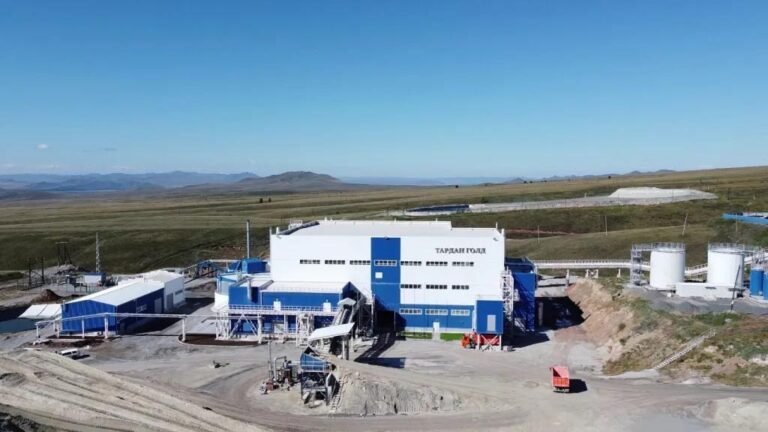
Gold recovery plant "Tardan Gold", Republic of Tyva.
For Haskell, gold mining in the territories of the indigenous peoples of Russia is one of his main financial interests.
The son of an American tycoon, he lived in Russia since the early 1990s and developed business projects, mainly related to real estate.
He entered the gold mining industry back in the 2000s: before purchasing shares in Auriant Mining, he was the main shareholder of the New Mining Company, which was engaged in gold exploration and mining in the Trans-Baikal Territory.
In 2008, Haskell stated:
“Over the past decade, I have established contacts at the highest levels of Russian politics and business and feel comfortable in this environment. My American ancestors spent many years mining coal in the United States, so mining is in my blood.”
Swedish newspaper Expressen describes him as a "playboy with dual citizenship." Having renounced his US citizenship, Haskell acquired a Saint Kitts and Nevis passport in 2010.
In addition, Haskell is a citizen of Sweden, which became a source of problems for the businessman when the authorities of this kingdom accused him of tax evasion. Today, his debt to the Swedish tax authorities is estimated at 330 million Swedish kronor (more than 2.8 billion rubles).
In addition to Haskell, the owners and beneficiaries of Auriant Mining are mainly citizens of the European Union and the UK. For example, Swedish businessman Per Ahlgren owns 25% of the shares.
The company's board of directors is headed by British Lord Peter Greenall, 4th Baron Daresbury.
Gold rush
In the first half of the 19th century, a gold rush began in northern Asia: the Russian Empire allowed nobles and merchants to mine gold in the newly “annexed” - and in fact seized - lands.
In 1857, the authorities allowed gold mining in Tyva (then Uriankhai region), although the region was not formally part of Russia. At that time, exploration and gold mining could only be carried out by Russian nobles and merchants, who sent their people there. The indigenous population did not have the right to independently mine and sell gold - only to participate in mining under the leadership of the colonialists.
As for the sale of gold, it freely went to Russia or China, since until 1928 in Tyva there was no body directly controlling its production and sale.
After the annexation by the Soviet Union in 1944, artels operated in Tyva for several more years, which could hand over the mined gold to the state, but since the 1960s, gold mining finally came under monopoly control from Moscow.
The arrival of Auriant Mining in Tyva was a rare case for the region of the appearance of a foreign investor after the collapse of the USSR.
“Usually, strategic deposits were controlled by Russian government agencies or businessmen, but here we were talking about private foreign capital,” recalls Eres Kara-Sal, a former deputy of the Supreme Khural (parliament) of Tyva.
According to him, Auriant Mining believed in the prospects of Russia and took the risk of investing in one of the poorest regions of the country.
“The company invested about 4 billion rubles in infrastructure construction alone, which, by Tuva standards, was a colossal investment,” recalls Kara-Sal.
By 2020, Tardan Gold became the second largest taxpayer in the republic - that year the company contributed 177.6 million rubles to the budget.
However, the company’s relations with both local authorities and the population of the republic were not always smooth. In 2019, Tardan Gold's license was temporarily suspended due to the fact that the company did not take “necessary measures to reduce the negative impact on the environment.”
Three years later, the Arbitration Court of the Republic of Tyva ordered the company to pay 80 million rubles, including for contamination of the soil on the territory of one of the company’s fields with sulfate ions.
Relations with local residents did not work out due to the fact that Tardan Gold for a long time preferred to primarily hire visitors from other regions of Russia.
In 2008, local media wrote that Tyva residents made up only 30% of the company's employees. This figure has risen to 59.6% by 2024, but critics within the republic insist that the population of Tyva is still a loser.
At the same time, the Republic of Tyva occupies the penultimate place in the ranking of Russian regions in terms of material well-being and 79th place in the ranking in terms of unemployment rates. 20.4% of the population of Tyva lives below the poverty line - this is the second to last figure in the country.
“Tardan Gold and the like only hire Russians because of the Sayans, they don’t hire ours,” a local resident wrote about the Tardan Gold company in a public post on Vkontakte in May 2025.
After the invasion of Ukraine
“Our board of directors, when this whole situation began to develop, naturally gathered for an extraordinary meeting,” is how Ekaterina Babaeva, Auriant Mining’s deputy general director for legal affairs, describes the first days after the start of Russia’s full-scale invasion of Ukraine in February 2022.
“I must say that our directors in the Swedish company are all Europeans too. They looked at each other, nodded to each other and said that we continue to work: our employees there should not get hurt, production should not stop,” she continues.
Babaeva shared this story in a long interview with the Moscow Lawyers YouTube channel, which she gave together with the director of the company’s legal department, Olga Shugaeva, in August 2024.
Having received less than a thousand views at the time of publication of this material, the interview reveals the inner workings of Auriant Mining - including how the Swedish owners did not even consider the option of exiting the Russian market.
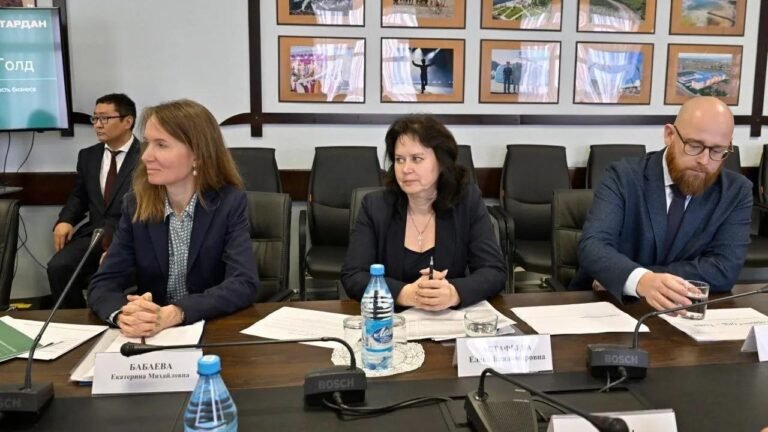
Ekaterina Babaeva (at the table, left) attended a meeting of representatives of Auriant Mining and Tardan Gold companies with the head of the Republic of Tyva Vladislav Khovalyg in November 2025. Photo: telegram channel of Vladislav Khovalyg
This is reflected in the press release that Auriant Mining issued on March 10, 2022 - the company's first public statement since the start of the full-scale invasion.
In it, the Swedish company used the term “military operation in Ukraine,” following the narrative of the Russian government, which calls the invasion of Ukraine a “special military operation” (SVO).
Auriant Mining stated that gold mining in Tyva continues uninterrupted, supplies have not stopped, and the entire stock produced until the end of February has already been sold.
In addition to the deposit in Tyva, Auriant Mining also mines gold in the Trans-Baikal Territory, and holds a license to develop a deposit in Khakassia.
The Swedish company neither closed nor sold any of these enterprises. The press release only said that from now on the company would sell all its gold within Russia.
“As new sanctions and counter-sanctions emerge, the full impact of the situation will become more clear in the coming weeks. The company will continue to monitor developments and take additional measures to reduce risks,” the company concluded in a press release.
As the further actions of Auriant Mining and Tardan Gold show, all the “risk reduction” measures on the part of these companies were aimed only at rapprochement with the Russian authorities and their official agenda - even after the European Union introduced a ban on the import of Russian gold in the summer of 2022.
It got to the point that in February 2024, the director of Tardan Gold, Vadim Khaltaev, received gratitude from the authorities of the Republic of Tyva for “providing sponsorship for the needs of the Northern Military District.”
“The assistance was truly comprehensive - assistance in the delivery of humanitarian supplies to the front lines […], the purchase of vehicles and much more,” this is how the local publication Tuva Online described the “charity” from Tardan Gold and other companies in Tuva.
Eight months later, Tardan Gold received another award related to the invasion of Ukraine - this time the subsidiary of the Swedish company took second place in the republican competition “for the best organization of military registration”
Sanctions?
Despite the continuation of gold mining in Russia and participation in supporting the Russian army, no sanctions were imposed on Auriant Mining by the European Union or the United States.
According to journalists from the specialized publication Mining SEE, Auriant Mining’s actions may fall under EU Council Resolution No. 833/2014 - it limits the export to Russia of equipment that can strengthen its production capacity, including in the field of gold mining.
However, journalists from Asians of Russia and From the Republics were unable to find evidence that Auriant Mining imported any equipment into Russia after 2022.
The company operates in a kind of gray zone of international law - without selling anything outside of Russia, it, at first glance, does not violate anything. Moreover, Auriant Mining has undergone a so-called “delisting”—or exit—from the Nasdaq First North Growth Market, where it had been selling its shares until February 2025.
Anti-corruption expert, director of the Arctida center Ilya Shumanov confirms that if a company does not export gold outside of Russia, then there is no risk of falling under sanctions.
The expert also notes that sanctions risks from European authorities are unlikely in general: the EU, as a rule, does not impose sanctions against companies with European registration.
“American sanctions are more significant for this project. There is a risk of being subject to sectoral sanctions, since mining activities are subject to increased risk from OFAC (US Treasury Department's Office of Foreign Assets Control). Therefore, any company operating in the mining industry may fall under secondary sanctions (these are sanctions against third countries and companies that continue to do business with Russia - approx. AP and FtR),” the expert believes.
However, in 2024, two events occurred that may indicate Auriant Mining’s attempts to establish international trade - the company opened branches in Serbia and the United Arab Emirates. Representatives of the company openly stated this in the same interview with the Moscow Lawyers channel, in which they admitted their reluctance to leave the Russian market.
Full interview with Babaeva and Shugaeva on the Moscow Lawyers channel.
Both Serbia and the UAE regularly appear on the list of countries through which Russian companies manage to circumvent sanctions after 2022, but the mere fact of registration of legal entities there is not enough to prove any violations.
Since both branches of Auriant Mining are new, there is no data yet recorded on what they trade and in what volume.
Representatives of Auriant Mining did not respond to a written request from journalists from Asians of Russia and From the Republics for this material.
Meanwhile, Preston Haskell continues to move regularly between the European Union and Russia. Living in Italy, he makes regular trips to Russia even after the start of a full-scale invasion.
According to information from leaks that journalists from Asians of Russia and From the Republics received from colleagues from the Organized Crime and Corruption Reporting Project (OCCRP), in February and March 2023 Haskell flew between Moscow and St. Petersburg, and in July of the same year he flew to Moscow from Turkish Bodrum. In October 2024 and November 2025, Haskell was part of the delegations that met with the head of Tuva, Vladislav Khovalyg.
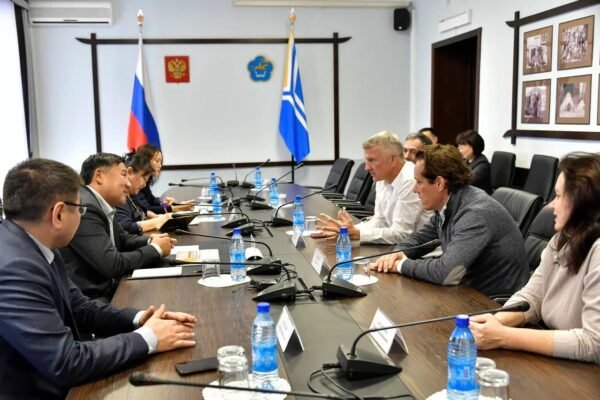
photo: telegram channel of Vladislav Khovalyg
“Tardan Gold expressed its readiness to support the IV International Buddhist Forum in Tuva, which will be held in August 2026. “As part of the forum, the company proposed inviting Hollywood actor Steven Seagal as a special guest,” wrote, among other things, Khovalyg’s press service following the meeting on November 8.
Haskell's tax evasion lawsuits continue to this day in Sweden, where he is now suing the company that provided him with financial advice. Having lost his case in Stockholm District Court in early October, Haskell is considering filing an appeal, according to Expressen newspaper.
While the court hearings were going on, Haskell regularly attended them, which allowed Expressen journalists to ask him questions directly in September 2025, including about business in Russia.
“Investments in Russia have not yet brought me any return. I hope one day I will still get it and be able to leave the project,” Haskell said, while refusing to answer the question about the ethical side of doing business in Russia against the backdrop of the invasion of Ukraine.
Instead, Haskell's lawyer intervened in the conversation with reporters and showed them on his phone a list of foreign companies that continue to operate in Russia:
“You can find other Swedish companies there too”
Worked on the material:
Editor: Bektur Iskender.
As well as editors and journalists of the publications “Asians of Russia” and From the Republics, who wished to remain anonymous for security reasons.