
Translated material
Flying over a stork nest
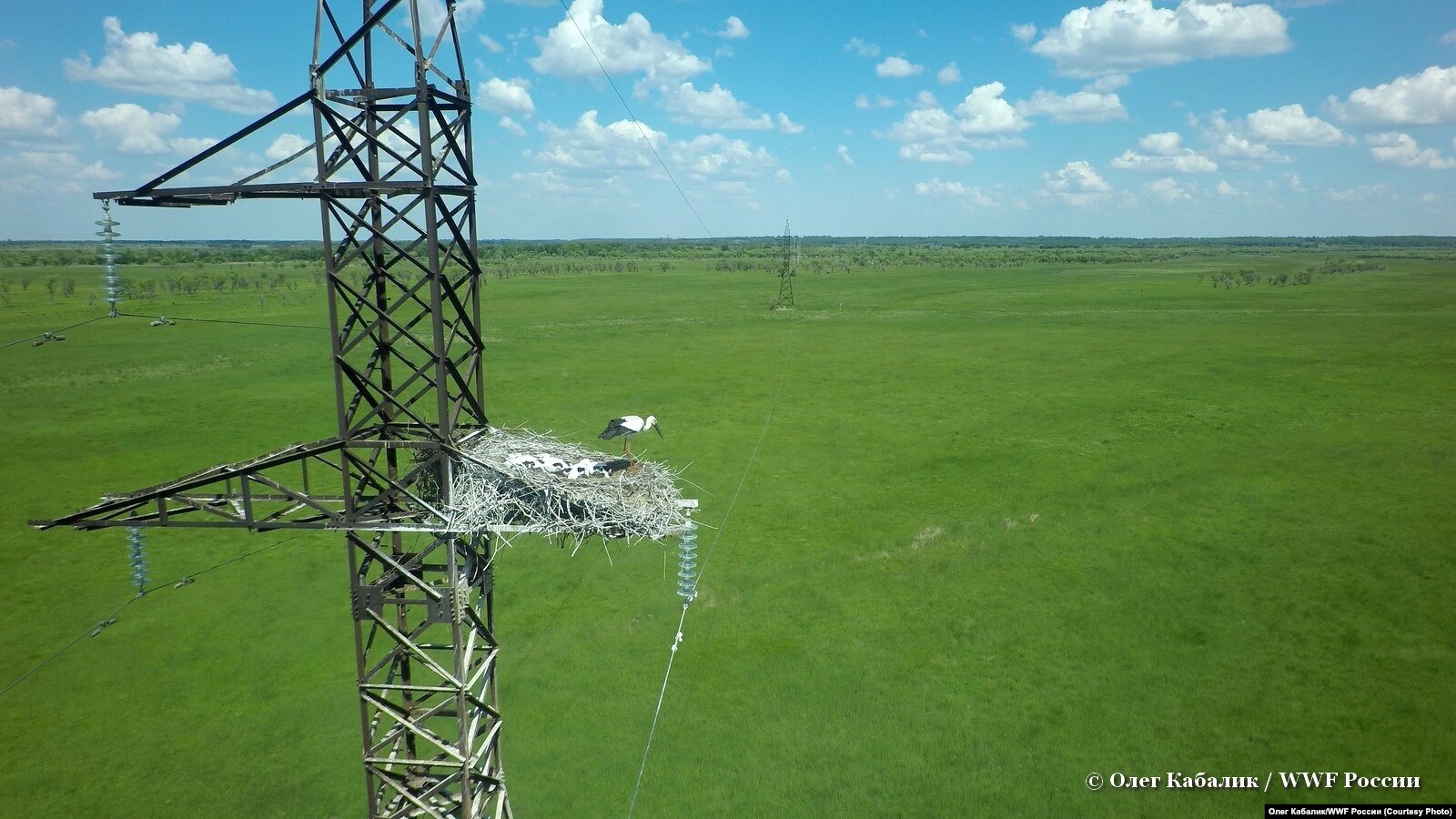
At the end of April, camcorders, installed by the Ornithologists of the Amur Region to observe the Far Eastern stages, photographed a grand fire that destroyed the whole field. One of the cameras stood on the support of the power line, thirty meters from the ground, right in front of the stroke nest. Many online users online monitored the actions of the female who sat on the eggs. When the fire raged at the base of the power transmission line, right under the nest, the female tried to cover the masonry of the eggs with dry grass to protect them from overheating. Then, making sure that the danger has passed and nothing threatens the chicks anymore, she again gracefully led to masonry. Spectators of the bird reality show sighed in relief.
SR in mobile SR on Instagram Wed FacebookFires are the greatest threat to these rare birds nesting in the Amur Region. In 2019, their number reached 1,500 individuals - almost half of the entire world population of the Far Eastern stork. About how to preserve storks and what discoveries were made after a multi -month round -the -clock observation, the publication of Siberia. Reals was told by volunteers of the Bars Ecological Friends.
“In those four nests on which we have online observation cameras, almost all the chicks have hatched: only one masonry remained, it was late,” says Anton Sasin , the coordinator and manager of the Far Eastern stork project in the Amursky Regional Public Environmental Organization “ Amursoes ”.
This species, which is so closely observed by ecologists, is listed in the International Red Book. In total, about 4,000 Far Eastern storks remained in the world.
- The Far Eastern stork is an endemic species, and nests mainly along the banks of the Amur, the rivers of Ussuri, Sungari, on Lake Bologn. This is the Amur and Jewish Autonomous Region, the Khabarovsk Territory. There is a storger population in the north of China - also along the banks of the Amur and the Huanghe River. But in terms of density and number of Far Eastern storks in the Amur Region, there are most of them: now we annually observe 1200-1400 individuals.
- When did you launch a project with surveillance cameras?
The wider the audience of our reality show, the more people will love storks and will not remain indifferent to the fate of this species
- We put the first camera last year, declared the year of the Far Eastern stork. This camera recorded the strange behavior of birds. A pair of storks lay eggs four times, but the male threw them out of the nest each time. Why he did this - a riddle for us. Then they completely stopped flying to this nest, and we dismantled the camera.
This year we installed six cameras on four nests thanks to the Grant from WWF ( World Wildlife Fund. - SR ). Each camera costs 60-80 thousand rubles. On artificial supports in the reserve they put themselves, and on the supports of the power lines, where storks willingly nest - they raised cameras with the help of industrial climbers. The height on which the nest is usually is 20–25 meters.
- What are the goals of this project?
- First of all, environmental education. The Far Eastern stork, due to its rarity, is still confused with cranes and herons. Citizens have a vague idea of how a stork builds a nest, removes chicks, gets food for them. The wider the audience of our reality show, the more people will love storks and will not remain indifferent to the fate of this species. Already in several European countries, ecologists bring people's interest in wild nature through the possibility of observing the life of its inhabitants online.
- Where else in addition to Russia and China is the Far Eastern stork?
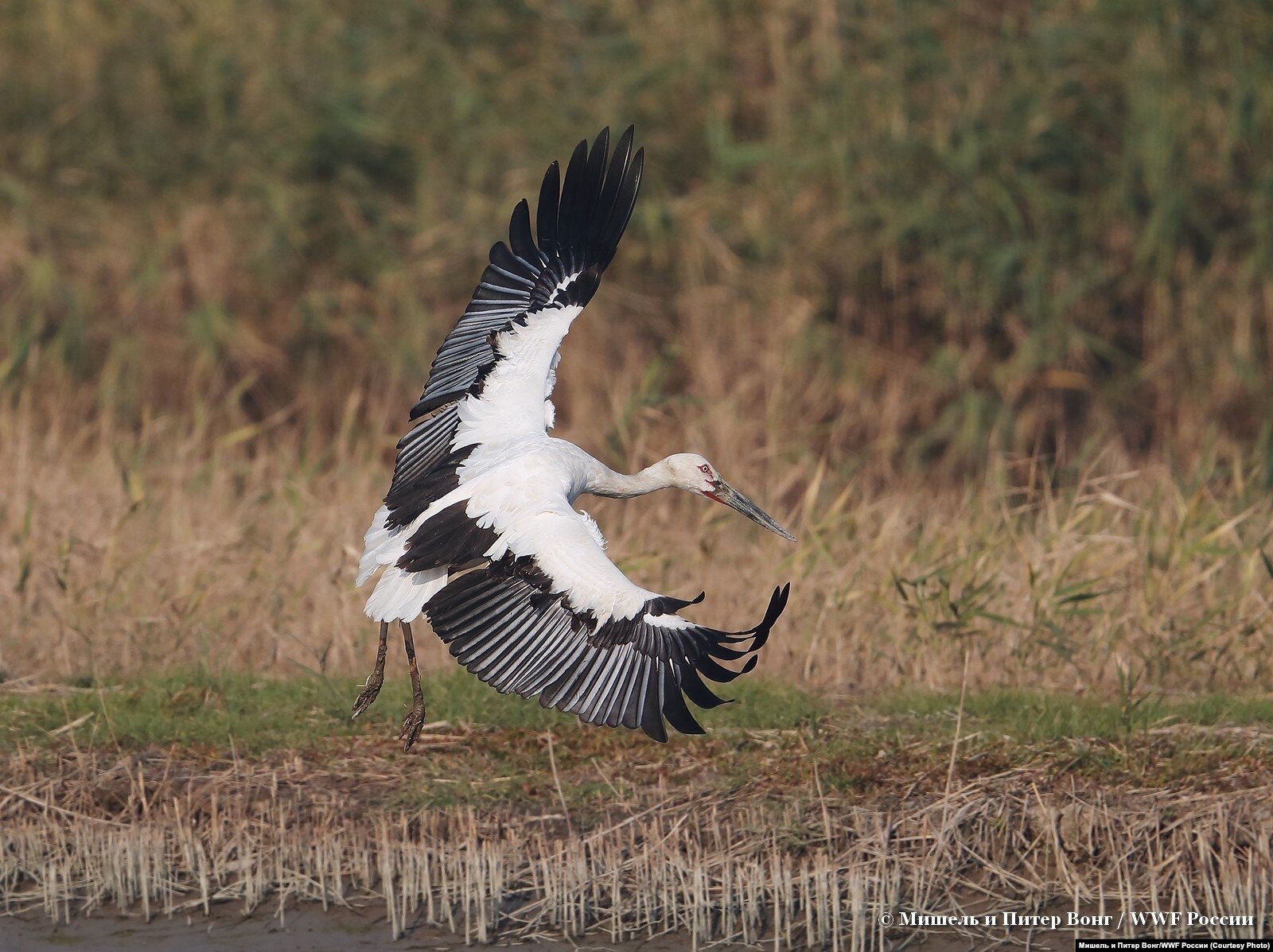
- Now it is practically nowhere. In the 70s, this species completely disappeared in Japan, after which the Japanese bought chicks from us and brought storks anew. Now there are no more than 100 individuals. But, despite the fact that the number of aist is increasing, it is too early to say that nothing threatens him. For example, a European stork is represented by 350 thousand individuals. Our appearance is far from so far.
- They say that in the Amur region, the stages lack trees.
If there is a lot of stork, then everything is not so bad with the Amur ecosystem. And if not enough, then there are problems
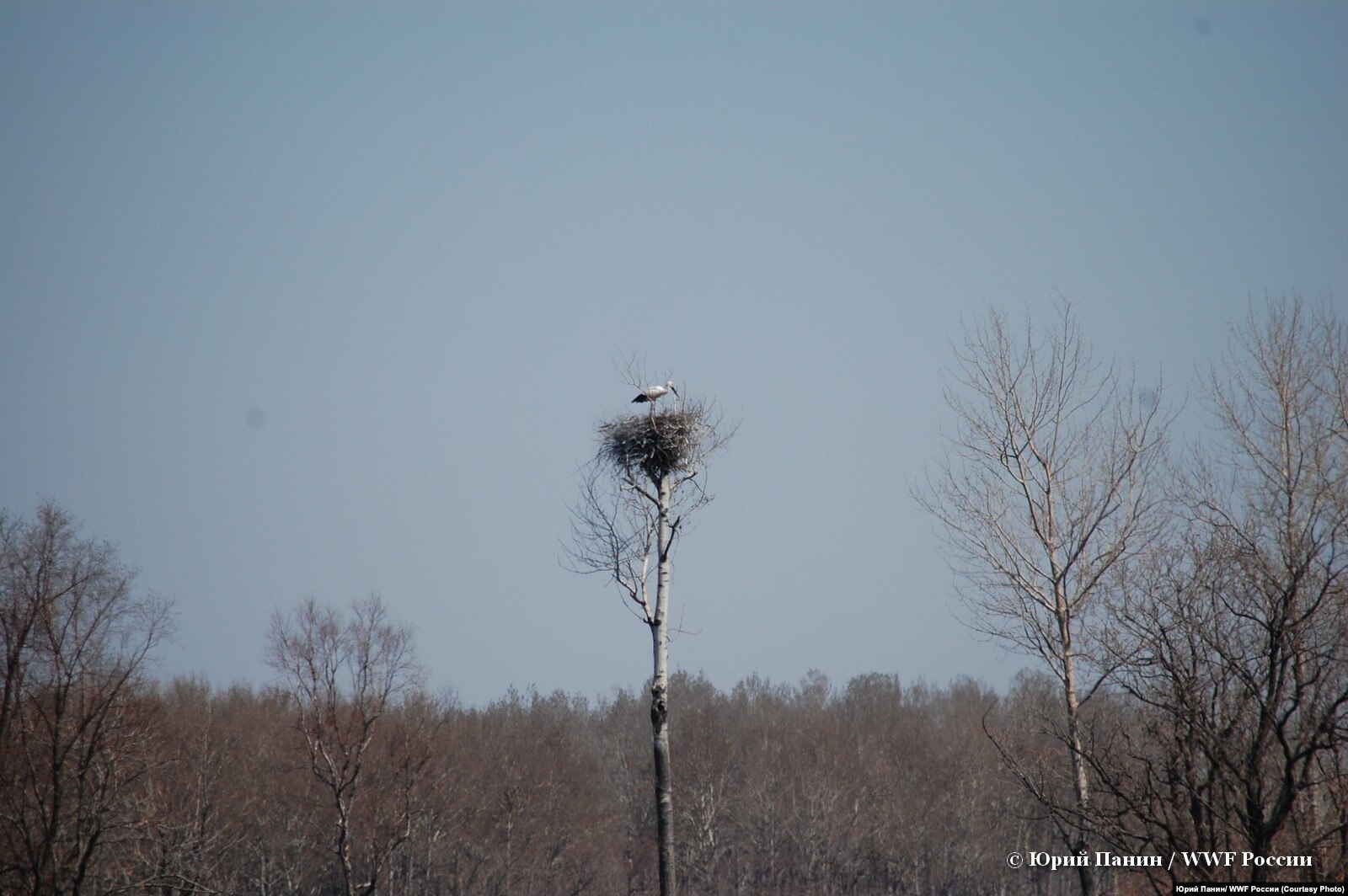
- Yes, this is true: you have to put artificial supports for nests. In the Amur Region, the large area of the Zesko-Burean plain is occupied by agriculture, and there are very few such strong trees that are suitable for nesting. Because of this, it turns out that a pair of birds returns after wintering in China, and they have nowhere to build a nest. If the tree is not strong enough, then it does not withstand the weight of the stroke nest and breaks. In the spring, we are often allowed by the PALS, so there is a danger that masonry of eggs or already hatched chicks will burn.
- Why can't the trees withstand?
- The stork nest is very heavy, its weight can reach 500 kilograms.
“ Are you weighing them?”
- We received this information experimentally. Once in the reserve, a tree on which storks built a nest was badly damaged by the arson of grass. They decided to transfer the nest. It turned out that only a cargo truck can raise it. A stork nest is a very large bowl of branches, into which the birds are dragged and tightly laid the ground, and grass on top. There you can make a flower bed inside! So, if the trees are at least a little burned from below, they can fall under the weight of the nest.
- Therefore, you have to install artificial supports?
- Yes. In the Amur Region, for example, in the Berezovsky reserve, in 2007 there was only one artificial support - the tripod, as we call it. Now there are already 16 nests on the tripods. We also increased the number of supports in the Amur reserve by doubled, put in the Muravyovskoy reserve. There, storks willingly fly and nest, so we are trying to concentrate such supports in the protected areas. Every year, for 10 years, we put several tripods.
- To what extent does the human factor threaten the storks?
- A person is to blame first of all in forest fires and arson of grass. But there is another problem - agricultural chemicals. In the Amur Region, soy is grown, and in recent years they began to use more means to combat pests. By the way, it was the chemicals who destroyed the Far Eastern storks in Japan in the 1970s. Then pesticides containing heavy metals were used, which with rainwater fell into rivers, lakes. And there - the feed base of storks: amphibians and fish. When the reservoirs are polluted, heavy metals enter the body of storks. And what happened in Japan - the eggs of poisoned females did not have shells, that is, these were leathery bags that the female crushed her weight.
-Can this somehow prevent?
In 2010, the North Korean workers climbed into the nest, took the eggs and fried them, not having a concept that this was a rare bird
- We are very afraid of repeating such a scenario in the Far East, so this year we begin monitoring of heavy metals in stork feeds. Now for this they allocated trial sites in the Amur reserve. There, all are grown nearby, the fields are located on the banks of the river, where storks feed. Just there, with rains, all chemistry, as we assume, falls. Our task is to evaluate the composition of water and fish infection. We will attract chemists. There is a method of such work, and we want to realize it at home. In general, the stork shows the state of ecosystems in the region: if there is a lot of stork, then everything is not so bad with the Amur ecosystem. And if not enough, then there are problems.
- Do storks often become a person's prey?
- Hunters kill storks extremely rarely, almost once every five years, these are literally isolated cases. We regularly make the nests by a quadrocopter, and last year we found a shot stork near the support of the power lines. But they were rather hooligans with guns than hunters. In 2010, the North Korean workers climbed into the nest, took the eggs and fired them, not having a rare bird. Then these workers were deported from Russia.
-Did you manage to make any important discoveries during the video surveillance?
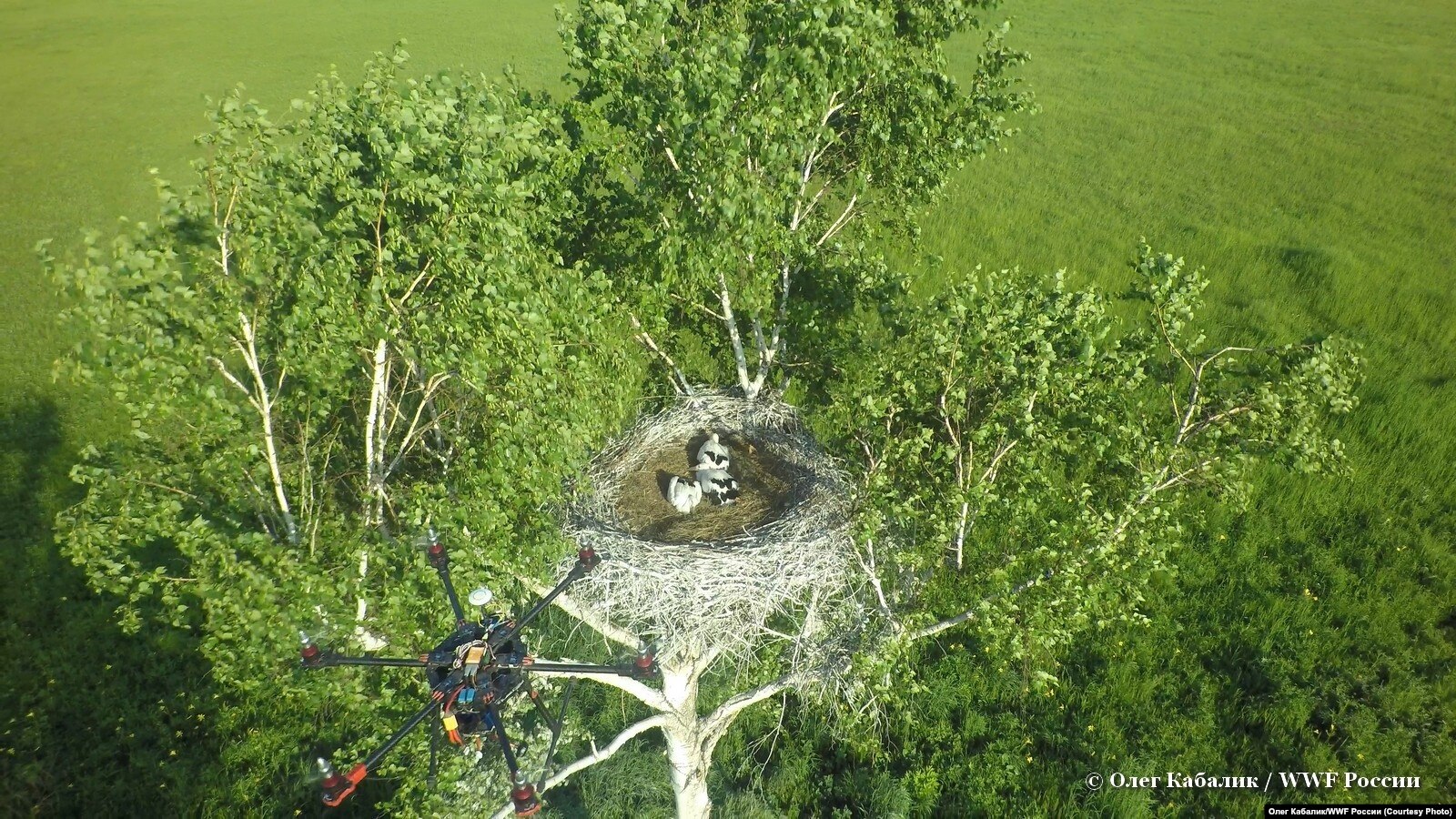
- The information is accumulating gradually, but now we have learned a lot of interesting things. For example, it was previously believed that storks live separately and only for raising chicks form pairs. But just the other day, the quadrocopter from which I observed the nesting of birds, was subjected to a collective attack! Males from neighboring nests took our apparatus after the predator and attacked him with an entire flock. It’s good that the stork only imitates the attack. He, as it were, takes to the fright of an uninvited guest with his size and wingspan, and does not really attack. So our equipment so far.
- What else do you plan to do as part of monitoring?
- Now we are starting to study the migration of storks in conjunction with Chinese scientists. After all, the Far Eastern stork, in fact, shares its habitat between China and Russia: winter there, and nests with us. Last year, the Chinese side funded us installation on the chicks of 9 sensors, which can be monitored in real time moving the chick. This year we’ll install such sensors already 40, plus the bolds from the Chinese side will be added. In total, it should turn out about a hundred. Unfortunately, a lot of chicks perish in the process of migration. Of the nine installed sensors "in the ranks" there were only four. One chick died, breaking on the wire, another died in China. True, they never told us the reason. Three sensors simply stopped transferring data, but the likelihood that the birds died high.
- Why do you need to track the movement of birds?
- We still do not understand how they choose a nesting place for themselves. For example, two "our" chicks "moved" to the Jewish autonomous region. And one, on the contrary, returned from EAO to us. They seem to be changing - we want to trace this process, find out what affects their movements, ”says Anton Sasin.
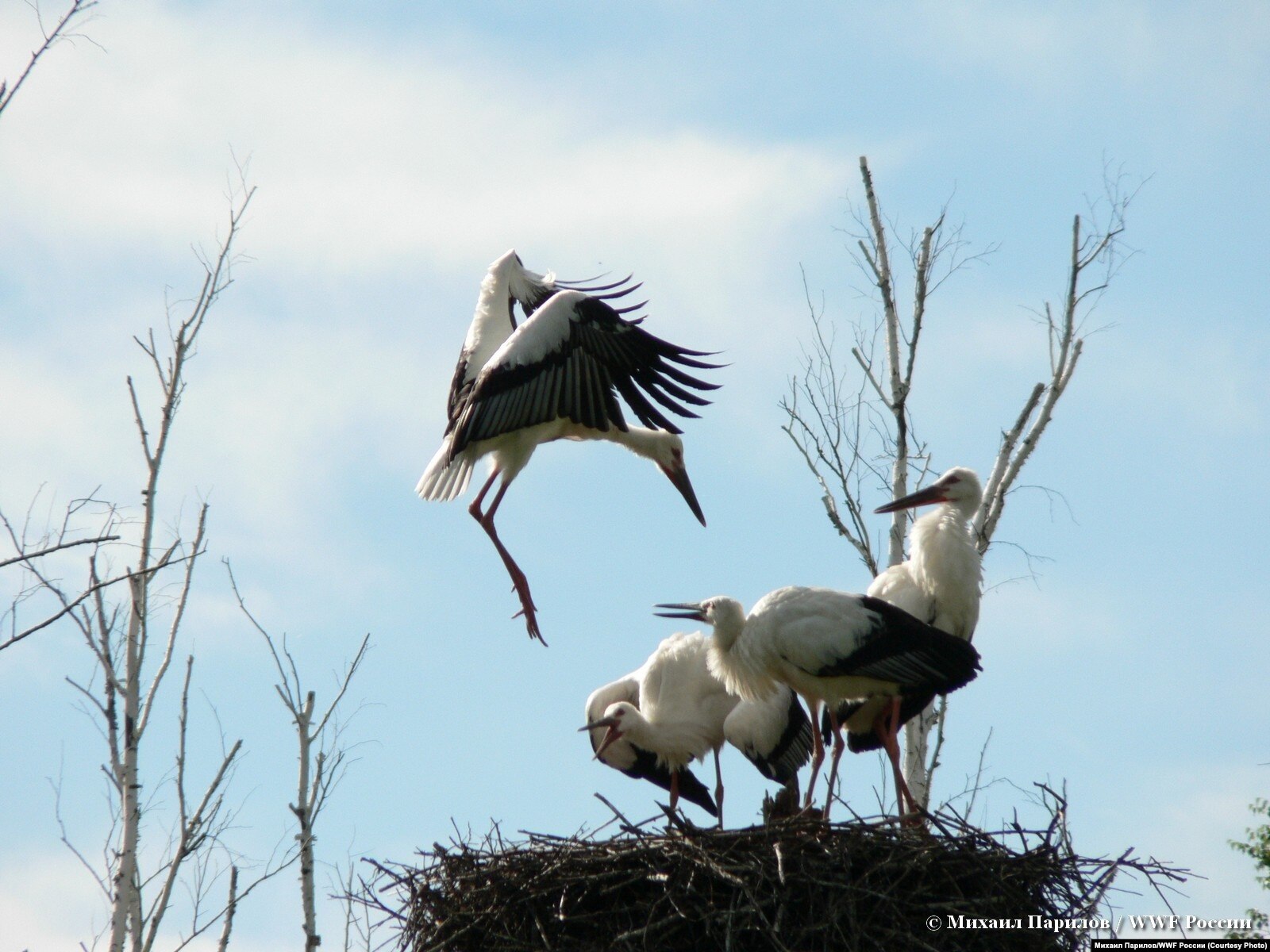
By mid -May, storks, under the supervision of video cameras, proved eight chicks. The birth of each took place on the " live ". For Russia, this is the first experience of online broadcasts from the life of rare species of birds. The stork chicks are born almost naked, covered with thin fluff, and weigh no more than 100 grams. Therefore, parents protect the chicks from the wind, taking turns covering them with their wings. The first flight of small storks occurs a month after their birth. This event can also be observed online approximately in mid -June.