
Translated material
Through the ECHR to freedom, but not to the election
Russian lessons affairs of the Azerbaijani oppositionist Ilgar Mammadov
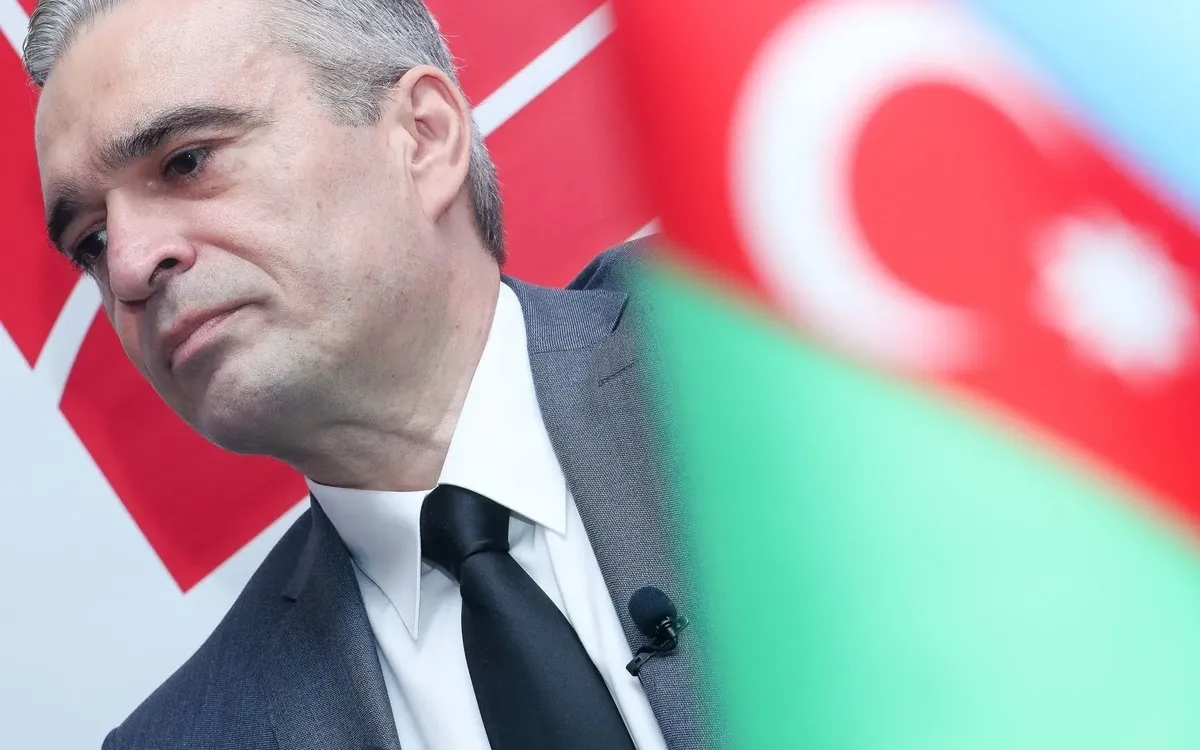
The leaders of the states that have been sitting in their seats have breathed a sigh of relief. On May 29, the Grand Chamber of 17 judges of the European Court of Human Rights first made a decision under Article 46 (4) of the European Convention on Human Rights.
The pilot was a complaint against Azerbaijan Ilgar Mammadov - an opposition politician, leader of the Republican Alternative movement and the director of the Baku School of Political Studies. In January 2013, he visited the city of Ismails in Central Azerbaijan, where protests against corruption and impunity of local officials were held. For entries on blogs from Ismail in support of protesters Ilgar Mammadov, he was almost immediately arrested and subsequently convicted of participating in the riots and the threat of violent acts regarding the police. The Shekinsky court of serious crimes sentenced him to seven years in prison.
The European Court of Human Rights reacted quite quickly: already on May 22, 2014, the chamber of seven judges not only decided that there were no minimum suspicions necessary for Mammadov’s detention, but also that the criminal case against him was a persecution of political criticism of the Azerbaijani government (in violation of Article 18 of the European Convention, known as the “prohibition of political persecution”). Not a unique, but quite rare case in practice:
In the resolving part of the decision, the European court directly pointed out the obligation of the Azerbaijan authorities to release Mammadov from the guard.
But nothing happened, and 2018 Ilgar Mammadov met in prison. The Azerbaijani authorities repeated that the mammades were already deprived of his freedom by the court verdict, which the decision of the ECHR of 2014 does not affect in any way. The second decision of the European Court, which recognized the criminal process over Mammadov unfair in 2017, also did not lead to liberation. Only after the commission of the Committee of Ministers to the Great Chamber in December 2017, Ilgar Mammadov was released on August 13, 2018, and its term was reduced by the Supreme Court to the actually departed.
The almost four -year delay in the liberation did not convince the court of the conscientiousness of the Azerbaijani authorities. By establishing a violation by Azerbaijan the obligation to fulfill the decisions of the ECHR, the Big Chamber directly clarified: the first court decision in 2014 meant that there was no criminal case against Ilgar Mammadov at all.
But one problem familiar to Russian oppositionists remained unresolved: mammades are still considered convicted, and therefore cannot participate in any elections.
For many years, members of the Committee of Ministers and its Secretariat for many years said that article 46 (4) in cases of non -fulfillment of court decisions will not be applied, bringing more and less convincing arguments from the category “no matter what happened”, “Article 46 (4) was accepted to never apply”, etc. However, the first case showed - excluding the issue of suffrage - almost 100% efficiency: only after the start of the process in the Grand Chamber, Ilgar Mammadov was released.
Russian practices monitored this business with special attention: lawyers and NPOs repeatedly turned to the Committee of Ministers with requests to apply Article 46 (4). The execution of the decisions of the European court by the Russian authorities have long been replaced by non -fulfillment in almost all areas: crimes against civilians in the North Caucasus, torture, extinction and expulsion to central Asia threaten torture, the conditions of detention, the injustice of courts, uncontrolled listening of telephones, acceleration of peaceful assemblies, discrimination ...
The list can be continued for a long time, but especially for the numerous affairs of Ilgar Mammadov, it seems to be the persecution of Alexei Navalny. On May 29, 2019, the Great Chamber showed that no matter how vicious the criminal process is against a critic of power, no matter how politically motivated the persecution,
Strasbourg is not ready and try to force the commander state to return his or its last name to the ballot.
The Council of Europe and the European Court of Human Rights, which had just celebrated his 70th anniversary, were created by post-war European politicians to prevent the slow sliding of member states to dictatorship. So far, even the maximum joint efforts of the Committee of Ministers and the court cannot lead to a return to the election of a political competitor to a long -term permanent president.