Translated material
Interview with the liquidator of the accident and an ecology historian
In early April 2019, the HBO TV channel released the Chernobyl series dedicated to the tragedy at the Chernobyl nuclear power plant. After the release of the third series, he became the highestly valued series on IMDB, and in May they wrote a lot about it in social networks. On the night of June 4, the final episode of the series will be released.
"Paper" spoke with the historian of the ecology Julia Layus about the consequences of the tragedy at the Chernobyl nuclear power plant. And one of the liquidators of the accident Vasily Nayda shared his opinion about the series and its reliability.
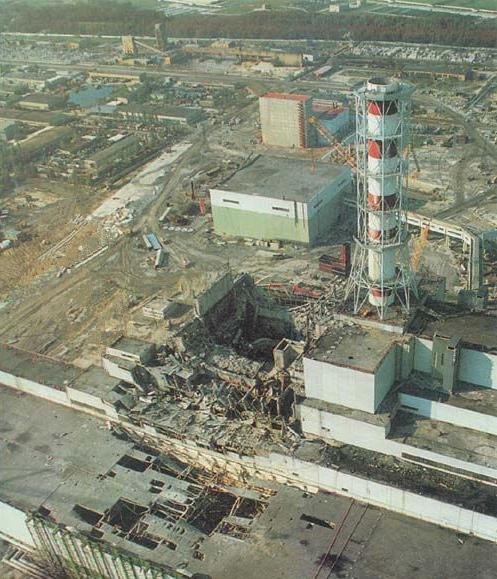
The accident at the Chernobyl nuclear power plant occurred on April 26, 1986. An explosion occurred on the fourth power unit near the city of Pripyat, the reactor was completely destroyed, and many radioactive substances hit the environment. The main causes of the tragedy are considered the design features of the reactor, personnel errors and general insufficient awareness of security in nuclear matters.
Vasily Nayda
Disaster liquidator in Chernobyl
- If we take the first series of Chernobyl, then it corresponds to what was. Somewhere the events were embellished to make it more interesting to watch, but basically it was. The fact that the accident occurred due to repairs and the human factor is a fact, and in the series it is. What the exercises on the reactor planned was also true, but they told about it not very expanded. In fact, a request to Moscow was sent to conduct an experiment, but they said nothing and did not answer there. Therefore, they decided to carry out repairs, and during the work - an experiment at the expense of the power unit.
The causes of the tragedy are also shown true. The experiment was carried out with violations: they turned off the protection, and this cannot be done on the power unit, and in addition - [used] water -coolation, and this is generally fatal. Those who conducted the experiment, including the deputy chief engineer of the woodpeckers, are guilty. He was a brave nuclear holder, but they all did not know defects of the design itself.
The silence of the tragedy really was, and it is shown in the series. It was forbidden to sow panic, to report on the tragedy in the press and local residents. For example, in Pripyat, which was three kilometers from the station, after the tragedy, the children went to schools and kindergartens, fiddled in sandboxes, the people worked at the dachas. And they needed to take a drug that they were not given. Even the weddings managed to play on April 27. And then 50 thousand people were evacuated on 1,200 buses.
I was at the site of the disaster in December and stayed there until February. He managed the medical service of the Army of the Leningrad Military District. I lived in Chernobyl itself, he was empty. Pripyat also stood under the protection of empty. A cat or dog will run, and in the houses empty. You go along the 30-kilometer zone-the trees are bare. There were no people, it was wildly difficult to look at it. Entire villages and villages were buried in special fuels. The whole red forest, who died from radiation, was buried in the pit - it was dangerous to burn it. Our entire regiment was irradiated and buried him.
I think the series about Chernobyl must be shown - so that in the future it would be disgraced. Only this is why ours did not do it, but the Americans are incomprehensible. And we, as always, are trying to hide everything, this is wrong. God forbid the next disaster will happen. So we all rode, and now the youth has gone that many will think: "Yes, I will not go."
Julia Lyus
Associate Professor of the Department of History of the Higher School
- The silence of the disaster led to the fact that the population behaved completely wrong, since it was not informed. On the spot, the children almost ran to look at the fire, although this was categorically impossible to do. This also led to the loss of the image of the Soviet government both within the country and abroad.
People became clear that no one would take care of them and that the government will hide what is happening to the last. It also played against an international point of view. It was impossible to hide: the measurements of the radioactive background were carried out quickly enough, and in Finland, Sweden, Germany realized that something was happening. It became clear where all this flies from.
In the West, they began to exaggerate [the consequences of disaster]. For example, the number of victims was named, not true. Lack of trust always gives rise to myths. The propaganda car [USSR] spent enormous efforts to expose these myths. And they arose due to incompetence and due to the fact that real information was not reported on time.
In this whole story, the lack of training is amazing: people at various levels did not know what to do. There was a feeling that scientists and engineers thought that this would never happen. And so it looked as if there was no intelligently agreed plan of action. But at the same time, in my opinion, there was a high level of expertise, this was evident when experts were allowed to make decisions. When compared with an accident at the nuclear power plant in Fukushima, the comparison is not in favor of the Japanese.
The consequences of the disaster are multi -level. First of all, there are now debates about how many people were injured due to the tragedy, but the exact numbers cannot be established in principle, since the effects of radiation have an extended effect. These are early dead people, and unborn children, and a lot of everything else. It is also difficult to say about nature on nature. On the one hand, the influence in the alienation zone is obvious, on the other hand, due to the fact that no one has been living there for a long time, some kind of ecosystem has been developing there. If you look at the graphs of the accumulation of radioactive cesium in lichens, the northern deer in the Arctic, then the Chernobyl peak is definitely visible. It is less than from testing atomic bombs on the New Earth, where 132 nuclear explosions were held in the Soviet years, but the peak is visible.
With radiation, it is almost always, except for a very strong effect, it is impossible to determine the specific consequences. For example, it is known that it causes cancer. But what exactly caused cancer in each person is difficult to identify.
What is important for the further development of atomic energy is that some projects in the implementation stage were frozen or discontinued. For example, they did not build the Crimean nuclear power plant, into which they invested a lot of money and which was supposed to open in the late 80s. People began to protest against the launch of this station, because there are unfavorable seismic conditions. If this station were opened, we could get a second Fukushima. There could be destruction associated with earthquakes. In Kamchatka, they also did not build an planned object. Chernobyl made an understanding that atomic energy is much more dangerous than it seemed.
The accident in the countries of Europe in Chernobyl affected the attitude to atomic energy in the countries of Europe. Germany reacted to the disaster apocalyptically, now in the country they generally abandoned atomic energy. [Moreover] If all agricultural products were calmly consumed in the GDR, then in Germany they began to be checked for infection. But the French were completely different. They have a lot of their atomic energy, but they began to be more responsible for technologies and the possibility of their use. So the “Chernobyl effect” from the country to the country varies.
There were many joint meetings with experts and politicians from the United States, which were in parallel with atomic disarmament and destruction of weapons. The role of international organizations has increased against the background of the fact that trust in the USSR government has decreased. In 1995, the UN adopted a joint resolution on the elimination of the consequences of the accident in Chernobyl.