
Translated material
Sunny
Philologist Stefano Gardzonio - about the life and work of Kurtzio Malaparte
Kurzio Malapart is a famous Italian writer, director, diplomat, adventurer, author of the books “Topic Technique”, “Cursed Tuscans”, Romanov “Shkhuh”, “Kaput” and recently published in the Russian “Ball in the Kremlin”. The editor of Gorky, Eduard Lukoyanov, spoke with Slavist Stefano Gardzonio, who wrote for the “Ball” a preface, about the contradictory figure of Malaparte, his biography, work, relations with Mussolini, Bolsheviks and Russia.- Malapart, it seems to me, is represented by the same type, born of modern as Ernst Junier or Gabrielle d'annunzio. How, in your opinion, in general, the type of person arose in whom heroic is combined with the fact that he is an artist, a writer, and it is impossible to determine which pole of political coordinates to attribute to - right or left?
-A special feature of Malaparte is that from the very beginning of his life he is busy building his image, an image, which is called Self-Presentation in English. On the one hand, he lives his own life, and on the other, he creates a parallel life of a parallel to himself, which he constantly redo, decorates, modifies. You can never understand where the personality of the Malapart himself ends and where the personality of his literary alter ego begins. Therefore, from a psychological, from a behavioral point of view, this is a very special figure. You mentioned Yunger - yes, he is quite close in the image of Malapart, how much the type of Malapart can be attributed to d'annunzio - I don’t know, although there are a lot of coincidences and, in particular, the tendency to combine art and action. Here, of course, is Marinette. It is noteworthy that Malapart studied at the same college where D'annunzio studied at one time. Sem Benelli, a well -known Italian playwright, which Alexander Blok was very fond of, especially his play “A torn cloak”, studied there. Therefore, of course, Malapart is embedded in the general line of the personality of modernity, but its biography is much more picturesque than the biography of others.
The writer was born in the city of Prato - this is the industrial and textile center of Tuscany; His father came from East Prussia to earn money as an entrepreneur, his mother was an Italian. Soon Malapart, who was not yet Malapart, but was Kurt Erich Zuckert (this is his real name), became close to the folk environment of the city: when his father was engaged in the search for new works, he lived in the family of a simple representative of the Prato people named Baldi; He was friends with the local poet Bino Binatsi - and at the end of his life he wrote the book Maledetti Toscani (“Cursed Tuscans”), where this side of his life, his character, his biography is clearly represented. So, Malapart, on the one hand, is German, on the other, the indigenous representative of the city of Prato and the Tuscan people.
But this is not all, because then he began to play different roles and change his appearance. He usually chose extreme positions in life, in politics, after which he had to rewrite his biography and, of course, redrawing his appearance. Its portrait often does not coincide with those portraits that other people who wrote about him and who admired them or, conversely, cursed him. At first he was an Italian patriot, and this, by the way, was a very peculiar and unexpected choice. He was still studying at college, suddenly ran away from the house and, together with the Garibaldian brigade with a foreign legion, began to fight in France against the army of the central empires, that is, against his own people, because he, I remind, by origin of the German. Then he turned out to be the hero of the Italian army, survived the tragedy of the famous retreat at Kaparetto and received several awards - from the French and from Italians. Thus, his first appearance is a young brave heroic boy who decided to fight for his homeland, Italy. Then he will even use the expression Arcitaliano, that is, the "Sudalian". This, of course, is connected with d'Annunzio, with ideas, which will then be included in the nascent myth of fascism.
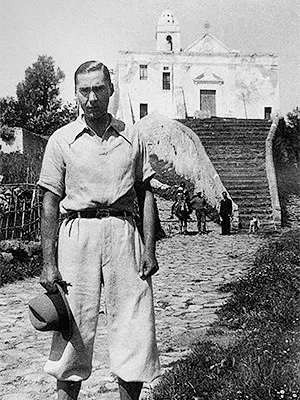 After the end of the First World War, Malapart found himself during the diplomatic mission of the Italian kingdom in Warsaw. Warsaw has just become a free capital, but it was at this time that Poland was at risk. The Red Army was advancing, and the Malapart became a witness to hostilities and, in particular, as he writes, the battles of the Vistula, the key battle of the Soviet-Polish war, is also known as the "miracle on the Vistula." It took place in August 1920, ended with the victory of Poland and the termination of the Red Army. . In fact, it is unknown whether it is or not, it may also be an exaggeration, but what is interesting - he already admired Bolshevism. The future writer, a representative of Italy, the bearer of European values, suddenly began to admire the appearance of revolutionary Russia, the power of folk rebellious spontaneity. A few years later he will write about this in the book “The Technique of the Council”, which was published in France in 1931 and which had a difficult fate, because he could not print it in Italy, despite the fact that Mussolini liked this book.
Kurzio Malapart began to develop his impressions not only as a writer, but also as a politician and even as a political thinker. This is the other side of his appearance. When he returned from Warsaw to Italy, he had to solve (in Italy there was a very difficult situation: a crisis moment, Biennio Rosso), whether he would become a supporter of socialism or a supporter of fascism, but in the end he chose a purely nationalist position and became an ardent fascist. This side of his biography will be greatly reflected in the future and the writer will represent it differently. For example, at the end of World War II, when he had to defend himself from all charges that he was an associate of fascism, a friend of Mussolini. On the other hand, in the treatise of the “Council of Commerce” 1931, the Malapart speaks of the victory of fascism as if he himself was a participant in a campaign in Rome. In fact, this is not true. He began to add many different events, details to his biography, which in reality there were no. Therefore, it is always very difficult to determine the real biography of Malaparte, and, from this point of view, the recent books of Maurizio Serra and Oswaldo Hourryeri made a great contribution.
In the 1920s, Malapart was an ardent supporter of fascism and even committed very vile acts (for example, in connection with the Matteotti Jaacomo Matteotti (1885-1924)-a social deputy, whose murder caused a political crisis in Italy and almost led to the overthrow of the fascist regime. ). At this time, he began to publish the magazine “The Conquest of the State”, this name, according to him, prompted Mussolini. As for Mussolini and his attitude towards him, Malapart wrote about him the book of Don Camaleo - “Mr. Hameleon” - he gave such an interesting definition to Duche and his political balancer. In the mid-1920s, Antonio Gramsha himself said that he was “a conceited snob-chameleon”: a person who can constantly change his position. I do not know how much this is a literary character or in fact it is a feature of Malapart himself. This is also due to the change of surname: the German by origin, he chose the pseudonym "Malapart" and made himself a purely Italian writer. He thought for a long time how to change his last name: it seemed that this was due to the fact that then, with fascism, there was a campaign to Italianization of everything that was possible. For example, when the South Tyrole turned out to be part of Italy, fascist officials changed all the names of cities, villages and so on. It was necessary to somehow express the desire for Italianization.
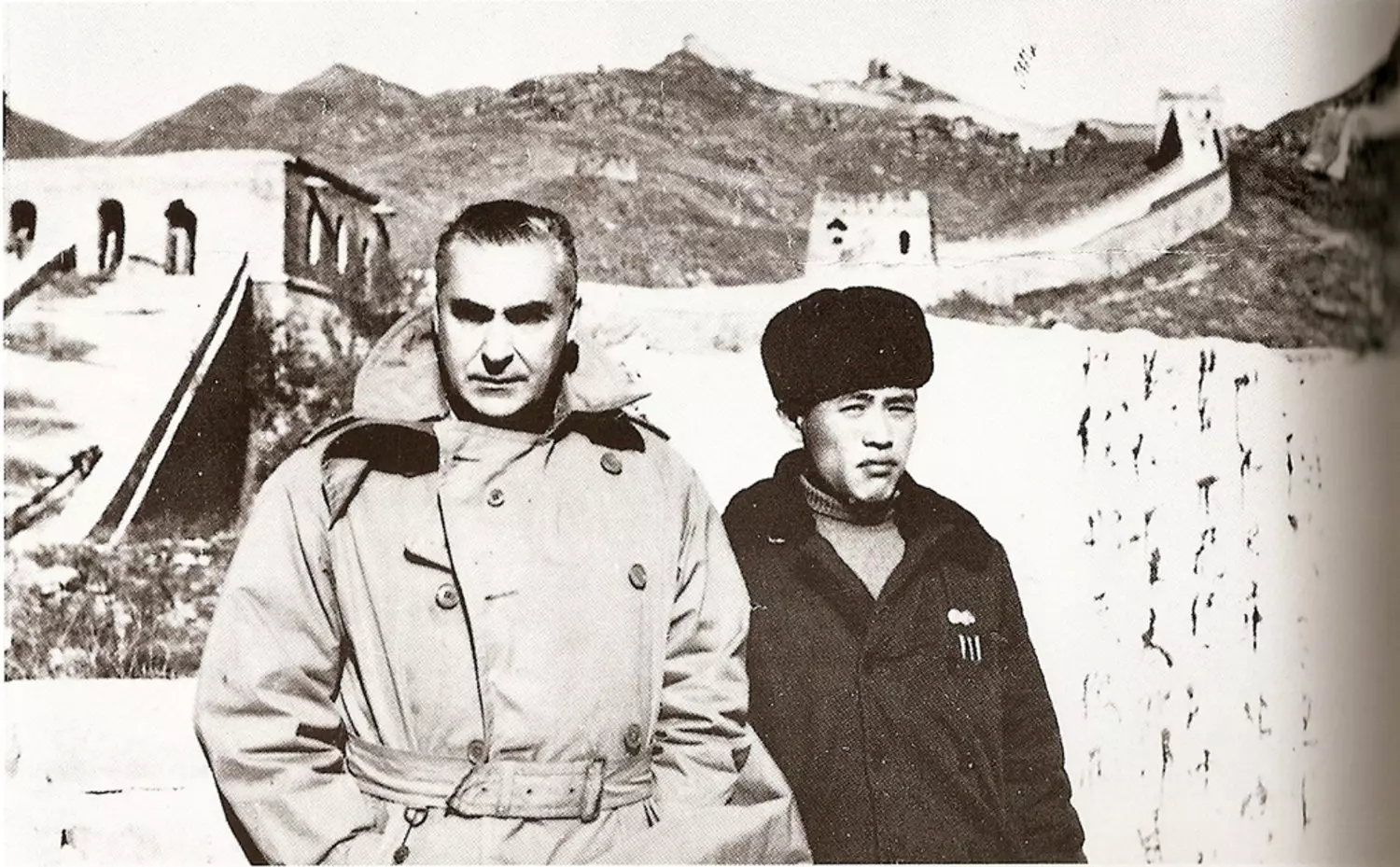 Malapart on the Chinese wall in November 1956
Tecnica Del Colpo Di Stato has become, as they say, a table book of many revolutionaries, including Che Guevara itself. It examines different types of couples and uprisings - from the Kappov pitch in the Weimar Republic to the fascist coup and the October Revolution in Russia. Malapart analyzes the activities of different representatives of the era: Mussolini, Lenin, Trotsky, Hitler. Interestingly, the book was published in 1931, even before Hitler’s complete victory, but Malapart somehow guesses his path of conquering the state. Malapart very accurately describes the role of Trotsky in the proletarian revolution, he shows that, on the one hand, Lenin is a strategist, and on the other hand, the whole technique is at Trotsky. He sees the same distribution of roles in the coup between Mussolini and his closest ally, Italo Balbo, with whom relations will deteriorate in the 1930s and because of which he will later be in prison. He writes that he was arrested because of this book that because of her he was sitting dungeons. In fact, everything was different: this was due to the fact that Malapart began to write about Balbo, about his role in fascist mode in the early 1930s-of course, his correspondence was checked and he was arrested. He was sure that Mussolini would protect him and support him, but this did not happen, and Malapart was sent to exile for Lipari Island. The conditions of detention were not very harsh: a woman could visit him there, he had a dog - this is not a gulag. Although he describes his stay in prison and in imprisonment in very dark colors.
In the same years, he compiled a collection of articles dedicated to his stay in the Soviet Union - “Lenin’s understanding”. After that he wrote a book dedicated to Lenin himself-Lenin-Dobryak (Le Bonhomme Lénine). Therefore, in the mid-1930s, Malapart could be considered one of the main representatives of political thought that built their concepts precisely on the basis of the study of modern events, modern historical changes. He spoke very poorly about Hitler, his books in Germany were banned and burned in stake.
- And how did he even have this sharp turn from the right to the left?
- There is also a lot of fantasy. We focused on the fact that Malapart was in exile on the island of Lipari, but soon, not without the participation of the son-in-law Mussolini Galeazzo Chiano, he is released, not even released, but sent to a very soft link to the city on the coast of Forte dei-Marmi, the famous resort center. And he allegedly lives there in exile, but soon buys a beautiful villa, which belonged to the artist Guildbrand. Malapart even had some semblance of Dolce Vita: he goes to the famous Night Club “La Kapannina”, in which all Italy is going to know. He has a scandalous affair with Virginia, the widow of Edoardo Anelli, the son of the owner of Fiat Govanni Anelli. A little later, the epic of the construction of the famous villa in Capri begins.
Malapart was a man who could not sit still, he had to act: he fought as a boy, then participated in all fascist campaigns (except, I repeat, going to Rome). In the late 1930s, he accepts the proposal to become a military commissar at first in Ethiopia, where he wrote the book "Africa is not black." After that, he was a military commissar in Albania, Greece, Yugoslavia and with the German invaders went on to Romania, and from there to the Ukrainian front during the Great Patriotic War. He has a famous book that was published a little later - “The Volga is born in Europe”, in which he speaks of Soviet soldiers and the Soviet army quite positively.
After that, he returns to Italy - however, almost immediately then he will go to Finland, there he will become a witness to the blockade of Leningrad. But when he, the military corner and representative of the Italian fascist army, finally returns to his homeland, he immediately hides in Capri. When Malapart realized how the war would develop further, he began to look for contacts with the allies, with the Americans and the British. As for the Americans, he was lucky. In Naples, he was interrogated as a representative of the fascist army, as a former famous fascist figure, but he was somehow able to convince them of his innocence or, say, his loyalty, and he was released. Soon the writer was in the service of the Americans - and how true it is, and how much he invents is difficult to say.
It is known that he ended up in Tuscan along with the partisans and worked there a military correspondent under the pseudonym Gianni Strozzi. At this time, it was in Florence, the partisans were arrested by Giovanni Gentile, the famous idealist philosopher, who in 1925 wrote a manifesto in support of Mussolini. The manifesto then signed Malapart. Gentile, the former Minister of Education of Fascist Italy, remained faithful to Mussolini after September 1943, that is, after the fall of fascism. Gentile began to support the Republic of Salo founded with the help of German invaders. The philosopher was captured and immediately shot. They say that Malapart was also connected with this - how true this is, it is difficult to say.
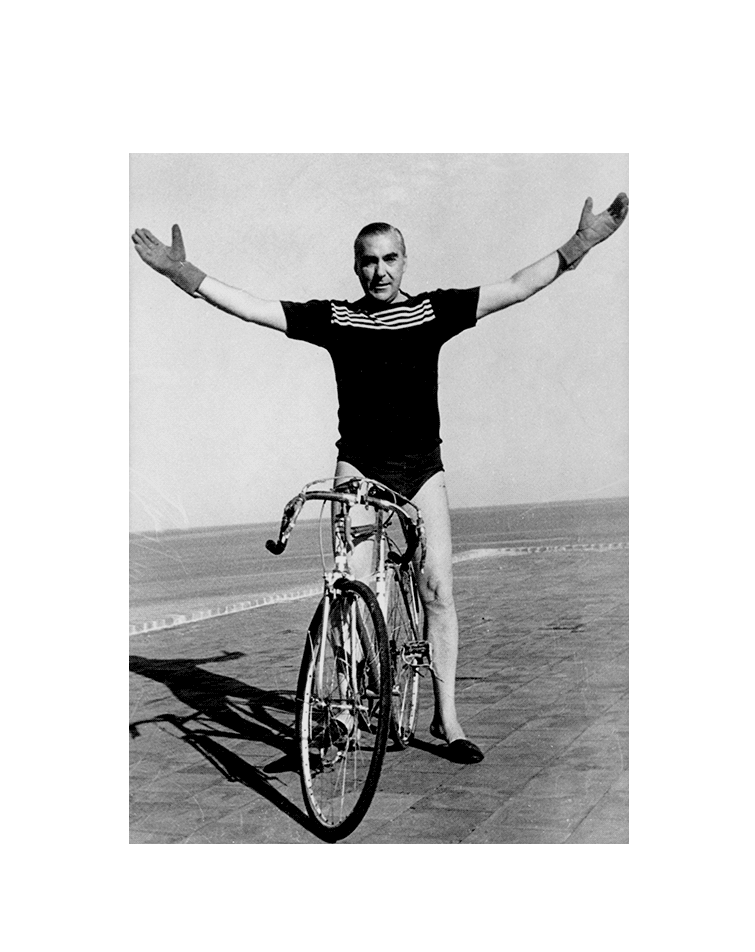 Kurzio Malapart on a bicycle
Further, the writer became a supporter of New Italy, however, his connections with fascism were so close and so well-known that he was under trial-he was tried for two years, until 1947. And after all these events, he preferred to live in France, and not in Italy, and not only because the anti -fascists often attacked him, but also for another reason: it turns out that in 1944 he received money from the Republican fascist party to continue his activities. At the end of 1946, an amnesty was announced for the participants of the Nazi Republic of Salo, who were able to return to Italy, and they certainly did not forget about the betrayal of Malapart.
At the end of his life, Malapart became closer to the democratic forces of New Italy, but not everything is clear here either. Malapart is included in the new democratic trends of art. For example, in 1951, he made a very interesting film in the spirit of Italian neorealism “Forbidden Christ”, a real masterpiece. At the same time, he approaches the Republican Party, but at the end of his life he was offered a ticket to the Italian Communist Party, and even they say that Malapart received him from Togliatti himself. Already on his deathbed, the writer received representatives of the Vatican - he allegedly decided to enter the bosom of the Catholic Church.
But I must say that the most important thing in Malapart is, of course, his literary work. So far we have talked about his biography, about his political beliefs, about his image, about building his own portrait, etc., but first of all he is a great writer, although he did not love him for many years, underestimated.
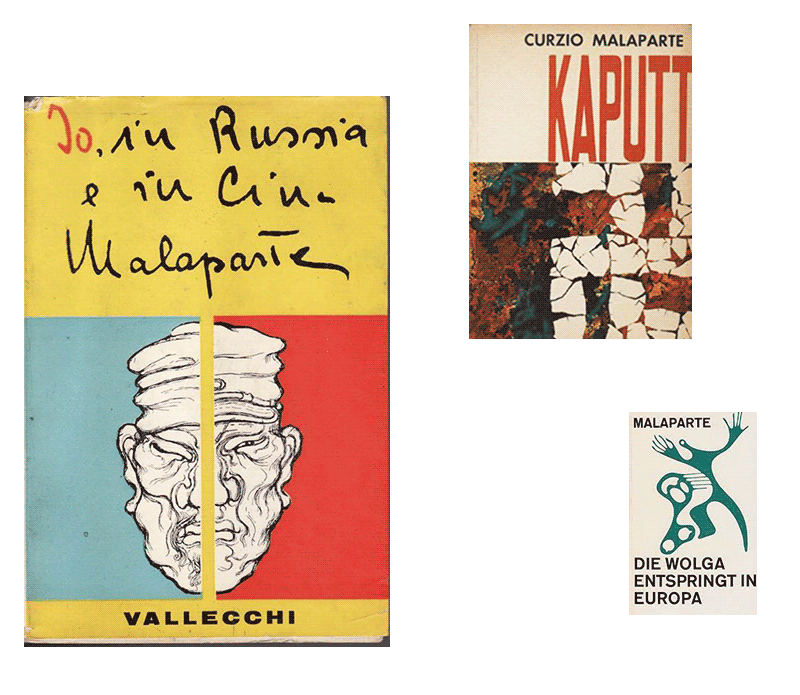
The new opening of the Malapart in Italy is associated with the activities of the Milan publishing house "Adelfi". They reprint almost all the work of Malapart, and now for the Italian reader there is a “new” Malapar: more complex, more complex, with many new data. Malapart, like many writers, was published for many years in the famous Florentine Publishing House of Vallekka, whose archive died in a fire several years ago, so much has been lost. A lot has yet to be studied and his life to study and deepen his life.
-Tell us then, please, about the Malaparte writer and, no less interesting, the publisher.
He was a great writer. His famous books “Kaput” and “Shfa” are masterpieces of Italian literature. In addition, he prepared a third part of this trilogy - “Ball in the Kremlin”, which he did not finish, she had just left in Russian. I must say that Malapart is a very interesting author of the stories, few people know about it. He published in the 1920s, 1930s collections of stories and other books: he has journalism and books such as Don Camaleo dedicated to Mussolini, there is still Italia Barbara about the problem of Italy and Europe. His debut book Viva Caporetto! (“Long live the Caorette!”) Dedicated to the tragedy of the First World War. He has many other works that are now half -forgotten or not reprinted. I greatly advise reading his last books: “Rotten Mom” - the dedication of his dying mother is an amazing book that should also be translated and presented to the Russian reader, and, of course, “damned Tuscants”.
In his youth, Malapart founded an avant -garde movement, which was called “oceanism”, but this is most likely a fiction, because it was almost only in it, but this is a tribute of time, because new trends, new groups arose everywhere. He also published the political journal “The Conquest of the State”, which we have already talked about, is journalism, politics, chronicle of modernity and so on, and at the same time he was engaged in literature and literary criticism. For example, he collaborated with representatives of the left culture of that time, such as, for example, Giovanni Amendol or Pierrot Hobetti, and at the same time published a profane magazine - here is again a contradiction.
 Then he became close to the Straepaise group - this is a group of writers who were supposed to sing and emphasize the soil qualities of Italy, the Italian village. This movement was quite close to fascism: nationalism, patriotism, traditions, and so on. On the one hand, he is printed with them, and on the other hand, at the same time or immediately after that, he enters the European magazine '900, where representatives of foreign European literature were printed from Joyce to Virginia Wolf, by the way, Ilya Ehrenburg, with whom Malapar was familiar. The main publisher of this magazine Bontempelli belonged to the literary grouping “Straitta” (“Supercoming City”). С одной стороны, «Страпаэзе» — деревня, итальянская глубинка, а с другой стороны, город, метрополис, Европа.
Малапарте выбирает определенную тенденцию и сразу же или чуть позже примыкает к противоположной. Это, очевидно, характеристика самого Малапарте — полная противоречивость. Он был, конечно, артист, любил говорить о себе, был большим скандалистом, его девиз: «Самое главное, чтобы об этом говорили». С этой точки зрения Малапарте — представитель современной культуры, было бы интересно посмотреть, как он завел бы собственный блог или стал пользователем соцсетей — вот это было бы очень забавно.
Самое интересное — это, конечно, журнал, который он основал в конце 1930-х годов, Prospettive. Там он сотрудничал с Альберто Моравиа, с которым у него потом были очень сложные отношения. Он определил Моравиа словом «вольтагаббана», то есть приспособленец, человек, который меняет свои позиции. Конечно, самого Малапарте тоже часто обвиняли как «вольтагаббана», и, пожалуй, как мы видели, не без основания.
Возьмем как пример последнее путешествие Малапарте в Советский Союз. Оно практически совпало с событиями в Будапеште, но об этом у него нет ни слова. Он даже печатает очень странную мемуарную статью «Визит к Сталину» (встреча относящаяся якобы к 1929 г.), в ней положительно представлена личность вождя. Он, очевидно, еще не в курсе, что уже идет десталинизация, и хотел показать своим итальянским братьям-коммунистам — которые тогда все были сталинисты, конечно, — что он тоже очень высоко оценивает роль Сталина. Вот еще один пример его странного и противоречивого поведения.
— Я прочитал «Бал в Кремле» и «Шкуру» и все равно не могу понять, откуда у него растут ноги как у читателя. Можете что-нибудь рассказать про его читательскую биографию? Какая у него была библиотека?
- This is a difficult question. Я не итальянист, поэтому мне трудно определить эти связи, но, например, первая книга Viva Caporetto! написана под сильным влиянием Барбюса. Малапарте был хорошо начитан в французской литературе. И неслучайно, что несколько его книг вышли сначала на французском языке. Он ведь сформировался в Прато, в лицее, в колледже, где в свое время сформировался д'Аннунцио, и он, безусловно, впитал в себя элементы итальянской культуры и литературы того времени. Еще, конечно, итальянский футуризм на него повлиял. У него был авангардный модус формирования. Он переживает разные фазы итальянской литературы, культуры — европейской в общем-то — того времени. Юнгер — писатель, который, по-моему, очень близок к нему.
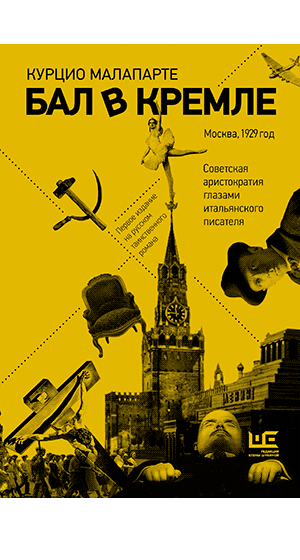 Что касается собственно «Бала в Кремле», это неоконченная работа, но что интересно: одним из вариантов названия было «По направлению к Сталину», оно намекает на парадоксальное сходство художественного подхода со знаменитой эпопеей Марселя Пруста «В поисках утраченного времени». Малапарте, конечно, читал и Джойса, и Пруста, и всех представителей европейского модернизма. Вначале эта книга должна была называться «Бог-убийца», потому что центральная тема в ней — тема Бога (эта тема перманентно присутствует в творчестве Малапарте, как и христианская идея самопожертвования). На страницах романа есть много намеков на эту тематику, самый очевидный — Демьян Бедный, безбожник, но главное — это высказывание, связанное с Маяковским, с одной стороны, и с Булгаковым — с другой. Он вряд ли читал этих авторов (кроме малочисленных переводов на итальянском и французском языках), хотя мог о них знать от Марики Чимишкиан, переводчицы, которая его сопровождала.
«Бал в Кремле» — философский роман. Он описывает гибель красной аристократии, деятелей революции, которых сама революция пожирает, везде возникает эта тематика существования Бога. Эту проблематику мы встречаем опять в картине «Запрещенный Христос». Диалоги и сценарий к фильму написал сам Малапарте, и они перекликаются со многими мыслями и проблемами, которые мы находим, например, в диалоге Малапарте с Луначарским. Там, конечно, есть некоторые элементы сатиры: ситуация с креслом князя Львова или описание кареты Флоринского и сам Флоринский как персонаж. Поэтому трудно определить чистую тенденцию Малапарте как писателя, он, конечно, сочетает разные элементы, разные влияния. Но к чему он стремится? Он стремится обнажить прием, он любит парадоксы, которые постоянно появляются в его текстах и придают повествованию такое оживленное и противоречивое состояние неожиданности и порой жестокости. Идея Бога, вопрос о существовании Бога — центральная тема его творчества — находит свое отражение в неоконченной пьесе «Ленинград», которую он написал в 1944 или 1945 году. Там он описывает, как приходит в гости к жителям осажденного города какой-то рабочий с Кировского завода Иван Добре — на самом деле это Иисус Христос или какое-то воплощение божества, — который спрашивает у этих людей, как они могут жить без Христа, без Бога и т. д. Эта тематика повторяется во многих его текстах, и я бы сказал, что это подчеркивает философский характер его повествования.
В 1920-е годы Малапарте общался практически со всеми писателями своего поколения. Есть еще один интересный момент, пока не изученный, хотя очень важный для меня, — Малапарте как читатель Достоевского. Тогда, в 1920–1930-е годы, интерес в Италии к Достоевскому был очень высок, и были такие писатели, как Джованни Папини или Никола Москарделли, которые до известной степени связаны с Малапарте и для которых Достоевский стал центром внимания. Но то, что образ Мышкина присутствует как подтекст во многих моментах самоопределения героев в романах Малапарте, на мой взгляд, очевидно. Поэтому, с одной стороны, было влияние современной ему литературы, а с другой — Достоевского, как, наверное, и немецкой литературы. Не стоит забывать, что он был двуязычный: он читал по-немецки, и поэтому это влияние сильное. Из всего этого возникает писатель, которого очень трудно определить и по школе, и по направлению, к тому же у него была сложная личность и очень сложная литературная маска. К сожалению, до сих пор даже в итальянской истории литературы место Малапарте еще не определено, то есть мы знаем прекрасно, куда ставить Моравиа, Витторини, Павезе — это классики ХХ века, а Малапарте какой-то «неудобный». Конечно, это в первую очередь связано с его биографией: неудобный человек, которому трудно доверять, потому что он так много врал, еще у него есть какие-то ужасные моменты в биографии, просто мерзкие. Это тоже отражается на интерпретации его литературного творчества, к сожалению.
Сам факт, что у него такая интересная судьба, заставляет всех заниматься главным образом его биографией, а не его творчеством, хотя «Шкура» и «Капут» — это, конечно, два шедевра итальянской литературы. Но до недавнего времени Малапарте не был писателем, которого рекомендуют проходить в школе. С другой стороны, он сам много сделал для того, чтобы так получилось. Думаю, что сейчас уже пора смотреть на него иначе.
Kurzio Malapart. Ball in the Kremlin. М.: Редакция Елены Шубиной, 2019. Перевод Елены Ямпольской, комментарии Михаила Одесского и Натальи Громовой.