
Translated material
Czech "Belarusians". Why Prazhans took to the streets
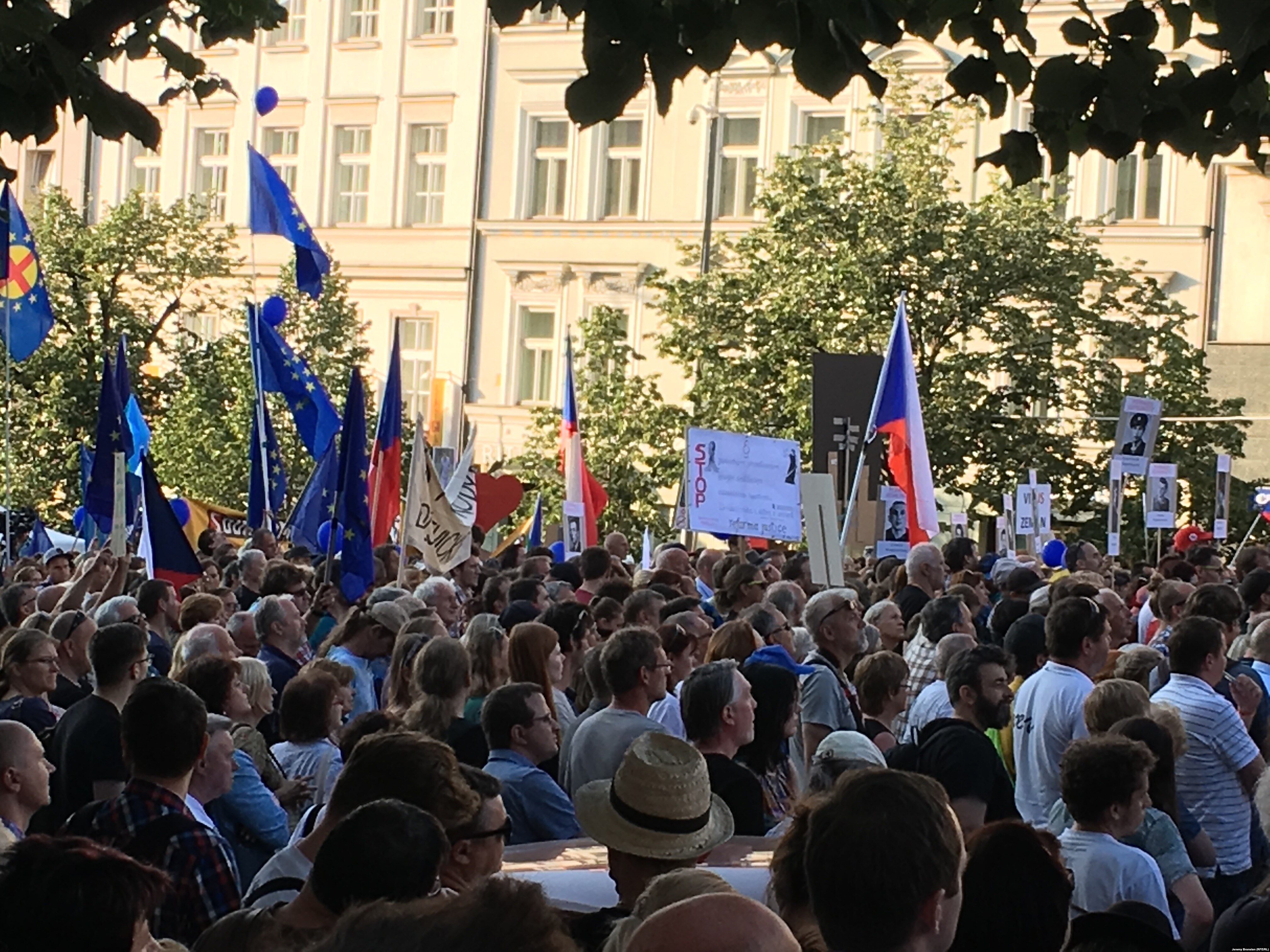
Perhaps the largest mass action since the 1989 velvet revolution, which ended with the communist regime, was held on the evening of June 4 in Prague, members of the Civil Initiative "Million minutes for Democracy" (Milion Chvilek Pro Demokraci) . The rallies and protests against the policy of Prime Minister of the Czech Republic Andrei Babish have been continuing in other cities of the country for several months. What is the second "velvet revolution"?
The “Million Minutes” initiative, created last year by a group of mainly student activists, calls “support and development of democratic culture, civic activity and social dialogue” as the goals of his activity. According to the members of the group, all this is contrary to the policy of the President of the Czech Republic Milos Zeman and Prime Minister Andrei Babish. "Million minutes" organizes weekly protests in Prague and other cities of the country. The number of people going to demonstrations is growing every week, the situation is being discussed by the country's parliament, although Prime Minister Babish himself dismisses the demonstrators, advising them, "if they do not like something, to establish his political party."
Prague Center in the evening of June 4:
The organizers managed to keep the promise and attract many tens of thousands of people to the anti -government action - according to the members of the initiative “Million minutes for democracy” themselves, up to 120 thousand people. Based on the fact that the Vaclav Square - in reality, the Big Boulevard in the center of Prague - was filled to the very end, we can confidently assume that at least 90 thousand participated in the rally.
The massiveness of demonstrations was given by the recent appointment by the new Minister of Justice Maria Beneshova, whom the public suspects that she would slow down an almost finished investigation of financial fraud associated with firms that Babish owned when the businessman was when he was.
Who is Andrey Babish?
64-year-old Andrei Babish is a Czech politician and entrepreneur of Slovak origin. His father was under the communist regime a high -ranking official in the foreign trade department. In childhood, Babish lived in Paris for several years, later studied in Switzerland. He received an economic education, worked in the foreign trade system. According to the Slovak Institute of National Memory, he collaborated with the state security authorities of Czechoslovakia. (Babish himself denies this). After the collapse of Czechoslovakia, he remained in the Czech Republic, where most of his commercial assets were located.
Since the 90s-in business. The largest of the Babish of enterprises belonging to Andrei is the AGROFERT holding operating in the chemical, food and agricultural sectors. (After leaving for politics, Babish transferred the Office of his enterprises to the Board of Trustees). Babish, according to 2018, was estimated at more than $ 4.5 billion, he ranks second in the list of the richest people in the Czech Republic. In recent years, a number of accusations of financial fraud have been brought against Babish and his companies in the receipt of subsidies from the EU funds.
In 2011, Andrei Babish founded the ANO social movement (“Promotion of dissatisfied citizens”, the abbreviation is the Czech word “yes”). In 2013, ANO took the second, and in 2017-the first place in the parliamentary elections. Babish spoke with the slogans of the anti -corruption struggle and promises "to lead the country as a successful company." In 2014-17-Deputy Prime Minister, Minister of Finance of the Czech Republic. Since December 2017 - head of government.
Andrei Babish is married to a second marriage, he has four children. Around his eldest son Andrei, suffering, according to his father, a mental illness, in 2018 a scandal broke out with the strange circumstances of Babish Jr. to Crimea. (The Czech Republic has joined the EU sanctions regime imposed after the annexation of Crimea by Russia).
The current political situation in the Czech Republic and its unexpected similarity with the recent Russian history in an interview with Radio Liberty is commented by the observer of the Prague newspaper Law, Alexander Mitrofanov .
- From the point of view of the sociological - who are these people who go out in the square in Prague and other Czech cities? Does this movement have any analogues?
- If we talk about the first demonstrations - after all, they have been lasting several months in general - then their social composition resembled protests in Moscow in 2011-12. Then, as we recall, representatives of the middle layers, the so -called "creative class" protested, who were insulted by what is happening in the highest echelons of the Russian government. It is similar to those emotions that are experienced by Czech demonstrators protesting against the policy of Prime Minister Babish and President Zeman. This is a protest against the political style, which, according to the demonstrators, is based on indulging the most low instincts of the crowd and handouts of this crowd - in the name of preserving and strengthening their power. Yes, it is mainly the city middle class, although the social base of these protests is gradually expanding.
This is a protest against the political style, which is based on indictation of the crowd instincts and handouts of this crowd
- What is known about the organizers of the demonstrations - the initiative "A million minutes for democracy"?
- Their "frontman" is student Mikulash Minarzh. I talked with him once. In principle, the core of this initiative is young people, students. Based on personal communication and public speeches of these people, I can conclude that they are very idealistically configured - that is, they believe that mass protests can change not only the atmosphere in the country, but also the alignment of political forces.
- You compared the Czech demonstrations with the unsuccessful “white” performances in Moscow and other cities of Russia at the beginning of this decade. At the same time, at the head of the protests in the Czech Republic - students, namely students, as we recall, began a velvet revolution 30 years ago, and she won. In this regard, what, in your opinion, are the prospects of the current protest movement? Despite all his mass, Prime Minister Babish does not yet pay much attention to them.
- Yes, he was still, as they say, to the light bulb. You are talking about the mass of protest - yes, in absolute numbers this is so, these are tens of thousands of demonstrators, they are able to fill most of or even the entire huge Vaclav Square in the center of Prague. But in comparison with the electoral support of Mr. Babish and his ruling ANO movement, this is not enough. Because both surveys and the results of all elections of recent times show that Mr. Babish’s movement retains a very significant gap from the rest of the political parties. Therefore, it seems to me that the current protest movement itself cannot change the situation at the top, but it can be an additional factor in pressure on power.
This is the type of consciousness when power is perceived as a master
Because just the other day a new circumstance appeared: the results of the audit of the European Commission regarding the Prime Minister of the Czech Republic and accusing him of a conflict of interests - as the head of government, on the one hand, and a major businessman - on the other. And if the conclusions of the audit will be confirmed, and this is very likely, then there will be a situation in which Mr. Babish will have to decide: either part with his millions, but stay in politics, or part with politics, but to preserve millions. It must be added to this that Andrei Babish is the premium: it is suspicious of financial fraud associated with the receipt of one of his firms from subsidies from the European Union budget. Therefore, Babish is now in a more vulnerable position, but this is due to the aggregate effect of demonstrations and audit of the European Commission. But what this will lead to in the end is difficult to say so far.
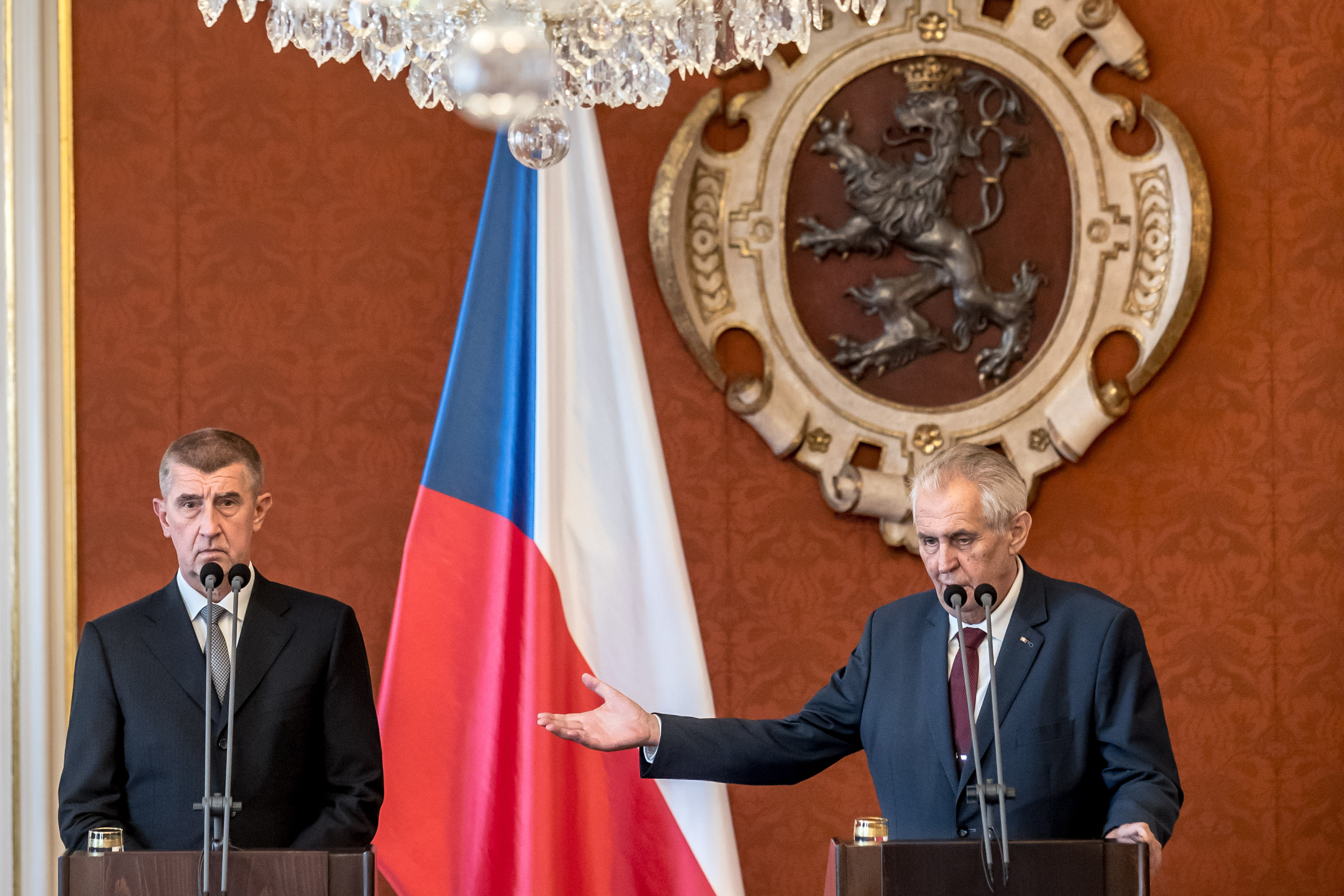
- These events can be considered a manifestation of the crisis of democracy in the post -socialist world, which in recent years they talk about?
- You can look at this situation more widely: democracy in the form that we are accustomed to, now have problems and, for example, in the USA, which are used to considering themselves the outpost of democracy. If we talk about the post -socialist world, then yes - politicians like Mr. Babish very skillfully felt for the string that played an important role in the public consciousness during the communist rule and, judging by electoral results, is largely preserved now. This is the type of consciousness when the authorities are perceived as a master who does something there at his own top, but we, the population, are not particularly versed in this, because "we are dark people, the academies did not finish." But if you obey the master, then you look, and something will be wearing something from his table. This psychology is politically exploited perfectly, ”said Alexander Mitrofanov, political observer of the Czech newspaper Law.
The Prime Minister of the Czech Republic Andrei Babish , in an interview with the Novinky.cz information portal, said he was not following the progress of the current demonstrations, but "it is cute that people go there for concerts." He, obviously, had to participate in the ranges of some of the pop artists and bards known in the Czech Republic, who spoke to protesters, including with musical numbers.
"A million minutes for democracy" promises to continue the shares: in a week - throughout the country, except for Prague, then - again in the capital, where they intend to gather in the Poyensky field. There, in the days of the "velvet revolution" at the end of 1989, the largest demonstration in the history of the Czech Republic was held. 750 thousand people came to it.