
Translated material
Chernobyl special forces
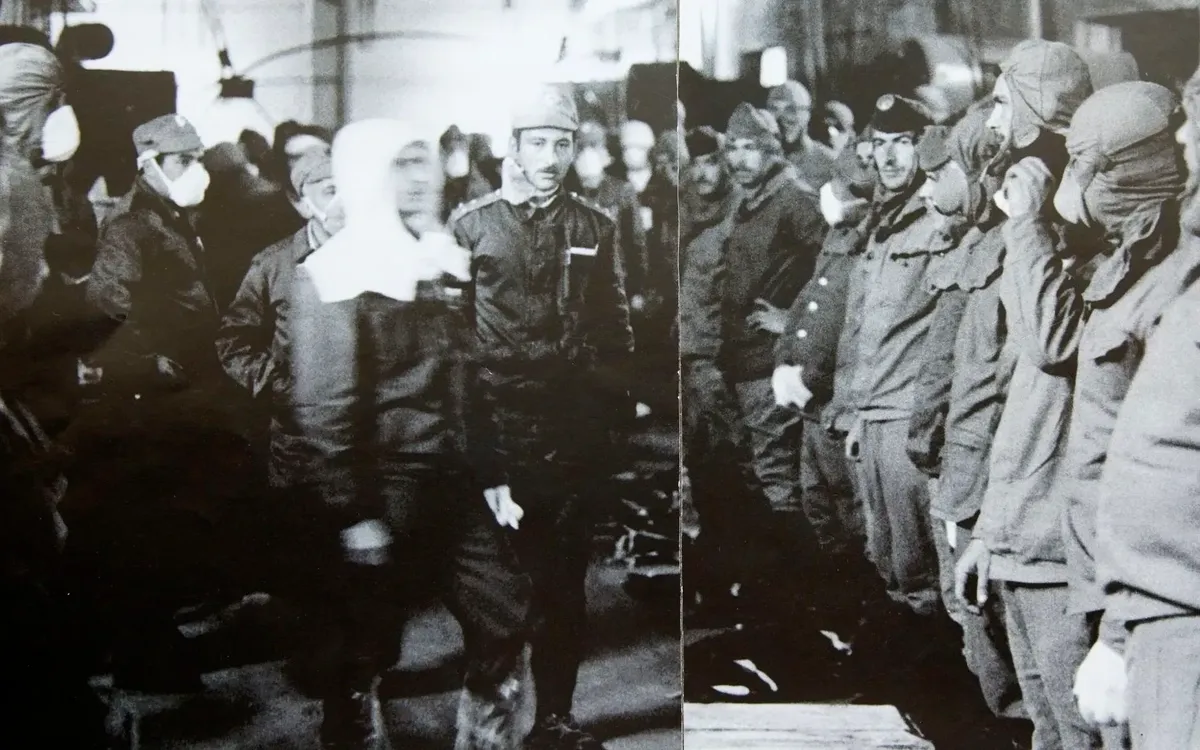
These people were the first to climb the roof of the destroyed reactor. Unique certificates of General Tarakanov - prototype of the hero of the fourth series of the HBO saga
Preface of the editorial office
One of the worst moments of the fourth series of the Chernobyl series is as a general who led the operation to clean the most polluted zones, sends his people to the roof of the sarcophagus - to clean it from graphite pieces manually. Because the German robot, whom they wanted to use, immediately failed - he went through the level of radiation. Therefore, people went themselves. In homemade lead armor, with shovels and vacuum cleaners. Only 376 people.General Nikolai Tarakanov, who is played in the series Irish actor Ralph Ainson, is more than a real character. Major General, Head of Work on the Elimination of the Chernobyl accident, President of the MOOI “Center for Social Protection of Disabled Chernobyl”, Doctor of Technical Sciences, Member of the Union of Writers of Russia. Now he is 84 years old, and he is still fighting with a radiation illness left with him after the disaster 33 years ago.
A few years ago, the "New" met with General Tarakanov. Then we had a special issue of the Chernobyl special forces. At our request, Major General Tarakanov spoke about those terrible days as everything was there-with documents, numbers, photographs and those memories that you can’t fix. Does the series look like what was really? How the liquidators of the accident really worked in mortal conditions and whether they had a choice. About this - "Chernobyl special forces."
Many knew about it
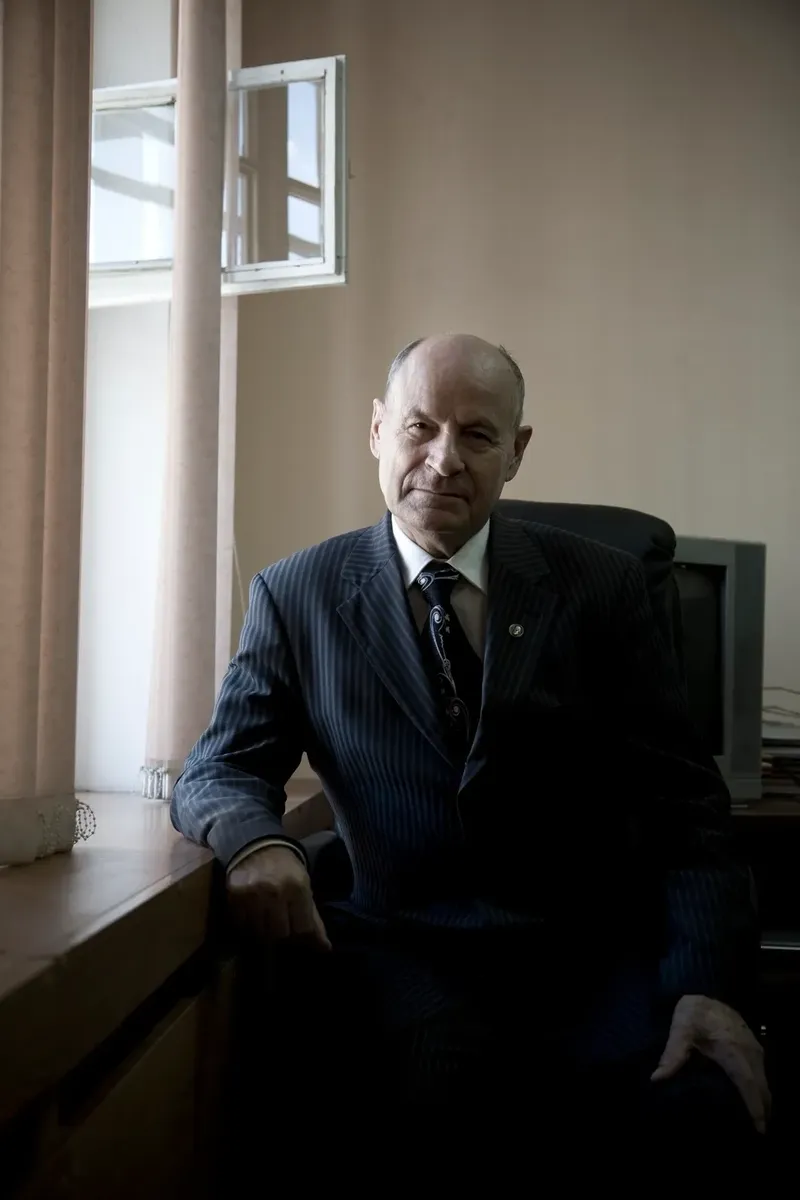
September 1986, the third month of my business trip in Chernobyl. My close comrades and colleagues went home. As a rule, officers and generals for more than one or two months did not linger here. I agreed to extend the business trip to three months. The authorities in Moscow did not mind.
Almost everyone who worked at the nuclear power plant had the opportunity, without knowing it themselves or not noticing, to “grab” the radioactive rubbish above the rational limits. After all, before sending soldiers, officers, especially chemists to all sorts of work, were the first to go. They measured the levels and made up a cartogram of radioactive infection of the area, objects, equipment. And at the same time, was it possible to take into account radiation?
B.E. Shcherbina, who got on the very first hellish days of Chernobyl. True, he was not long then. But I know that Boris Evdokimovich grabbed the radiation in full.
I still can’t understand why neither the government commission, nor the chemical troops, nor the civil defense of the USSR, nor the State Highway, nor the Kurchatov Institute were interested in particularly dangerous zones, where hundreds of tons of highly radioactive materials in the form of graphite, heat -emerging assemblies (TVS), heat -emailing elements (TVEL), fragments from them and others were thrown out. The same academician Velikhov more than once hung on a helicopter over an emergency third block, did he really see this mass?
Is it conceivable that for so long-from April to September 1986-radioactively-produced dust throughout the white light spread from these zones with winds!
The radioactive mass was washed by rains, evaporation, now already infected, disappeared into the atmosphere. In addition, the reactor itself continued to “spit”, from which a considerable number of radionuclides erupted.
Surely many leaders knew about this, but no one took radical measures. And no matter how the scholars from the Kurchatov Institute proved that already in May the reactor stopped emissions-it was a pure deception! The last emission was recorded by the radar station around mid -August. This was personally done by Colonel B.V. Bogdanov. I responsibly declare that the main severity of the work on assessing the radiation situation, up to the capture of tens of thousands of soil samples, water, fell on the army. Research results were regularly reported by encryptions to the corresponding authorities. The most truthful and full map of the radiation situation was also prepared by the military.
A burnt robot
Once, at a meeting in Chernobyl, the State Commission, a speaker on a radiation situation in the region, was Israel*Yuri Israel, the head of the State Highboard meter of the USSR. I asked why such a rainbow situation was given in the report-we knew her well. There was no answer.
And we are in Kyiv, at the request of the pre -people of Ukraine A.P. Lyashko, took hundreds of samples of soil, foliage, water. This operation was carried out together with officers who flew on helicopters from Chernobyl, and the headquarters of the civil defense of Ukraine, headed by Lieutenant General N.P. Bondarchuk. I remember how green leaves of chestnuts in Khreshchatyk were shot on the photographic film. They showed a film, and the points of radionuclides shone on it with might and main. These leaves were hidden in a special camera and after a month they shot again. Now they were completely amazed - a web formed from the points. When the captain of the 1st rank G.A. Kaurov showed the negatives A.P. Lyashko, he gasped ...
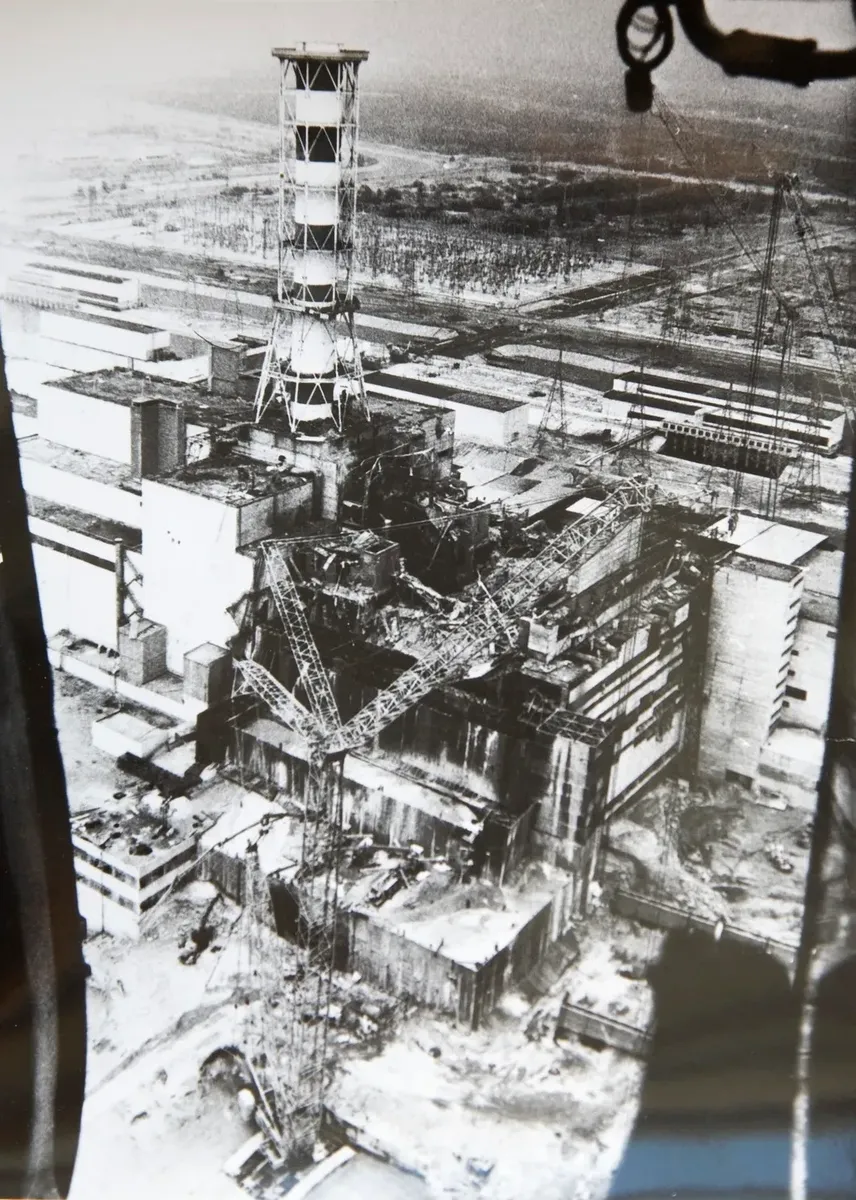
The most dangerous and responsible decontamination work was to be performed on the roofs of the third power unit, where a significant amount of highly radioactive materials were concentrated in the accident in the fourth block was concentrated. These were pieces of graphite masonry of the reactor, heat -eating assemblies, zirconium tubes, etc. The power of doses from separate objects were too high and very dangerous for human life.
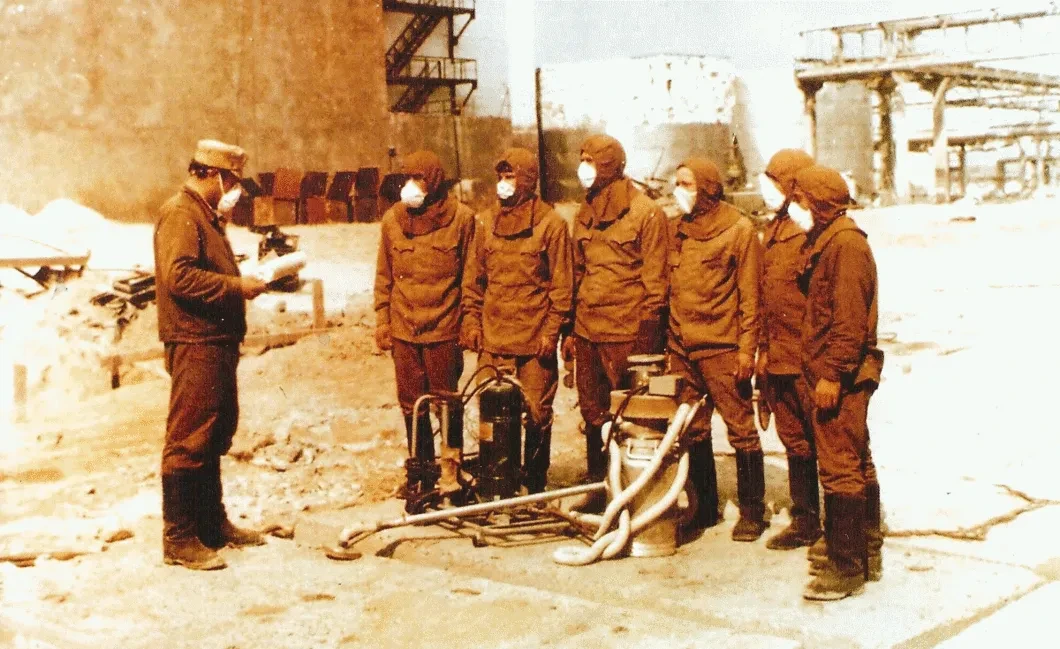
And all this mass from April 26 to September 17 lay on the roofs of the third power unit, the platforms of the main ventilation pipe, it was scattered by winds, washed with rains in anticipation, while, finally, it would reach its removal. Everyone was waiting and hoping for robotics. Waited. By helicopters, several robots were taken to especially dangerous zones, but they did not work. The batteries sat down, and the electronics refused.
In the operation, which I had to lead in especially dangerous zones of the third power unit, I have never seen the robot in work, except for one, extracted from graphite - “burned” in X -rays and became an obstacle when working in the “M” zone.
Work for people
Meanwhile, work on the burial of the emergency fourth power unit was close to completion. At the end of September, the Sarcophagus was to be blocked by large -diameter metal pipes. The difficult task itself was also complicated by the fact that on the roofs of structures, tons of highly radioactive substances lay on pipe sites. At all costs, they had to be assembled and dumped into the pharynx of the destroyed reactor, hid under a reliable roof. The work of the architect and very risky ...
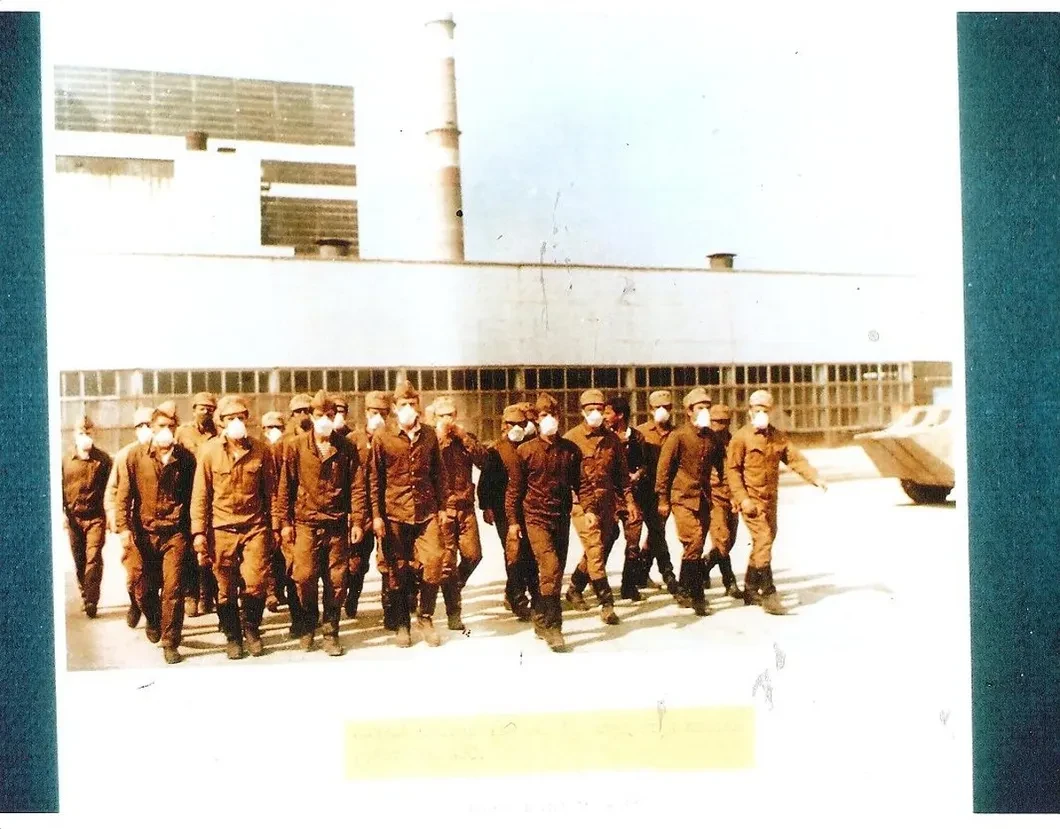
But how to approach the zones, where the radiation levels remained life threatening? Attempts to use hydraulic motors and other mechanical devices were unsuccessful. In addition, the places of the scatter of radioactive products adjacent to the ventilation pipe of the main building were inaccessible: the height of the structures - from 71 to 140 meters. In a word, without the active participation of people, such a task was simply impossible to fulfill.
On September 16, 1986, in accordance with the encryption received, I flew by helicopter to Chernobyl. He arrived at 16.00 to General Plyshevsky and immediately went with him at a meeting of the government commission, which was held by B.E. Shcherbina. We discussed the proposed version of the removal of highly radioactive materials from the Chernobyl roofs by warriors of the Soviet Army.
The participants in the commission plunged into painful silence. Everyone understood how dangerous this hellish work was for its performers. B.E. Shcherbina once again went through all possible options, not one of them was real. Then it came to the burial place of highly radioactive materials. The decision was the only thing - to discard only to the emergency reactor. I tried to convince the commission to delay upcoming work, make special metal containers with a large coefficient of weakening radiation and helicopters to take the collected materials to the corresponding places of the burial. The proposal was rejected. They talked about the shortage of time: they settled the closing time of the "sarcophagus".
Then the chairman of the commission turned to the general and to me: “I will sign a decision to attract the soldiers of the Soviet Army for the work of the soldiers of the Soviet Army.”
The decision was made. But the same decision was responsible for me for the scientific and practical leadership of the entire operation. At the same meeting, I proposed to prepare and conduct a thorough experiment in preparation for the operation.
On September 17, the helicopter brought us to the venue of the experiment. They decided to spend it at the N “H” site. A special role in the experiment was assigned to the candidate of medical sciences to Lieutenant Colonel of the Medical Service Alexander Alekseevich Saleev. He was supposed to check the possibility of working in a dangerous area. Saleev was to act using special intensified protective equipment. The lead protection of the chest, back, head, respiratory organs, eyes was adjusted to him.
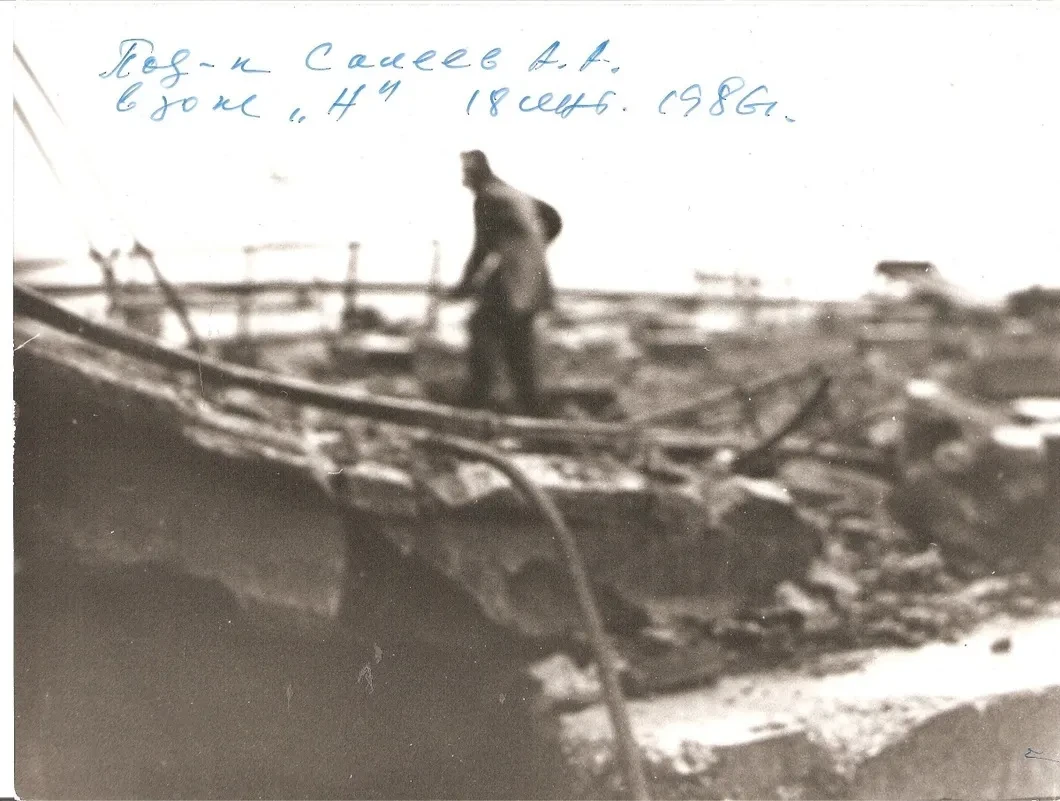
Promoted mittens were laid in special shoe covers. The corrugated aprons were additionally put on the chest and back. All this, as the experiment later showed, 1.6 times reduced the effect of radiation. In addition, a dozen sensors and dosimeters were hung on Saleev. The movement route was carefully calculated. It was necessary to exit through the gap in the wall onto the site, inspect it and the emergency reactor, dump 5-6 shovels of radioactive graphite into the collapse and return back at the signal. Saleev, Lieutenant Colonel of the Medical Service, performed this program in 1 minute 13 seconds. We, holding our breath, monitored his actions - stood in the opening, made by an explosion in the wall, but since we had no defense, we were in the zone for 30 seconds ...
For a minute with a small, Alexander Alekseevich received an irradiation dose of up to 10 x -rays - this is according to a direct -feeding dosimeter. The sensors decided to send to the laboratory, only after their decryption it was possible to draw more accurate conclusions. After a couple of hours, we received information: they did not particularly differ from the already known to us. The act based on the results of the experiment and reported their conclusions to members of the government commission. The commission considered the presented act, the instructions and memos for officers, sergeants and soldiers developed by us and approved them.
It was all the more amazing for us that for the entire period of the headquarters to eliminate the consequences of the Chernobyl accident from June to November 1986, the USSR Ministry of Health did not issue any recommendations and did not conduct examinations of working as a psychophysical state.
The members of the special -exploration detachment for 4 months of work in high and ultra -high fields and large dose loads did a blood test only once! Wild indifference ...
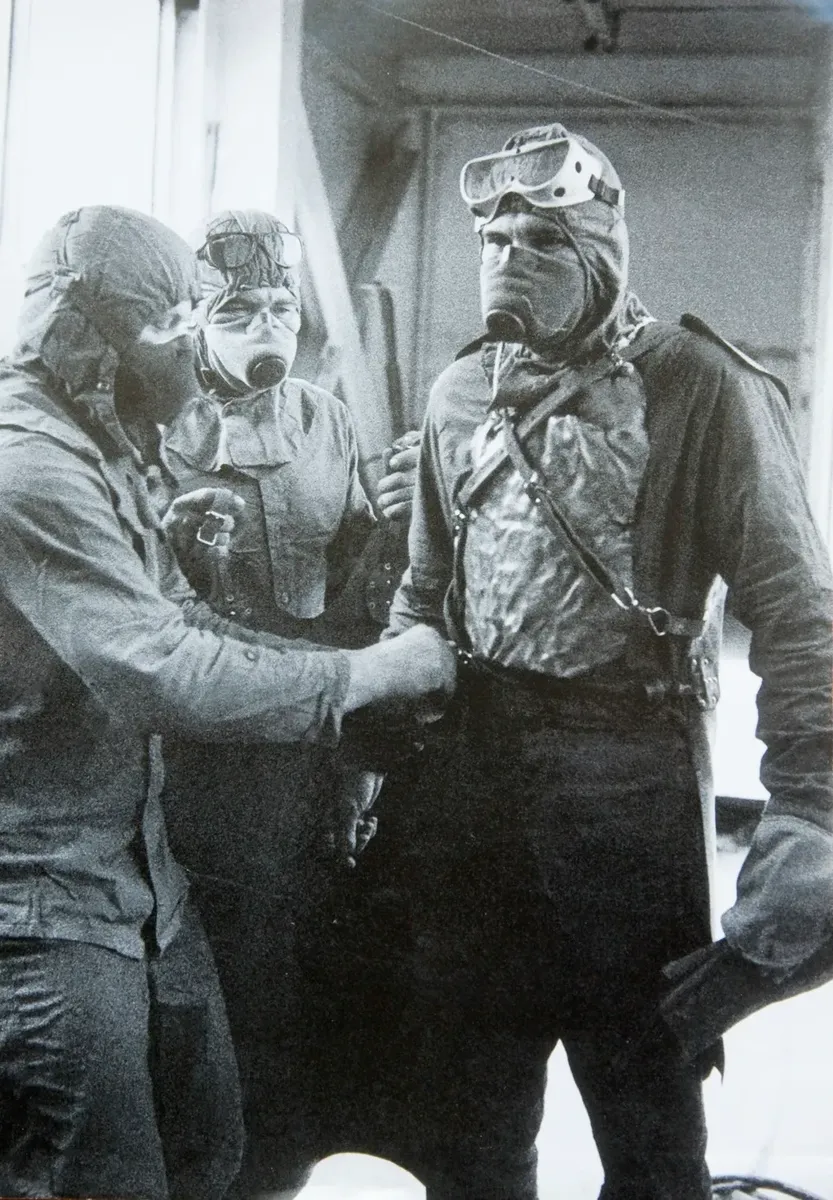
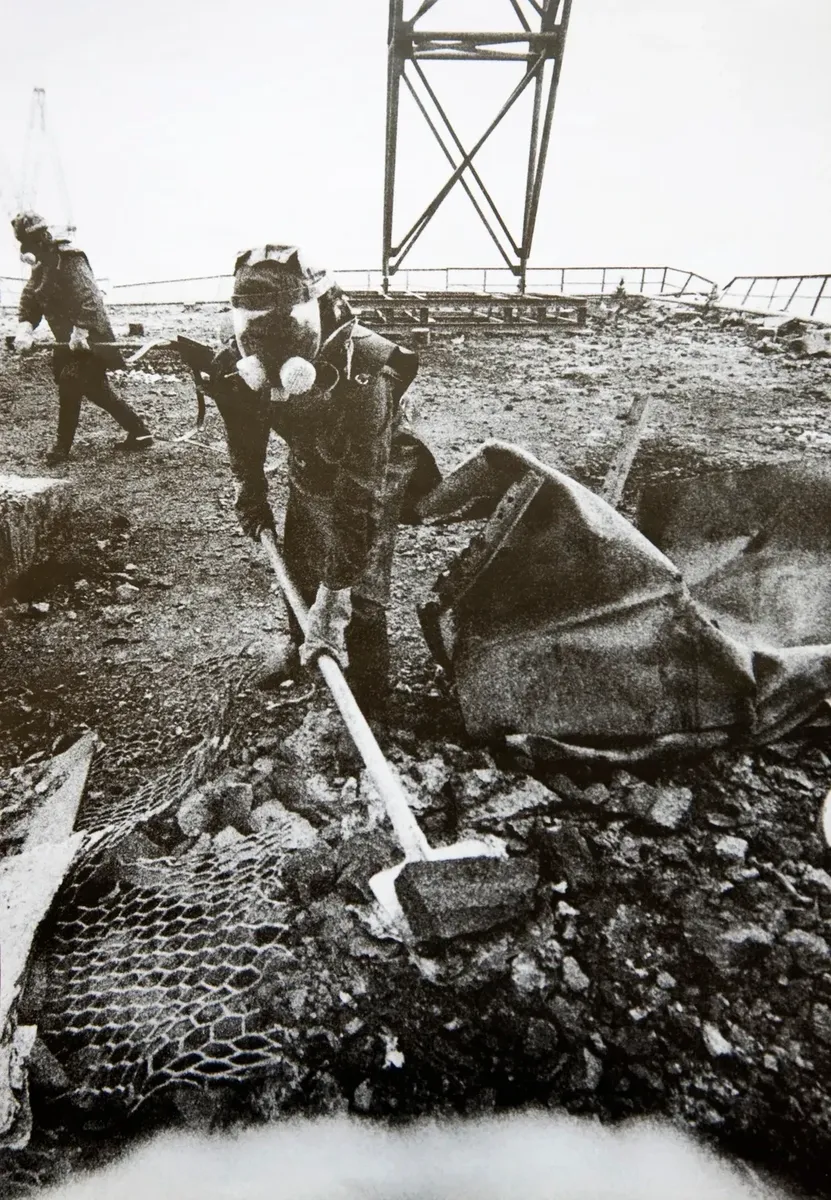
Preparation for the upcoming operation was in full swing. Soldiers manually prepared personal protective equipment. To protect the spinal cord, a 3 millimeter plate was cut out of a lead, lead swimming trunks were made - “baskets for eggs”, as the soldiers called them. To protect the occipital part of the head, lead screens were made like an army helmet; to protect the skin of the face and eyes from beta radiation-a millet-glass shields with a thickness of 5 millimeters; to protect the legs - lead insoles in shoe covers or boots; Respirators were adjusted to protect the respiratory system; to protect the chest and back - aprons made of corrugated rubber; To protect your hands - corrugated mittens and gloves.
In such armor weighing from 25 to 30 kg of soldiers, he looked like a robot. But this protection made it possible to reduce the effect of radiation on the body by 1.6 times.
"How so?! - I do not get tired of asking myself a question. - Or we came from the Stone Age to collect lead sheets so and cut out of them in haste protection of the critical organs of a person? "
I, the general and the person who has lost health in that operation, is ashamed to talk about such a primitive protection of people. It is no coincidence that every soldier, sergeant and officer had to calculate the work time - up to a second! I affirm: we took care of the soldier more than ourselves ... We did not repeat the fatal mistakes of the heroes-fucked ones. I am sure, and they could have survived if they knew the time of time and to the X -rays ... and most importantly, if they had the necessary overalls and protective funds.
Officers and bosses
Academic science has not developed anything reasonable in organizing work in especially dangerous areas. I had to create and equip a special command post (KP) on the go. There we installed telemonitors, a short -wave radio station for communication with the nuclear power plant and the operational group of the Ministry of Defense. In particularly dangerous areas, television cameras PTU-59 with a control panel on three axes and adjustment of the focus with transfocators were exhibited. The camera allowed the review and close -up to consider individual objects. At this KP, I conducted the commanders' briefing, set specific tasks to each soldier.
Special responsibilities were assigned to the output and route officer. The withdrawal officer was personal liability for the accuracy of compliance with the time of work. He personally gave the command "Forward!" And he launched the stopwatch, he also gave the command to stop working in the zone and turned on the electrician. In the hands of this officer was the life of warriors. The slightest inaccuracy or error could have tragic consequences. Nonsense was assigned to route officers. First, dosimetrists A.S. Yurchenko, G.P. Dmitrov and V.M. Starodumov drove them to complex labyrinths to especially dangerous zones. And only after this preparation could a route officer bring his team to the work area. Typically, a route officer withdrew 10-15 teams of soldiers, and his dose load became maximum, that is, 20 x -rays.
While we were processing the experimental data, a special commission, appointed by the First Deputy Minister of Defense, the Army General P.G. Lushev. The chairman of the commission was Army General I.A. Gerasimov, who, in the most difficult days after the accident, headed the operational group of the USSR Ministry of Defense. He will not be told in offense, but this was not the best option for leading the liquidation of the consequences of the accident. Far from the best. After all, together with N.I. Ryzhkov ( Nikolai Ryzhkov - Chairman of the Council of Ministers of the USSR - approx. Ed. ) And E.K. Ligachev ( Yegor Ligachev - Secretary of the CPSU Central Committee - approx. Ed. ) On May 2, the head of the civil defense of the USSR, Army General A.T. Altunin.
It was then that these leaders of the state were obliged to entrust the leadership of the entire operation to eliminate the consequences of the accident on the civil defense of the USSR. It should immediately be relocated to the headquarters in Chernobyl and give it the corresponding number of troops. And what happened? The zealous bosses were removed by A.T. Altunin and, unjustly reproaching, sent him to Moscow. Army generals were connected to the management, sometimes completely incompetent. Civil defense was appreciated as unprepared and incompetent, technically not armed.
Scouts
So, the same commission from the Ministry of Defense arrived. Its composition contained eight generals, including from the General Staff, Glavpur, rear, Khimvoysk, etc. At first they talked in the office of the head of the opera. Then we met with Shcherbina. Later we changed clothes and went to Chernobyl. There, several people on helicopters flew out to inspect the roofs of the third power unit and the sites of the main ventilation pipe of the nuclear power plant. At the command of the chairman of the commission, the helicopters hung several times above the roofs of the third block and at the pipe. Members of the commission with their own eyes saw a mass of graphite, heat -eating assemblies with nuclear fuel, zirconium fuel, reinforced concrete slabs and returned to Chernobyl.
Everyone again gathered for a meeting and a discussion began. It was proposed to approve a dose of one -time irradiation during the period of work in a hazardous zone of 20 X -ray.
In the Decree of the Government Commission No. 106 of September 19, 1986 there were only four points. The first paragraph stated that the Ministry of Defense of the USSR, together with the Chernobyl administration, was instructed to organize and carry out work to remove highly radioactive sources from the roofs of the third power unit and trumpets, and the last point of the decision was assigned all the scientific and practical leadership to the first deputy commander of the military unit 19772 Major General N.D. Tarakanova. Nobody asked me personally on this occasion, he did not warn me, especially since I am a mechanical engineer by education, and not a chemist at all. But he did not dispute the decision of the commission, simply so that they would not be considered a coward.
В тот же день, 19 сентября пополудни, началась адская операция в особо опасной зоне третьего энергоблока. Через полчаса я был на командном пункте, который размещался на 5001-й отметке. По ежедневным замерам, уровни радиации в блоке у стенки, примыкающей к четвертому аварийному блоку, были 1,0–1,5 рентгена в час, а у противоположной, примыкающей ко второму блоку, — 0,4 рентгена в час. Так что за две недели пребывания на КП по 10 часов в сутки можно было с избытком «набраться» той проклятой радиации…
Первыми в зоны постоянно ходили разведчики, всякий раз уточняя меняющуюся радиационную обстановку. Я назову их имена: командир отряда дозиметрической разведки Александр Юрченко, заместитель командира отряда Валерий Стародумов; разведчики-дозиметристы: Геннадий Дмитров, Александр Голотонов, Сергей Северский, Владислав Смирнов, Николай Хромяк, Анатолий Романцов, Виктор Лазаренко, Анатолий Гуреев, Иван Ионин, Анатолий Лапочкин и Виктор Велавичюс. Герои-разведчики! О них, а не об арбатских трубадурах слагать бы песни…
Особо опасная зона
Первую пятерку воинов во главе с командиром майором В.Н. Бибой я лично инструктировал у телемонитора, на экране которого отчетливо были видны зона работ и все находившиеся в ней высокорадиоактивные материалы. Вместе с командиром вышли в зону сержанты Канарейкин и Дудин, рядовые Новожилов и Шанин. На старте офицер запустил секундомер, и началась операция по удалению радиоактивных материалов. Воины работали не более двух минут. За это время майор Биба успел сбросить совковой лопатой почти 30 килограммов радиоактивного графита, сержант В.В. Канарейкин с помощью специальных захватов удалил разорванную трубу с ядерным горючим, сержант Н.С. Дудин и рядовой С.А. Новожилов сбросили семь кусков смертоносных ТВЭЛов. Каждый воин, прежде чем сбросить смертоносный груз, должен был заглянуть в развал реактора — заглянуть в ад…
Наконец секундомер замер! Впервые зазвучала сирена. Пятерка воинов во главе с комбатом быстро положила шанцевый инструмент в указанное место, мигом покинула зону через отверстие в стене и последовала на командный пункт. Здесь дозиметрист, он же и разведчик, Г.П. Дмитров вместе с военным врачом сняли показания дозиметров и объявили персонально каждому полученную им дозу облучения. Дозы у первой пятерки не превышали 10 рентген.
Я хорошо помню, как комбат просил меня пустить его в зону еще раз, чтобы добрать свои 25 рентген. Дело в том, что при получении 25 рентген полагалось пять окладов.
В зону пошла очередная пятерка в составе Зубарева, Староверова, Гевордяна, Степанова, Рыбакова. И так — смена за сменой. В тот день 133 воина-героя убрали из зоны «Н» более 3 тонн высокорадиоактивных материалов.
Ежедневно после завершения работ мы готовили оперативную сводку, которую я лично докладывал генерал-лейтенанту Б.А. Плышевскому. Зашифрованные сводки отправлялись министру обороны и начальнику Главпура.
ОПЕРАТИВНАЯ СВОДКА
19 и 20 сентября в работах по удалению высокорадиоактивных веществ с крыш 3-го энергоблока Чернобыльской АЭС принимали участие солдаты, сержанты и офицеры инженерно-позиционного батальона (войсковая часть 51975, командир — майор Биба В.Н.) в количестве 168 человек. Работы в основном выполнялись в первой особо опасной зоне «Н».За время выполнения работ:
собрано и сброшено в развал аварийного реактора 8,36 тонны радиоактивно зараженного графита вместе с элементами ядерного горючего;
извлечено и сброшено в аварийный реактор две тепловыделяющие ядерные сборки общим весом 0,5 тонны;
собрано и сброшено в развал аварийного реактора 200 кусков ТВЭЛов и других металлических предметов весом около 1 тонны.Средняя доза облучения личного состава 8,5 рентгена.
Отмечаю особо отличившихся солдат, сержантов и офицеров: командир батальона майор В.Н. Биба, заместитель командира батальона по политчасти майор А.В. Филиппов, майор И. Логвинов, майор В. Янин, сержанты Н. Дудин, В. Канарейкин, рядовые Шанин, Зубарев, Жуков, Москлитин.
Потерь среди личного состава и происшествий нет.
Руководитель операции, первый заместитель командира в/ч 19772 генерал-майор Н. Тараканов
Юрченко и Дмитров
Операция была в разгаре, и вдруг сбой. В правом углу зоны «М», что под трубой, появились чрезмерно высокие поля — в пределах 5-6 тысяч рентген в час, а то и более… Почти все разведчики были «выбиты», то есть перебрали дозу облучения. Я подозвал командира части и говорю: «Подбери толковых офицеров-добровольцев для разведки в зоне «М». Но тут ко мне подошел Саша Юрченко: «Пойду сам». Я категорически возразил, заметив, что уже дал команду подобрать офицеров. Саша ответил, что офицер, тем более не «обстрелянный», не принесет нужных нам данных, да и вряд ли доберется до места. И один пошел в разведку. Вернувшись, по памяти набросал картограмму инженерной и радиационной обстановки. Александр Серафимович выполнил задание блестяще, но я знаю, во что обошелся ему тот выход в зону…
После этого были внесены коррективы в производство работ по времени и дозам облучения. Ту памятную картограмму я до сих пор бережно храню!
Я уже упоминал о разведчике Дмитрове. Геннадий Петрович прибыл на ЧАЭС из Обнинска добровольцем. Во время операции он почти ежедневно был со мной на третьем блоке и неоднократно выходил в разведку в особо опасные зоны. Это был блестящий мастер своего дела — эрудированный, тактичный, скромный. Солдаты его уважали. С ним мы всегда возвращались поздно ночью с третьего блока по всем тем длинным лабиринтам. Однажды вернулись на АЭС, а санпропускник уже закрыт. Вся наша чистая одежда под замком. Обувь мы сбросили еще раньше. И вот, усталые, разбитые и страшно голодные стоим и не знаем, что делать. Был двенадцатый час ночи. Говорю: «Геннадий Петрович, иди к дежурному и решай задачу, ты же разведчик». Геннадий Петрович ответил: «Есть, товарищ генерал!» — и пошел в одних носках к дежурному по АЭС. Через полчаса мы уже мылись, но перекусить так и не удалось: все было закрыто.
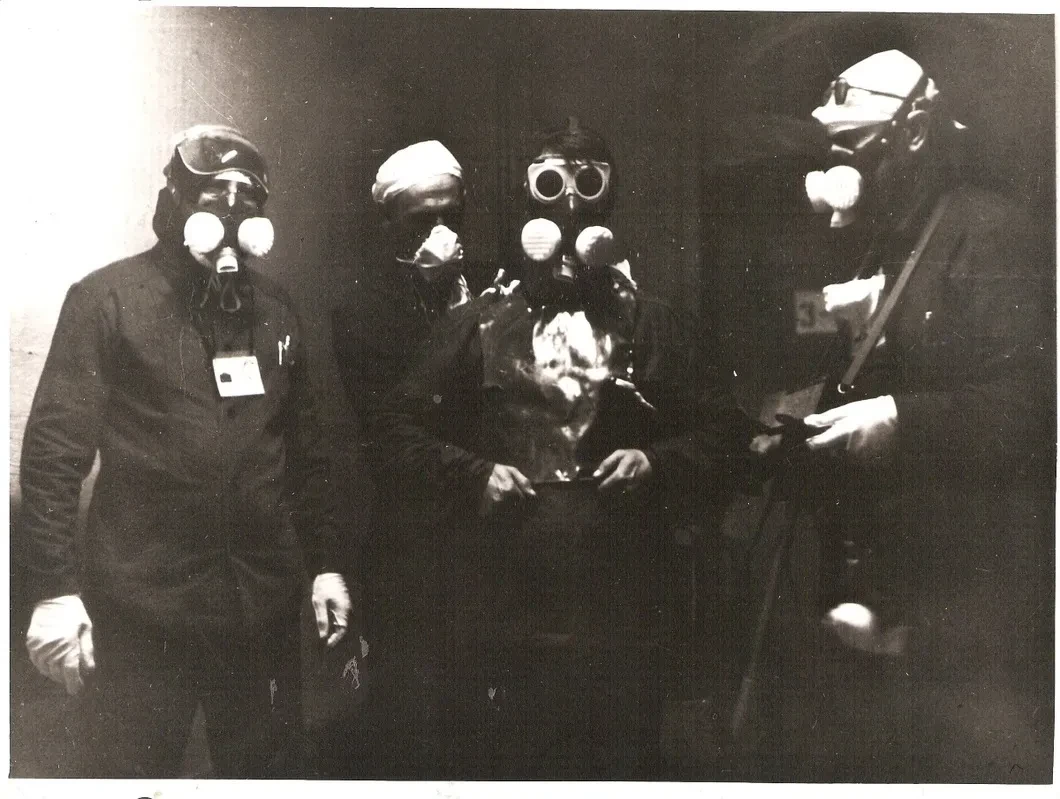
Вспоминаю еще один эпизод, связанный с Геннадием Дмитровым. Как-то, весь бледный, подбегает ко мне, подводит солдата и говорит: «Николай Дмитриевич, вот этот солдат мухлюет с дозами облучения. Он, кроме нашего дозиметра, установленного на груди под защиту, где-то добыл еще дозиметр и положил его в карман, а на контроль представил не наш, а свой. Но солдат этот выполнил свой долг, он работал в опасной зоне». Я пригласил командира подразделения и попросил разобраться по совести. Наказали того солдата или обошлось беседой — не знаю, но до участников операции этот факт я довел. Ведь все были добровольцы, всем предоставили возможность перед выходом на выполнение задания еще раз подумать и решить — идти или не идти в опасную зону. Какие же могли быть сомнения в руководстве операцией? Или были основания не доверять лично мне, стоящему у врат ада?..
Штурм трубных площадок
Но все это, как говорят в народе, — были цветочки… А вот ягодки нас ожидали на площадках главной вентиляционной трубы и у ее основания, где и графита, и ядерного горючего было просто навалом! Вентиляционная труба АЭС обеспечивала выброс в атмосферу факела очищенного в некоторой степени воздуха заборными вентиляционными системами из помещений третьего и четвертого энергоблоков. По конструкции эта труба представляла собой стальной цилиндр диаметром 6 метров. Для повышения устойчивости она была схвачена трубчатой каркасной конструкцией, опирающейся на восемь упоров (ног). Для обслуживания труба имела 6 площадок. Высота отметок 1-й площадки — 94 метра, 5-й — 137 метров. Выход на площадки обслуживания обеспечивался специальными металлическими лестницами. Каждая площадка — для безопасности — имела ограждение высотой 110 сантиметров.
В результате взрыва реактора четвертого энергоблока на все эти площадки, включая и 5-ю, были выброшены куски радиоактивно зараженного графита, разрушенные и целые ТВС, куски ТВЭЛов и другие радиоактивные вещества. При выбросе частично повредило 2-ю трубную площадку со стороны четвертого энергоблока…
И вот, в соответствии с разработанной технологией удаления высокорадиоактивных продуктов выброса, было принято решение начинать работы на 1-й трубной площадке, где радиоактивность была более 1000 рентген в час!
Работы усложнились трудностью маршрута выдвижения в зону. Команда сначала выходила на исходный рубеж, где был оборудован пост стартового офицера. Он управлял электросиреной, хронометрировал время, которое рассчитывали физики. И команда со старта по пожарной лестнице выходила через проем в перекрытии, который образовался после взрыва. Короткими перебежками по деревянному настилу все следовали через зоны «Л» и «К», где уровни радиации были 50–100 рентген в час, в зону «М». Там уровни радиации доходили до 500–700 рентген в час. Затем команда поднималась по металлической лестнице через отверстие 1-й трубной площадки в зону работ. Время выхода и возвращения — 60 секунд. Время работ в зоне 40–50 секунд. Работы велись ограниченными командами — только по 2–4 человека…
September 24th. Начало штурма трубных площадок. Первыми на 5001-ю отметку прибыли воины полка Гражданской обороны из Саратовской области. В этом полку, в должности полкового инженера, проходила моя служба с 1962 по 1967 год, когда я с семьей переехал с Украины в Россию.
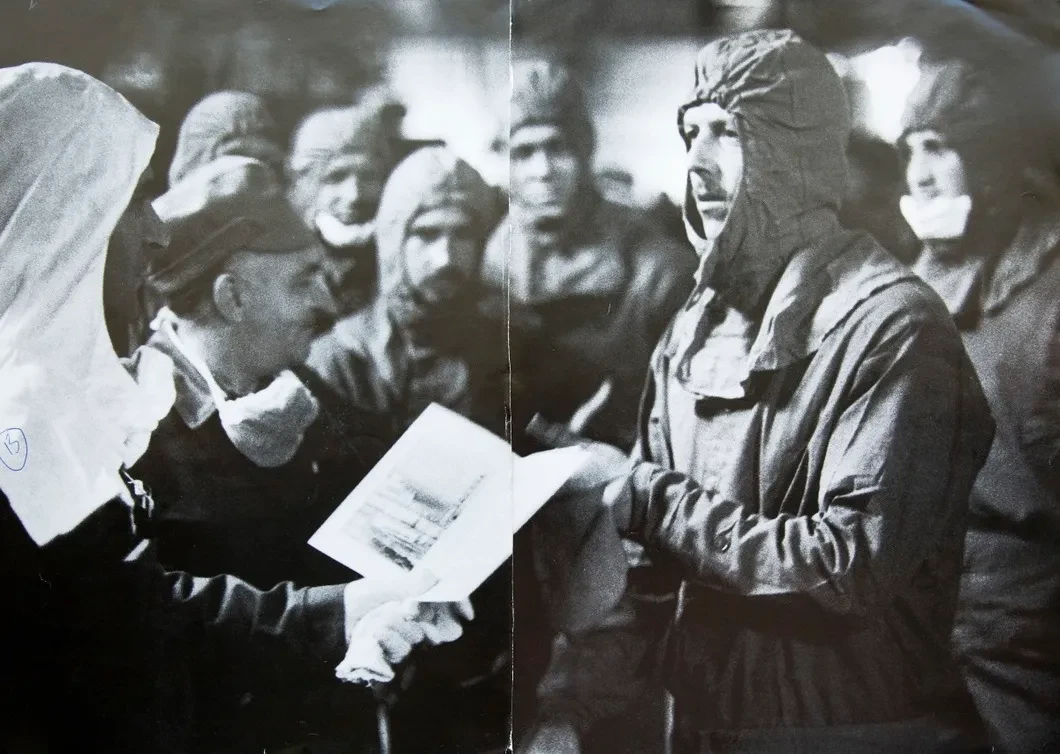
И вот теперь в аду Чернобыля, на отметке 5001, стоял личный состав воинов Саратовского полка. Не было тут ни друзей, ни знакомых… Я коротко выступил перед личным составом, рассказал, что мы работаем шестые сутки. Но предупредил, что предстоит работа самая сложная и самая опасная. Назвал уровни радиации зон (более двух тысяч рентген в час), где они, мои однополчане, начнут операцию по сбору и удалению высокорадиоактивных элементов. Внимательно всматриваясь в лица, я громко объявил, как и вчера, и позавчера, и ранее: «Кто не уверен в себе и кто плохо себя чувствует, прошу выйти из строя!» No one came out. Командиру полка я отдал распоряжение разбить личный состав по командам, начать переодевание в защиту, а потом уже представлять на инструктаж.
В 8 часов 20 минут начался штурм первой трубной площадки. От воинов-саратовцев эстафету приняли саперы инженерно-дорожного полка, потом полка химической защиты и завершили — воины отдельного химического батальона.
ОПЕРАТИВНАЯ СВОДКА
24 сентября в работах по удалению высокорадиоактивных веществ со 2-й трубной площадки Чернобыльской АЭС принял участие личный состав войсковых частей 44317, 51975, 73413, 42216 в количестве 376 человек.За время выполнения работ:
собрано со 2-й трубной площадки главной вентиляционной трубы и сброшено в развал аварийного реактора 16,5 тонны радиоактивно зараженного графита;
собрано и удалено 11 полуразрушенных тепловыделяющих сборок с ядерным горючим общим весом 2,5 тонны;
собрано и сброшено в аварийный реактор больше 100 кусков ТВЭЛов.Средняя продолжительность времени работ составляла 40–50 секунд.
Средняя доза облучения военнослужащих 10,6 рентгена.
Потерь среди личного состава и происшествий нет.
Отмечаю наиболее отличившихся солдат, сержантов и офицеров: Миньш Э.Я., Терехов С.И., Савинскас Ю.Ю., Шетиньш А.И., Пилат Ш.Э., Илюхин А.П., Бруверис А.П., Фролов Ф.Л., Кабанов В.В. and others.
Руководитель операции первый заместитель командира
в/ч 19772 генерал-майор
Н. ТАРАКАНОВ
Вертолетчики
При выполнении операции по удалению высокорадиоактивных веществ с крыш третьего энергоблока и трубных площадок нашими боевыми помощниками были славные вертолетчики — гражданские и военные.
Очень часто перед тем, как начинать операцию на третьем блоке, вертолетчики на огромных Ми-26 проливали бардой или латексом зев аварийного реактора, крыши машзала третьего энергоблока, трубные площадки. Делалось это для того, чтобы радиоактивно зараженная пыль не поднималась в воздух во время работ и не разносилась по округе.
Особенно врезались в память военный вертолетчик полковник Водолажский и представитель «Аэрофлота» Анатолий Грищенко. Хорошо помню неофициальную встречу, которую организовали Юра Самойленко и Витя Голубев. Встреча состоялась на заводе у Голубева, где они поздним вечером устроили ужин. Прибыли самые близкие мне люди — Женя Акимов, Володя Черноусенко, полковник А.Д. Саушкин, А.С. Юрченко и вертолетчики, в том числе Водолажский и Грищенко. Уже далеко за полночь мы наконец-то распрощались и разъехались… Жили все в Чернобыле.
И вот, когда 3 июля 1990 года в американском Сиэтле скончался Анатолий Грищенко, а я в это время лежал в Центральной клинической больнице, мне стало вовсе худо…
Не верилось, что Анатолия больше никогда не увижу. В голове невольно прокручивалось: следом — твой черед…
Вокруг была какая-то пустота. Ведь этот живой, удивительно жизнерадостный человек был у меня в январе 1987 года в московской больнице, по его виду и предположить было невозможно, что через три года его не станет… Всплывали воспоминания об удивительно скромном и отважном вертолетчике. Он имел огромный опыт работы с крупногабаритными грузами, что и пригодилось при ликвидации последствий аварии на Чернобыльской АЭС.
Вертолетчики первыми пытались подавить взорвавшийся реактор. Позже они вели борьбу с вредными радиоактивными элементами, подавляя пыль из брандспойтов. Это называлось дезактивацией с воздуха. Анатолий Демьянович, кроме того, учил военных вертолетчиков переправлять крупногабаритные грузы. Затем правительственная комиссия поручила ему перемещение многотонных вентиляторов и кондиционеров. Они требовались для восстановления первых трех блоков АЭС. Более месяца была первая командировка. Тогда вместе с Грищенко честно выполнял свой долг заслуженный штурман Евгений Воскресенский. Это ему позже врач Монахова пробивала бесплатную путевку в санаторий, так как некоторые специалисты не хотели признавать у штурмана заболевание крови. А уже второй раз бесплатную путевку ему не дали. У нас это умели делать…
Красный флаг победы над «белой» смертью
27 сентября был очень памятный для меня день. В это утро мои коллеги по операции на АЭС в шутку говорили: «Ну, наконец-то чернобыльского генерала снимают с трубы». Но это была лишь маленькая передышка. Дело в том, что 26 сентября прилетел из Москвы генерал армии В.И. Варенников. Мне уже поздно вечером сообщили, что на следующее утро меня будут заслушивать о ходе операции. Никаких шпаргалок для доклада я не готовил — вся информация была в голове.
Утром 27 сентября состоялось совещание. До совещания Варенников долго расспрашивал меня о работах на АЭС, особенно его интересовало состояние строительства «саркофага», его фильтровентиляционной системы, результаты работ по дезактивации первого и второго энергоблоков, как выполняются указания начальника Генштаба С.Ф. Ахромеева по работам на деаэраторной этажерке третьего блока. Дело в том, что деаэраторные этажерки третьего блока выходили к развалу аварийного энергоблока, и они были тоже опасным источником высоких уровней радиации. Правительством поручалось Министерству обороны и Минсредмашу совместно выполнить работы по подавлению этой радиации.
Как сейчас помню, после полученной шифровки из Генштаба мы вместе с заместителем министра среднего машиностроения А.Н. Усановым провели первое совещание и наметили мероприятия. К слову, об этом человеке: Александр Николаевич Усанов лично руководил строительством «саркофага», и его КП, более или менее защищенный, находился в том же третьем блоке, где и мой… Позже мы с ним часто встречались в шестой клинической больнице Москвы. Он тоже «схватил» лишку радиации. За Чернобыль получил Звезду Героя Социалистического Труда. Свидетельствую: эта награда Александру Николаевичу по заслугам.
На совещании я хриплым голосом докладывал о мужестве наших солдат, сержантов и офицеров, о выполненных объемах работ, о том, что еще осталось сделать.
2 октября 1986 года мы успешно завершили операцию по удалению высокорадиоактивных элементов. Всего было сброшено в развал 4-го взорвавшегося энергоблока около 200 тонн ядерного топлива, радиоактивно зараженного графита и других элементов взрыва. Под руководством Виктора Голубева были развернуты трубопроводы и с помощью гидромоторов были смыты все мелкие фракции от взрыва с крыш ЧАЭС. Специальная комиссия обследовала район работ на крышах энергоблоков, крышах машзала и трубных площадках главной вентиляционной трубы, на которую был поднят красный флаг в знак победы над «белой» смертью.
Николай Тараканов, генерал-майор, руководитель работ по ликвидации последствий аварии на ЧАЭС, президент МООИ «Центр социальной защиты инвалидов Чернобыля», доктор технических наук, член Союза писателей России