
Translated material
Merkel lost an ally
The head of the Social Democratic Party of Germany-the partner of Merkel in the coalition-resigned. The future of the coalition is in question
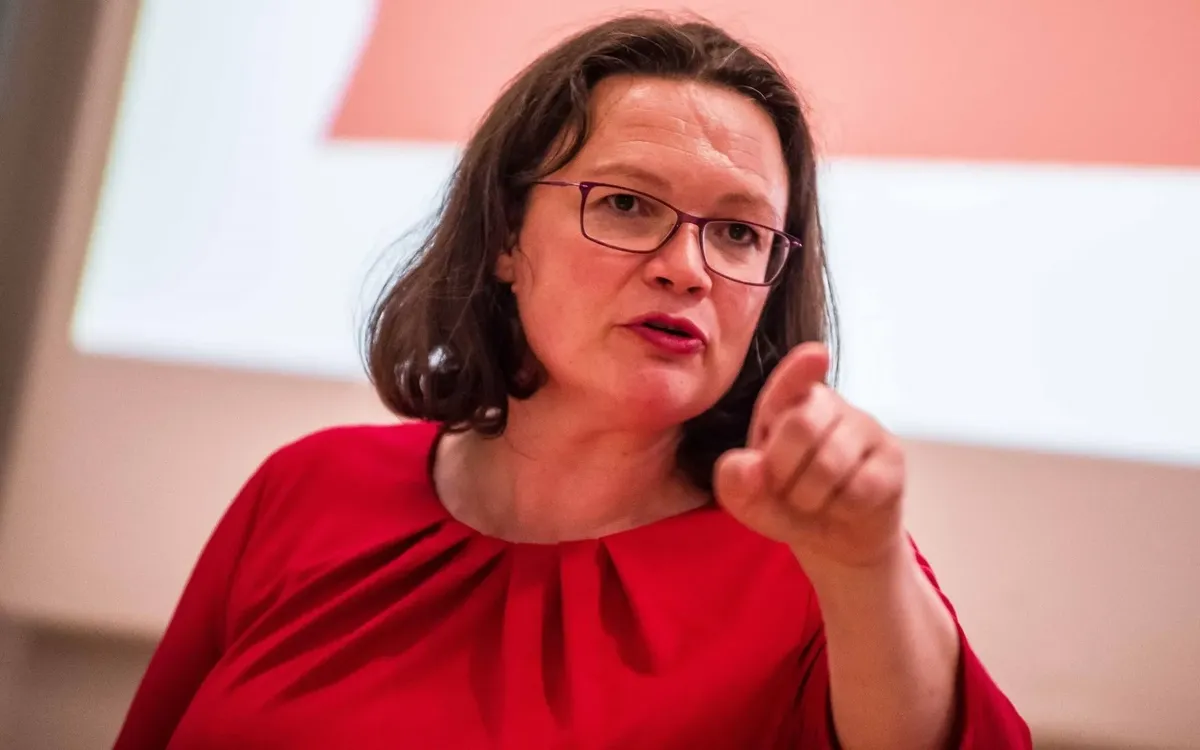
The "large coalition" of Christian democrats and the Social Democrats, the ruling in Germany, tolerates a tangible shock for the second time during the year. In December, after a series of recordly low results of the Christian Democratic Union in the regional elections, Angel Merkel left the party chairman-though she remains a chancellor until 2021. On Sunday, Andrea Nales, the chairman of the German Social Democratic Party, said about her intention to resign about her intention to resign. All this jeopardizes the position of the ruling coalition, which already loses the support of the population - and the Angels Merkel, who, in the event of the collapse of the coalition, will have to look for a new ally or declare early elections.
A few years ago, the black-red coalition (the colors of the CDS and SDPG) seemed very strong: it is the rules during the first, third and present-fourth-deadline Merkel. Problems arose in 2015, after the start of the so -called migration crisis, when Germany agreed to participate in the European refugee resettlement program and a stream of migrants poured into the country. During the last parliamentary elections, in 2017, voters demonstrated their discontent: the CDS, and the Social Democrats again took the first and second places, respectively, but the former lost 8.6%, and the latter-5.2% compared to previous elections.
The most conservative voters have moved to the ultra -right “alternative for Germany”, which first went to parliament with a result of 12.6%, and more left to free democrats and green. The “green” in all regional elections of the last two years significantly strengthen their positions: for example, in the October elections in the federal land, Hesse, after which Merkel announced a resignation, “Green” received about 20% of the vote, improving their result by 9% compared to previous elections. The Alternative for Germany then, in October, first went to the Hessian land parliament.
New parties - “green” from the left flank and “alternative” from the right - successfully lure voters from political heavyweights: the CDS and the SDPG. This was especially evident during the recent elections in the European Parliament.
Social democrats suffered a painful defeat in these elections, gaining only 15%-their historical minimum (for comparison: in the elections in 2014 they received 27% of the vote).
According to the unpleasant coincidence on the same day, regional elections in the federal land Bremen were held, where the Social Democrats were in power for more than 70 years in a row and where this time lost to Christian democrats.
The party leader Andrea Nales decided to take responsibility and on Sunday, June 2, said that she was resigned.
“In recent weeks, there have been great doubts about whether I have sufficient support,” she wrote in her appeal on the website of the Social Democratic Party. - Therefore, I wanted clarity. This week I received this clarity. The discussions in the party and signals within our faction showed that there is no more support necessary for me to continue this post. ”
Tules finished her appeal with the wishes of “good luck and success” to those who come to her place.
Good luck is clearly required. The main issue that the Social Democrats will now have to solve for yourself is to continue to stay inside the coalition with the CDU, or is it better to go to the opposition. Many party leaders are for the second option. Firstly, in this case, the Social Democrats will be able to dissociate themselves from the CDU, who, judging by the ratings, disappointed his voters and who has his intra-party problems. By the way, the elections to the European Parliament also confirmed this: the result of the CDU/CSS decreased by 6.4 percentage points.
Secondly, on the rights of the younger partner of the coalition, the Social Democrats are forced to pursue a joint policy with the conservative Christian Democratic Union, which can become even more conservative with the new leader-Annegret Kramp-Carrenbauer, a convinced Christian and opponent of same-sex marriages. This is somewhat contrary to the left values of the Social Democrats, especially the young, who want to move even to the left: for example, a month ago, the leader of the youth wing of the party Kevin Künins in an interview with the newspaper Die Zeit proposed nationalizing the BMW and generally reconsider the modern economic model based on private property.
True, for his initiative, he received a wave of criticism from his own-the party Secretary General Lars Clangbail on Twitter called this idea “social utopia” and assured that this was not part of the Social Democrats program, and deputy Johannes Kars, also on Twitter, asked that Cunervance smoked. But the fact remains: and without left -winged ideas inside the party there are a lot of disputes - and an acute understanding of the need for a new program and new ideas that will help to raise collapsed ratings.
It is still unknown who exactly will take the place of Nales. This will be decided at a universal party congress, which should go in mid -autumn. Until then, three will lead the party: the Prime Minister of the land of the Raynland-Pfalz, Malu Dreyer, Prime Minister of Meklenburg-Transfiguration Manuel Schvezig and the head of the Hessian branch of Torsten Shafer-Gyumbel. “I am sure that we will be able to go through this transition period very well,” said Malu Dreyer to the German agency DPA on Monday, after a meeting of the party leadership. “We know each other, do not compete with each other and trust each other.” All three have already stated that they would not apply for the post of chairman of the party.
So far, for the future ruling coalition, the most important date is on June 24. A meeting of the board of the Social Democrats is scheduled for this day, where they will also decide how to further build relations with the CDU. For Merkel, it is critical to keep the younger partner. If the Social Democrats decide to break the coalition agreement, Merkel will have two options: either look for a new coalition partner (and it will be difficult to find it), or declare extraordinary elections to the parliament.
The latter means that Merkel will leave the post of chancellor earlier than 2021: after the election, a new coalition government will be formed, which, in case of victory of the CDU, will be headed by its new leader Annegret Kramp-Carrenbauer.
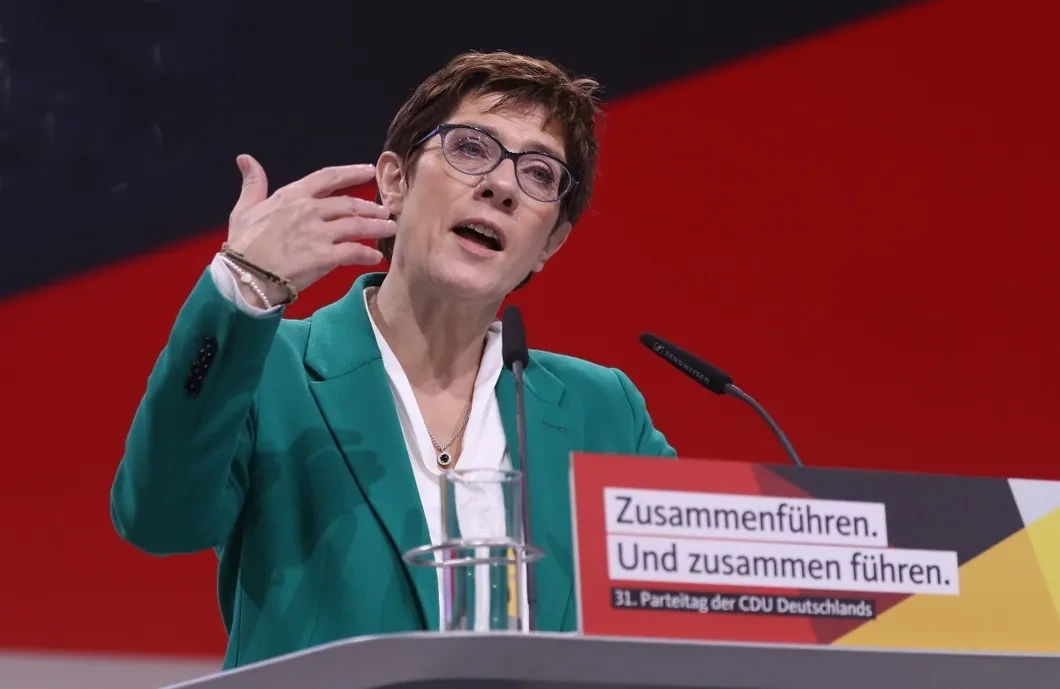
Everything is not easy with this. Then, in the fall, Merkel said that she would leave the post of party chairman to give HDS a chance for a new start. Kramp-Carrenbauer, at least for now, could not give this new start: party ratings are reduced. Moreover, according to the recent survey of the Forsa research center, 70% of the Germans do not want to see Kramp-Carrenbauer at the head of the country-on the site of Merkel. In general, extraordinary elections for the CDS now - when some of the voters have moved to other parties, and the rest are nostalgic for Merkel and are not used to the new leader - they will not be very hand. Therefore, immediately after the statement, Nales Merkel hastened to call partners to stay in the coalition and promised: “We will continue to carry out the work of the government with all seriousness, understanding our responsibility.”
Social Democrats meanwhile make it clear that the future of the coalition depends on the CDU. Party Secretary General Lars Klingbail has already stated that the SDPG expects from Christian democrats proposals for pension policy and climate change. “The change of SDPG leader will not affect the coalition,” he said in an interview with German radio. “This coalition will work or not depends on how much we will achieve progress in negotiations on coalition policy.”