
Translated material
"Could not scream from hunger"
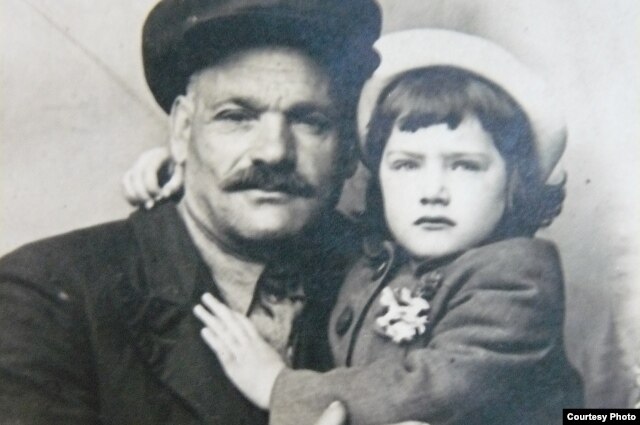
On September 8, 1941, the blockade of Leningrad began, which lasted 872 days. The chairman of the Society of Blocades of the Sverdlovsk District of Krasnoyarsk, Esfir Kolosova, still does not know exactly how old she was, who was her real parents. In 1942, a child was taken out of the besieged Leningrad to the orphanage of the city of Kansk (200 km from Krasnoyarsk). Three years later, a Jewish family adopted the girl. The foster parents gave her a new name, patronymic, surname and even changed the place of birth in the documents from Leningrad to Krasnoyarsk. Only in adulthood did Esfir learn that she was not a Jewish at all and in fact her name is Valya Kiseleva.
Around bandaged arms and legs
The earliest children's memory Esther Kolosova (surname for her husband) is a huge hospital ward, around bandaged arms and legs. Obviously, she saw this very small, most likely - in Leningrad, where she was born. The Esther knows that she was taken out of there during the blockade, when she was no more than two years old. As it turned out later, it was the hospital chamber of the Primorsky hospital in Leningrad.
They lost their only son in July 1944 on the Leningrad Front. In order to somehow drown out grief, they decided to adopt the Leningrad girl
“I still remember, under the bed there is a wooden pelvis,” says Esther Isaevna. - Nobody could tell me about this, therefore, that picture was preserved in my memory. Apparently, I remembered this chamber because I was very scared then.
The foster parents Lydia and Isai Zusmanovich did everything so that the girl would forget the horrors of war. They named her in honor of their son Frol, in the female manner - Esther.
“I was loved madly, although by age my parents were suitable for my grandparents,” recalls Esther Kolosova . - Such love is not from every native mother can be expected. To feed me, they immediately bought a goat. Until the age of 13, my mother took my hand, she could not let go of her. They so wanted me to be their child that changed my place of birth in the documents.
Lydia and Isai Zusmanovich lost the only son of Frol in July 1944 on the Leningrad Front. In order to somehow drown out their grief, they decided to adopt the Leningrad girl.
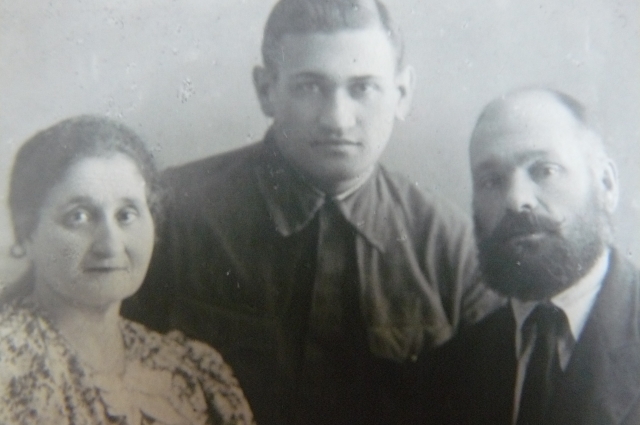
“Later, my mother said that when she saw me, she immediately decided that I would be her daughter,” says Esther Kolosova. “I was as black as they.” They took me to Krasnoyarsk for a while to feed me. And two months later, my mother brought me back to the orphanage, she went to draw up documents. I remember that this was the most terrible time for me. I already lived with my mother and dad, and here again - an orphanage. But my mother returned, and we never parted before her death.
If you look at the photos of a little fira, it is surprisingly similar to her adoptive mom and dad. It is unlikely that anyone who did not know her story may doubt that these are their native people. But the parents did not hide from the daughter that she was a reception.
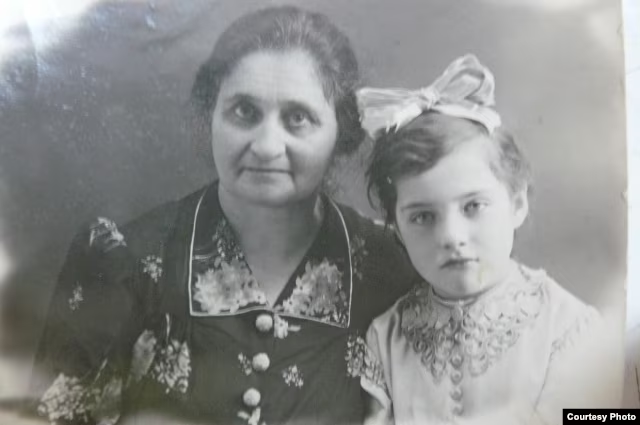
"Firona, you look, but you have no one"
In 1990, Esfir Isaevna accidentally saw a note in the regional newspaper. In it, everyone who survived the blockade of Leningrad was invited to the red corner of the electric repair plant. It was a meeting of the regional society of blockade.
“A woman came up to me there and offered to go with her,” says Esther Kolosova. -She took out a dilapidated, chreepy barn book, on which it was written "Children evacuated from Leningrad." There were lists in the districts where they were sent: Krasnoturansky, Taseevsky, Kansky, etc., the columns began to read: surname, name, patronymic, parents, date of birth, place of residence. And in one of the lines we find: "Valya Kiseleva." It is "Valya", not "Valentine". In the remaining columns about relatives - a dash, and in brackets - an orphan.
As the blockade society said, there were few such absolute orphans. It turned out that the information about Val Kiseleva completely coincided with the fact that Esther knew about her move to Krasnoyarsk.
- I survived a shock. The same time and place were indicated from where they took me and where they later brought me. There was no doubt that it was me. These were the first meager official information about my past, says Esther Isaevna.
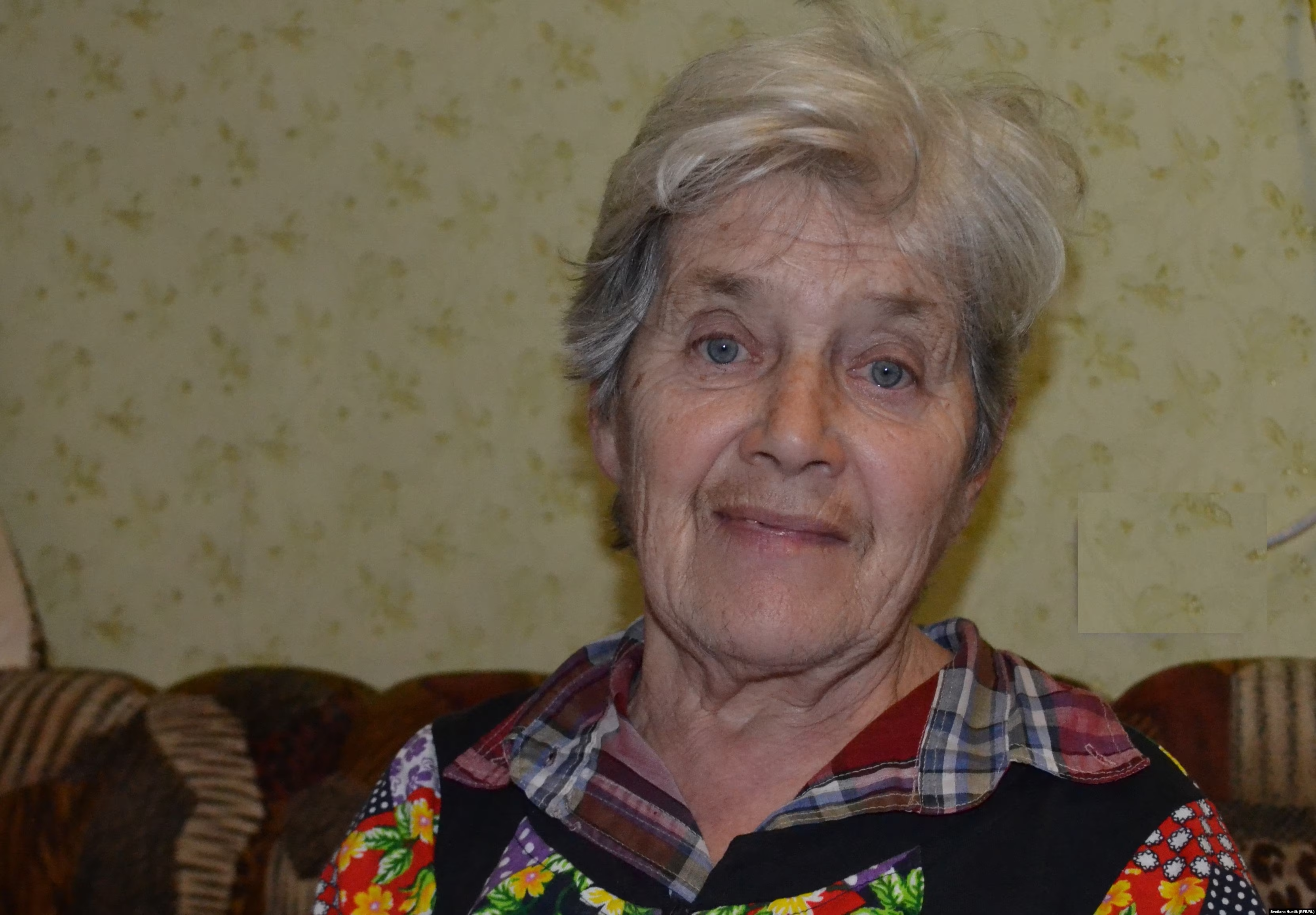
The Esther decided that she would look for her biological parents. The adoptive mother, who was still alive, did not resist the searches, but said: "Fironka, you look, but you have no one." Esther Kolosova nevertheless wrote a request to the Primorsky hospital of St. Petersburg. As it turned out, not in vain. There was information that in 1942 they really received an exhausted girl who was sent to the Leningrad house of the child No. 9. The Esther became clear where her first children's memories of the hospital ward and bandaged people were.
Determined the date of birth - March 1, 1940. The age of the children was then determined approximately by the teeth
The Esther sent the letter to the regional station. From there the answer came that "the Bezrodny Valya Kiseleva really lived in the Leningrad House of the Child No. 9." There, as it turned out, she was given a name - Valya Kiseleva, and determined the date of birth - March 1, 1940. It turns out that the age of the children was then determined approximately, by teeth.
- It turns out that I was called Valya Kiseleva, but this name and surname were not real?! And in Krasnoyarsk, Valya Kiseleva turned into Esther Zusmanovich, says Esther Kolosova.
According to the stories and archival data, Esfir found out that she was brought to the Leningrad Primorsky Hospital. The little girl was found in one of the Leningrad communalists.
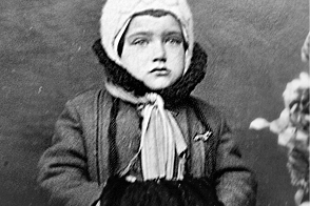
“I could no longer scream from hunger, there were no living adults next to me,” says Esther Kolosova. - I was treated and sent to the house of the baby, and after a while he was evacuated to the Krasnoyarsk Territory, to the city of Kansk. As I later learned later, the children were taken for more than a month, heated in warmers. The road to Siberia took more than a month. Not everyone was able to do such a long way. Many were dying along the road, their calf was put into a Kholodnik car, which was driving the same composition. Regularly in the wagons the question was heard: "Are you all alive?" How I survived, one God knows.
A container with children-blockers who did not survive on the way was then delivered to Krasnoyarsk. They were buried in a cemetery in the village of Berezovka. In total, 11 thousand people were evacuated from the blockade Leningrad in Krasnoyarsk from 1941 to 1942, including 2 thousand children.
- Wasn't you a desire to leave for Leningrad, to your homeland?
- No, I lived all my conscious life in Krasnoyarsk, I love him. My children were born here, I worked as a dentist for 40 years, retired and consider myself a very happy person. And I first saw Leningrad when my children were already studying at school. There is everything else for me. But children's memories still do not allow you to forget that I actually - an orphan from the blockade Leningrad. All my life I lived with the feeling that now someone will call, knock on the door or come a telegram that they are looking for me. Of course, I would never abandon my foster parents, they were holy people. But this is the feeling that my relatives are looking for me, always with me.