
Translated material
Bus to Vancouver

How the Swedish teacher went on a trip for justice and first became a Canadian writer, and then Moscow homeless
On May 31, the Russian television channel 360 ° showed a story that in one of the squares near the Kyiv station in Moscow lives a homeless writer from Sweden named Mia Johansson. Following the channel in the square, journalists of many editions reached out. Mia willingly talked with them, distributed an interview, talked about her life and plans.
Time traveler diary
According to her, she was waiting for a bus at the Kievsky station, on which she was going to go to Canadian Vancouver. But since the bus did not come for a long time, she enjoyed the warmth of the Moscow spring, looked at the stars and pondered her new book. Employees of neighboring stores confirmed that a Sweden citizen has been living here for two weeks. Locals brought her food, water, and coffee. Sometimes they gave money. Mia received help with gratitude and, according to her, was pleased with everyone.
Journalists soon found out that Mia is really a writer. In any case, I published one book. On the Web found links to its fantastic novel published in English in English “Unfinished discussion about God, or the diary of a traveler in time”.
But their own travels played a cruel joke with Mia. She came to Russia through Ukraine in February for a monthly tourist visa. Since then, I managed to live in Moscow, go to St. Petersburg, and also travel along the Trans -Siberian Railway to Slyudyanka, in Baikal. There she was detained for the first time. The visa by that time was already expired, so the police transferred Mia to the court, who sentenced her to a fine and ordered to leave Russia within a few days.
The Swede disciplinedly followed the received instructions. She went to Moscow and went to Sheremetyevo Airport - to the Aeroflota box office. There was a good price for tickets to Sweden, she says. But the cashier said that Mia tickets cannot be sold. Then she asked for a ticket to China - she had long wanted to get there, and, again, inexpensive.
But customs officers at the airport explained that in order to leave Russia, Mii should pay a fine for an expired visa. How to do this, she did not understand. Therefore, I went to another cash register and bought train tickets to Finland. They were also inexpensive. After all, they demanded to leave the country as soon as possible.
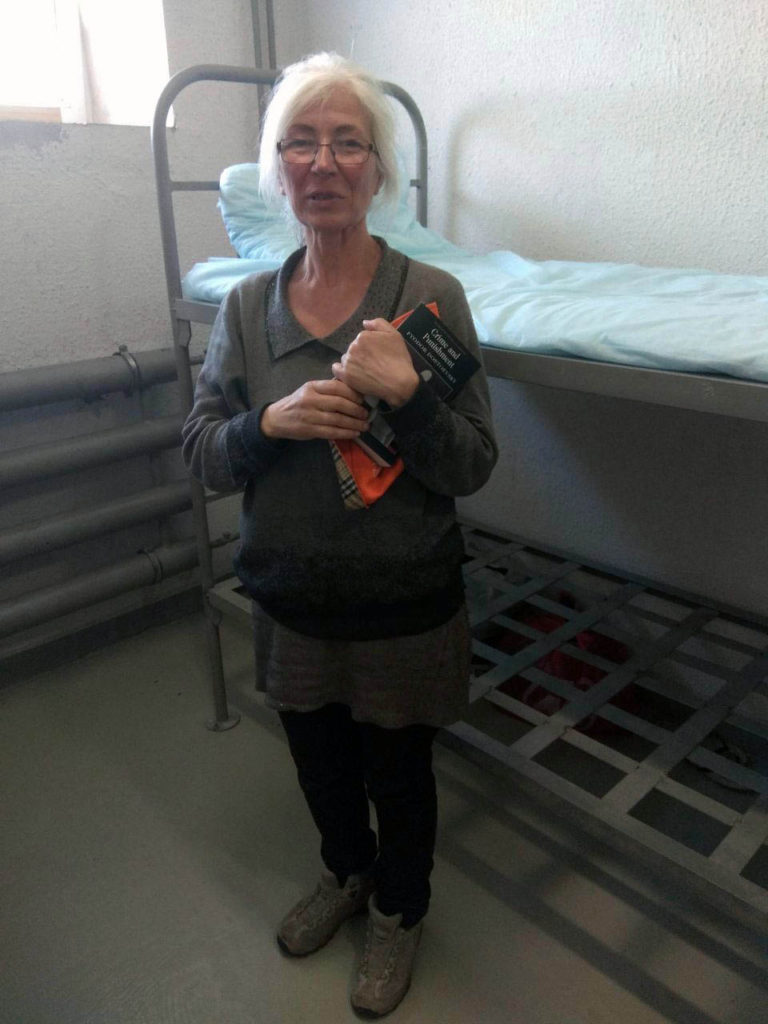 Mia Johansson in the migration center in Sakharov Photo: Alexey Sakhnin
But she also did not leave for Finland either. The conductor checked her passport, saw an expired visa and did not let him on the train. The head of the train advised MII to go to the Swedish consulate. From there she was sent to the police. The police sent to the migration service. There, employees knew English, but did not know where they were paying for fines. Mia went to the police again. But the police could not find the protocol of her court session on their database, because it was drawn up in Slyudyanka.
And Mia went to the Kyiv station. I liked life in the Kyiv MII area. “The Russians are very friendly,” she says. - And Russia itself is a wonderful country. All countries are beautiful. ” The days went, and the bus to Vancouver (where MII, according to her, had important things and where she has her own company for the sale of ceramics, painting and applied art) did not come. The writer has already begun to ponder the plan B: take a bus to Chisinau. Also a good city. And then she was discovered by cunning television people.
Journalists have connected to solving the problems of Mia Vadim Kozhenov from the Russian Federation of Russia. The first thing he proposed to pay her inexpensive hostel, where she could wash and sleep, but Mia flatly refused. She did not like the modest atmosphere and the presence of neighbors around the room. Kozhenov invited her to quickly arrange a visiting visa and even, perhaps, buy a ticket to Stockholm, but Johansson refused again. She stated that she could not trust Vadim, whom she really does not know, and prefers to communicate with the Russian police or, even better, just stay where she was found.
But violation of the visa regime under Russian laws is a fairly serious offense. Therefore, after a hype in the media, the police again detained her, and on June 4, the Dorogomilovsky court sentenced her to deportation and a new fine. The federation of migrants took the fine, and the herself was taken to the center of the temporary detention of foreign citizens in the village of Sakharovo near Podolsky.
In anticipation of deportation
Together with Kozzhevov, we drive up to the gates of the multifunctional migration center in Sakharov. The institution is not much different from the prison or special receiver. The territory is surrounded by a deaf fence with barbed wire. At the entrance of the booth with machine gunners. Vadim is a frequent guest here, he will be recognized in the face, and we are allowed without delays inside. The deportation center is equipped in the territory of the former military unit and consists of typical three-story boxes painted in a cheerful bright yellow color. The windows are taken with iron grilles.
It contains 500-600 violators of migration rules. These are mainly immigrants from the post -Soviet republics, who did not leave the Russian Federation after the due 30 or 90 days of stay that did not have a migration patent or work without work permit. But there are “real foreigners”.
 In the migration center in Sakharov photo: Alexey Sakhnin
For example, the usual contingent is former students from African countries (especially from Nigeria, or rather from Biafra-the southeastern part of this largest African country, in which separatist sentiments are strong). The Nigerians often do not really want to leave for their homeland after receiving education and for years remain in Moscow without documents, until the police delay them and sends them here, to the cheerful yellow barracks of the village of Sakharovo, and then even further, to the yellow sands of the African continent.
On average, the deportation of one violator to the homeland costs the state of 40 thousand rubles. In the country, according to GU on migration of the Ministry of Internal Affairs of the Russian Federation, there are about 2.6 million illegal migrants. It is easy to calculate that the deportation of these people would cost the budget half the cost of the Crimean bridge. Fortunately, migrants are trying their best to save money by domestic taxpayers.
“We are trying to convince officials that we need a wide migration amnesty,” says Vadim Kozhozhov. - Then the state will not only get rid of overwhelming obligations, but also receive huge income. Most migrants will be able to legalize and buy a new migration patent, and this is a lot of money to the budget. But while they nod to us, and now there. ”
"All countries are beautiful"
At the entrance to the deportation center, journalists from the 360 ° television channel join us. Those who were the first to make a report about Mia. True, they do not speak in Swedish, nor English, and it is not very clear how they are going to take interviews.
The institution here is regime, but the atmosphere is quite calm. We don’t even check the documents: there is enough authority to Kozhenov for the administration. We go into the female corps, climb the second floor.
Mia Johansson sits in a four -seater cell together with a girl from Nigeria. The security on the floor warns that Mia here is not the most loyal “passenger”. She, they say, violates the rules, refuses to eat, does not wash the parach and generally untidy. We are convincingly asked to convince her to improve, or she, they say, are waiting for bad times.
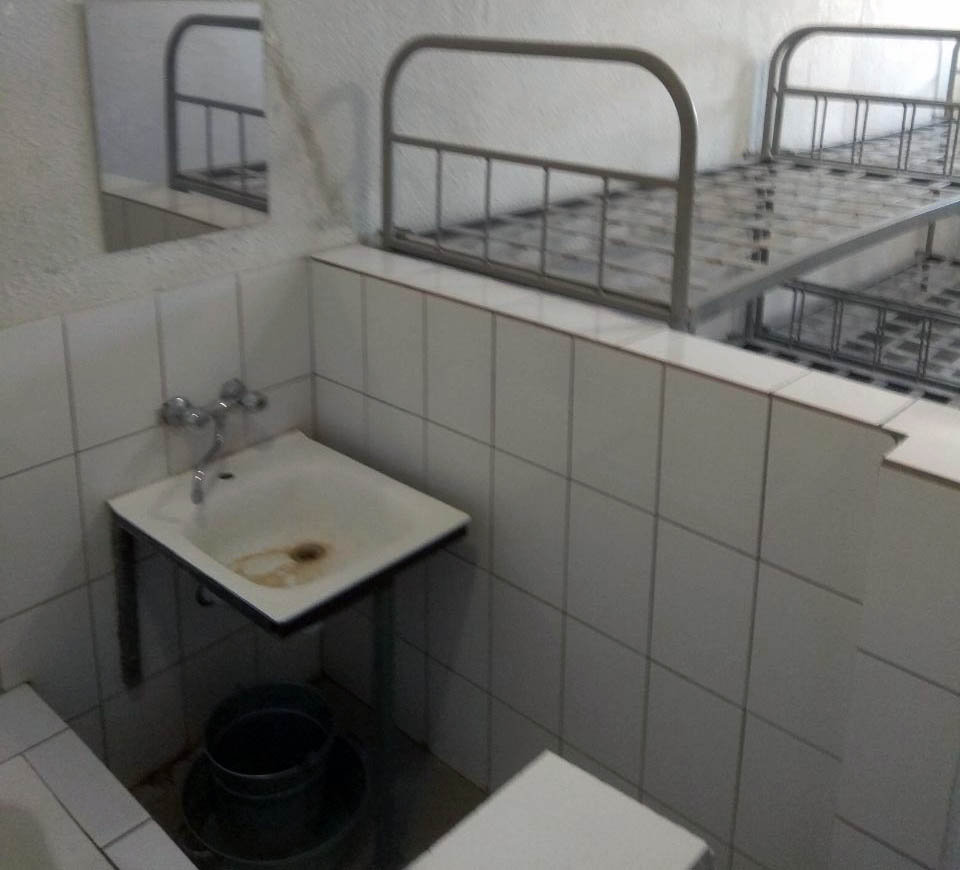 The camera in which Mia is located in the migration center in Sakharov Photo: Alexey Sakhnin
When we go into the camera five, it immediately becomes closely in it. Nigerika sees people with cameras and quickly hides behind the parachi partition, covering his head with a handkerchief. But television workers do not pay any attention to this and without commentary shoot everything around. During a conversation with Mia, they begin to “might” the room from different angles, shamelessly climb to the African, ask her some questions, poke a microphone into her, trying to force her to look out of the scarf and take a woman who hid in a corner right above the pussuar.
When we entered, Mia was lying on the skeleton and read the “crime and punishment” of Dostoevsky in English. She with pleasure allows herself to photograph and shoot herself with and without a book, posing, pressing our hands. Her attention does not bother the media.
“I feel good here,” she says. “I understand that I have committed a violation and these people should punish me as in the book,” she points to Dostoevsky’s volume. “But they are kind to me.”
Read also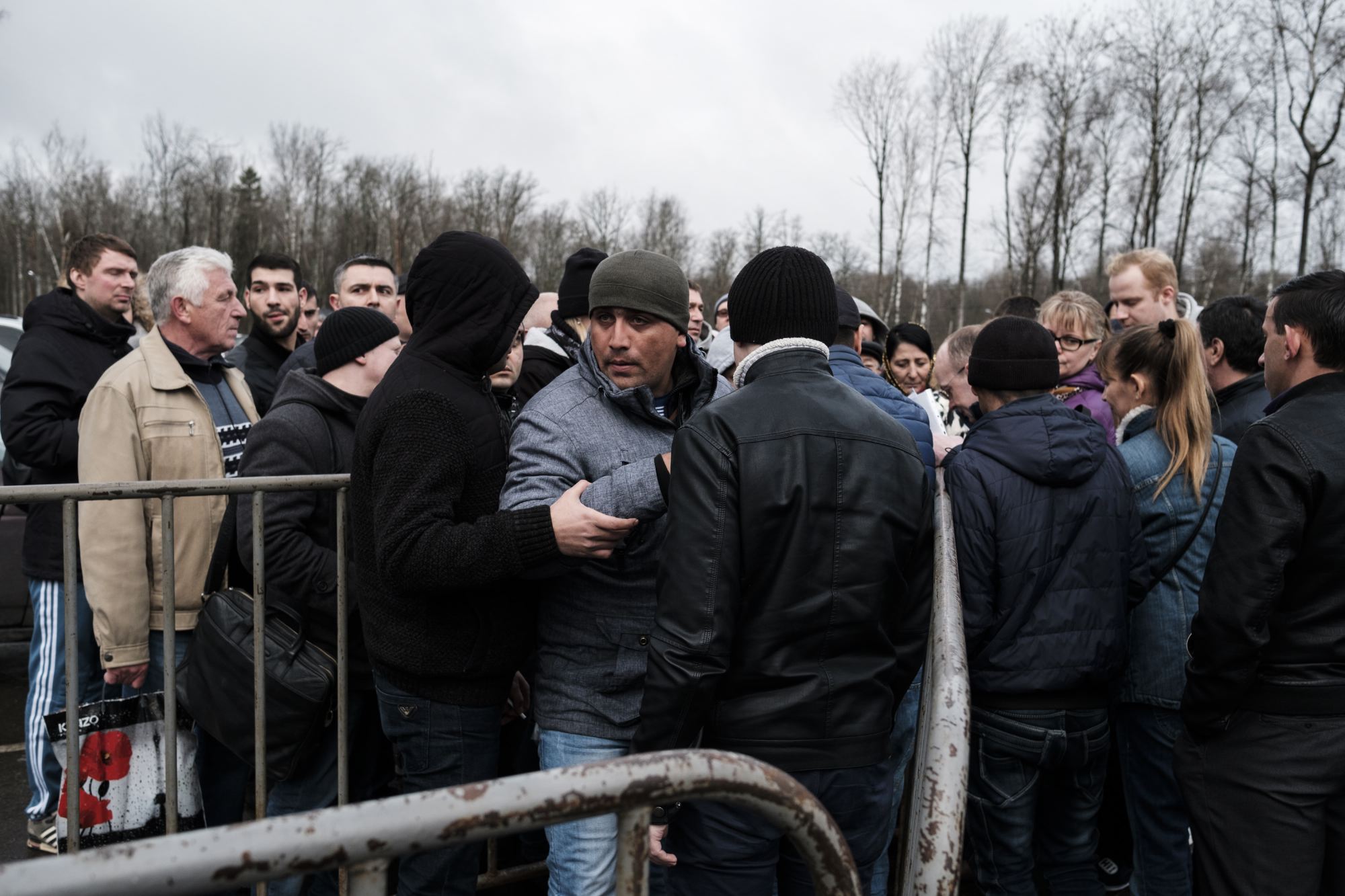 The factory for sorting people on TV has repeatedly shown how Moscow cares about foreigners - how fast and just they can now get the treasured documents. And this is all true. Almost
To my surprise, she speaks Swedish not very well. It is easier for her to explain in English or in French. Her full name is Mioara. She was born in Romania, not far from Ploesty, in 1961.
“With chauser, everything was pretty good,” she recalls. - We lived well. As a child, we had very interesting programs on television. I really liked the Soviet cartoons. And then I studied as an engineer in the field of geology ... "
But almost immediately after the 1989 revolution, Miora met her future husband. She fell in love, married him and left for Sweden. The husband worked for the army, she taught the Swedish language. Soon a daughter was born. Now she is 22 or 23 years old - Mia is not completely sure. She calls me the names of her ex-husband and daughter, but these are such common names that finding people in Sweden on them is as difficult as some Ivan Ivanov in Russia.
Mia worked in Sweden as an assistant teacher - a typical work for an emigrant. In Sweden, children with special needs go to a regular school and are engaged with everyone. And so that the teacher did not have to spend all their strength on children with features, schools hire additional staff, people without a teacher’s license, who play the role of a personal assistant and educator. Since the salary in this area is low, the employer often closes his eyes to the fact that his staff owns the Swedish, the main thing is that the person is good. I myself happened to work in a similar role.
- Well, how? What are the impressions? - Miya revives.
I admit that I did not really like such work, it seemed too monotonous, boring and did not give satisfaction.
- And I really liked it! She exclaims. - It was great!
It seems that Mii likes everything that happened to her in life. She is an optimist. She liked the Romania of her youth, she was satisfied with her life in Sweden, and she was quite to her taste of the life writer. Even in the chamber of the deportation center in the village of Sakharovo, she feels good.
In 2014, Mia divorced her husband and decided to start a new life. She went to travel. As the main residence, she chose a vancuver, to which since then she seeks to return. In Canada, she requested a residence permit, registered her small company, opened an account with a bank. All this was a few years ago, but now she needs to return there to restore bank cards, documents, and most importantly, to do literary work.
 Mia Johansson's book “An unfinished discussion about God, or a traveler's diary” Photo: Amazon.com
In 2013, a novel had already been released in the USA. The book can really be purchased on Amazon for $ 12.66. It was a kind of philosophical essay, where Mia talked about God, the light, of beauty, about the way of man from birth to death and the like interesting things. But now she was planning to write travel notes. For example, she will talk about her adventures in Russia. “After all, people here are so good, and the country is so beautiful,” she repeats. - All countries are beautiful. Moldova too. " But, it seems, a certain important message will be hidden behind this simple form.
While Mia hesitates between two names for his future book: “About Blue” (under the blue, our wonderful planet, she explains) or “state”.
- Why "state"?
“Well, I want to write utopia,” she smiles back.
Fair society
At this time, Vokhrovites enter the camera. The time of eating, they announce. We must go out, give women to eat, and then you can continue.
“Well, what did you tell her? - asks an employee in a civilian who was waiting for us from the outside. “Will she wash the parachi or just shit?”
Mia believes that in Russia many have skin problems. Unhealthy color, different defects, diseases. She believes that this may be due to malnutrition and public restrooms. Therefore, just in case, Mia prefers to celebrate the need in the bushes, in nature, and not in dirty city toilets. In the cell, she doesn’t, of course, does not. But flatly refuses to wash the parach. This is very annoying her neighbor and the staff of the Center, who considers this behavior a violation of the rules.
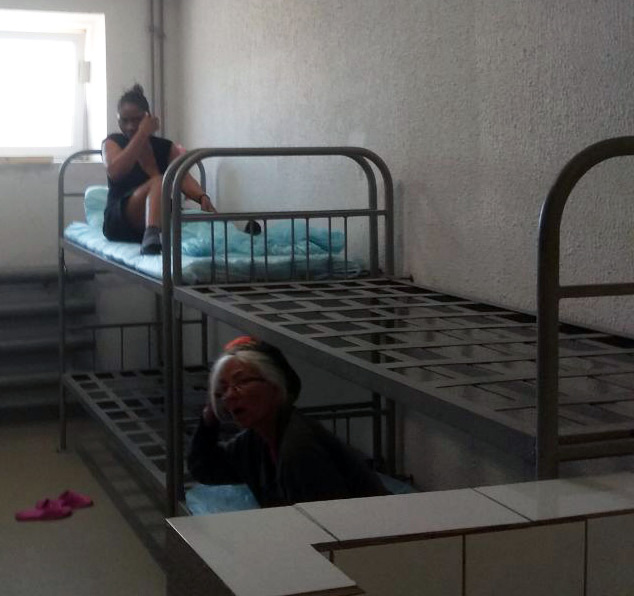 Mia Johansson in the migration center in Sakharov Photo: Alexey Sakhnin
“She does not want to wash the restroom, but she’s good, be softer with her,” I advise.
“Yes, I’ll just put her to the Uzbeks, they will teach her to live there,” the employee shrugs. - The Negroatsk is howling from her howling. And blacks - they are evil. Really evil. Here she will give her head, and what will it be?
When we left the camera, Nigerik really repeated the request several times to be transferred to another camera because she does not want to sit in the same room with the writer. “Please, mamma, please,” she begged. - She's Crazy, Mamma. " True, I did not hear any anger in her intonation, more despondency.
But Mia herself treats the neighbor with sympathy: “A very sweet woman, it’s interesting to talk to her. She is a doctor, and very smart. ”
When we return, the female doctor again runs into the parach and hides there. And Mia is waiting for us and continues to talk about his utopia.
“I want to write about justice. “State” - this will be the name of the entire book or one chapter. But this will be about a fair society. People work, but not because they need money, but just for pleasure. They do what they want, they like. After all, if you like money more than what you do, this is wrong. All should be enough for everyone, someone should take care of this ... Therefore, I will call this “state”. ”
Mia is not interested in politics or religion. But the theme of a fair society, in which people can do creative labor, and not endure the salary endlessly in order to survive, it is very worried. She returns to her several times. In this society, everyone will be happy, everyone will be kind to each other, everyone will enjoy life. Everything will be the other way around, not as it happens in our world. As if our world will be taken and turned upside down. And what today seems crazy today will look right, reasonable, kind.
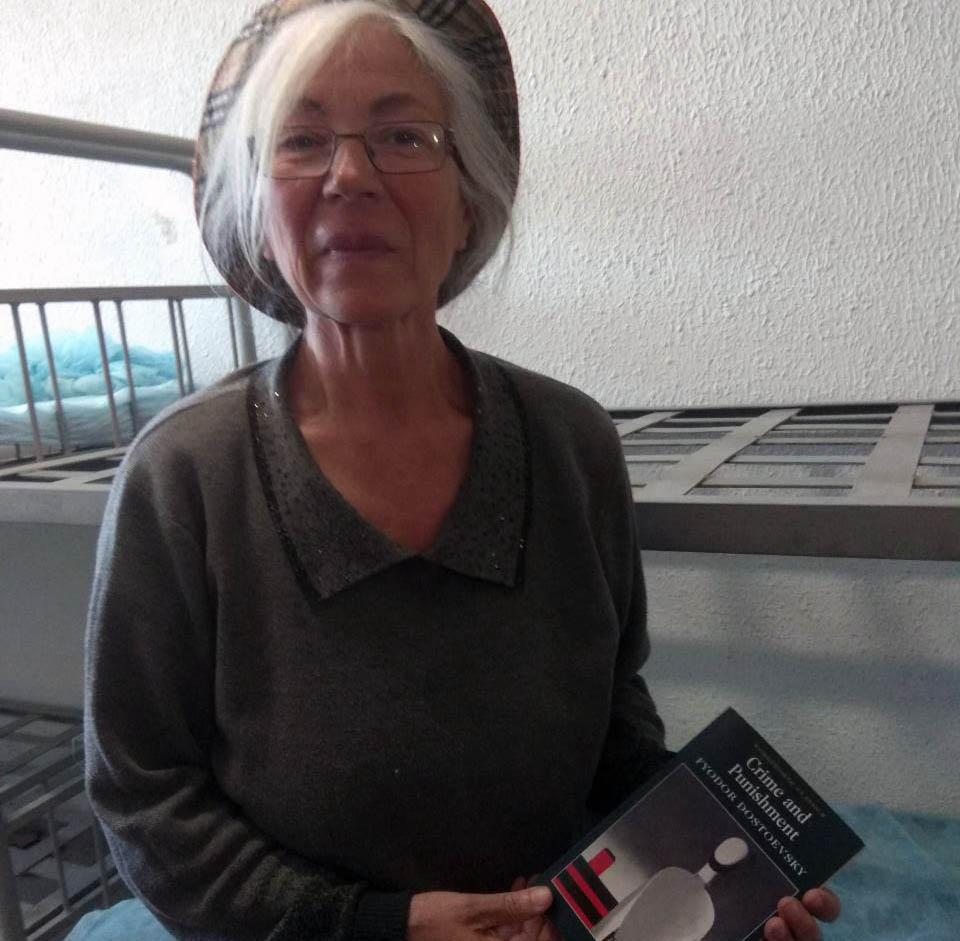 Mia Johansson in the migration center in Sakharov Photo: Alexey Sakhnin
“Here you scold her, and she says only good about everyone,” I tell the Vokhrovites, leaving the camera.
“Her roof just flows,” they shrug.
The administration of the center sent an information letter to the Swedish embassy. The embassy may take over the costs of deporting its citizen. But if the Swedish state does not want to take care of it, Miya will be held in the center for a couple of weeks, and then they will buy her ticket at the expense of the Russian budget.
Mia called me the address at which her husband used to live, but now there is not a person with that name is not registered. I do not know if anyone will meet her in the country in which she lived most of her life. But Mia herself does not seem to be very worried about this. In her travels in time and space, she is already close to such a world in which all this does not matter.
In this world, there is plenty of kindness and there is even a bus to Vancouver right from the Kyiv station.
Homeless Canada Sweden