
Translated material
Nine senators will leave the Federation Council in the fall
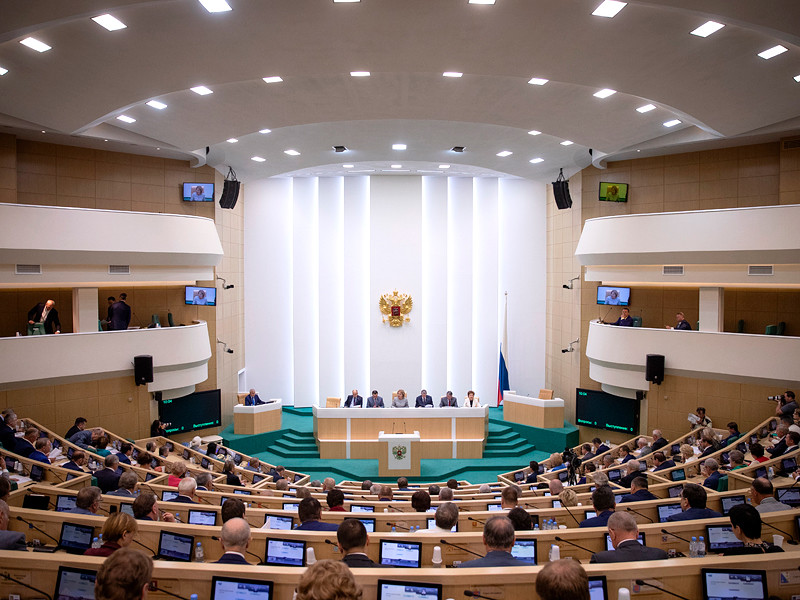
In September, the composition of the Federation Council will change. The upper house after the regional elections on September 8 will leave at least nine members, RBC reports with reference to one of the senators and two sources in the apparatus of the Federation Council. In total, after a single voting day, there will be grounds for a shift in the upper house 31 senators - 18% of the total composition, but some will be reassigned to new terms.
Each of the 85 regions in the Council of People's Commissars according to the Law "On the Procedure for the Formation of the Federation Council" is represented by two senators - from the head of the subject and from the regional Duma. The term of powers of the senator coincides with the term of work as a governor or legislative collection that put forward him. According to the law "On the procedure for the formation of the Federation Council", only his deputy can become a senator from the regional parliament.
This year, representatives of the Legislations of several regions leave the upper house. Among the outgoing senators is the representative of the State Assembly of Mari El Natalia Dementieva. Her place can be taken by the head of the apparatus of the Council of Council Sergey Martynov. Martynov did not submit documents for the primaries of United Russia (where they choose candidates from the party for nomination to deputies of the State Council), but may fall into the list of candidates for the State Assembly from the Party of Government by decision of the Presidium of its General Council.
The chairs of the former head of the defense committee of Viktor Ozerov (Khabarovsk Territory), a member of the Committee on Nature Management Ildus Akhmetzyanov (Tatarstan), a member of the Defense Committee of Oksana Buriko (Supreme Khural of the Republic of Tuva), representative of the Committee on Regional Policy, the former head of the Russian Ekaterina Lakhova (Bryanskaya Bryanskaya (Bryanskaya Bryanskaya) Committee. Regional Duma).
All of the listed senators did not submit documents for the primaries of United Russia. In most regions, the preliminary party vote ended on May 26. According to the law, in order to become a senator from the Legislative Assembly, you must first get into the regional parliament, which delegates to the Council of People's Commissars. As a rule, deputies who are elected from United Russia, who have a majority of votes in regional parliaments, become senators from the legislators. But in order to get into the election lists of the party in power, it is necessary to go through the primaries. This applies to both members of United Russia and non -partisans who are advanced from it. In some cases, there may be exceptions - the Presidium of the General Council of "United Russia" has the right to include in the lists of any person who did not pass the primaries.
According to the interlocutors of RBC, the senator from the capital will also leave the upper house - the chairman of the Science Committee Zinaida Dragunkin (Moscow City Duma) and a member of the Committee on International Affairs Olga Timofeev (Sevastopol).
At least two new chapters of the regions will be replaced by their representatives in the upper house. The acting of the Kurgan region Vadim Shumkov in the event of a victory in the election will not be put forward to the Council of People's Commissariat of the Budget Committee Elena Perminov, and the head of the Chelyabinsk region Alexei Texler will respond Irina Gekht, deputy chairman of the agricultural policy committee on agrarian policy. She has already confirmed her departure from the Federation Council.
According to the law, any citizen of Russia over 30, "has an impeccable reputation." Each of the candidates for the head of the region can nominate three candidates for their representatives in the Council of People's Commissars. The winner in the elections chooses one person from them, who becomes a senator.
According to political scientist Konstantin Kalachev, the significance of the upper house has recently increased, but it has always been a "place for honorary pensioners" - former governors and large retired officials often get there. "Governors are not needed by the Council of People's Commissars as a Chamber of Regions, but as an instrument of relations with the federal center and elites," he said.
Over the past few years, the change of senators has accelerated and passes regularly - in connection with the regional elections, the political scientist Rostislav Turovsky noted. “But there is no single scheme: somewhere it is necessary to send former governors, somewhere - federal figures. Senators are not owed to the regions and do not work much actively for them,” he added. “Unless the groups of influence will need lobbyists in the center with the status of the senator.”
This year, on a single voting day, September 8, direct elections of the heads of 16 regions will be held. In two other subjects - in Kabardino -Balkaria and in Crimea - local parliaments will be elected. On the same day, elections will be held in the Legislative Assembly of 13 subjects. Regular series of resignation of the heads of regions pass, as a rule, twice a year - in the fall and spring. In 2019, a series of resignations began on March 19: then the statement of departure was written by the Chelyabinsk governor Boris Dubrovsky , then it became known about the resignation of the heads of Altai Alexander Berdnikov and Kalmykia Alexei Orlov. On March 21, the heads of the Murmansk and Orenburg regions Marina Kovtun and Yuri Berg reported the desire to leave their posts. Then, unexpectedly - three months before the election - the president replaced the acting head of the Astrakhan region Sergey Morozov to the head of the president in the North Caucasus Federal District Igor Grandmother.