
Translated material
How to corrupt power, why propaganda lost and whether the television journalists have a conscience
Interview of the author of the book on the history of domestic media Arkady Ostrovsky - Novaya Gazeta
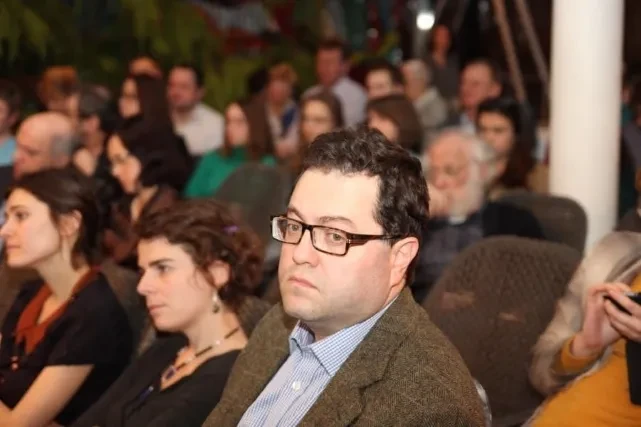
In Russian, the book of the editor of the department of Russia and Eastern Europe, The Economist, was published by Arkady Ostrovsky , “Russia says and shows. Traveling from the future to the past by the media. ” The book itself is already four years old, the Russian version has been late, after translation from English I had to rewrite something, “since in my native language I wanted to express myself in my own words,” says Ostrovsky. “Russia says and shows” is, in fact, a guide to Soviet and Russian media at different historical moments. The author is trying to answer the question of how it turned out that, having first become a conductor of freedom, journalism in Russia eventually turned into a service institution of the Kremlin, and what is the responsibility and role of specific people from the media in the turn of the country in one direction or another at different stages of the historical path. One of the foundations of the book is the author’s own conversations with people who determined the face of Russian media at different times: Sergey Dorenko, Gleb Pavlovsky, Igor Malashenko, Vladimir Gusinsky, Alexander Nevzorov - and many others.
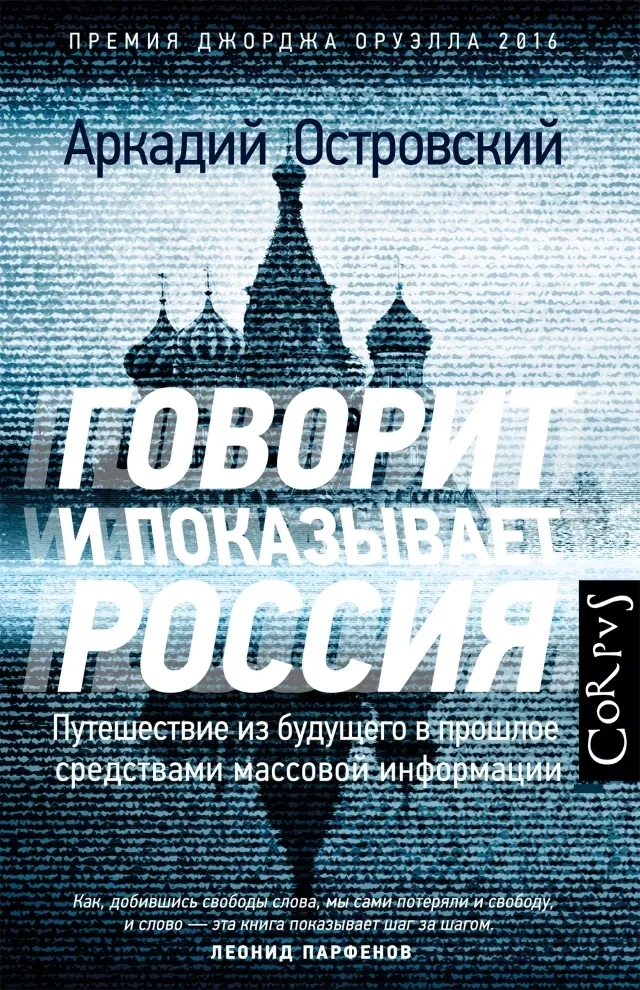
At the international level, Ostrovsky’s book was awarded the George Orwell Prize in 2016. In 2019, the Russian version of the book (not so much rewritten as the commissioned) received the Libmites Award. In an interview with the special commander, “New” Ostrovsky explained how journalists in Russia in the 90s corrupted the power, why the current propaganda has already lost and whether modern employees on Russian television have a conscience.
"The process of marginalization of television is launched"
- At the beginning of your book, the thesis appears that journalists, in fact, became one of the graves of the Soviet Union, because, having received freedom to talk about everything, they destroyed the picture of the world that Soviet power woven from lies. How likely is such a scenario today? They will tell reporters: that's all, let's not lie and work as propagandists, now only the truth. Will work?
-Now everything, of course, is more complicated than it was in the 80s. The Soviet system held on two pillars - the fear of repression and lies. Repression began to weaken after the death of Stalin. By the beginning of the 80s, Soviet leaders were very decrepit and were much less bloodthirsty. Repressions were mainly aimed at dissidents, and with society as a whole they preferred to work with other methods. The second pillar was a lie, it is also propaganda. They could not believe in it at that time, but she created a feeling of irresponsibility of the system. When propaganda weakened, the system was more than to hold on: there was no normal economy and the ability to satisfy people's requests. Then it seemed that if you remove the entire communist elite and change the regime, then the country would be freed, it would become normal and civilized - this was the main thesis of the reforms of that time.
Today, the system rests on about the same - at the fear of spot repressions that intensify, and on television (mainly) propaganda.
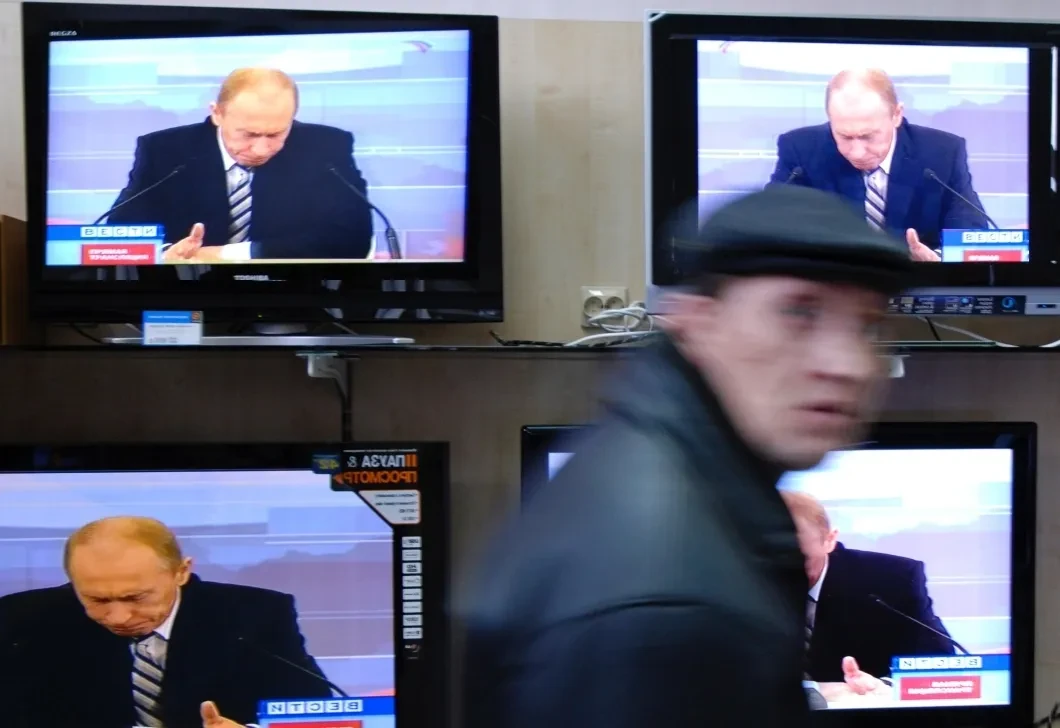
Putin’s first step was the establishment of control over television, and the television remote control remained a scepter or a magic wand with which the Kremlin controlled the country and created a picture of the world profitable for himself. Today, the monopoly on television remained, but television itself began to lose its magical power to control the mass consciousness. In part, this monopoly is undermined by the Internet and especially YouTube, which is comparable by coating the television signal of the main state channels in its coating. The task of the propaganda machine today is to create the appearance that everyone thinks the same, that there is some “majority” that shares his views, but it seems to me that this is another fake. Access to various, including alternative, sources of information before, but now real demand has appeared, which, for example, can be seen from the multimillion -dollar audience of Dudia.
If the journalists of the State University begin to tell the truth tomorrow, begin to talk about corruption and the absence of justice, if they pick up, relatively speaking, the “Navalnov” agenda, they are unlikely to inform something that the majority of the population of Russia does not know.
The news will not be what they say, but the very fact that they spoke about this from the screens - and this in itself will mean a change in the regime.
In this sense, again, everything is similar in the late 80s, when the Moscow News and the Light began to write in the spirit of publicism about Stalinism, about the problems in the economy. The news was not the arts themselves, but the fact of their publication - it became possible to do this.
-In the past, the journalists themselves were afraid to do something because of the same repressions and fear of writing something wrong. Now the level of suppression of dissent is not the same, but there are not very many who want to defend the truth.
- In Soviet times, there was still a centralized system of censorship, then everything that the journalists wrote passed through Glavlit without exception. Now there is also censorship, but it acts differently. What is there to tell: you can’t release a certain critical material on television simply because you cannot, no matter how a truth -seeker.
Here in Novaya Gazeta this can be done, since some feedback with dissatisfied is needed, this is not only a steam release mechanism.
But if the "new" came out with million circulations, it would not be simply [in this form]. She has her own audience that cannot be convinced, but the authorities realized that it is not so dangerous and not so significant quantitatively in the protest sense. And at television, the audience is much larger [there cannot be done something beyond the scope of the representations of the authorities].
It is important to mention: 30 years ago, the ideas of democracy were directly correlated with the fact that there was nothing in the country and it was impossible to drive abroad. Therefore, people, going to the Manezhnaya Square, hundreds of thousands of people under the slogans of freedom and democracy and seeking the abolition of the 6th article of the Constitution of the USSR, who consolidated the monopoly of the Communist Party to power, implied the opportunity to dress normally and buy products, without spending life on standing in lines. Now there are food in stores, and personal freedoms remain. The system has a third pillar in the form of an economic resource. But another began: the company has a feeling of injustice, which has been laid by pension reform, increasing taxes and a decrease in income, which has been going on for the sixth year.
The political agenda has moved from the abstract search for freedoms to almost trade union topics. This understands, for example, Navalny.
Being a sophisticated politician, he knows that if we talk only about freedom of speech, you will get your own 7-10%, and if you fight for the increase in salaries and the rights of doctors and teachers, you can go to a completely different audience.
-This agenda is somehow affected by the fact that they try not to talk on federal television on delays in salaries, as they are not talking about Navalny's slogans?
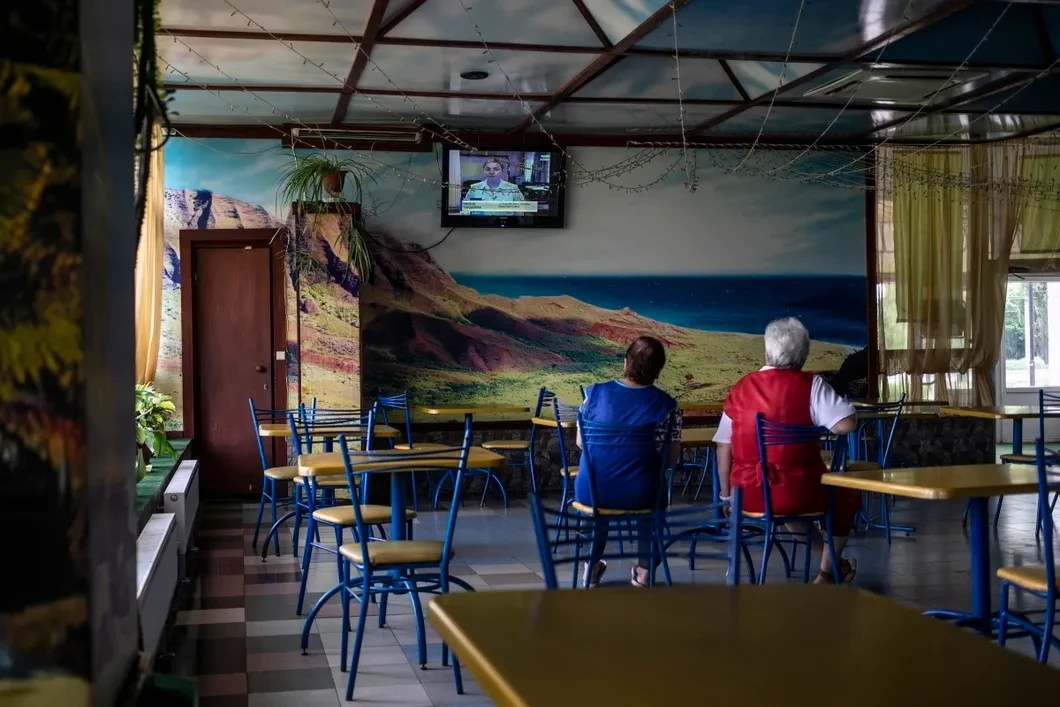
- Not good. The entire television system is inscribed in the model of public administration, so no one perceives television separately from the Kremlin. The fact that Navalny is not allowed there does not mean anything, since the Internet allowed him to calmly bypass television. The television channels themselves become more and more irrelevant and to some extent marginal. In the Sunday evening with Vladimir Solovyov, they continue to spray saliva, but the marginalization process of all these characters is launched.
Life has become completely different - not the one that is shown on TV.
Remember: in 1988, Nina Andreeva’s letter “I can’t get to the principles” made a huge impression on everyone. It made an almost paralyzing effect on the press: here it is, the revenge of the Communists! Only after many years, when I wrote this book, it became clear that Nina Andreeva at that moment was already a marginal character. For those who were already engaged in business at that moment, Nina Andreeva was generally no one! At that moment, in the same city of Leningrad, where Andreeva writes his letter, Gennady Nikolaevich Timchenko has already begun his business on oil products trading.
For Khodorkovsky, Friedman, Gusinsky such a character as Andreev, did not exist at all. Something similar is happening now: people from the TV do not fall into the agenda so much, what is happening in real life, that their words and thoughts become absolutely meaningless.
- That is, people are tired of propaganda. But at the same time, television programs do not particularly fall. The power of habit?
- Television remains a strong media resource, people are used to turning it on. But for that matter, people used to look at the “Time” program: in 1983, I believe that he had the same ratings [if they were measured], as it is now. But it was part of the environment, a piece of furniture, television was a source of the usual background noise.
The inclusion of the Time program in the evenings did not mean at all that people believed in record crops, they went to the store and saw how it really was.
Therefore, the main emphasis in Russian propaganda is placed on an external, and not an internal agenda - it is more difficult to test it with your own experience. Now this also ceases to work: on sociology it is clear that reports about external victories also began to irritate society very much. Thank you, of course, that they raised us from the knees and made Russia great, but what is happening with pensions? And in general, why should we contain Venezuela, Syria and even Crimea with our money?
- The traditional argument for this "Have you seen the US public debt?"
- The US Jollow is in the United States. It’s nice, of course, that the cow's neighbor died, but for some reason its own “yields” do not increase from this. Television mobilization works only as long as there is money in a wallet from an ordinary person. Now there is a request not to spend money on someone, but to spend on yourself. This request has not yet spilled into protests, although it all depends on the angle. If you look only in Moscow, then everything is calm, since the authorities understand that the main events are taking place in the center - it means that it is necessary to fill it with money, which has been happening since 2014. Moscow is now the least protest city.
"People with an atrophied sense of conscience"
- With large propagandists like Kiselev and Solovyov, everything is clear. How would you explain the logic of ordinary journalists who come to work on the Russia TV channel and almost immediately begin to talk about “great achievements”. Is this submission to the corporate structure or at some point it becomes easier for them to believe?
- I think it is worth separating here. Ordinary fighters of the information (or rather misinformation) front work as mercenaries, understand everything well, but continue to serve, since no one offers another service. As for those in whose hands the money and power - the conditional Kiselev, Dobrodeev or Ernst, the question always arises: do they really think so or is it beneficial to them? A wonderful historian and culturologist Andrei Zorin once said:
"They believe in it because it is beneficial for them." It seems to me that this is a very accurate definition. There is absolutely no contradiction.
Of course, no one canceled double -minded, but a person generally believes in what it is beneficial to believe in. When he ceases to be profitable to believe in it, he will cease to believe in it.
- And at the same time it does not overthrow anything inside them? There is, suppose, NTV, where films about the opposition completely unimaginable in emotions and aggression are shot. Then in 2015 they killed Boris Nemtsov. What do you think, those who made this film did not become uncomfortable, uncomfortable?
- I think not. These are people with an atrophied sense of conscience. They do not have this feeling, because if it were, they would initially not shoot anything like that. In general, there are not a lot of people on Russian television who reflect and understand that they have done something bad.
- By the way, this is to the question of the “code of honor” of the journalist. You wrote that even Dorenko, like a telekiller, was still. Is there any conditional code of honor from modern propagandists or are people without principles?
- Dorenko was a brilliant professional in his business. A good killer is also a profession. Dorenko and Nevzorov are also a profession.
Killer understands: what he does is the murder, but does his job because he chose such a profession. He does not try to say: "I killed someone, and that's good." He says: "I can do it very well." And in this regard, both Dorenko and Nevzorov had a feeling: "We are professionals, we just have such a profession."
Dorenko was honest in his cynicism. They paid me, and I have to do my job well, and he did it well. After all, Nevzorov once told me: “We, like a tank, we have towers in all directions.” They at least talked about it honestly.
“Yes, but any modern employee of the Russia TV channel can also say:“ We are sovereign people, the state pays us for showing the picture as the state sees it. ”
-The fact is that Sergey Dorenko was a very creative person, and propaganda can also be done differently. It can be very poorly working, very poorly made: clumsy, uninteresting. Goskanals are trying to say that they sincerely believe in it. And Dorenko honestly said: “I don’t believe in everything, but I do it because I have such a profession.”
"In the late 90s, journalists turned into preachers"
-How true is the assertion that each time the direction of the historical path of Russia determines the personal interest of one of the actors who, at that moment, was lucky to be upstairs? If in 1994 it were not Evgeny Kiselev and Dobrodeev would be on horseback, and someone else (for example, modern Dobrodeev), would Russia become different in the end?
-Of course, people in the media of the 90s had their own class interest, he simply coincided with such a democratic vector of Russia: at that moment people were in the media who needed a normal, civilized country. A normal civilized country does not kill its citizens in Chechnya. Therefore, they were against this war. They illuminated the first Chechen campaign just because they loved the Chechens so much, but because they understood that the country ... ( pause ). Either Igor Malashenko, or Vladimir Gusinsky, said that the country that will kill its citizens in Chechnya will reach out the hand to the machine everywhere. Journalists fought for a normal, civilized state.
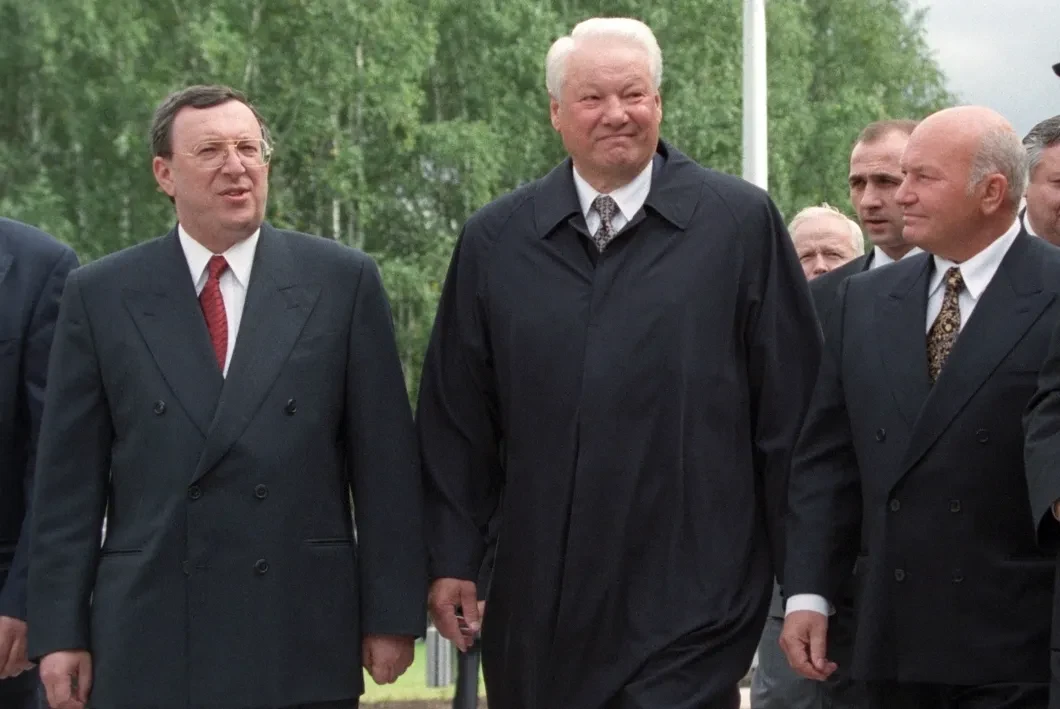
In the 96th year, they are not for money-or not only for the money-they supported Yeltsin and then fought not so much with Zyuganov as with the security forces who surrounded Yeltsin. Journalists understood that if the elections are canceled, postponed, then Yeltsin would remain hostage by the Silovik team. This means that Russia becomes in a state of isolation and confrontation with the West, which the security forces so wanted. No normal country will come out again, and the normal country, of course, includes the opportunity to leave the IPO and increase the capitalization of its companies. Absolutely understandable class, historical interest.
Journalists fought for Russia to continue to be integrated into the Western world.
In the 97th year, when everyone began to fight each other, there was no class interest, it was a pure struggle for power. It seemed to many that the victory of Yeltsin in the 96th year meant the irreversibility of the democratic process in Russia. It turned out that this is not so.
- And where did the fatal fork? 96th year?
-I do not think that the 96th year was a turning point. For me, such a point is the 97th, because this story is not about the victory of Yeltsin in the elections, but about how this victory will be used. In the 97th year, the oligarchs (both Berezovsky and Gusinsky) demolished the government of the reformers. Together with him, they demolished Boris Nemtsov, who was one of the first, if not the first to speak about the oligarchs, because he understood the danger of privatization of power. The oligarchs began to fight with each other and the government, completely not thinking about where this would lead them. The crisis of the 98th year later layered on this later, and the crisis of the 99th with the bombing of Kosovo, and so on.
Another turning point was 2004. Then several things also connected at the same time: the capture of the Yukos, the statement in the power and money of the security forces, on the one hand, on the other hand, the “Orange Revolution” in Ukraine, under which they said: “So we need this money and power to fight the color revolutions,” and Beslan, and the fight against terrorism. In general, the 97th year in the end led to what happened in 2004.
- And specifically for journalists, where was this fork? Intervention in the election or acceleration of NTV in 2001, when many just passed by colleagues?
-So the 97th year was! The war with the young reformers was conducted by journalists and the hands of journalists. They were an instrument of corporate showdowns. A year before, journalists fought for the future, and in the 97th-only for money and for power. If then the journalists told the oligarchs: no, guys, our interest is more likely where Nemtsov was at that moment - they would not have lost credit of trust, and we may not have come to today in its current form.
-The journalists themselves in the 97th year understood that they were acting “not by honor”?
— Не знаю, что они думали, но тогда журналисты получили власть и не отошли от этой власти, став ее частью. Из журналистов, которые боролись с коммунистами и силовиками, эти люди превратились в проповедников и хозяев жизни.
Без вариантов для Кремля
— Есть какой-то вариант, при котором можно журналистике вернуть статус важного общественного института, а не придатка Кремля?
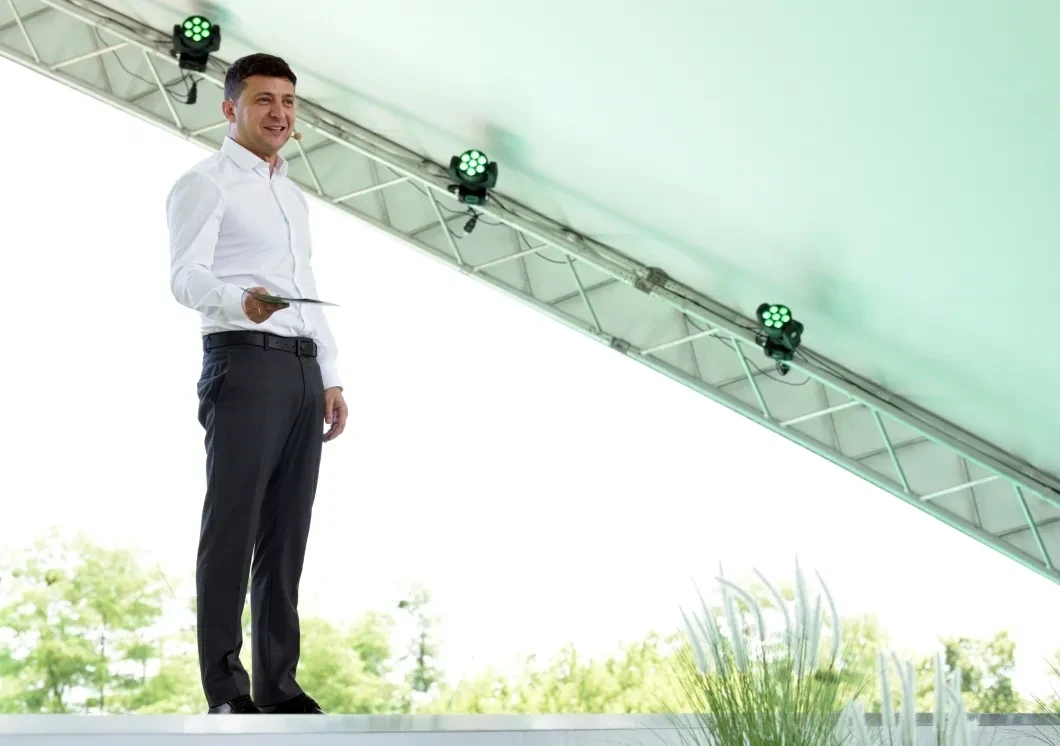
— Ничего нельзя вернуть, поскольку процесс реставрации никогда не приводит в ту точку, которую декларирует как желанную. Нельзя вернуться в Советский Союз, нельзя вернуться в 1994 год — прошлое оно на то и прошлое. Вернуть такой статус журналистике, который был в 95-м году в России, невозможно, так как произошел еще один важный процесс во всем мире. Доступность информации стала такой, что у журналиста больше нет монополии на коммуникацию. Каждый человек в соцсетях — сам себе медиа. Для политиков это еще и означает, что им теперь вообще не нужен доступ на главный канал и к главной газете. Политика и медиа слились — Трамп, Зеленский, Навальный тому яркий пример.
Каждый из них сам по себе медиа. Навальному не обязательно появляться на Первом канале, чтобы заявить о своей повестке, когда есть YouTube, Трамп общается с миром посредством Twitter, а не газеты «Нью-Йорк таймс», Зеленскому не нужно давать интервью, если у него узнаваемость выше любого традиционного политика.
Я думаю, у журналистов больше никогда не будет такой власти, которая у них была в 90-е годы.
— Растет количество каналов информации — растет и количество «проповедников».
- Yes. And no. Человек — существо социальное и стремится к какой-то общности. Если есть какая-то увлекающая всех фигура, люди будут ее слушать и смотреть. Посмотрите на Юрия Дудя с его аудиторией десять миллионов человек. Но слушают тебя или нет, будет зависеть не от государства, а лишь от твоего таланта и содержательности.
— Сюжет вашей книги заканчивается в 2017-м году, когда молодежь вышла на акции Навального. Спустя два года можно ли сказать, что значительная часть этих людей предпочла не бороться, как их деды-шестидесятники, а вернуться в тщательно рисуемую кремлевскими пропагандистами «стабильность»?
— Протестная активность то нарастает, то угасает, многое зависит от электоральных циклов и внешних раздражителей. Но повестка и требования молодежи — они никуда не делись. Как только возникнет какой-то катализатор, вроде пожара в Кемерове или строительства храма в Екатеринбурге, — выяснится, что все протестные настроения никуда не делись.
— Понимает ли Кремль, что их методы пропаганды перестали воздействовать — в том числе на молодежь?
— Понимает, поэтому судорожно пытается найти другие каналы коммуникации, и в то же время пытается ограничивать интернет, поскольку осознает его реальную опасность для режима. Во власти все-таки не идиоты сидят. Но я не очень понимаю, какие у Кремля в принципе есть варианты исправить ситуацию в свою пользу.