
Translated material
How irony saves from socialism
The author of Samizdat dismantled the film “Larrors on the thread” by Irji Menzel and found out how interest in the life of a common person, irony and the search for self -identification became the hallmarks of Czech culture and what the soldiers Schweik and Yara Tsimrman have to do with it.
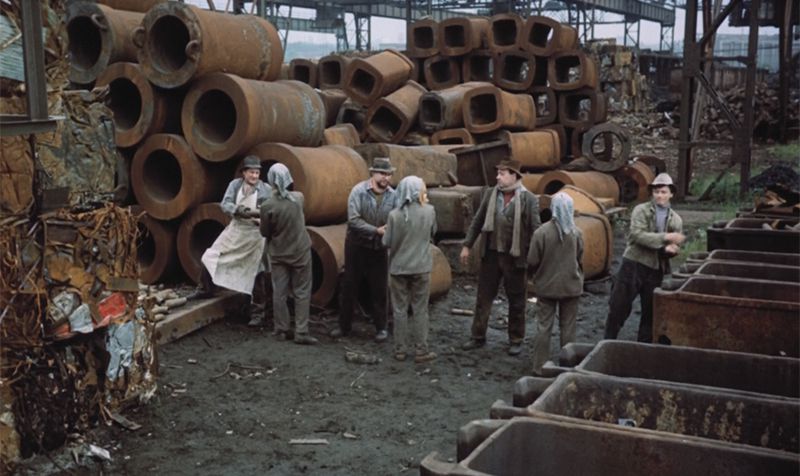
The workers and two pioneers are on a landfill, around - concrete blocks, scrap and metal. One of the pioneers holds out a tie to the man, the worker is angry: he clearly does not like a tie, nor pioneers, or everything that happens at all. He wants to leave, but cannot.
The film “Larrors on the thread” (1969) Irji Menzel according to the novel of the cult in the Czech Republic of the writer Bogumil Grabal - a parable of the social system and the classic representative of the Czech “New Wave”. However, a small confusion with the Czech “New Wave” characterizing the creative flowering of Czech directors in the 1960s: formally it should be considered Czechoslovak, since the Czech Republic and Slovakia since 1918 have been one country. From January 1969 until 1993, when Czechoslovakia was divided into two sovereign states-the Czech Republic and Slovakia, Czechoslovakia was a federal state consisting of two equal socialist republics: Czech and Slovak.
In 1968, unrest passes around the world, people go out onto the streets and protest against the foreign and domestic policy of their countries. In January 1968, the post of head of the Communist Party of Czechoslovakia was held by Alexander Dubchek. He softens censorship, produces political prisoners - the country begins to build "socialism with a human face." Czechoslovakia is tired of Soviet authoritarianism, in society they speak of the need for reforms. “Prague Spring” is a time of change and hopes, but the euphoria does not last long. In the evening of August 20, Soviet troops will enter Czechoslovakia and will capture the country in thirty -six hours.
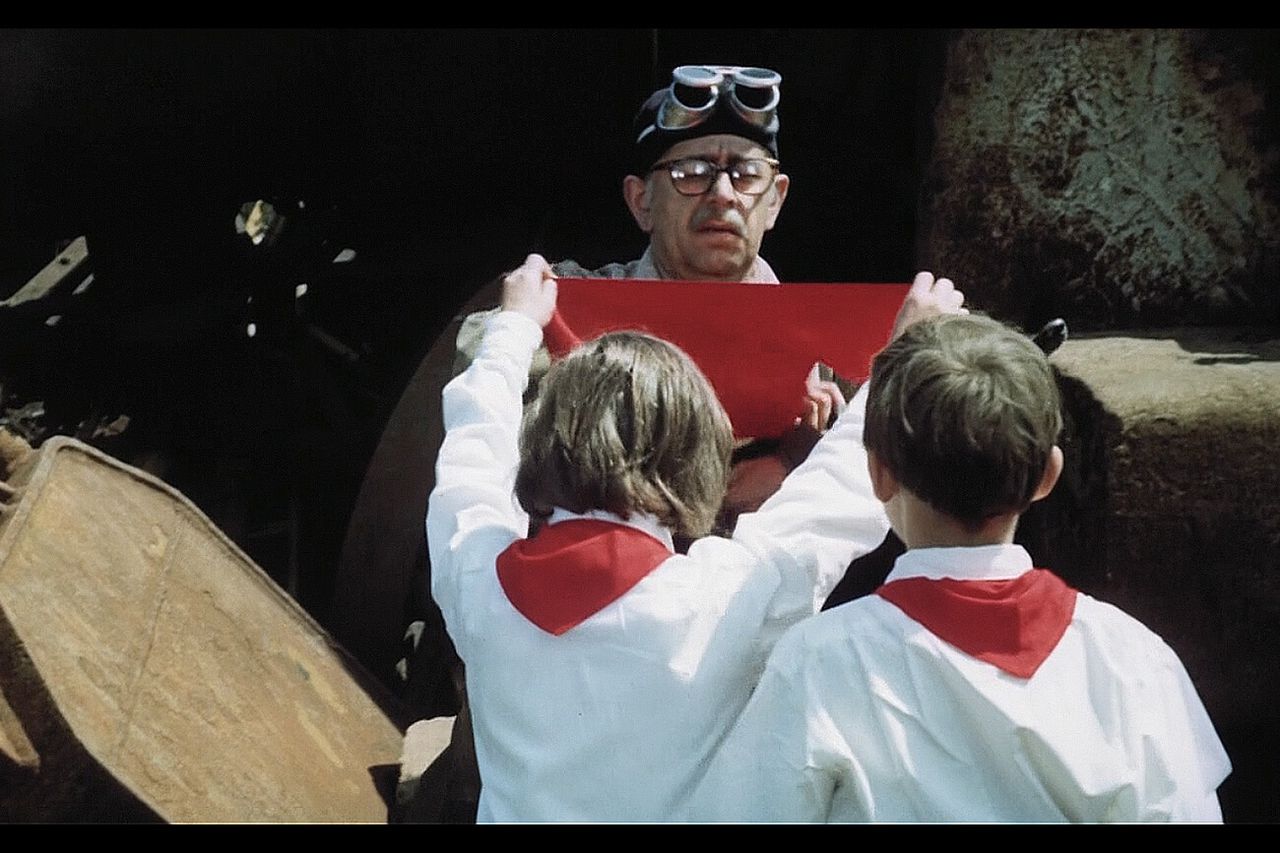
The intelligentsia in the landfill
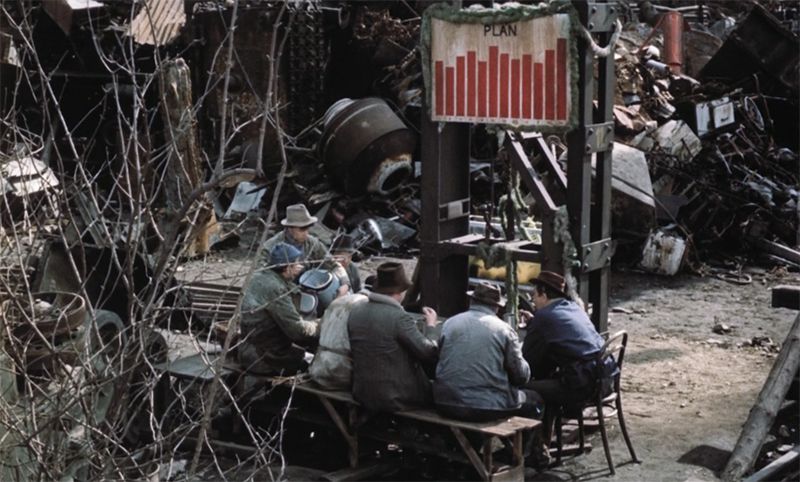
The action of the "larks on the thread" takes place in the mid-1950s. In the center of the plot are the workers of the steel plant near Prague. All of them are the remnants of the defeated classes: a librarian who refused to destroy the “decadent Western literature”, a prosecutor whose ideas about justice diverge from the official, an entrepreneur, a captain, a hairdresser who came to the plant because “out of five hairdressers there should be here,” saxophonist, milkman and a cook who did not want to work on Saturdays due to religious considerations. A separate brigade is made up of women, who were going to escape abroad. These men and women were sent to work for the good of the country and correct their bourgeois origin.
The plot mainly unfolds in a dump of scrap metal, which the heroes must collect. Together with him, crosses, icons are on the landfill, and the intellectuals are superfluous in a new socialist society. Not all will reach the final of the picture-some of them, obviously saying something wrong with those people, unexpectedly disappear as a result of the repressions that remained, however, behind the scenes.
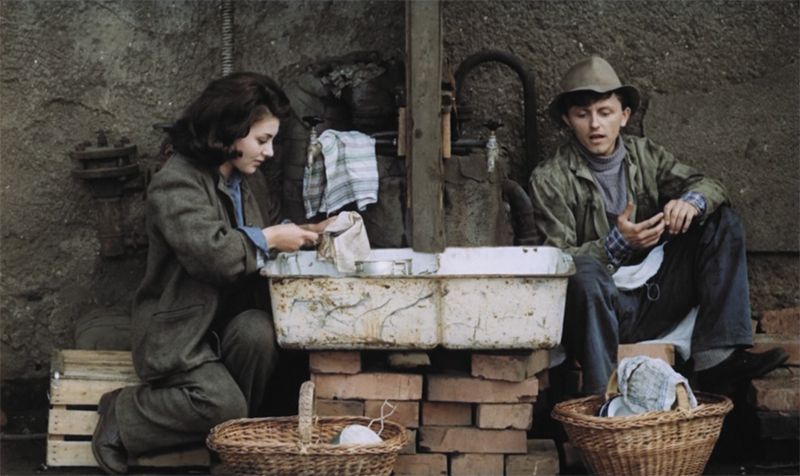
In the 1930s, Soviet propagandists stamped agites on a production theme-about the heroes of labor, Stakhanovites. When these heroes defeated the “pests” and set their outstanding records, in the final as a reward they usually gained love. This topic was brought to the point of absurdity Grigory Alexandrov in the film "The Bright Way" (1940). "Larks" turn the myth of the Stakhanovites. The last thing these workers think about are production feats. Instead, the former librarian, for example, talks about Kant at any opportunity, the former prosecutor - discusses the law, the hairdresser - by the old habit he cuts everyone. In the evenings, men spy on women under the windows of the hostel, and they do not mind and flirting in response.
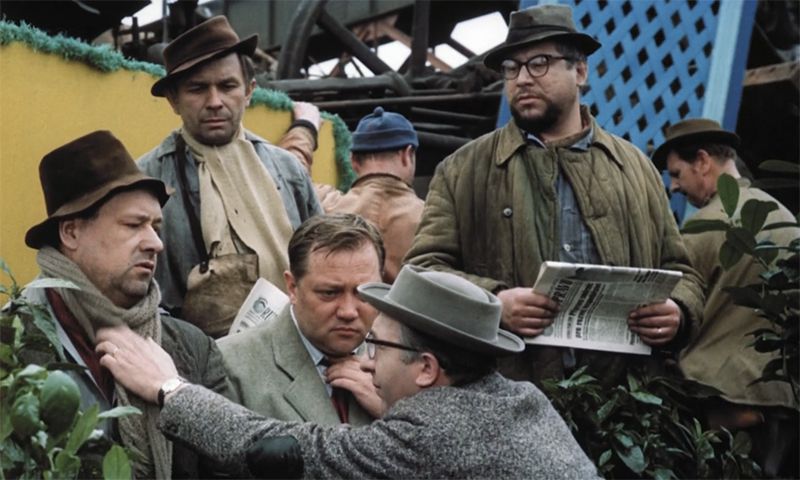
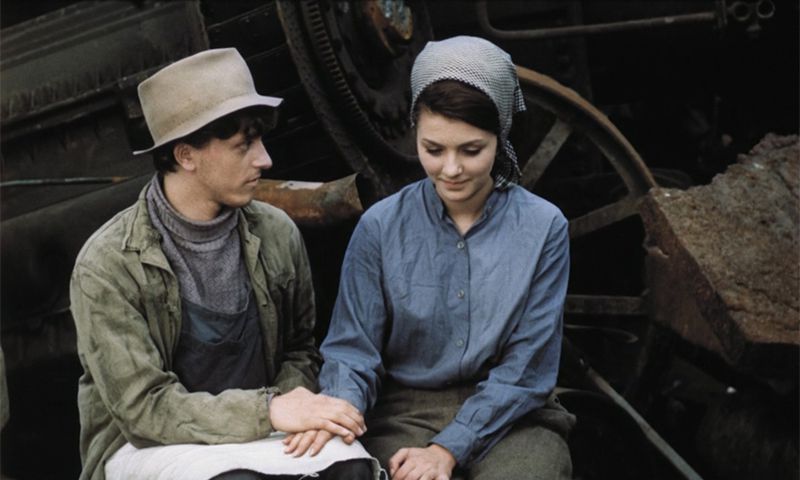
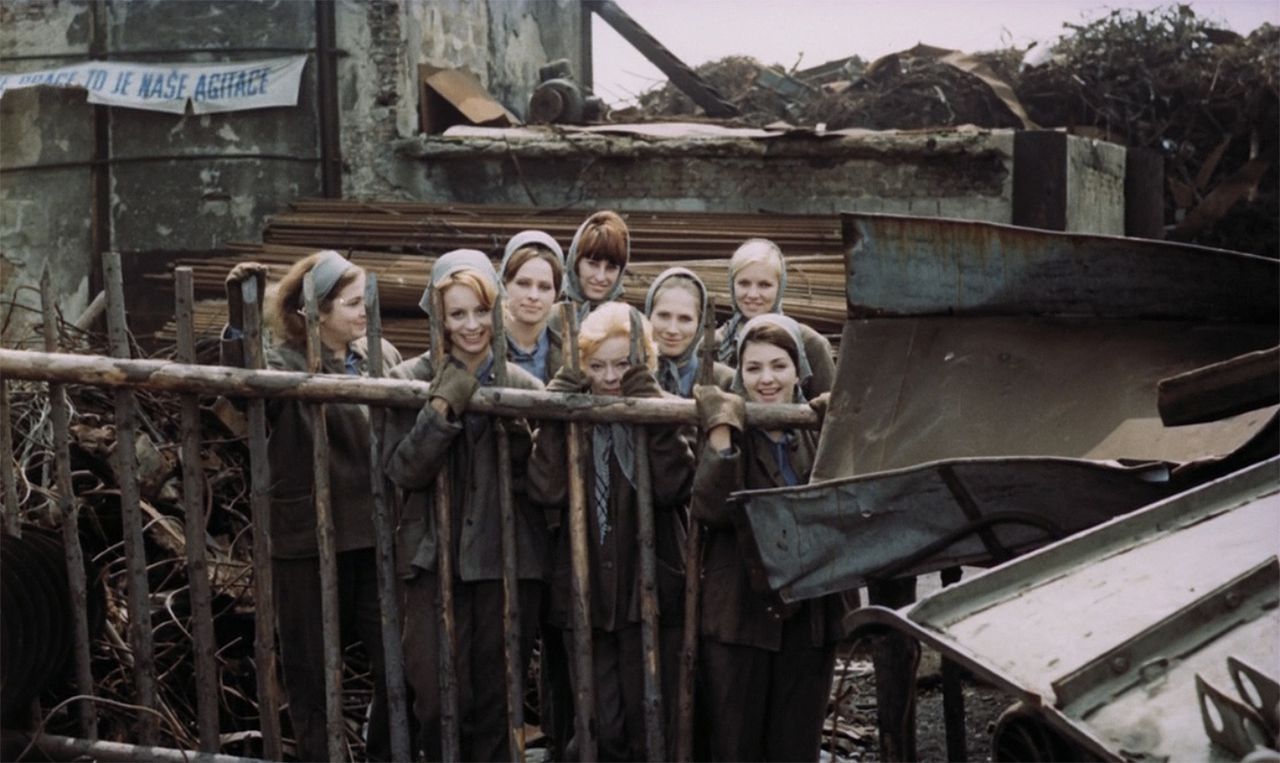
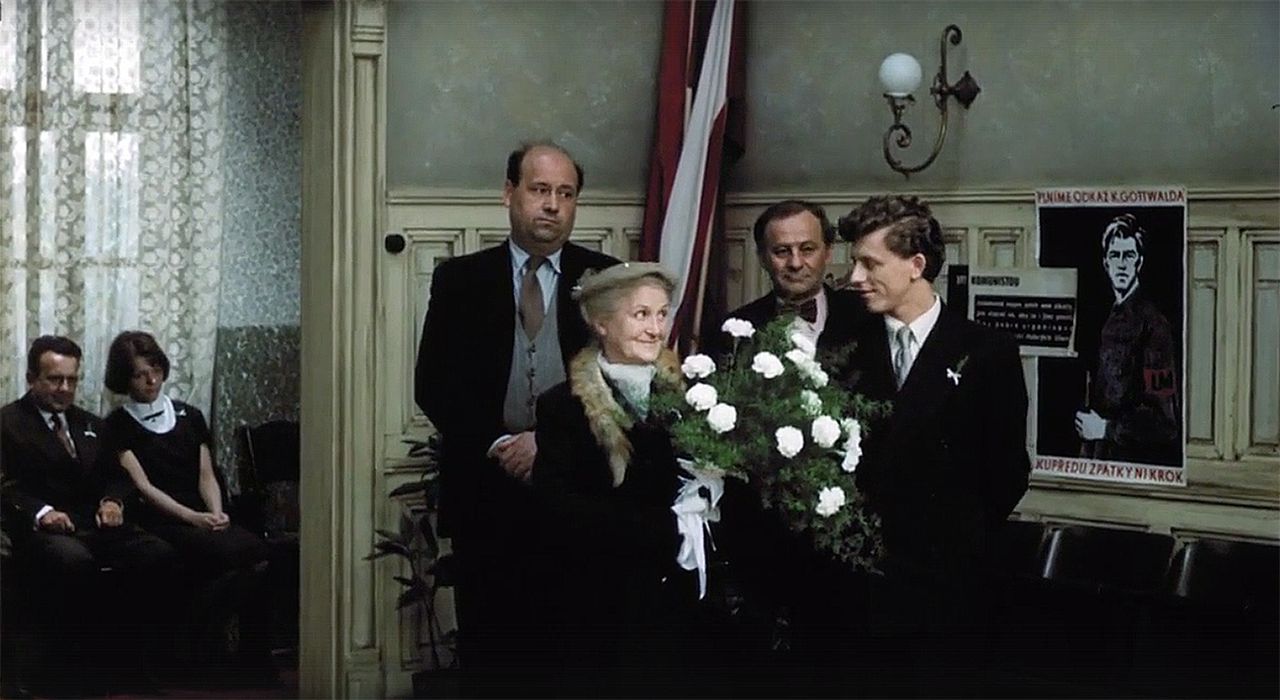
Of the entire intelligent gang of outsiders, only the cook Paul is trying to fit the new society at the very least and arranges personal life. He finds a couple, but he has to marry a herunt lover, because the chosen one herself cannot be present in conclusion and at the ceremony. When Yitka finally freed himself, Pavel will go to prison for two years. In this new world, lovers are not destined to be together.
The only one who positions himself as a proletarian is a foreman, against the background of the wards, he looks the most burst. Once he decides to help the brigade, throws a leather portfolio and disassembles all scrap metal, but there is not enough for a long time.
Czech "New Wave"
In 1962, a censorship artistic council was abolished at the Barrand film studio and replaced it with several independent creative groups. In 1965, the Union of Czechoslovak Film and Television Workers (Fites) was founded. Young filmmakers appeared in the country, many of them studied at the Film Faculty of the Prague Academy. Foreign films were available to students, under the influence of which the directors formed their own ideas about the cinema.
The Czech “New Wave” was based on decrees and slogans. Behind the French Nouvelle Vague there was a manifest by critics Les Cahiers du Cinéma. Although this manifesto was not so programmatic as, for example, the Dadaists, however, all the authors of the French “New Wave” believed in the same ideas: smaller genre cinema, more documentary, freedom and street filming. Czech directors adhered to various views: some entered the Communist Party, others criticized socialistry. They also made a movie in different genres: among the heritage of the Czech “New Wave” there are historical films, dramas, comedies, and detectives, and animation.
However, they were united by interest in a person: they talked about ordinary people and not accidentally worked with Bogumil Grabal. The heroes of his works were “spathers”, as Grabal himself writes: “These are people who can say that they are crazy, crazy, although not everyone who knew them would call them that way. These are people who are able to exaggerate everything, and with such love that it comes to ridiculous. “Spaders” are incomprehensible, their appearance is unclear, argued, sometimes unpleasant in appearance, uncomfortable. But, despite this, they are becoming their own everywhere in six months. ” In the film “Pearls at the bottom” (1966), the directors of Irji Menzel, Vera Hitilova, Jan German, Yaromil Yiresh and Evald Shorm filming five Grabal stories, and this picture became a sign for the Czech “New Wave”.
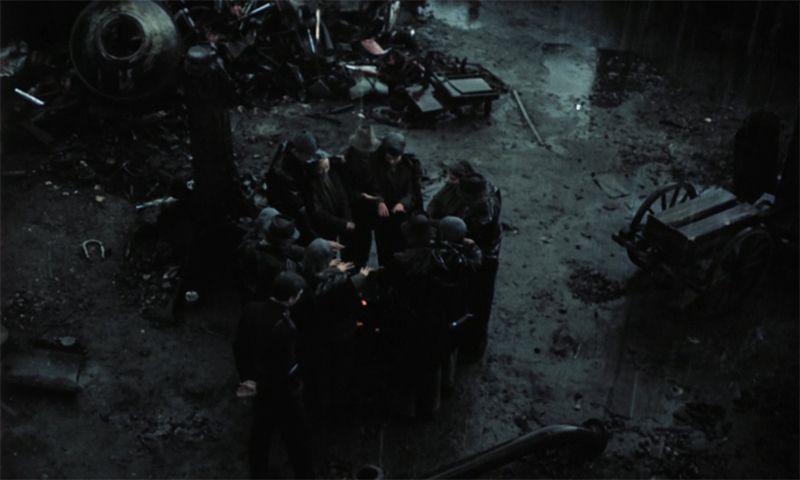
The historian Natalya Korovitsyna believes that one of the features of the Czech identity is the so -called “resistance through adaptation”. Czechs had to fight more than once in order not to lose themselves as a nation. In 1620, the Czech Republic lost in the battle on the White Mountain and for almost three hundred years fell under the dominance of the Habsburg dynasty. The Habsburgs strangled all the Protestant sentiments in the country, made Catholicism the only official religion and stubbornly tried to Germanize the Czechs and destroy their language and culture. In 1948, the Czech Republic fell under the sphere of influence of the USSR - it was this historical period that was depicted in the Menzel film. In crisis moments, the Czechs, according to Korovitsyna, are able to adapt, endure and thereby maintain their identity.
Kinoveda Victoria Levitova believes that Czech art is characterized by naive heroes, and to some extent their behavior models reflect the very “resistance through adaptation”. Joseph Schweik is the most striking example of this type of thinking. Now the Gashekovsky hero is actively exploited as an emblem of beer culture: souvenirs with its image are sold and portraits in bars are hung. Schweik turned into a popular image - an ordinary stupid drink. In fact, this is a brilliant conformist: the ostentatious naivety of the Schweik, whom everyone takes as an idiot, helps him get out of the troubles and outpatient opponents. True, he also falls into troubles because of his naivety.Naive heroes
Irji Menzel in the cinema and Bogumil Grabal in literature develop the traditions of naive heroes. Grabalov-Menocalev characters are simple-minded eccentrics who like to chat, make a joke, and do not care, but are by no means prone to exploits. In the “larks”, the heroes do not open their discontent openly with the system, fulfill all the requirements of the authorities and how they can adapt to circumstances, but the fate of some of them is tragic. In another joint work of Menzel and Grabal, “Trains under the close supervision” (1966), in the midst of World War II, the main character Milos was more worried about sexual failures, and another character had fun by putting the girls with the coat of arms of the Third Reich.
The role of Milos in the "Trains" and Paul in the "Lark" is played by Vaclav Netskarzh. The fate of the second hero as if continuing the fate of the first: this is the same unsophisticated guy, but already leaning in love affairs. Pavel drags chocolate and cigarettes that he liked, holds her hand, flirts and eventually marries. In general, Pavel goes through the path that Milos dreamed of, but which the war broke off to him. True, Pavel Happy End also does not happen.
Another symbolic for the Czech Republic, the hero who appeared in the 1960s is Yara Zimrman, a fictional inventor, mathematician, athlete, writer, composer, doctor and philosopher. In 1966, Yirzhi Shebanek, Zdenek Sverak and Ladislav Smolyak, in the best traditions of Orson Wells's hoaxes, released a program on the unrecognized genius of Tsimrman on the Czech radio. According to the plot, he was somehow involved in all the important discoveries of the 19th and 20th centuries-it was he who invented the dynamite, an electric light bulb, designed the Eiffel Tower, prompted the plot of “three sisters”, the first reached the north pole and did a lot of things, but due to ridiculous accidents, all the laurels went to others.
Creating myths about Zimrman, the Czechs make fun of their place in history. The joke is laid even in the name and surname of the hero: the German surname Zimmermann is intentionally written in Cimrman. The neighborhood with German culture is a sore subject for the Czech Republic, and the Czechs prefer to ironize on this subject. In 2005, Tsimrman was the leader in the television contest “The Greatest Czech”, but alas, he was disqualified, and in the end the actually existing Charles IV won.
Most authors, starting with ancient ones, define irony as a kind of contradiction of form and content. Victoria Levitova believes that the irony in Czech cinema is closer to the tragic interpretation of Kierkegaard. In the dissertation “On the concept of irony”, he looks at the figure of ironic as a tragic, which sees the imperfection of the world, foresaw his fast death and is forced to notify about it. The heroes of the "larks" do not fit into the era, but fit perfectly into the traditions of Czech culture. Firstly, they are victims of circumstances, secondly, they are ironic, thirdly, passively contemplate the world around and try to adapt to it as they can.
The scene with the pioneers is key in the understanding of the characters. At some point, pioneers are announced to the plant with a tour. Two generations are faced in the frame - old and new. Pioneers, singing in chorus, “run over the bonfires” live in an imposed system, and they never knew the other. The main characters shun the pioneers and hide - and this is an incredibly ridiculous riot.
“Larrors on the thread” is one of the last films of the Czech “New Wave”. After the events of August 1968, censorship will return to the country and the new leadership will spin nuts. In 1969, the directors will still have time to finish the paintings that were planned. Many leaders of the “New Wave” - Milos Forman, Ivan Passer, Jan German, Woles are clear - emigrate. Irji Menzel and Vera Hitilova will be forbidden to shoot for several years. However, Menzel himself prefers to say that in those unemployed years he felt the happiest because he was very lazy. The film “Larrors on the thread” will be “on a shelf” and will be released only before the collapse of the USSR in 1990 - as a certificate of “Prague Spring” and the thirst for freedom, which was characteristic of that time.