
Translated material
Populists of all countries
Now they have their own faction in the European Parliament
According to sad irony, the first press conference of the ultra-right faction of the European Parliament “Identity and Democracy” (ID) was held in the Anna Politkovskaya hall. One of the two main characters of this event-the leader of the Italian League and the Deputy Prime Minister of the government of Italy Matteo Salvini-was not in the presidium. There was Marine Le Pen, who with all her appearance radiated joy and triumph of victory. Other characters are still little known.
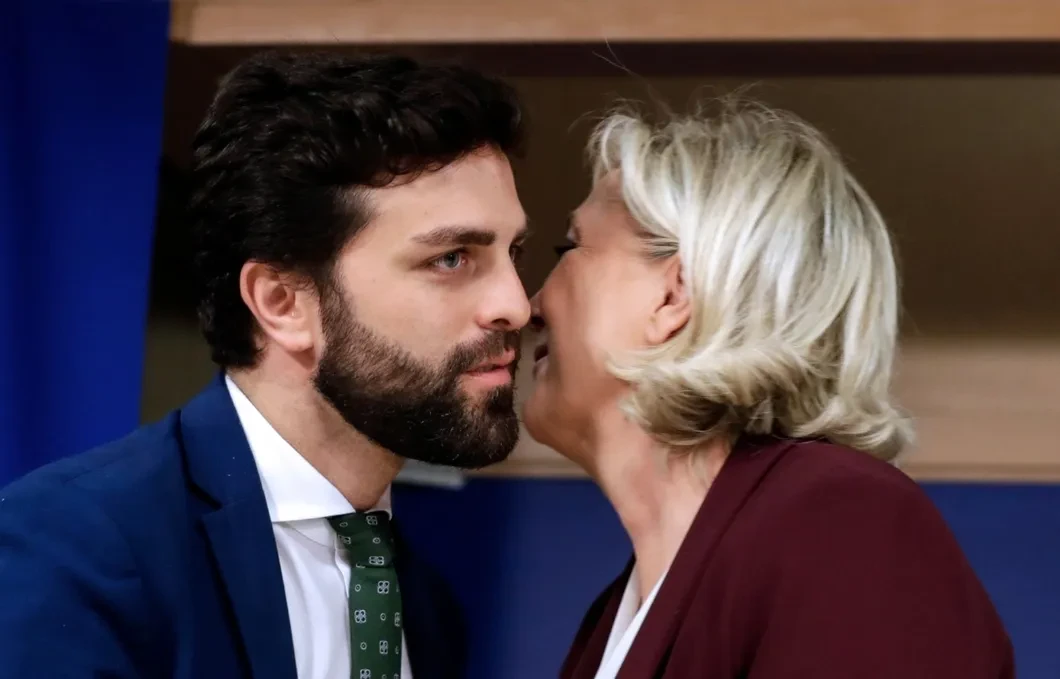
The new political group was represented by deputies from parties who have recently been called “populist”, “Euroskepetic”, “nationalist”, and more recently, by historical standards, they defined as “neo -Nazi” ones.
In fairness, it should be noted that recently they have performed “rebranding”,
They abandoned old -fashioned anti -Semitism, no longer justify Nazi gas chambers, and even recently ceased to openly call for the dissolution of the European Union.
But they still offer simple solutions to complex problems, instead of “values” suffered by post-war Europe, appeal to “pragmatism” and “common sense”, and they are habitually looking for the reason for all troubles in foreign powers and in foreigners.
The new faction included 73 European parliamentarians from nine EU countries. It is the fifth largest in the European Parliament after the legal entities (179), Social Democrats (153), liberals (106) and “Green” (75). The basis of the ID was compiled by the Italian League and the French “National Association”, to which the deputies from the “alternative to Germany”, the Austrian Party of Freedom and one member of the nationalist parties of Belgium, the Czech Republic, Denmark, Finland and Estonia joined.
The word for the presentation is taken by Marco Dzanny, a 33-year-old deputy from the League, who was elected the chairman of the ID faction on the eve. He conveys greetings from Salvini, who was prevented from coming to Brussels more serious affairs in Italy.
What the chairman said
We are an antithesis that is happening, what we have observed in Europe in recent years.We play for another Europe - not impersonal, not combed under one comb by general legislation. For Europe, which moves forward, protecting these differences that defends the idea of a national state ...
We are against failed attempts to create a European super -state.
The parties of the political mainstream were not able to withdraw Europe from a deep crisis, which has been continuing since 2008, to cope with unemployment and public debts. We promise to get out.
Current EuroSceptics strongly do not want to be called that. Like, we are against depersonalization of nations, but we understand that some areas of politics are better to develop together, while others, due to historical and cultural differences, should be in the jurisdiction of national parliaments and governments. And Dzanny formulates three points of the joint action program:
Internal security. “Europe has experienced large terrorist attacks in recent years. We will give guarantees to citizens who are afraid to walk along European streets. ”
The rejection of open -door policies for immigrants from third world countries, more rigid control on the external borders of the EU, the expulsion of those who do not have the right to enter the EU. "Open door policy Merkel led to destabilization."
Economic policy. “None of our delegations want the country to pay debts of others, but we must give a certain freedom of maneuver so that some states solve their financial problems without requiring the help of others.” Change the Eurozone. "The tax space should be in the jurisdiction of the member states, the EU should not levy either direct or indirect taxes."
With the first two points, few will argue. Even before the May elections, they already firmly entered the agenda of the European Union. The case moves. Illegal migration, reaching the peak in 2015 (more than a million people), decreased ten times. And the economic program of the populists is slurred.
Dzanni finished, and immediately on the license of the hostess of the event, Le Pen turned on, apparently considering that in the performance of the young colleague there was not enough confidence.
What did Marin Le Pen said
Le Pen called the fraction of the ultra -right "first force of sovereigns" in the European Parliament. She spoke with enthusiasm about the “dynamics” of the movement of supporters of the “European of nations”. The participation of their parties in governments is a new level of maturity.She sees evidence of the “turn” in a change in the tone of discussions in the EU Council, in its decisions. Therefore, evaluating the growth of the influence of "non -systemic" forces, do not indulge in the "accounting approach." ID will conclude situational alliances with members of other factions. According to her, in the European Parliament there are about 200 (out of 700) potential voices of the “sovereignty” block, which greatly changes the future balance.
“We will create a new color background, the new color of the debate, which is still not known in these walls,” Le Pen wrapped it, and in this one can safely agree with her.
The performance of Le Pen was met by applause, which very surprised journalists. Within the walls of the European Parliament, they do not show their political preferences. Only in texts and ether.
It turned out that half of the hall composed a “support group” from the deputies of the faction and the employees of their devices.
Applause was repeatedly heard with the galleries filled with deputies and officials, and journalists called the guests to order. The Presidium “swam” when it came to questions and answers. Marine Le Pen intervened if she felt dis varicked and inconsistent in the answers of the faction comrades.
The question of the autonomy of countries in budget policy. Will this violate the stability of the eurozone, the currency of the euro? Dzanny repeats: national parliaments, not Brussels, must make decisions on the budget and dispose of the country's own funds. Yussi Khalla-Aho is trying to answer the same question from “true Finns”: “Of course, if we want to have a single currency without new disasters, we must support centralized budget control. Or you have to dismantle the system of a single currency ... It pushes the EU to enhanced integration. ”
Will the faction be performed in the European Parliament for the abolition of sanctions against Russia introduced for the accession of Crimea and interference in the Donbass? Moten from ADG answers this question. He is probably the most frequent guest in Russia, where he is caressed by the authorities and the press. “There is no point in continuing these sanctions,” he repeats once again. - You see very well that the situation in the Crimea can no longer be changed. It will not change from sanctions. It is better to act pragmatic, which means to cooperate well with Russia ... as with other countries. "
Le Pen is in a hurry to hush up this topic. After all, a press conference is not in Moscow, but in Brussels. In the faction, although there are many those who are called “Putin’s friends”, there are those who are in Russian propaganda “Russophobes” and even “fascists”.
So, the question of Russia is not a “big topic”.
On the budget policy and currency euro, views differ. The attitude towards foreigners is undoubtedly common. The dissolution of the European Union is not included in the agenda, although some do not hide that they hate it. At the end of the press conference, Dzanny shouted under the curtain: “None of us want the destruction of the European Union, we want to radically reform it!”
What is the relationship of official Russia to all this?
We turn to the words of the many years of the Permanent Representative of Russia under the EU Vladimir Chizhov. Speaking in the fields of the St. Petersburg Economic Forum, he stated that Europe was clearly behind the pace of its adaptation to new realities. But personally, he "is not a supporter of extremes and is completely sure that those who predict the European Rapor to the European Union greatly underestimate the survivability of this association." Turning to the results of the May elections to the European Parliament, he notes "the electoral achievements of those who believe that anti -Russian sanctions are simply disadvantageous to their countries economically and politically."
Of the two opposite camps that made an electoral breakthrough, it clearly does not mean liberals and “green”. So, others: “National Association” Le Pen, “League” Salvini, “Alternative to Germany”, Austrian People’s Party, Belgian “Vlams Belang”, Party “Brexit” Faraj, perhaps “Fides” of Orban.
All of them are friends with the Kremlin, many officially partners of United Russia. Probably, in Moscow they make a certain bet on them.
“New“ steering Euro -project, ”the Permanent Representative suggested hopefully,“ will take the right lessons from the experience of their predecessors in the Russian direction, will boldly form a truly independent foreign policy and, in fact, make efforts to restore the atmosphere of trust with us. ”
On one of the current shows on Russian television, the deputy from United Russia was asked if his friendship with European ultra, which almost do not hide their Nazi roots, was embarrassed. He answered something like this: we are friends with those who support Russia's policy, and millions of people voted for democratic elections.
Brussels