
Translated material
"The resource is not infinite"
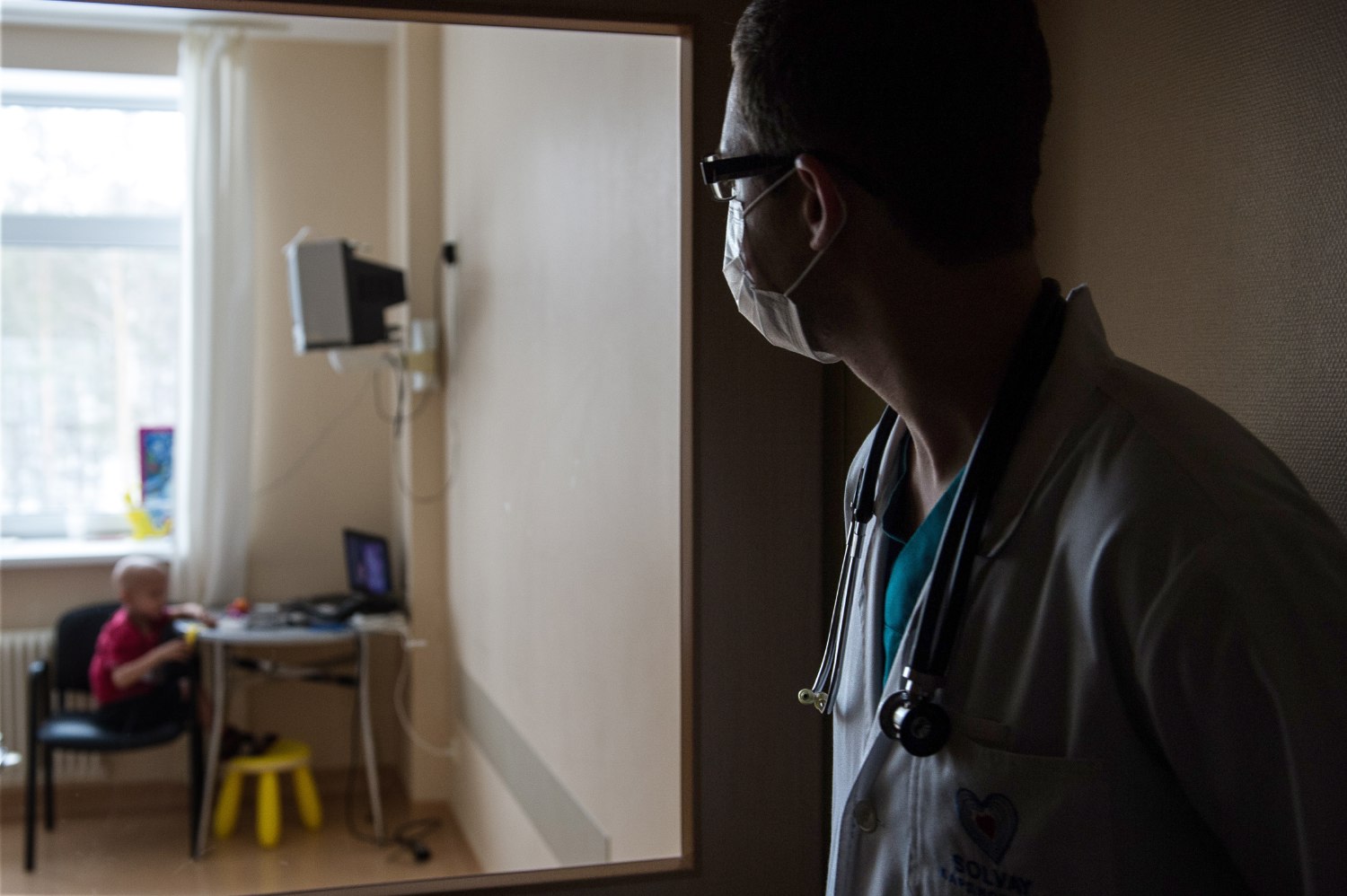
According to Medscape magazine, 44 percent of doctors experienced emotional burnout syndrome. In a separate risk group, there are specialists working with oncopacients: they told “such matters” about how to help survive stress to others - and themselves
Remove stress
“When I was a boy, my grandmother died of cancer. It was a terrible loss for me. At that moment, I told my parents that I would be a doctor, and never doubted my choice. I have never been looking for warm places in private clinics. For me, work has always been important where my help is directly needed, ”says the head of the cancer dispensary at the GKB named after D. D. Pletneva Vadim Mekhtiev. In oncology, he for more than 25 years, in this oncology dispensary he came to work as a district oncologist, and four years ago he became the head.
“When a person learns about the oncological diagnosis, for him this is always a huge stress. The moment when the earth leaves from under the feet, I do not want to live and it seems that it is over. Our paramount task is to remove emotional stress in patients. To convey that oncology is not a sentence, and even in an advanced, fourth stage with modern drugs and treatment methods, we can achieve a lot . Over the past five years, the percentage of cancer detected in the early stages has increased, and mortality has decreased . ”
In 2014, the district cancer dispensary, where Mekhtiev has been working since 2000, became part of the huge multidisciplinary medical complex on the basis of D. D. Pletnev’s city clinical hospital under the leadership of the chief physician Irina Nazarova . Mekhtiev believes that such a unification was only beneficial and facilitated the treatment of patients: you can not drive patients around the city, but provide all the necessary care in one place.
“Every year after the residency, young specialists come who want and are motivated to work with oncopacients. The percentage of youth is much more than it was 3-5 years ago. And salaries are growing. "
But despite the availability of all the necessary conditions, drugs, the growth of salaries and the influx of young personnel, the problem of burnout does not go anywhere, says Mehtiev.
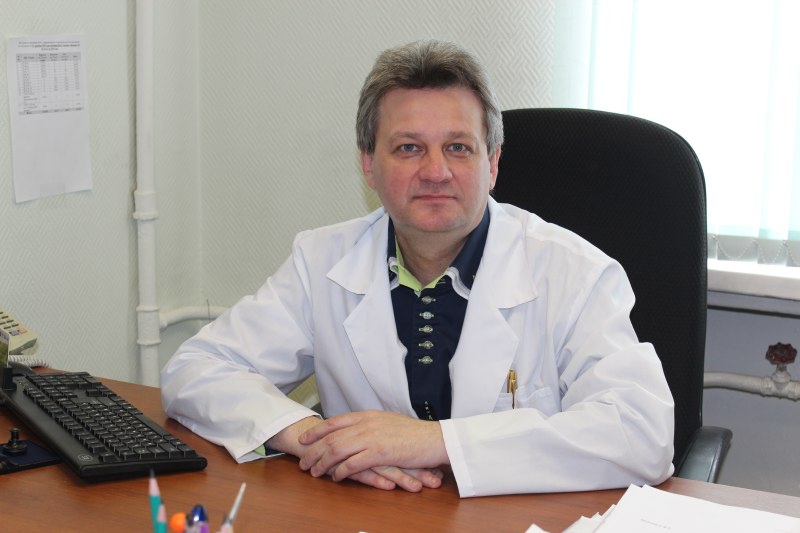 Vadim Mekhtiev Photo: From Personal Archive
“Now special trainings began to appear with psychologists and psychotherapists. We participated twice in trainings that give the full opportunity to concentrate, to understand how to behave himself, how to communicate with the patient, with his loved ones. Indeed, in our profession, we are faced with pain daily not only physical and not only the patient himself, but also his relatives. And you need to be able to effectively interact with them. ”
According to him, such programs should become basic and conducted annually.
“For me now, as for a district oncologist, it is very important to introduce a psychologist’s rate into the state of oncological dispensaries and oncological clinics. It must be it, ”Mekhtiev notes.
He himself admits that over 25 years of work he never had "such that it was completely burned out."
“I can switch. I can close the door, sit in silence for ten minutes, watch the fish in the aquarium and exhale. But I carefully monitor the psychological state of our employees. Not only doctors, but also sisters and younger staff. They have hard work. If I see that a person is exhausted, I can let go for a few days. ”
Switch
“Every day at the reception, at least one very difficult conversation happens that goes beyond the discussion of the diagnosis and treatment. Sometimes you can’t throw some stories from your head for a long time, you’ll scroll it again, ”says Lyudmila Jansston, an oncologist of the primary oncological department at the Central Committee of the Central Control Commission .
It largely depends on her work whether a person who only recognized his diagnosis will understand how to act, and whether he will receive directions for the necessary examinations. Lyudmila brings about 100 patients weekly. According to the norm, 18 people per reception for 18 minutes for each - and several more those who cannot wait.
Lyudmila in oncology three and a half years. Before that, she worked as a therapist. She wanted to undergo advanced training and change the specialization. He says that it is in this place that he feels that he is needed and useful, and sees the obvious result of his work.
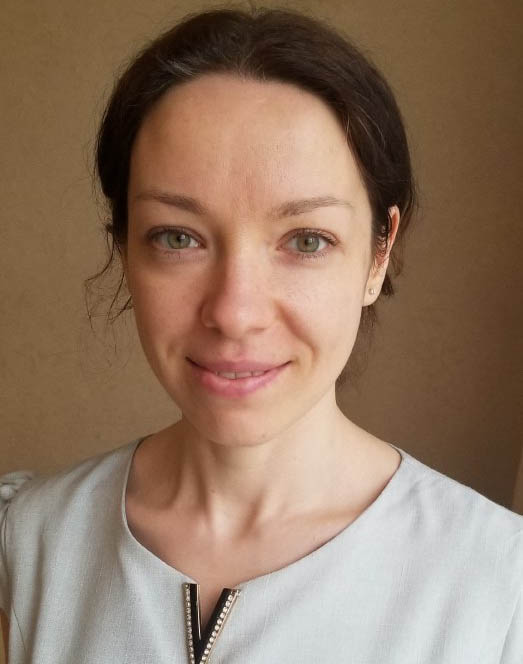 Lyudmila Jansston Photo: From Personal Archive
“When a person comes to me in a disassembled state, bewildered, frightened, not understanding what to do, I collect, structure and direct him. I make up for him what is called now with a roadmap. I take part of the tasks for myself - I track when and what he needs to do. Mostly I give clear recommendations what needs to be done, where to go. Sometimes I literally lead someone by the hand, I push someone to gather and mobilize myself. We have no wild overloads, as sometimes I see in Facebook videos when doctors literally fall from their feet. We have a good organization, and on the load of 18-20 people a day-this is tolerable. ”
For Lyudmila, communication with the patient is very important - but at universities they did not teach how to report a diagnosis and work with other people's emotions.
“We have to learn yourself. Find additional trainings. But in comparison with many other doctors, I have a very good support for the family, I have a husband, two children, I spend time with them and switch, I find time for sports, teach my tongues, it helps me to switch. ”
According to Medscape, 59 percent of doctors of one of the main causes of emotional burnout consider a large number of bureaucratic tasks.
“It is upset when you do not do a medical duty, but spend strength on some nonsense. The queues for examinations, the queues for consulting narrow specialists, there are no necessary medicines, because you have not yet bought the party-and you go and try to somehow solve it, although this is not in your competence, ”Lyudmila agrees. - And patients do not always understand this. It's hard. "
Find a common language
“Many patients come to me after treatment and talk about the lack of a desire to live, although all the worst behind and the forecast is good. And if they do not help them in time, then the efficiency of all investments and efforts of surgeons, radiologists, chemotherapists are aborched, ”says Oksana Chvveliv, a psychiatry and psychotherapy specialist in the highest category, the head of the psychiatry and psychotherapy of the Ilyinsky hospital. “But recently, the need for psychological assistance began to be noted as an important component of complex treatment of cancer.”
Read also Large lottery who will treat us in a few years
Oksana has repeatedly heard complaints about doctors from patients: he did not really explain anything, most of the time filled the papers, stingy with words. The patient in such communication see the indifference of a doctor and disinterest. Doctors most often complain that patients arrive several times with the same questions. It seems to the doctor that he already explained everything in detail and the patient understood and nodded in response in confirmation. But the next time he returns everything with the same questions, often comparing his appointments with the treatment of a neighbor in the ward or found on the Internet with a “similar” diagnosis. The doctor is perplexed - the patient is upset.
“Doctors at a medical university, in residency are taught precisely professional skills. And communicative skills are devoted to the minimum of time or do not pay attention to this at all, ”means the cause of Chviliv. - They are not taught to talk with the patient. The course of psychology is minimal. They do not explain that the patient during strong experiences may really not hear and not perceive what the doctor tells him: emotions do not allow him to assimilate information. And the doctor spends his strength and time, bringing the consultation to, as it seems to him, a logical conclusion. In fact, it turns out that it was wasted. ”
According to her, the conditions in which oncologists work do not contribute to emotional contact: many patients, a limited reception - to talk with the patient, have time to fill in the papers and meet the schedule, and you have to maneuver.
“Previously, a paternalistic model of interaction was used by the doctor - patient:“ The doctor knows everything, the doctor gives instructions and determines the course of treatment without discussion with the patient. ” In Europe and the USA, they have long left it, ”said Chistyova. - Russia also moves in this direction: from paternalism to the model of partnership interaction and informed consent. Now the network is in the open access on the network a huge amount of information for patients, and the longer the doctor continues to interact with the patient in the old way, the more the patient has distrust, speculation and accusations. The patient often comes to the first reception, taking a combat rack, having read different stories, usually faced with negative experience in the treatment of oncology in friends and relatives. And the doctor has to spend strength and energy in order to break through the armor and convey to the patient a realistic picture of his specific situation. ”
The doctor and the patient still have different knowledge and experience, no matter how much information the patient on the Internet continues, CHILEVA continues, but if the doctor tells the patient everything regarding the treatment of his disease, this improves contact and increases the effectiveness of treatment.
“This requires a doctor of the psychological characteristics of patients and communication skills, which doctors often do not have enough. They are not taught this. ”
This year, Oksana Chveloyva developed and launched together with the charitable foundation of Andrei Pavlenko Cancer Fund a training course for oncologists “There is a contact” about communicating doctors and patients.
Take a pause
“Emotional burnout is possible in any professions that a person is involved in communication. Oncology has a lot of pain, suffering, severe emotions. Nobody thinks systematically about the prevention of emotional burnout among oncologists. But it is already important that emotional burnout was included in the official list of diseases - the behavior of emotionally exhausted people ceased to be considered whims and blessed. Anxious, hyper -resistant, always striving to do everything on five people are subject to emotional burnout in the first place. ”
According to CHILEVA, emotional exhaustion depends on a combination of conditions and factors: personal life, working conditions, psychological climate in the team, relations with leadership, encouragement - in addition to material, praise from colleagues and leadership, recognition in the professional environment are of great importance.
Among the factors that negatively affect the emotional state are paperwork, bureaucracy, processing, low salaries.
Read also The reality show “will die-will not die” when Vika tried to raise money for bone marrow transplantation through social networks, she was not believed, they wrote that she was too beautiful for the patient
“I know doctors who work in three jobs. You can withstand such a load, but a limited time, it is infinitely impossible to work in this mode, ”explains CHILEVA. - At the initial stage, emotional burnout can manifest itself as irritability, anxiety, fatigue, then sleep disturbance, appetite, absent -mindedness, inadequate emotional reactions, lack of joy can be added. If you do not take care of yourself in a timely manner, then the state worsens, emotional detachment arises not only in work, but also in other areas of life, depression, alcohol dependence is possible as an attempt to improve the condition and even suicidal thoughts. ”
She clarifies that at the initial stage it is enough to take a pause, sleep, go on vacation, sometimes resort to professional psychotherapeutic assistance - and then there will be a desire to return to work with patients.
“But if you do nothing, it can end badly. Doctors do not leave the profession, because they want to help. But they are put in such working conditions that they are forced to maneuver, while there is enough strength. But the resource is not endless. "
The material uses links to publications of social networks Instagram and Facebook, as well as their names are mentioned. These web resources belong to Meta Platforms Inc. - It is recognized in Russia as an extremist organization and is prohibited.
The material uses links to publications of social networks Instagram and Facebook, as well as their names are mentioned. These web resources belong to Meta Platforms Inc. - It is recognized in Russia as an extremist organization and is prohibited.
doctors oncology psychology emotional burnout