
Translated material
"Inappropriate" for the prosecution
The conclusion of sociologists in the case of the "Network"* discovered the strong knowledge of the subject from the security forces
In the anarchist environment, there cannot be vertical structures with the leadership and distribution of posts, and the use of pseudonyms is a long -standing common practice. This is the conclusion of sociologists, now introduced to the materials of the criminal case about the "terrorist community of the anarchist" network ".
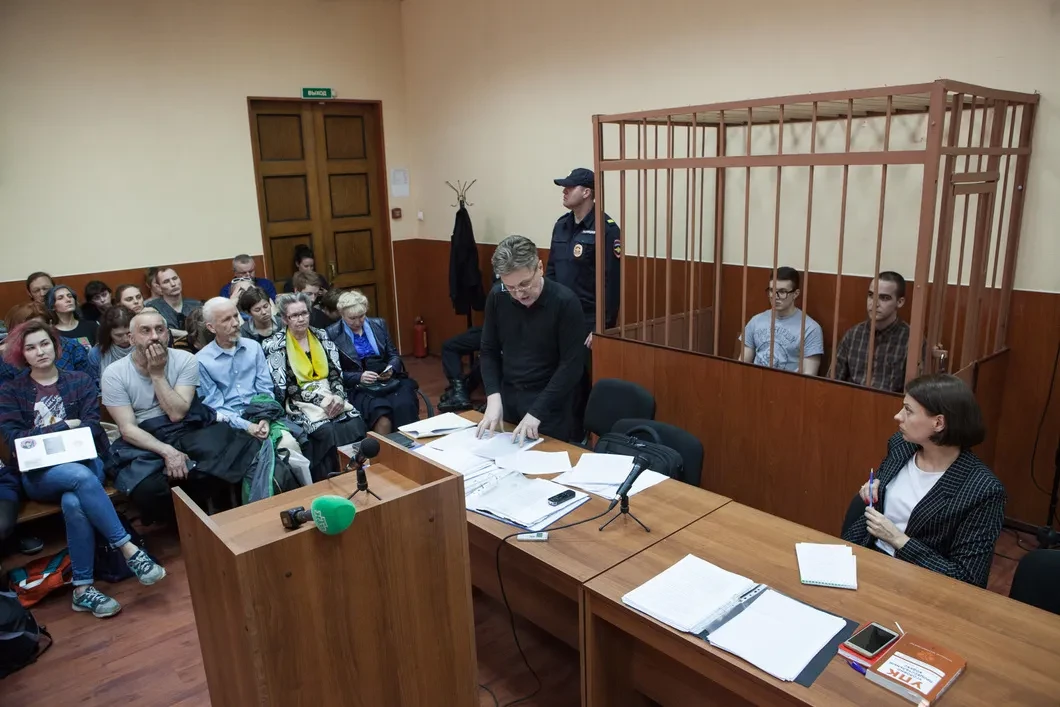
Upon circulation of protection, the conclusion was performed by a leading Russian specialist in the field of sociology of youth, doctor of sociological sciences, professor, director of the Center for Youth Studies of the St. Petersburg branch of the National Research University "Higher School of Economics" Elena Omelchenko and the master in the field of training "Sociology", junior specialist in the study of European University in St. Petersburg " Daria Litvina. The scientific and pedagogical experience of Elena Omelchenko-40 years, Daria Litvina, who presented the work they performed in the process, has been working in their specialty for more than eight years.
Already from the first reports of “exposing the criminal“ network ””, the wording of the investigation arguments caused bewilderment even among the public not very knowledgeable in the intricacies of the anarchism. The obvious Oxymoron sounded an accusation of the intention to overthrow power in order to establish an “anarchist state” (the basic idea of anarchism is the abolition of the state as such). The legal definition of the terrorist community required the presence of leaders and a clear distribution of roles in it.
The fact that there can be no hierarchy among the anarchists, the security forces did not take into account.
Dmitry Pchelintsev spoke about how he was sculpted by the head of the Teresa from him, in his statement of torture:
“They began to pull off my underpants, they tried to attach wires for the genitals. I began to scream and ask me to stop mocking. They began to repeat: "You are a leader." So that they stop torture, I replied: "Yes, I'm a leader."
Both the Penza and St. Petersburg accused, who declared torture, claimed that during the tortures they were forced to memorize certain formulations, which were then included in the interrogation protocols. Several witnesses at the Penza process also stated that the FSB officers made up the phrases necessary for the investigation, and refused to recognize for their testimony what they had to sign under pressure then.
As a result, the protocols of interrogations of the defendants and witnesses are replete with phrases that anarchist could never fold in goodwill and in their right mind. So, in the protocol of the interrogation of Viktor Filinkov (conducted, as he explained, upon completion of many hours of torture), he “admits” that according to the results of the “congress” of anarchists in St. Petersburg, a document was drawn up reflecting “the main forms, methods and directions of the struggle for the creation of the state with anarchist system in Russia”. And in the protocols of interrogations of witnesses from the Penza anarchic environment Maxim Simakov and Anatoly Uvarova, the intentions of the participants of the “network” “armed by changing power” are reported and such “methods of this ideology” as “establishing anarchism by conducting a civil war and killing citizens” are criticized.
Sociologists in their conclusion emphasize:
“Anarchism does not aim to change one power to another, it involves a change in the method of organizing society.
Therefore, for many anarchists, it is everyday life that becomes a central platform for expressing protest. “Revolution of everyday life” or “resistance through the lifestyle” (Lifestyle-Bassed Resistance) is a part of anarchist philosophy, which implies everyday practices directed against the existing order. ”
As noted in the study, anarchists in their activism emphasize the creation of communities with horizontal connections, on non -zero initiatives designed to implement the anarchist principles of solidarity into practice. Many of these initiatives are aimed at supporting socially unprotected strata of society - free distribution of food in the poor (“Food instead of bombs”) and things (freemarkets), support for trade union activities, organization of concerts with collecting socially useful projects or supporting needy, as well as environmental, zoostal measures, volunteer assistance to animal shelters. Almost all accused in Penza and in St. Petersburg actively participated in such initiatives.
“Most anarchist practices and ideas are non -violent in nature,” experts say. “The use of violence among anarchists is not common and is used in rare cases, interpreting as a response to an external threat.”
The traditional sources of such a threat are, first of all, Nazin-Schinged and the police.
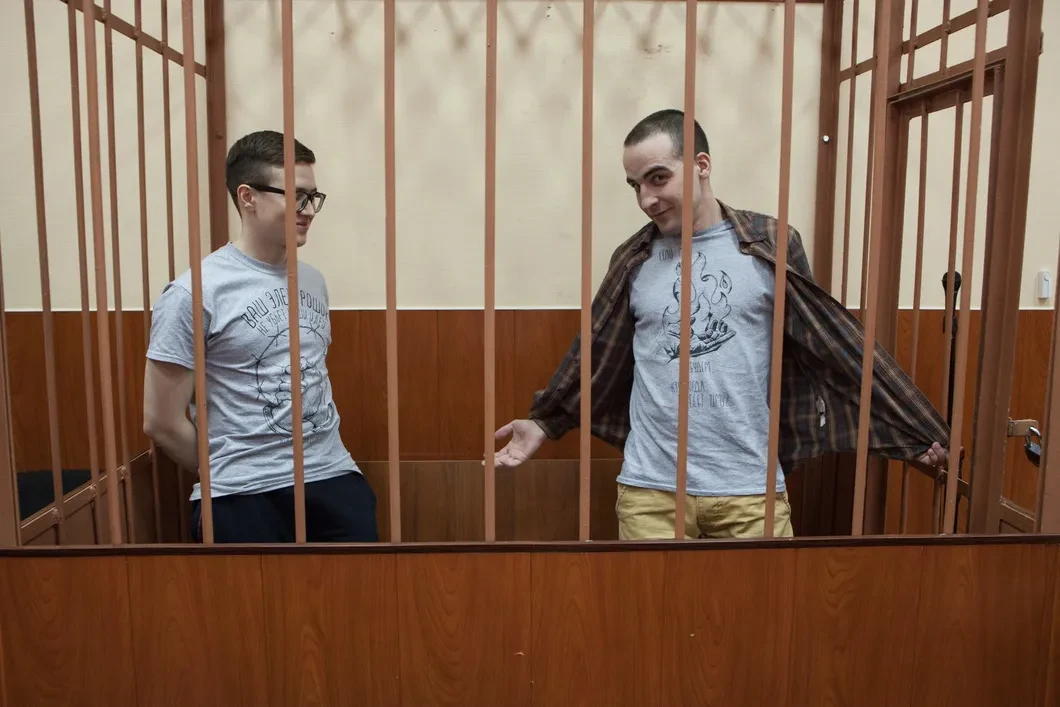
Experts refer to the results of studies in which informants talked about situations when the police in conflict situations took the side of the Nazi-Skinhedov, reported the threats received by the employees of the E-E Center and discovered the recruited participants within their movement, faced the proposals of becoming an informant, and were detained. In this context
The police are interpreted by anarchists and anti -fascists as an aggressor who protects the interests of the state, capitalists and nationalists.
Therefore, response (for example, when detained at a rally) is considered permissible, experts explain.
At the same time, they cite statistics showing: distrust of the police is characteristic not only by the anarchists. So, according to the 2014 VTsIOM survey, about 68%of citizens believe that the police are most defended not by their interests, but by the interests of “individual layers and groups” (34%), “their own” (19%) and “ruling circles” (15%). And 41% of citizens note that during the year they had to observe the actions of police officers who, in their opinion, violate human rights.
Aggression against ordinary citizens, as well as in general any living beings, is not consistent with the basic values of the anarchists.
“Solidarity with the working class and proximity to the left political ideas suggest that anarchists and anti -fascists defend“ ordinary people ”. In fact, this is their main global political/social goal. The organization of terrorist acts in which ordinary people could suffer is not consistent with the principles and key ideals of anarchism and related ideas, ”the conclusions of the conclusion said.
Experts evaluate the fact that the accusation qualifies as “following strict conspiracy” in order to avoid criminal liability. According to their data, the use of pseudonyms (nicknames), encryption of interpersonal communication and the exchange of information on the Internet has long been widespread among anarchists.
“The threat of a real clash with the police and Natsi-senior has led to the fact that the anti-fascists and anarchists have formed a stable tradition of“ conspiracy ”: a closed face and dark clothing on promotions, fictional names in social networks, and the transfer of information about promotions and cultural events only through proven channels. Similar protection mechanisms for a long time had been given close attention, since even a single neglect of the safety rules could indicate Natsi-Skydam to the address of residence, frequent routes or places of meetings. For some anarchists and anti -fascists, such protection measures remain relevant so far, ”the conclusion says.
For such “conspiracy” there are other reasons: “Romanticization of the image of the rebel and tribute to the stylistic traditions of movements and subcultures of the past”, as well as “following the anarchist idea of depersonalization and criticism of property rights (including authorship).” In the latter case, the meaning of such a departure into the shadow is not so much a desire to hide your personality as an emphasized rejection of an individual right to authorship, opening access to the production of ideas for everyone, ”sociologists explain. Moreover, they pay attention to the fact that
The described methods of “conspiracy” are characteristic not only for anarchists, but also for many other youth subcultures, regardless of the level of their politicization - apolitical pancks or ready, for example.
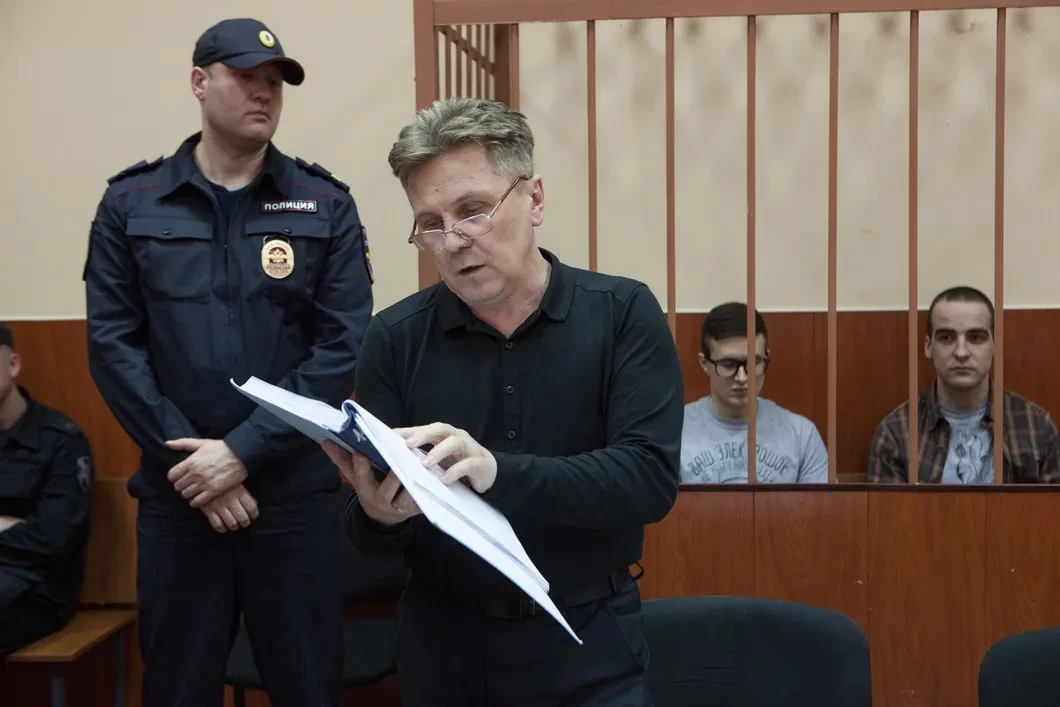
The conclusions of sociologists make it possible to evaluate the allegations of the accusation that since May 2015 a deeply conspiratorial and clearly structured terrorist community of anarchist, which has regional units and leadership that distributed “official duties” between ordinary participants, acted in Russia.
“One of the key features of the device of anarchist movement is the lack of formal structure and leadership. The anarchist (anti -authoritarian) ideas imply this primarily precisely this - the rejection of leadership, inequality and power relations, to replace which are horizontal relations between people, the conclusion says. - [...] The key principle of decision -making on important issues in the anarchist environment is the search for consensus. Basically, anarchists do not attribute themselves to any anarchist associations. Anarchic organizations exist, but they are few, mainly include the older [by age] anarchists and also work on the principle of horizontal connections. [...] The solidarity that underlies anarchist ideology creates a trusting atmosphere and allows the anarchists to receive support (to find “essentials” - places for an overnight stay or long -term housing, receive financial assistance in difficult situations) even from unfamiliar participants in the movement. ”
On the evidence -based bezbie, the investigation had to blame Viktor Filinkov even that he did not invite relatives from Kazakhstan to register marriage in St. Petersburg. What are the FSB’s minds “evidence of the behavioral aspects of the life of Filinkov V. S., expressed in evading from inclusion in positive social relations, neglect of social ties, secrecy and failure to close relatives in his life.”
Since this passage is included in the indictment, the experts had to analyze this.
Explaining that the anarchists as a whole are characterized by a skeptical attitude to the marriage (criticized as a type of “economic transaction”) and to the triumphs related to it. Separating anti -capitalist ideas, anarchists seek to minimize the consumption of goods and services - so that expenses on limousines with baby dwellings, banquets and expensive outfits are presented to them unethical.
“Registration of relations is far from always in anarchist pairs,” experts noted. “The marriage and the wedding can be perceived by part of the anarchists quite functionally - as a necessary step for obtaining certain legal rights (for example, to be able to receive information about the state of his/its health; in connection with the birth of a child, etc.), and not as a festive event, which involves the participation of relatives and wide celebration.”
In the conclusion, statistics on Russia are also given: according to the VTsIOM 2017, in the open question about which the wedding cannot do without, only 6% of Russians noted the presence of relatives and friends.
The experts considered data in the indictment of the Filinkov’s negative social characteristics “labels” (the “labels” in sociology are understood as negative characteristics that are attributed to some groups of individuals to others - those whom the former are considered “deviants”):
“... The lack of an invitation of relatives to the wedding does not indicate the negative personal characteristics of V. S. Filinkov. Firstly, this practice is quite common so that we can talk about its legitimacy (acceptability) in the conditions of democratization of intimate life. Secondly, it can be additionally explained by anarchist principles. Thirdly, negative characteristics attributed to V. S. Filinkov cannot be brought directly out of his choice not to invite relatives to the wedding and are the result of the existence of labels in relation to individuals whose practices differ from generally accepted. ”
According to the lawyer Filinkov Vitaly Cherkasov, the conclusions made by specialists can be confirmed by the position of protection on the far -fetched and insolvency of the essential part of the prosecution arguments. At his request, the court introduced the conclusion of sociologists to the case file.
*“Network” is a terrorist community, whose existence has not yet been proven by the court, but is already prohibited in Russia.