
Translated material
The country is tired
What is happening in Moldova, where the largest political crisis erupted

It is hot in Moldova. And not only because thermometers fix the temperature above +30. The political temperature here began to heat up three months ago - after the elections to the Moldavian parliament, which was on February 24. According to their results, the deputy mandates were distributed almost equally between the three main political forces of the country: the Party of Socialists, considered the pro -Russian, pro -European bloc of Acum and the Democratic Party - the pocket structure of the richest man Vladimir Plahotnyuk.
Moldova is a parliamentary republic, because it was the parliament that was to form a coalition and determine the composition of the new government. But the process was stalled. Socialists refused to unite both Plahotnyuk and Acum. Plakhotnyuk offered the ACUM block to unite, but each time he received a refusal. One of the leaders of the bloc Andrei Nastas directly stated that "the ACUM unit will not participate in any consultations with the current leadership of the DPM, since this clan is responsible for capturing the state, for the external insulation of the country and undermining the economy due to the dubious seizure of the most important economic assets, for poverty and the exile of people from the country."
The catalyst for the aggravation of the situation to some extent was the meeting of the presidents of Russia and Moldova on the fields of the summit of the Eurasian Economic Union (EAEU). What Vladimir Putin and Igor Dodon talked about is unknown, but on May 30 a tiny information message appeared on the Kremlin’s website about the very fact of a “separate meeting”. And not a word about the content of the conversation. What served as the basis for the nomination of a huge number of conspiracy versions, including this: “Putin personally instructed Dodon about the decisions of President Dodon,” which he should take in the near future.
By the way, this meeting took place a week after the ex-president of neighboring Romania, Trian Basescu, called Igor Dodon, “Podelia Moscow,” commenting on the prospects for the development of relations between the EU and Moldova. The fact is that on June 27, 2014, an association agreement was signed between Moldova and the EU. On July 1, 2016, the agreement entered into force. But in early 2017, Igor Dodon announced his intention to cancel the document after the 2019 parliamentary elections. Dodon emphasized that the agreement worsened the situation of Moldova, because the Russian market was closed to Moldovan goods, and export to EU countries was sharply reduced.
But in the elections, I repeat, the Dodon Party of Socialists could not get a majority - so I had to postpone the idea of denouncing an agreement with the EU.
The proximity of Igor Dodon is noticeable to the Kremlin.
“Any politician, having headed the state, primarily strengthens relations with neighboring countries,” says Alina Radu, the publisher of the influential Moldavian newspaper Ziarul de Garda. - Moldova has two neighbors - Ukraine and Romania.
For 2.5 years of presidency, Dodon never visited Kyiv or Bucharest, but several dozen times flew to Russia.

Just a few days after the conversation of the Presidents of Moldova and Russia in the capital of Kazakhstan Nur-Sultan, on June 3, Russian Deputy Prime Minister Dmitry Kozak, who is also the special representative of the President of Russia in trade and economic cooperation with Moldova, flew to Chisinau on Chisinau on a two-day visit. Among the Elite of Moldova there was talk that Kozak brought Dodon detailed step -by -step instructions for getting out of the political crisis. At the press conference, following the meeting, Kozak allegedly “talked”, saying that it would be better for socialists in parliament to create an alliance with the pro-European acum, and not with the PDM, to return the country “from the current state to the democratic normality”.
It is noteworthy that the Kozak’s stay in Chisinau coincided with visits to the country of the EU Commissioner for the expansion and policy of the neighborhood of Johannes Khan and the director of the US State Department of the US State Department Brad Freden. And all three met with President Dodon and the leaders of political parties, including Plahotnyuk. And everyone talked about the need for stability and forcing the appearance of the government in the country.
When it became obvious that the Dodon Party of Socialists will listen to the Moscow “Recommendation” and will go to the tactical union with the ACUM bloc for the formation of the government and that the process of coordination of ministerial portfolios has already begun, Vladimir Plakhotyuk, a crushing blow to the coalition, which later the parliamentary majority will be called “an attempt by the Domocus, undertaken by the Democratic Party the support of the Prosecutor General and the Constitutional Court. ”
On June 7, the Moldova Constitutional Court ruled that already on Saturday, June 8, the government should appear. Otherwise, the president must dissolve the "insolvent" parliament.
Dodon refused to dissolve the parliament. And on June 8, the Constitutional Court made a decision on the dissolution of the parliament. At the same time, the KS removed from the post of Dodon himself, appointing early elections of the head of state.
Dodon refused to leave, the parliament refused to bloom. Already on Sunday, June 9, the deputies of the Parliament from the Party of Socialists and the ACUM bloc gathered at an emergency meeting and proclaimed Moldova as a “captured state”.
The accusations were publicly made that all key government structures, including the Constitutional Court, are under the control of Vladimir Plakhotnyuk.
Further events began to develop rapidly. Supporters of the parliamentary majority, and the supporters of Plahotnyuk reached for Chisinau streets, was going to direct clashes. But the current president and parliament were supported by the United States, the European Union and Russia.

Moreover, on Thursday, Vladimir Putin gave an interview with the world. Regarding the situation in Moldova, the president spoke out unequivocally: the power in the country was usurped by “oligarchic structures”, which crushed “all state structures, everything is absolutely: the law enforcement sphere, and the parliament, and anything”.
On Friday, June 14, the office of the Democratic Party in Chisinau was visited by the US Ambassador to Moldova Derek Hogan. What Hugan and Plahotnyuk talked about during a 15-minute conversation is unknown. But it was after this conversation that Plakhotnyuk left Moldova, and his supporters turned street activity.
On Saturday, June 15, the Constitutional Court of Moldova again gathered at the meeting and turned 180 degrees, canceling its own decisions on the dissolution of the parliament and the appointment of early elections of the head of state.
On Sunday, June 16, a march was appointed in honor of the victory over the regime of personal authority Vladimir Plahotnyuk, who for many years managed to control Moldova, simulating European integration, the fight against the “Russian threat”, reform and democracy. That is, Plakhotnyuk skillfully used the confrontation of the West and the East.
On the morning of June 16, I flew to Chisinau, but by that time the march was already canceled. As the ex-deputy of the Moldavian parliament from the Communist faction, Alexander Petkov, told me, the current government was frightened that the Chisinau would not go on the march, and it would turn out to be small.
“They came up with an excuse that the police worked almost around around the clock in the last week, and she needs to give a rest,” says Petkov. - And perhaps Dodon was afraid of the return to the country of Renato mustachioed.
And this version does not look completely unrealistic.
The fact is that with Petkov we talked at the building of the Moldovan Special Prosecutor's Office to combat organized crime, where Renato’s mustache, the leader of the Moldavian “our party”, the former mayor of the city of the Balti, the second largest Moldova city. Politics was detained by border guards and police at the crossing point of the Moldavian-Romanian border.
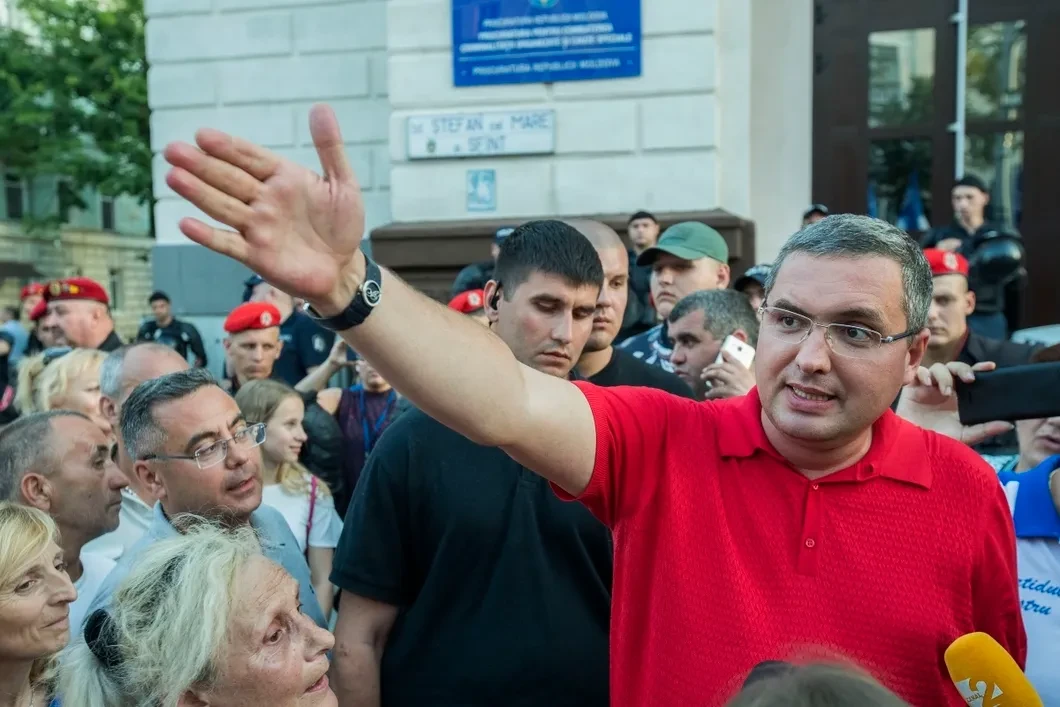
The mustachioed for several years spent in exile, leaving Moldova after more than a dozen criminal cases were instituted against him and he was wanted. The day before, after the mustachioed announced his return, he told the “new” that his criminal prosecution was politically motivated and was initiated by his opponent Plahotnyuk:
- So I think not only me. Even Interpol, having studied, presented by the Moldova, refused to include me in his search basis. And all these years of being in exile, I had no problems with the movements of European countries.
Nevertheless, barely Renato's mustachioed crossed the border, he was detained and delivered under the convoy to Chisinau. Here I must say that more than a thousand of his supporters met the politician on the border, and the mustachioed had to turn to them with a request to unlock police cars.
Supporters of the mustachioed also gathered at the building of the Moldovan Special Prosecutor Governor, who chanted: “Renato freedom!”
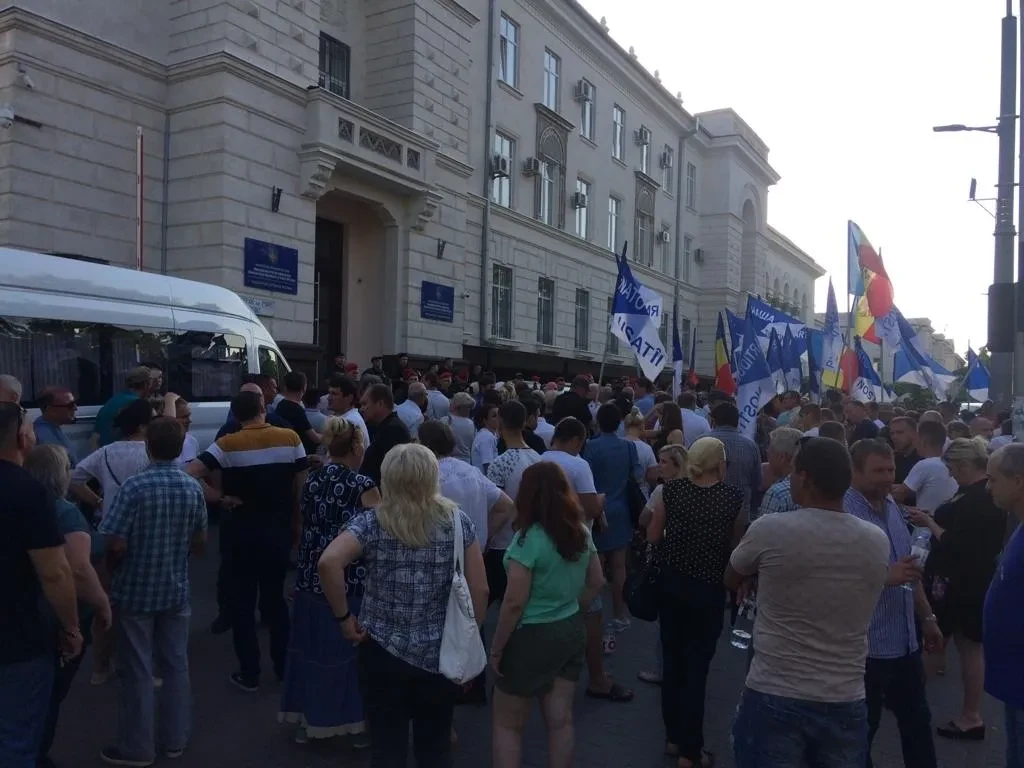
“In Moscow, such an action in full force would be loaded into auto -zaks and transported to Kutuzki,” I say to Petkov.
- And we have the most liberal law on public events in Europe. And we, the Communists adopted this law,-the ex-deputy of the Moldova parliament proudly says.
- It is enough to start about the rally or picket. And even the declared amount is not necessary, we specifically prescribed this in the law: we can say that the stated 50 people entered the action, and the rest simply joined.
After five hours spent in the prosecutor's office, the mustachioed was freed. And not even under the recognizance not to leave.

After the release of Renato, the mustachioed said that he plans to meet with President Igor Dodon, with the new Prime Minister Maya Sandu and the new Minister of the Ministry of Internal Affairs Andrei Nastas to discuss what he can be useful. The mustachioed promised not to criticize the Party of Socialists and the ACUM block as long as they are dismantling the previous system.
And the dismantling is serious.
The already mentioned Alina Radu, who is skeptical of Renato mustachioed, considering him a populist, is in solidarity with him in assessing the key problems of Moldova.
“The biggest problem of Moldova is corruption,” says the publisher of the newspaper Ziarul de Garda. - The country is tired of Plakhotnyuk. And everyone is tired. Both the elite and "little people."
It seems that not only the country is tired of Plahotnyuk. Four months ago, February 22, the Russian Ministry of Internal Affairs reported the investigation of a criminal case initiated under Art. 210 and 193.1 of the Criminal Code of the Russian Federation (organization of a criminal community, illegal withdrawal of funds abroad), which is involved in Vladimir Plakhotnyuk. According to Russian law enforcement agencies, it was the Moldavian oligarch along with his accomplices that organized an international criminal community, whose members in 2013-2014 withdrew 37 billion rubles from Russia.
The possible involvement of Plahotnyuk to withdraw money from Russia for me was not a surprise. And we are not about 37 billion, but about a much more impressive amount. For the first time, I learned about Plakhotnyuk in the summer of 2014, when the Novaya Gazeta investigation department and the International Organization of Journalists-ID (OCCRP) sorted out who and how brought out almost $ 20 billion from Russia.
19 Russian banks participated in the withdrawal of money from Russia through the Moldavian Laundry. And the leader in the volume of dubious operations, according to Moldovan law enforcement agencies, was the Russian Land Bank (RZB), which from 2012 to 2014 allegedly pumped 152.5 billion rubles from Russia (at the rate of that time - about $ 4.5 billion).
Shortly before the publication of the Landromat publication, journalist Roman Anin, we met with the main beneficiary of the RZB Alexander Grigoryev and Beslan Bulguchev. Bankers invited us to the restaurant "Sphere".
During the conversation, the surname Plahotnyuk sounded. Grigoryev and Bulguchev convinced us that they were honest businessmen, not criminals. So honest that when they fly to Chisinau, many influential Moldavian persons meet and discuss business problems with them. And the first among the “influential people” was the name of Vladimir Plakhotnyuk.
In the fall of 2015, Alexander Grigoryev was arrested. True, not in connection with the “Moldavian Landromat”, but in the framework of the criminal case of the theft of several billion rubles at the Doninvest bank. Beslan Bulguchev left Russia. And before this year, there was no information about the investigation of the withdrawal of $ 20 billion from Russia through Moldova, until an official report on the criminal case appeared at the end of February, which was also involved in Vladimir Plahotnyuk.
Then, in February, the “new” reported that “the accusation of Plakhotnyuk of laundering billions from Russia looks ridiculous if there is not a single high -ranking domestic official who was supposed to be responsible for this scheme from the Russian side in the dock. After all, we are talking about a system through which not 37 billion passed, but about 700 billion rubles. ”
We do not exclude that the attitude of the United States and the European Union towards Vladimir Plakhotnyuk has changed dramatically after the Russian intelligence services shared with their Western colleagues the materials of the investigation about the international criminal group, which engaged in the legalizations of tens of billions of dollars of clearly criminal origin. Including about the status and role of Plahotnyuk in these crimes.
True, we doubt that these materials have the names of large officials and generals from Russia, without the patronage of which this international group could not work.