
Translated material
Uncle Sam armor
That the European Union can contrast US sanctions against Northern Stream-2: legal view
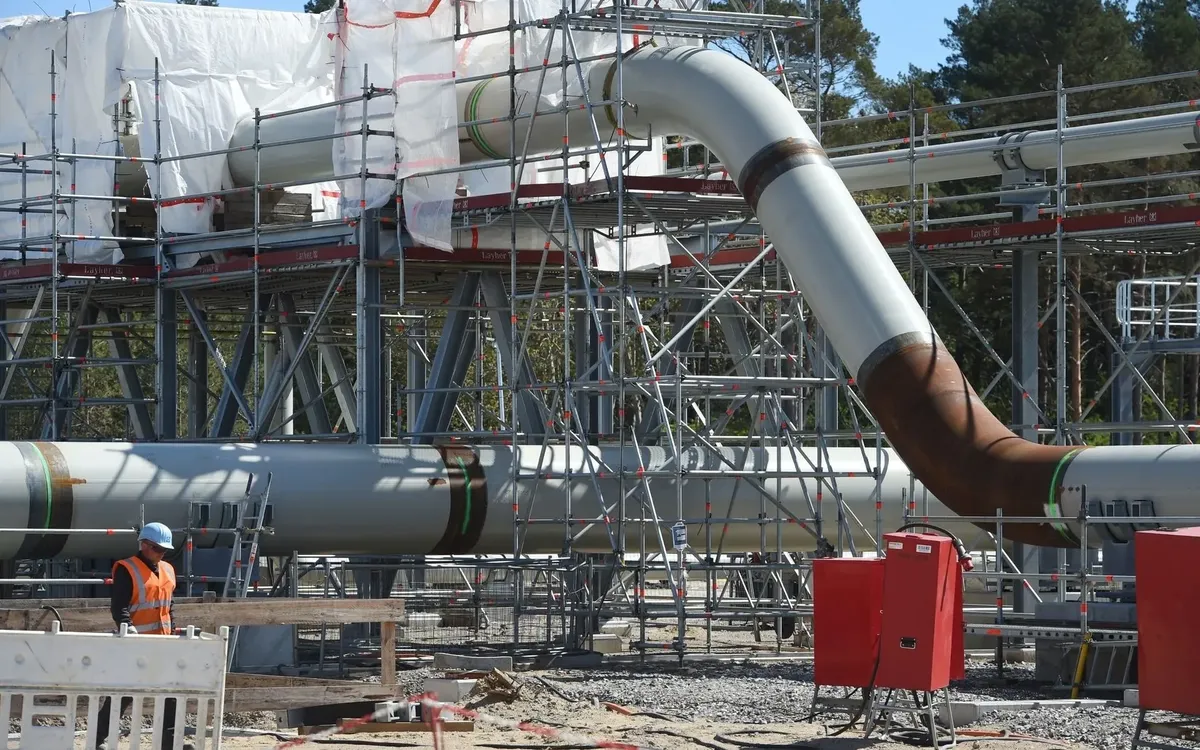
At the end of last week, the US Congress introduced another bill on the introduction of sanctions against Northern Stream-2 and other Russian gas pipelines. The official goal of the document called The Escape ACT (the act of cooperation in the field of energy security with the allies in Europe) has been stated a decrease in European dependence on Russian gas and an increase in the export of American liquefied natural gas (LNG).
In addition to sanctions against Russian gas pipelines, the authors of the bill intend to separately adopt an autonomous energy strategy, the purpose of which is “assisting European and Eurasian states to reduce their dependence on energy resources” of Russia.
This is far from the first bill aimed at Russian pipeline projects in Western Europe. On May 14 this year, the US Senate was included on the Protection of Energy Security of Europe, the purpose of which is to force American gas instead of Russian.
All these initiatives fit well into the policy of protectionism and sanctions pursued by Donald Trump as a mechanism for confrontation to foreign “ill -wishers and opponents”. It is difficult to disagree that the USA architect is now the United States. The laws and acts of American financial regulators are executed not only by Western banks and financial and credit institutions, but also by their colleagues in remote corners of the world. It is enough to bring the Fatca and FCPA laws as an example, to which Western and international companies are guided in their daily activities.
Then why are potential sanctions not welcome in Germany? It’s just that the Germans are very pragmatic about money: Russian gas is almost half as much as American.
The introduction of new sanctions against Russia has another reason: US President Donald Trump intends to run for a second term in 2020. One of the points of his re -election program by the head of the United States can be distinguished by a policy of protectionism. And despite the fact that in recent months, the sanctions war of America and China has come to the fore in the media, in parallel in the US Congress, lobbying measures to prevent the Nord Stream-2 pipeline project.
It is worth recalling here that in 2018, the European Union, faced with American sanctions against Iran, has already returned the regulations 2271/96-the so-called locking status or pan-European legislative mechanism for protecting a single market from extraterritorially applied US sanctions. This instrument was introduced in 1996 in response to a new round of US Anticubian sanctions to protect European business.
Shipowners and pipe layers working with Northern Stream-2 are just under its protection, but without insurance of responsibility, their activity will be blocked.
Marine activity is a comprehensive procedure, it requires compulsory liability insurance. And the insurance market is developing just on American patterns, since most marine insurance companies and underwriters are either American companies or have a significant share of American capital.
Formally, the blocking statute can protect the European business from the influence of American sanctions measures, but its mechanism operates Post Factum : the European Union is ready to consider the claims of the affected residents only after the application of sanctions and bringing the American authorities liable in other forms. Form of support - compensation for losses incurred in material form.
And although the protective instrumentation of the regulations does not work as a lead, even European residents are questioned, the mechanism evolves: in December 2018, the European Commission has presented a plan to expand the role of euro in international trade and financial flows, and last week, together with Tehran, it announced the creation of a special financial channel to circumvent American restrictive measures. The mechanism, known as SVP, is designed to become an intermediary between European companies and Iran in financial calculations and should allow the trade in Iranian oil.
Similar examples of the adaptation of the economy for sanctions can be found in Russia. After the introduction of restrictive measures against the largest players in the domestic defense industry, the government appointed Promsvyazbank responsible for the calculations of enterprises of the Russian defense industry. Transactions and payments on state contracts, which previously threatened to include Alfa-Bank, VTB and Sberbank in the American lists, are now passing through a legal entity whose reporting and even the composition of the leadership are partially classified.
The above bills are tools by which America defends the interests of its LNG manufacturers. This is an example of the influence of economic factors on sanctions mechanisms. And that is why the United States intends to sanctions, including European operators of marine pipelines and insurers participating in the laying of Northern Stream-2.
Sergey Glandin , special adviser to PEN & PEPER, candidate of legal sciences - specifically for "New"