
Translated material
Dylda has a female face
Alla Bossart: How Kantemir Balagov bewitched cinema community
NECESSARY
& Nbsp
Attention. In the text there are spoilers for the film Kantemir Balagov "Dylda"
It is believed that everyone, at least somehow owning a pen, can write one good book. Only the second book speaks of the writer's class. Probably the same with films. Although the genius of one masterpiece happened in the history of the movie. Without names.
Now, when Kantemir Balagov for the second time after the triumphal “tightness” has bewitched the world's cinema of his “Dylda”, it can be talked about and argued about him as an adult and a director, without discounts.
Of course, the enthusiastic reviews of critics should be expected. Yes, and the triumph in Cannes at a “special look”, as well as at the “Mirror” festival - how not to be.
The film is strange, with a lesbian component, frostbite, replete with picturesque allusions, with a military, and most importantly, a posed history, symbolic to convulsions, in general - everything as we love.
It’s not that I am afraid of spoilers, the picture, in essence, does not have such a strong plot to bother about its non -disclosure. Just once (namely, in the case of the “dancing in the dark”) I blocked to retell the plots. Because no matter how smart and maneuver, but in the retelling of the movie it will certainly be with a shade of idiocy.
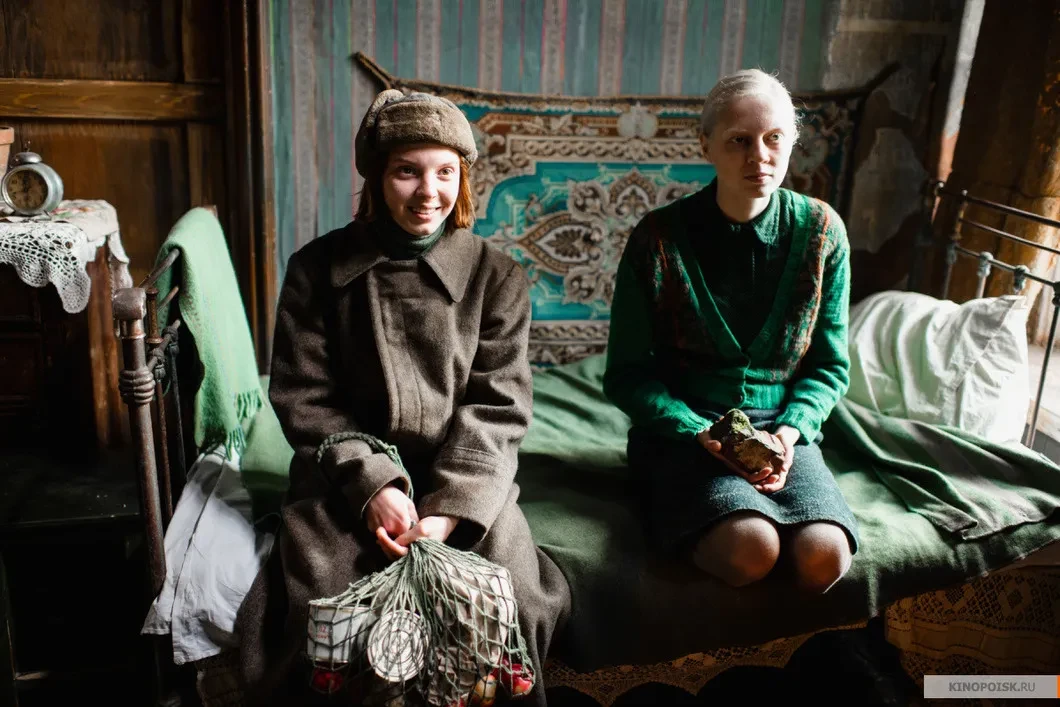
Therefore, literally a digest in a couple of lines. The lanky Iya (Victoria Miroshnichenko), the anti -aircraft gunner, shell -shocked in the war, works in the post -war Leningrad in the hospital and raises a little Pashka. A friend Masha (Vasilisa Perelygina) comes to her. Both are some kind of inhibited, defocused, impassive and frostbitten on the whole head. But they dream of some other life. (The work of actresses, and indeed everyone in the film, I must admit - excellent.) 130 minutes they, like hedgehogs, wander in the fog and, like the same hero, meet many mysterious phenomena in their path. (I see, yes, why should retells be avoided?)
Now, actually about Balagov and his method.
Kantemir, no doubt, is generously gifted. Of course, like any student, originally not very spoiled by culture, i.e. Grown by a powerful teacher literally from grain, half, if not 34 in it is a teacher. (I don’t write with a capital letter so that there is no confusion with a popular director, as well as unnecessary sacred hints.) Sokurov - a master of not just the highest art and pedagogical class. He, as my colleague said about him, St. Petersburg critic Olga Sherwood, "great, I repeat, the great Russian director." Although Alexander Nikolaevich is not my director at all, but this is my problem, and I agree with Olga. Yes, the great. Although not so that Russian. In Sokurov, time is always much more important than space. And his time is eternity. And he spreads this word from any letters. It seems to me that this truly great focus to comprehend this is a truly great focus in his workshop of young and gifted Kabardins.
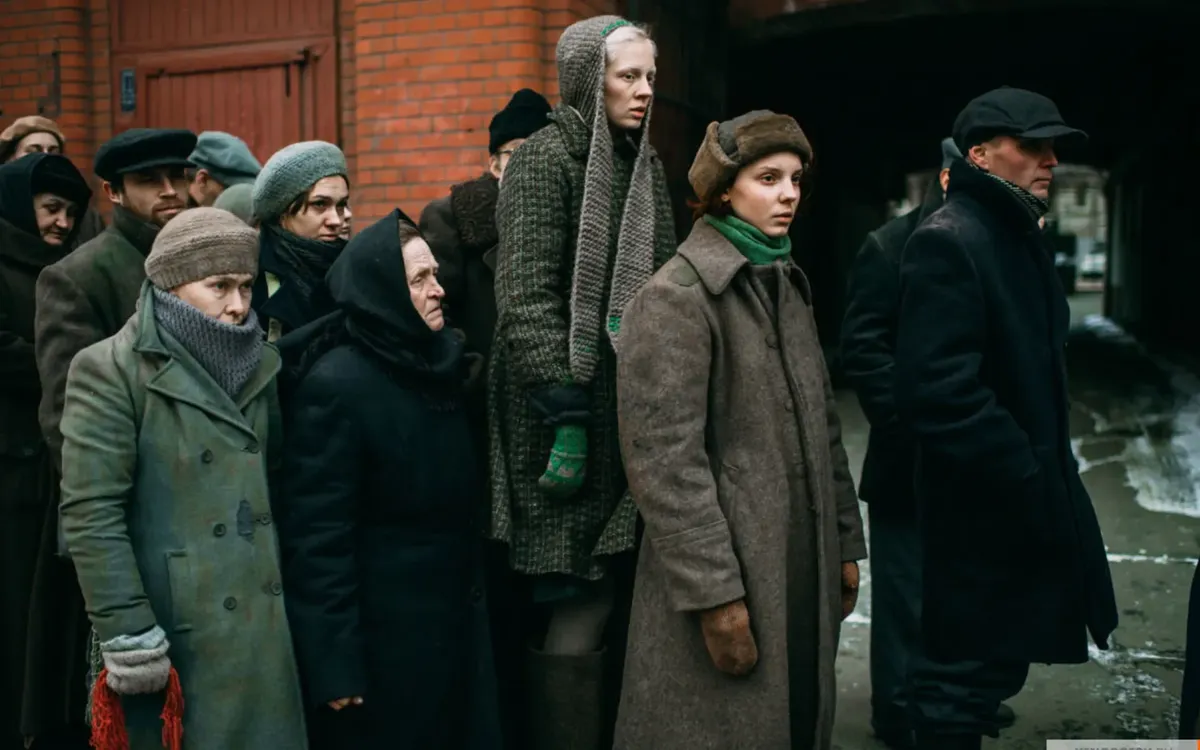
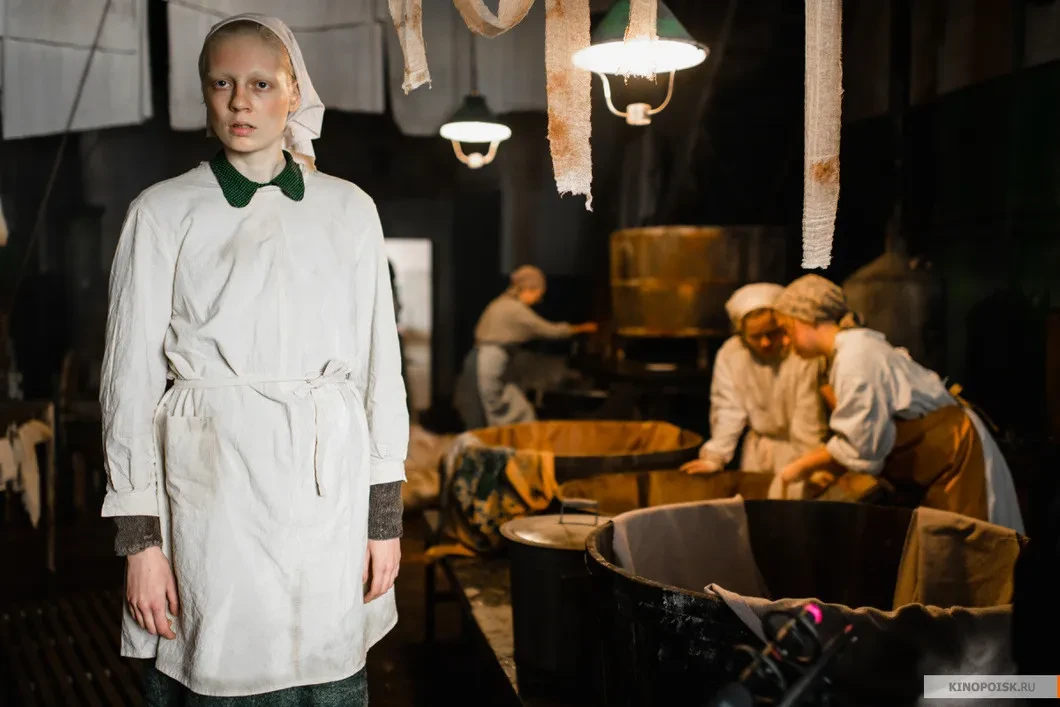
“Dylda” - as if about the post -war Leningrad, with its authentic trams, buzzing gateways, hunger, anfilads of hospital corridors and the expanse of huge chambers, with its Soviet aristocracy (pure Sur) and communal services. But in fact, this movie is about a woman both the primary of the world (both World and Peace). About the monad of being. My generation was for a long time in captivity with Parajanov with his "grenade color." Bagov, under the leadership of Sokurov, isolated the color of her monad from eternity. And this "color of the monad" is green.
Flowering, spring, herbs, vitamin of growth and love, Renaissance, Green Dutch fabrics, apples, grapes, my green -eyed ... all that.
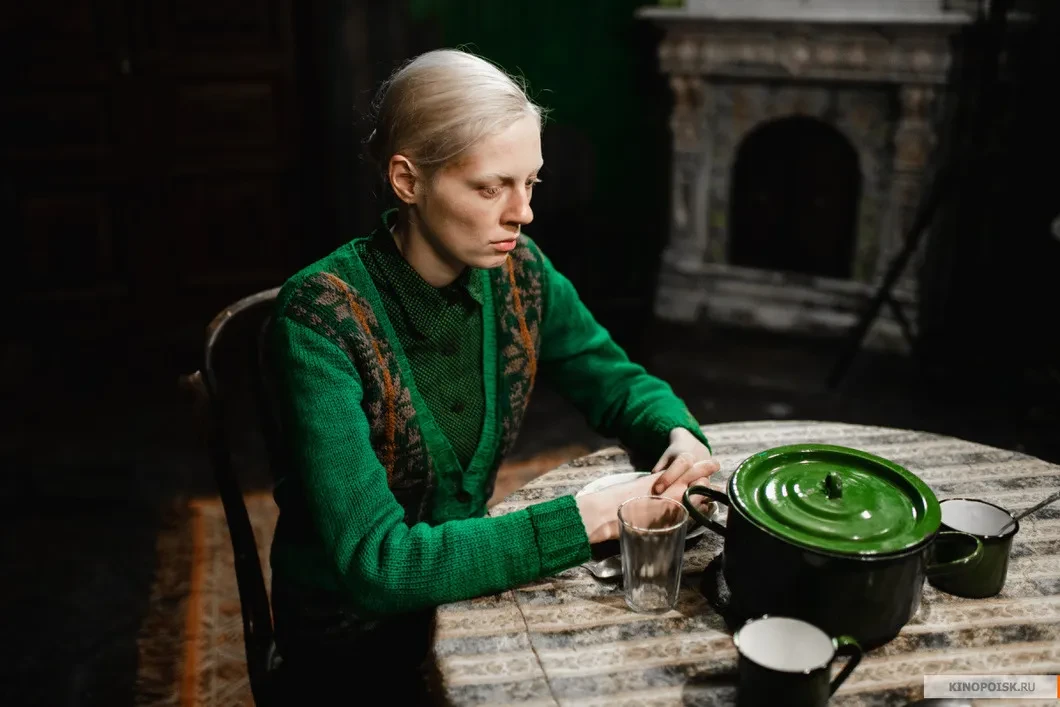
And the second color of the film - red - could become an antithesis, the second dimension that gives the image stereoscopy. This, in my opinion, did not happen. The "lonely voice of a man" did not merge with the sound of the pipe. The film has a lot of truly beautiful, luxuriously shot and played scenes. One of them-when a portable neighbor tries on Masha someone else's bright green dress. And that as if a poor orphan who got into a fairy tale, barely whispers: “Can I ... will be shook?” And so she is spinning, faster, long, madly, she, like a funnel, is drawn by the green whirlwind of a crazy dress ...
A fit of happiness. There is no happiness itself.
Masha, already seemed to grab the firebird by the tail, goes, lending the emerald sun-coat, to get acquainted with the parents of the “groom”, whose duck profile and closely planted eyes ... However, they wrote a lot about this. (A Propos-I did not find a single photograph of actor Igor Shirokov on the Internet. This is so, information for thought.) The mother of this shy misunderstanding, the mistress of the unthinkable estate, the party-Soviet goddess (wondrous Ksenia Kutepova) tries to expel her, she does not leave-also an excellent, piercing episode of a quiet class scandal. However, the experienced Meger, without raising his voice (in which Kutepova virtuoso) brings a miserable girl to nasal bleeding. “I gave the dress with blood,” Masha complains at home.
Here it is “devoted” by the blood that a lot is here. There is a speck, a stream ... Someone sees in this the delicacy of the director. I see anemic and fear. Are you pouring greens of buckets? Well, let's not regret the blood.
But on all the lines that are behind which are tragic irregularities, the director definitely freezes like his somnambuli heroini. As if fearing to pronounce aloud something fatal. ("The one who cannot be called" ...)
It is probably not necessary to explain that I am not for rivers literally blood a la Tarantino, although he is my favorite director. In the case of Balagova - I am for intelligence. For the frankness, which I did not have enough in the “Dylda” like oxygen.
We are dealing with copyright cinema, colleagues will strictly say. This means that simpletons, like me, should close my head with paws and certify: "Oh, I'm afraid, I'm afraid!"
I'm afraid, of course, but still I will ask. Here in the annotations it is said: "The story of two young women-frants who return to the post-war Leningrad and try to find a new peaceful life." Wonderful. But why and why this Iya, so beautifully and fogically removed through a tram glass with a son in her arms (definitely Petrov-Vodkinskaya, rethought time, Madonna, as the author insists), why does she ultimately kill the boy? Ah, this is not her, this is a son, that's the matter! - We will find out over time. And what? Alien child is tired of, well, let's in the process of arising, we will quietly strangle him. And what is especially wild and inexplicable - the reaction of Maria’s mother to the message that Pashka is no more, died for no reason in a dream. The reaction is zero. The dressed dress excites much more. "Trying to find a peaceful life." To fuse these reinforced-nedorosliks-and find. From a clean sheet. Not at the atoning death, sorry, Lord, the author hints to us?
This story is also complicated by the fact that the wounded at the front Masha lost the female, so to speak, fillings, and will no longer be able to become a mother. But at the same time - wants to madly!
Quietly, I remember everything: copyright cinema, biblical references, the role of the immaculate attachment of Mary should play Iya - a surrogate mother.
But for this July, you need to provoke sex. And here is another ambush.
Iya with her latent orientation is experienced by the animal disgust for men. One boyfriend even breaks his hand. And then Maria (I was already confused, which of them is Madonna) invents a completely devilish thing.
A very good, very tired person (Andrei Bykov), the head of the hospital department, where both friends work, it turns out that with the help of a nurse, AI facilitates the suffering of the doomed. Euthanasia. (Such sudden revelations with unequipts skip in the text and disappear forever.) Masha accidentally finds July for her mournful business. And it makes a beloved girlfriend write a repentant letter in the NKVD. Then it should be blackmailed to put July in bed with the elderly Nikolai Ivanovich (Joseph, probably?). This whole line (generally speaking-plot-forming) is mentioned in passing, barely audible and, as they say, “to the side”. And in general, with all the tedious existential multi -digestiveness, it is only a crutch for a powerful episode, the Balagsky cinema necklace (with a rather rotten binding thread) consists of a bright set of which (with a rather rotten binding thread).
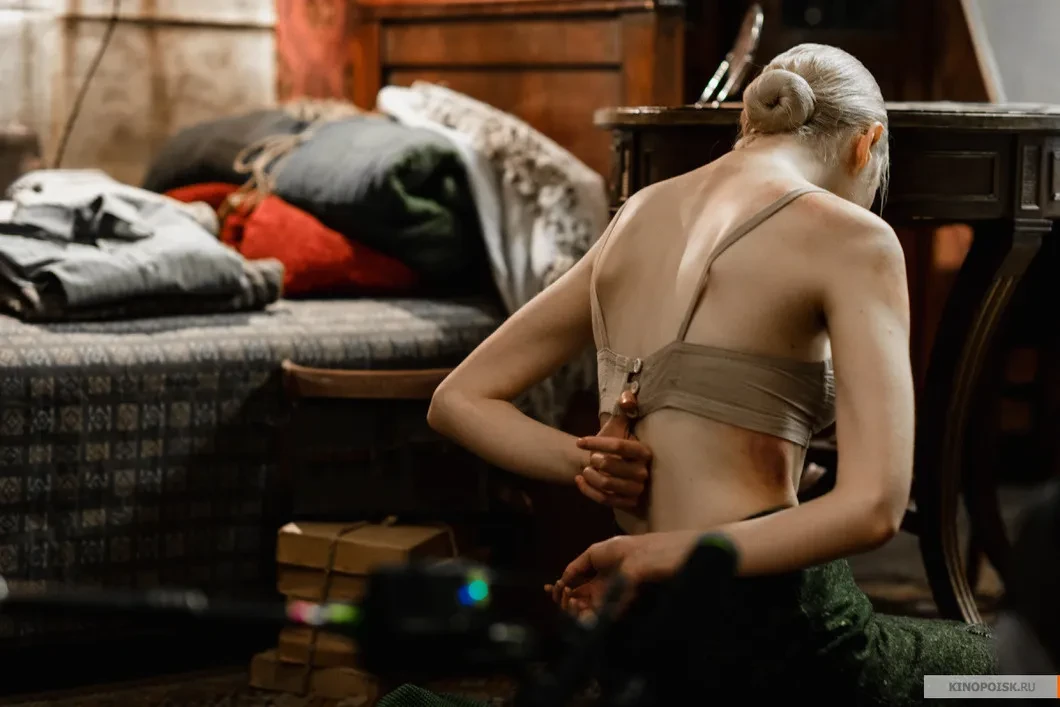
Every now and then he seems to drop off the heavy shackles of foggy disabilities. After the tongue -tied stuffy troops, it follows (if I wrote for Facebook, I would say - a plague) bed scene. Erotica rarely succeeds, this is a risky, subtle genre. And here the director fights-a desperate, anti-second, some kind of heartbreaking maneuver. Iya, in tetanus from the upcoming horror, is not able to even undress. Masha carefully, like a child, undresses her, after which she clings to her friend with a dead grip: “Just do not leave!” -And Nikolai Ivanovich falls into this narrow bed with the third, completely performs the necessary reciprocating movements. Iya cries, buried in the back of the head of Masha, and the ossified hands of the unfortunate women are woven as if forever.
Probably, hell may look like this. Such a hellish immaculate conception.
The weekend of the film states that the book of Svetlana Aleksievich “The War of the Nezhenskaya Person” was based on the basis. For me, this is another mystery. How is the dense, complete real horror, the texture Aleksievich in this irreal, almost ethereal image is used? The delusional Gothic manipulations of the virgin AI - the White Angel of Death - and Svetlana Aleksievich?
For Sokurov (and his screenwriter Yuri Arabov), the literary source was never just a canon, but even a canvas. Push, a secret signal to create your own poison or elixir, author’s witchcraft. The story of the Strugatsky “A billion years before the end of the world” has no external attitude to the film “Days of the Eclipse”. We remember: the mysterious power, the homeostatic universe (nature? God?) Prevent strong personalities from changing the order of things. What does the doctor who got into the provincial Turkmen town have to do with it? Yes, he is reconciled with a “barbaric” environment alien to him. But what does Malyanov of the Strugatsky brothers have to do with it? Where did the sick boy come from - either an angel, or a ghost? Where does the final ascension of the hero of the hero? From the author’s boiling flask.
The thinking of the authors of the film is parallel to the text of the book. These parallels do not intersect. But they, like rails, lead in one direction.
Balagov is a faithful student Sokurov. Although a lot in his cinema gives hope that Kantemir feels his way. It would be a shame to stay in history (albeit with a variety of awards) "Artist Sokurov."
Balagov knows how to be powerful and reckless: the scene in the hospital, where the wounded man applauds for a long time and lonely for a sled lady (Kutepova), for a long time, scary, “violently and incessantly” applauds, until blood appears on the shirt (the seams diverged) - one of the best in the film. Both in the image, and according to a strong metaphor.
Sometimes Balagov not only leaves the Sokurovsky fog - he seems to be very carefully groping the path into a hot, fierce, merciless, full -blooded world of a fighter, a seer with a diverse, the frankness of the alcohol and the out -of -heet surname - Balabanov.
The mythology of Kantemir Balagov is understandable. A boy from Nalchik, Kabardinets, Dzhigit, Highlander - he created a world without men: by a hunch? According to the dictate of Alexander Terekhov, an experienced master of a sweeping metaphor? On the hint of a teacher with his beloved theme of a asexual divine nature? I don't know that. I know that the episode in the bath is not only insanely beautiful, it is multi -layered and eloquent.
The world of parthenogenesis, where women see salvation in each other, want together, merging in love and harmony, to give birth to themselves - notice - a boy. Probably the Messiah.
And start living, as was said, completely, from a clean sheet. The war is over, everyone in the film is kept like a mantra.
I thought for three days: why did the first boy be strangled? I think I found an answer. Because he was from a man. From a male war with a non -female face. She, Dylda, like Gulliver, comes to the Liliput world, with which she cannot merge - simply by the incompetence of the scale. She is not only Dylda. She is an alien. She has a mission. Reloading our hopeless planet with its individual eternity. She chose fruitless Mary for this, doomed to an immaculate attachment.
Poor, one -dimensional, same -sex ... A miserable, stuffy world without oxygen, a planet, where everyone is only doing, that the carbon dioxide exhales. And the greens smells of Olipho.
Pre -faced syndrome, female souls so -warmed by the war, critics say. But has something changed since then?
And that the ugly explosion from party aristocrats, in love with Masha, looks like Putin, as literally everyone joyfully celebrates-I personally mix me a little, but does not play a fundamental role. He looks, by the way, not so much to Putin as to the good elf Dobby from Harry Potter. And what from this? From elves, children are still not born.