Date
Author
Source

Preserved copy
Translated material
Warren outside of context
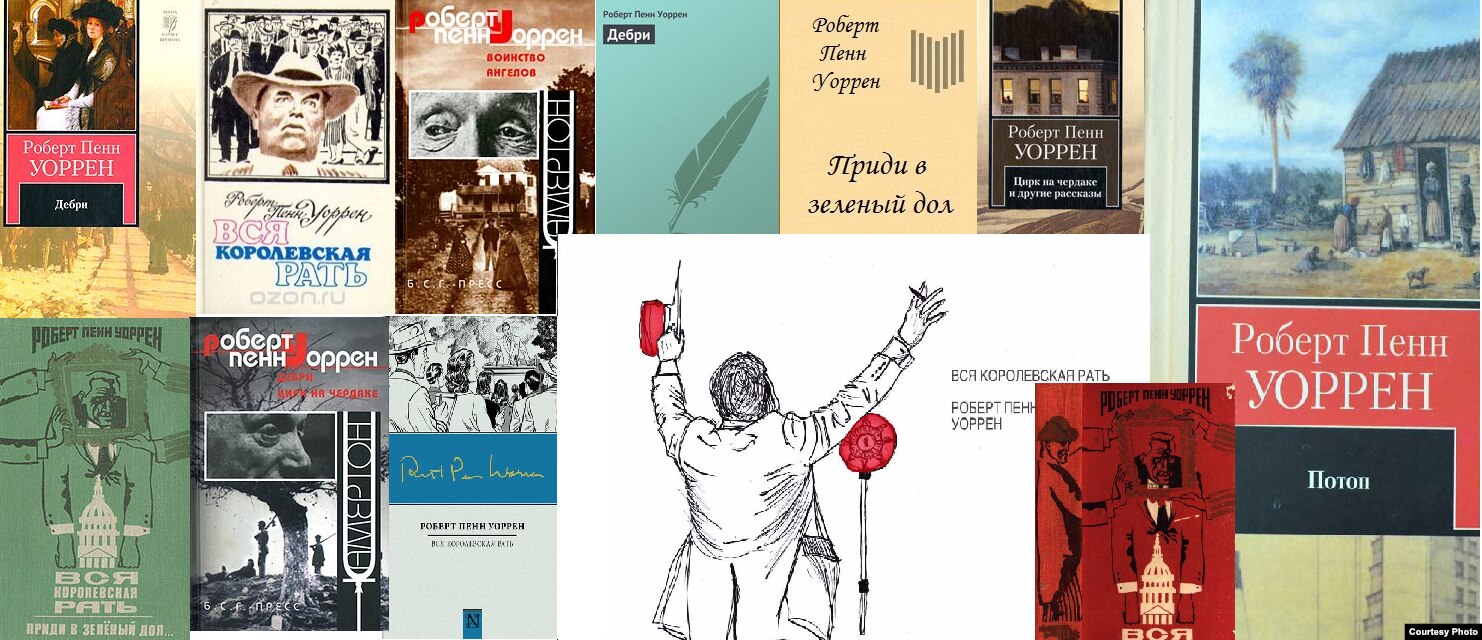
Roman about royal rati as a warning
Alexander Genis: Even when Trump was not the president, but only a contender for this position, the newspaper New York Times celebrated the 70th anniversary of the novel “All the Royal Army” with a list of eloquent parallels between Trump and the prototype of the protagonist Roman-the famous Demagogue Hugh Long. Today, populism again, as in pre-war times, has become an urgent threat in many democratic countries and the book of Warren is read as a preliminary novel. This happens with the masterpieces who themselves find themselves a burning context in order to become burning modern-from the “Lisistrata” of Aristophanes, which is put in every war, to the novel “1984” by Orwell, whose 70th anniversary we have just celebrated.
This is a natural, but not quite fair handling of classics. Especially such as the rich and complex epic opus “The whole royal army”, which does not fit into the framework of the political genre, into the so -called “Romance with the key”. Despite the fact that the author follows the outline of real events - the elevation and murder of Governor Willy Stark - the plot serves the book as a story - Shakespeare. Turning the drama, Warren, a big poet and in prose, transfers it to another layer of reality, plunging us into the lyrical landscape of his south. At the very beginning, we see an endless lulling road: “If you woke up on time and have not flown into the ditch, you will rush through the haze, and cars with such a roar will fly towards, as if the Lord God himself is torn off the iron roof with their bare hands”.
It is immediately clear that this highway is taking readers to the deep south, where it is easier to imagine “God with bare hands”.
Infected for life, Warren, once I specially went after his author’s character by journalist Jack Birden on the roads of the southern states. After spending a thousand miles at the wheel, I drove along the “biblical belt” of America. The cemeteries here looked east here in anticipation of the second coming of Christ, they wrote on the bumpers: “In the event of a terrible trial, this car will be left without a driver,” and I happened to visit a bookstore where they traded hundreds of one book, it is not difficult to guess which one. In these parts, the past - the time of the fight against the Indians, and the Civil War, and the Great Depression - is not felt by an archaic appendage to the present. It, according to another great southerly Faulkner, "did not even have passed." This is evidenced by a bright symbolic picture describing the town where the action of the novel by Warren begins.
On the square there was a “court building, a brick box, shabby and needed to color, because it was erected even before the civil war, with a tower decorated on all four sides for hours. Upon closer examination, it was found that these watches were simply painted and always showed five hours.”
However, when I still read this novel in the congenial translation of Golyshev, neither me nor adults occurred to compare this powerful book with real American history, about which no one really knew anything. For us, Soviet readers, Warren created the myth of the nature of power, and America itself was a myth.
In a certain sense, this circumstance - extraistorism of our reading - was beneficial for the book, not only by this, but to all the cult works of American literature, which, in fact, are discussed in the “Muse for Import” cycle. No matter how the ideological Soviet critic tried to conduct translation literature on the category of criticism of the West, it did not succeed, because we were passionately fascinated not by the content, but by the form. The Americans introduced the stylistic innovations of the twentieth century in a darkened in socialism. Warren - following the great revolutionaries of Hemingway prose, Fitzgerald and Folkner - wrote precisely what a modern literature, different from Victorian classics, mating high poetry with tough realism.
Our colleague Boris Paramonov, when we discussed the anniversary of the novel with him, spoke about this: “Reading the“ whole royal army ”, you are not dealing with the political machine of America and not with American politicians - you are dealing with people who speak the language of Shakespeare and biblical prophets.”
Well, now, having shared my own memories of reading this marvelous novel, I transmit the current episode of our cycle about the reception of American classics in Russia Vladimir Abarinova, who - a rare luck - will lead a conversation about the book “The whole royal army” with its translator Viktor Golyshev.
Vladimir Abarinov: Robert Penna Warren, both the Russian and the American public, knows from the novel “The whole royal army”, although he himself considered himself, was primarily a poet. He received two of his three Pulitzer prizes for books of poems, in 1986 he became the first poet-laureate of the United States. All his creative biography - and he did not do anything in life except literature and teaching literature - he tried to comprehend the nature of creativity, the meaning of history and the secret of love.
Wagging, his head thunders like a pumpkin, and the strands -
Like algae on smelly stones in the dam.
The nightmare retired, but previously whipped at the door:
He behaves like an old dog who is offended
He stomped and whimper once under your door.
Leaving the Omaha, you decided that you were coming from the old
Considering that it is connected with a grandfather who has
Was a wen on his forehead: sitting on the veranda, this grandfather
He walked his outgrowth, which was rushing over the light like brown
A grenade was a brain climbing from senile subsoil.
Later, in Harvard, under the historical bell tower,
Noting midnight by the deafening irregularities,
You were surprised: how did he jump here: completely light,
Timid - apparently, followed you more aimless
On the grandfather's inheritance or hare in the commodity.
You were almost good -natured - longing around the house has not yet been overwhelmed,
And he, his mouth, only meowed, but could not speak.
Then this very longing for the house was pretty overwhelmed by you,
And he came across all the shaky latitudes: that's cute,
You thought, nothing is never lost, God sees.
....
You often moved, but rarely left the address,
Rejoiced in his soul, learning about the death of one -year -old, -
A mixture of cleansing and hopes with all the bitterness of the pie.
But he did not die, but came: in his hand a bribe -
Chocolate or toy that was so dear to you.
He tries the castle, and you sleep without showing curiosity
In this sound, the door does not have special sacrilege.
Then he bypasses the house, stumbling about each threshold
(As a mother who searched a photograph of childhood at night),
Or snorts in the yard, like a horse, that in the field was fingered.
This was the poem by Warren "The original sin in a brief retelling" in the author’s performance. Translation by Pavel Grushko.
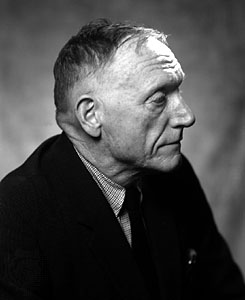
He was born in Kentukki, in the south-east of the United States, but several generations of his ancestors were southerners, and in his youth fate threw him south, first in Tennessee, then to Louisiana. There he became the most noticeable figure of the literary course of the so -called "southern farmers." Together with the writers who were not included in this group, but were close to them not only geographically, but also ideologically (for example, Faulkner), the "farmers" became a phenomenon that would later be called the "Southern Renaissance".
Warren subsequently wrote: "My emotional interest in farmers was caused by the desire to survive the story again, to recreate it and rethink it." The point of historical reference for the southerners was, of course, a civil war. This injury has not passed to this day, and then it was even more sensitive. This pain gave rise to great literature, smelling of gunpowder and magnolia. But the war, as always, has become a myth. In his essay "Heritage of the Civil War", Warren calls it "a mystical cloud from which our modernity arose."
It is difficult to resist, so as not to bring here another quote from Warren:
"If we had such a wonderful, beautiful past, then where, damn it, this was not a wonderful and not beautiful present - where, if this, unnoticed and adamant, was not in our past?"
This says Jack Burden, the hero of the novel "The whole royal army", but how not to subscribe to such a question.
My interlocutor today is the translator Viktor Golyshev. If you start listing all the works he translated, this program is not enough. It is in his translation that we know the novel "The whole royal army."
Viktor Petrovich, what do you think, why did the southern literature blossomed at the beginning of the 20th century, what explains such its wealth and such depth?
Victor Golyshev: I cannot explain. She is more baroque, almost all that is not taken, Wolfa or Faulkner there - this is a completely different pressure that is verbal. Why is this happening? I could not explain this defeat in the civil war. I don’t know ... I once asked one American why such a story. She said that they were poor, southerners ... Well, not planters are meant, but normal - farmers there and so on ... There were no newspapers, there were no radio. They sat on the rubble and told stories for a long time. Unlike northern people-in New York every half hour newspapers come out. And there all this happened orally. Maybe that's why it seems that it is richer, at least verbally. Well, then each case is special. How can Folkner's genesis be explained something? I think, first of all, his psyche. Why does he write long phrases? In "Avsessalome", in my opinion, there is a phrase six pages long. Why does he write so? So the brains are arranged, probably. He wants to drive everything into one phrase so that everything is explained.
Vladimir Abarinov: “The whole royal army” was published in English in 1947, and published in Russian in 1968 in the New World, the main editor of which was then Alexander Tvardovsky. This was the first publication of Warren in the Soviet Union. 1968 is an invasion of Czechoslovakia, a final turn from a thaw to stagnation. Like any new name of a foreign writer, moreover, the name of Warren, the name of Warren, was alerted by particularly vigilant comrades.
Victor Golyshev: I remember they were afraid. This did not reach Tvardovsky. They told me: "Transfer the sheet. We will see what kind of book it is." Then some man comes. I even remember his last name, but I will not speak. Literary critic. And he says: "Are you crazy? This is a fascist novel!" What is the fascist novel? Here ... they are afraid. Then you translate a third of the book - then they begin to move a little, like suitable. Tvardovsky had, in my opinion, when there was a more or less finished text or most of the text. I only saw him there once in the corridor, so I did not communicate with him.
Vladimir Abarinov: Do you remember the reaction of the public?
Victor Golyshev: I remember that the reaction was good, and after that the book very quickly published in the publishing house in the form of a book. Yes, I somehow did not really spin in this literary circle, so I did not really follow what the reaction was there. The reaction was later when Warren said that all his fees were given to Solzhenitsyn.
Vladimir Abarinov: In this case, it is clear why, after the 1968 book, a 10-year break in the publications of Warren came. But the novel "The whole royal army" was already legalized. Two directors and two film studios even argued for his film adaptation: Stanislav Rostotsky, Mosfilm, and Alexander Gutkovich, Belarusian television. Gutkovich was supported by the first secretary of the Central Committee of the Communist Party of Belarus Peter Masherov, and the film adaptation went to him.
One of the most famous places in the novel is read by the author. And the translation sounds performed by George Zhzhenov, who played Willy Stark in the Soviet film version.
"Funny is a thing - dirt. After all, if you think, our entire green ball consists of dirt, except for those places that are under water and again consist of dirt. The grass - and it grows from dirt. What is a diamond, if not a piece of dirt, which once has become hot? And what did the Lord do? He took a handful of mud, blew and made you, George Washington, and the whole human family. Blessed by wisdom and other virtues. "
Vladimir Abarinov: Many people read and fell in love. Let us recall the epigraph to the Picnic on the side of the road: "You must do good from evil, because there is nothing more to do from it." This is a phrase from Rati. It seemed to me before that the Strugatsky turned the meaning of this phrase, and now I think that they were not so reinventing. The atmosphere of the “picnic” in some ways is very similar to the atmosphere of Warren’s novels: the same decay and destruction, the same irresistible force, carrying death, but also some new insight.
Victor Golyshev: Yes, then a lot of people read him. Well, there are books that everyone read when they come out. Like "a hundred years of loneliness." Then "Joseph and his brothers" was. A lot of people read such books. She was also from these too.
Vladimir Abarinov: Viktor Petrovich, Soviet criticism interpreted the novel exclusively as a political pamphlet, but it is much deeper, including because it was written by the poet.
Victor Golyshev: Yes, there are pieces that are written as it were.
Vladimir Abarinov: It is again difficult to resist the quote.
"The person is conceived in sin and born into abominations, his path from the diaper of the stench to the stinking savana."
Victor Golyshev: For the poet, she is too composed. This is not the prose of the poet, no. This is a prose prose writer. Because the device there is quite complicated. There is a biography, which Shaltai-Boltai was sitting on the wall, and in parallel the biography of the one who talks about him, his worker. They cross all the time like two melodies in some kind of there, I do not know, with a sonatical form. And both people evolve.
Vladimir Abarinov: A minist is Jack Berden, on whose behalf the novel is written. It is not for nothing that I read the poem "Fortal Sin" and quoted the phrase of Stark about a diaper and a suvan. There is a place in the novel when Jack enters the living room Starkov and sees family portraits on the wall: "On the wall in Orekhovs with gilding frames - strict malarial calvinist faces, looking at you without much sympathy." According to the teachings of Jean Calvin, we all be guilty of the original sin of Adam. Calvin called her "hereditary damage." Judge Irwin sinned not only by taking a bribe, but also by the fact that he conceived the child out of marriage. Damage switches to Jack, who blackmail the judge, not yet knowing that this is his biological father. Well, when Jack finds out that his first love Anna Stenton is sleeping with Willy Stark, he falls into a state that critics dubbed a “great cramp” and which is described in the translation of Golyshev as follows:
"... all the names mean nothing and all our words mean nothing, but there is only a beating of blood and a shudder of the nerve, as in the paw of an experimental dead frog, when current is passed through it."
Now we will hear a fragment of the opera of the outstanding American composer Carlisle Floyd "Willy Stark", written based on the novel.
A fragment of the performance of the Opera Theater of the University of Louisiana. Jack is Adam Kolkomb, the judge is Noel Bauli. The director is Lawrence Kraman, the conductor is John Kin. 2008.
Vladimir Abarinov: This is a scene of Jack's explanation with Judge Irwin. Jack excavated compromising evidence to the judge, but does not want to believe him. At first he convinces himself alone with himself: "He will explain everything, it cannot be true." When a judge appears, Jack begs him: "Tell me that this is a fake, that this is a lie and, for the sake of everything saint, make me believe in it!"
The second after the "Rati" was translated a novel that I really love - "Come on Green Dol." He published one book with the “army” in Chisinau in 1978-after that 10-year break. Victor Golyshev has a special relationship with Warren. He did not translate everything that he wanted, but his mother, Elena Mikhailovna Golysheva, translated the novel "Potop", and in 2001 came out under the same cover with the novel "Debris" The Book of the Stories of Warren "Circus in the attic" is the translations of the students of Golyshev to the Literary Institute.
Viktor Petrovich, Willy Stark, as you know, had a specific prototype - Hughi Long, a senator from Louisiana, torn to the presidency, but killed in September 1935 for reasons of private order. Long became a household name of the Populist Politician, a Demagogue politician. When did you translate, did you mean Hugh Long?
Victor Golyshev: But he writes that he did not portray Long at all. There is rather such a Mussolinian story, with Hugh Long. And Stark is a slightly different story, not Mussolini at all. I heard about Long, I was not at all interested in and Warren, I did not read a single other book by that time. Then I read almost everything, well, maybe except two. But only after. And then everything happened in a bare place. And about Long ... And everything is written there, why did it be to know about Long? And now I think that you do not need to know about him. This is only the brains to powder. Is there such a joke as the bearded was asked: when you fall asleep, do you put a beard under the blanket or on the blanket from above? And he went to bed and could not fall asleep, he still could not figure out how to do.
Vladimir Abarinov: Yes, Willy Stark is not quite Hugh Long and not Mussolini, although both Warren watched both in reality. Since 1934, he taught at the University of Louisian, and in 1938 he went to Italy under the scholarship of Hugenheim. This is what he himself writes about this (this preface to the novel was also translated by Viktor Golyshev):
"Сколь прямо я попытался воспроизвести Хьюи Лонга и атмосферу того мира в прозе? Отвечу простым фактом. Первой моей попыткой рассказать об этом была драма в стихах; писать ее я начал в 1938 году в тени оливы у пшеничного поля под Перуджей. Если вы сидите под оливой в Умбрии и пишете драму в стихах, то, вероятно, занимать вас будет скорее миф, чем факт, скорее символ, чем действительность. Так оно и вышло. В сущности, иначе и быть не могло, ибо в строгом, буквальном смысле слова я не знал, кем был покойный уже Хьюи П. Лонг. Знал я "Хьюи" из мифа, с этим и прибыл в муссолиниевскую Италию, где громилы ходили в черных рубашках и приветствовали друг друга чудным салютом".
Виктор Петрович, сейчас у нас в Белом доме человек, очень похожий на Вилли Старка, хотя и не такой красноречивый. Переводить его – это мука мученическая. Вы можете посоветовать, как нам быть с этим косноязычием?
Виктор Голышев: Нет. Вы знаете, я его совсем не читал, ничего, ни одного выступления. И как-то мало слежу за ним. I don't know anything about him. Я только знаю, что про него говорят, и это как-то не то все. Чего-то у него с мозгами происходит, если он забор хочет строить.
Владимир Абаринов: Я все же процитирую место из романа, которое очень подходит к этой теме. Это разговор Вилли Старка и Джека Бердена.
– Мне кажется, они сегодня не очень хорошо меня слушали, когда я пытался объяснить мою налоговую программу.
– Может быть, ты слишком много им объясняешь. Это парализует их мозговые клетки.
– Хотя мне кажется, им было бы интересно узнать про налоги, – сказал Вилли.
– Ты слишком много объясняешь. Пообещай, что прижмешь толстых, – и хватит про налоги.
– Нам необходима сбалансированная налоговая система. Сейчас пропорция между подоходным налогом и общим доходом штата такова, что индекс…
– Ну да, – оказал я, – слышали. Но им на это плевать. Елки зеленые, заставь их плакать, заставь их смеяться, втолкуй, что ты им друг-приятель, заблудшая душа или что ты господь всемогущий. Разозли их, наконец. Пусть хоть на тебя злятся. Только расшевели их – все равно чем и как, – и они тебя полюбят. Будут есть из твоих рук. Ущипни их за мягкое место… Они не живые, почти все – уже лет двадцать не живые. Пойми ты, их жены расплылись, растеряли зубы, спиртного у них не принимает желудок, в бога они не верят – кому же, как не тебе, расшевелить их, чтобы они почувствовали себя живыми людьми? Хоть на полчаса. Они затем и приходят. Говори им что угодно. Но ради всего святого, не пытайся учить.
А это фрагмент одной из речей Хьюи Лонга.
"Кто-нибудь был когда-нибудь на барбекю, где один человек сгребает со стола все, что приготовлено на десятерых? Единственный способ накормить остальных – заставить этого человека вернуть все, что он нахватал! Так как же нам накормить остальных? Что Морган, Рокфеллер и Меллон собираются делать со всем тем, что они успели ухватить? Они не могут все это съесть или все это надеть на себя. И вот когда они наедятся досыта, и когда их дети получат вдоволь еды и одежды, и их внуки получат, тогда мы вправе призвать господ Моргана, Рокфеллера и Меллона и сказать им: кладите обратно на стол все, что вы ухватили и что вам самим не нужно! Оставьте что-нибудь американскому народу!"
Ну а теперь – финал романа. В советской экранизации этих слов нет. Reads the author.
"Что случилось с его величием – это другой вопрос. Может быть, он пролил его на землю, как проливается жидкость из разбитой бутылки. Может быть, он свалил его в кучу и разом сжег, в темноте, словно большой костер, – и не осталось ничего, кроме темноты и мерцающих углей. Может быть, он не умел отличить свое величие от своего ничтожества и так смешал их, что все испортил. Но величие в нем было. Я должен в это верить".
Владимир Абаринов: Закончим еще одним стихотворением Роберта Пенна Уоррена – "Соседский ребенок" – в переводе Олега Чухонцева. Reads the author.
Соседский мальчик дефективен, так как мать
При семерых уже исчадьях в той клоаке
Пилюль налопалась или свихнулась в браке,
И вот – еще один: урод ни дать ни взять.
Сестре двенадцать. Ангел писаный, она
Сидит с уродцем этим кротко, как святая.
Он ручкой машет: Ciao, Ciao! – повторяя
In Italian. А она как день ясна.
И от мадонны этой злость кипит моя.
Дуреха, знает ли, что всё не так-то просто,
Чтоб оправдать или не оправдать уродства:
Маразм судьбы или паскудство бытия?!
И что: петля иль воля эта красота?
Благословенье ли? – Доверимся надежде,
Что и прекрасного коснется мудрость – прежде,
Чем в щель засвищет мировая пустота.
Пусть венчик радости твоей – ориентир
Там, где империи крошатся и светила.
Я улыбаюсь – Ciao, Ciao! – через силу
И говорю, махнув рукою: "Это мир".
Владимир Абаринов: С нами сегодня был переводчик Виктор Голышев. Мы слушали музыку из опер Карлайла Флойда "Вилли Старк" и "О мышах и людях". Оркестр Глиммергласского оперного фестиваля, дирижер Стюарт Робинсон, запись 1997 года и оперный театр Университета штата Луизиана. Солисты Адам Холкомб и Ноэл Баули, дирижер – Джон Кин, 2008 год.