
Translated material
Why does PTSR do not only have a military
At the mention of post -traumatic stress disorder (PTSR), we usually represent the military who returned from hot spots, although in fact the PTSR is found not only for them. It is difficult to find actual statistics, since PTSD is not actively studied, but according to the WHO study in 2012, 3.6% of the world's population suffered from this disorder. Abuzive relations, automobile disaster, difficult birth, family violence - a disorder is found in people who have encountered various traumatic experience. Once one on one with symptoms, they can postpone a visit to a specialist for years, write off everything for fatigue and be treated according to false diagnoses. Samizdat found out how the post -traumatic disorder was arranged, who is subject to him and how to deal with him.
Hot battery
“I remember that the panic rolled as soon as the waters moved away. I began to shake, then I felt some kind of prohibitive pain. As soon as we arrived at the hospital, problems began immediately. They put me in a pathology and did not let my husband go, we met only when I was transferred to a clan. The birth was very severe and painful, the doctor refused to do anesthesia, although both I and my husband asked about it. When it ended, I was transferred to a double ward, my husband could not stay there. Already at night I felt panic again, it was dark and quiet, ”recalls Inga Zubakina.
Anxiety did not let her go at home. The son woke up with screams every thirty minutes in the first six months, for every cry a woman reacted with bouts of fear and nausea. “It was a feeling that something very bad has already happened, only I don’t know about it yet.” And it happened: four years after the birth of Inge, post -traumatic stress disorder (PTSR) was diagnosed.
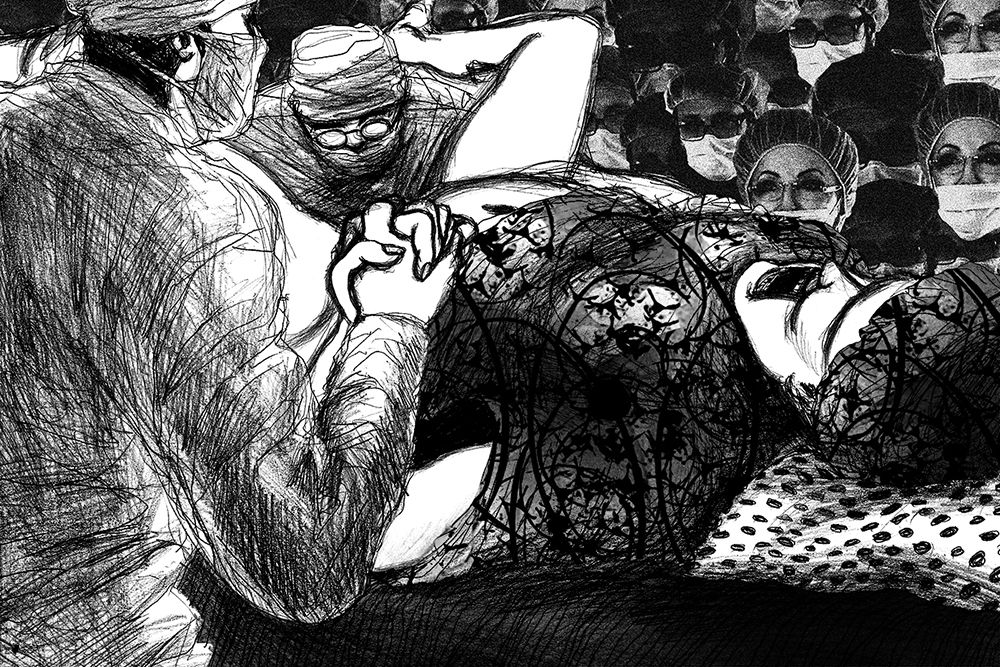
PTSR is a mental disorder that develops in a person due to a severe traumatic event that the psyche is not able to cope with. In colloquial speech, it is often called Vietnamese or Afghan syndrome, since initially the basis for the study of the disease was injuries obtained during hostilities. However, PTSD can also develop because of other different stressful situations: disasters, torture, violence, serious illnesses, losses of a loved one. It can be diagnosed not only among participants in a particular event, but also among their relatives, eyewitnesses, rescuers. It is difficult to judge how much PTSD is common in Russia, since there is no official and reliable statistics about the frequency of diseases.
Inga gave birth in 2011, and in 2015 for the first time I went to the doctor after the child went to the hospital. He swallowed a tablet battery, an operation was required under general anesthesia. My husband went to the hospital with his son, and Inga banged his head on the battery, frantically repeating: "I can’t do it anymore." In the city neuropsychiatric dispensary, she was diagnosed with mixed anxiety-depressive disorder.
Inga drank medicines, meditated, went in for sports, but to cope with stress, migraine, panic attacks and other symptoms did not help.
A few months later, she again went to the doctor - to the neurologist, with whom she finally could discuss everything that happened in the previous five years. And painful birth with indifferent doctors, and frequent panic attacks, and the child’s operation, and the stroke of the grandmother, who happened right with her and caused even stronger stress. “Calling an ambulance, I could not remember the name or mine to my grandmother. For about a month she lived after a stroke, every day I went crazy, was afraid to leave the room so as not to accidentally see how she was lying at home. It was very scary to look at her. Then she died, and I had obsessive thoughts: why we are born, live, do something if this is waiting for us at the end, such death. I also began to be afraid of death, ”Inga recalls.
"Military Disease"
In 1899, the German neurologist German Oppenheim introduced the term “traumatic neurosis”. The diagnosis was made to participants in the fighting, in whom both physical and psychological disorders developed due to injury.
Studies advanced against the background of the First and Second World Wars. In 1941, the American anthropologist Abram Cardiner described the symptoms of the chronic military neurosis he examined, observed in the wounded and demobilized. At the same time, the consequences of injuries obtained as a result of other stressful situations were also studied: shipwrecks, disasters, staying in concentration camps and military captivity. Researchers called the described phenomena differently-“post-traumatic syndrome of the survivors”, “postemotional syndrome”, “emotional instability syndrome caused by stress”, but at the same time converged in the description of the symptoms: depressing memories, frequent attacks of anxiety, overwork, irritability, departure from reality and fixation on the circumstances of the injury.
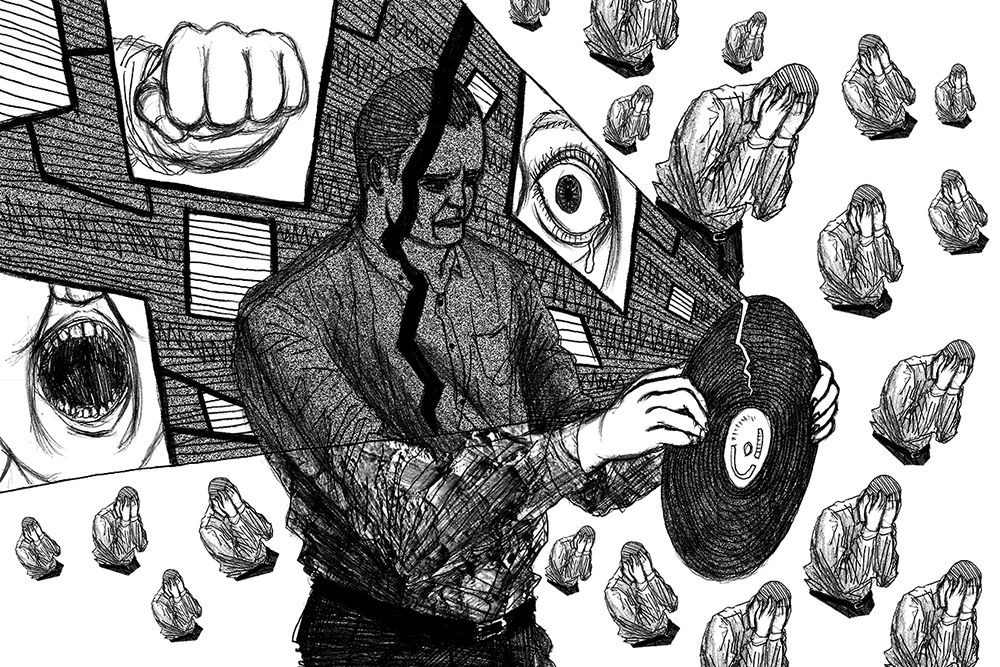
In the 1970s, the United States faced the problem of adaptation of participants in a protracted war in Vietnam. Campaign veterans returned home and could not get comfortable in peaceful life and calmly communicate with his family and relatives.
The problem acquired not only medical, but also social in nature: statistics collected by the beginning of the 90s said that about one hundred thousand Vietnam veterans committed suicide, many had a tendency to aggression and violence.
At that time, in the diagnostic and statistical guide for mental disorders (DSM-III), which was used in the United States, there was no diagnosis that could generalize all the studies and fully describe the state of people who survived the traumatic event. Therefore, in 1980, the PTSD was allocated in DSM-III as an independent nosological form (disease). In 1995, it was also introduced to the International Classifier of Diseases of the ICD-10, which is used to make diagnoses in Europe, including in Russia. In it, PTSD is defined as the body’s response to a stressful event of a threatening or catastrophic nature. Typical signs can be obsessive memories, alienation from other people, super -warning and insomnia.
“Before the start of treatment, I had constant flashbacks, as if I were still in the hospital with fights. I constantly scrolled in my head what had to be done, how could I be saved, and at the same time I always felt despair and intense fear from the fact that it could repeat it, ”recalls Inga.
Doctors say that people with PTSD are also characterized by avoiding situations reminiscent of traumatic experience. For Inga, great fear was the possibility of a new pregnancy. “I don’t even know how to describe how much I was afraid to fly away. If I could, I would never have sex again, just to be safe. But you don’t seem to drive your husband about this, everything is fine with him, and he is not to blame for anything, ”she explains. - I am manicly protected, every month I do a test so that in no case to miss the time when you can do an abortion, and at the same time monitor the clinics in which it can be done. And the situation with them is changing all the time, which is nervous additionally. I can’t go to the area where the hospital is located: this is an extra reminder that you can die in pain while in the hospital, for money, but get not help, but rudeness. ”
The doctor who made the diagnosis and prescribed medications: antidepressant, covering from him, so that there were no side effects, injections of muscle relaxants and vitamins. Usually, in the treatment of PTSD, in addition to taking drugs, it is recommended to undergo a course of psychotherapy. Therefore, in 2017, Inga doctor, with whom she remained in touch, shared with her the contacts of a familiar psychologist from Moscow. The conversation lasted three hours. “We discussed a lot, and, it seems, then I digested it for a year. In a good way, I understand that I need a course of psychotherapy. I think when there will be an opportunity ... and courage, I will pass it, ”Inga explains.
Mask for welding
Due to the fact that the disease is still associated with the war, it may not be recognized by psychologists themselves.
“When I defended my first work about PTSD in the Higher School of Economics, the commission asked me why I am at the Department of Personality Psychology, because Ptsyts belongs to extreme psychology,” says Victoria Parhaeva, a practicing psychologist and a loss specialist. “But this is not entirely true.” I examined the causes, manifestations and experience of PTSD, worked with people that PTSR came to after the loss of their loved ones. And such situations cannot be attributed only to extreme wars and catastrophes: this is quite a psychology of personality. People can experience PTSD not only with mass losses, but also with individual. ”
The problem with understanding arises at sessions, Victoria is sure. Practitioners can attribute patients to patients simply to the consequences of injury, but not to PTSD. “This does not mean that the specialist is unskilled. If the psychologist sees that a strong depressive state or, for example, suicidal thoughts, affect the client, then you can direct a person to a psychiatrist who can put PTSD, and, for example, a personal disorder. The problem often lies in the language: many diagnoses are interconnected, and the descriptions of symptoms are often similar to each other. Therefore, for a therapist, a person and his history, and not a possible diagnosis, will be more important, ”explains Victoria Parhaeva.
“People often think that PTSR is a war and flashbacks. But in fact, this is not quite true. If in life at least once there was a real risk of accumulating, there is a chance to get PTSR, ”says Nastasya Zvereva, who has been fighting with PTSD for two years. - In my case, not one event led to the diagnosis, but a whole chain. In childhood, there were problems with his father, he is unwell, lay several times in the clinic, but did not want to be treated, so no one made a diagnosis normally. ” When Anastasia’s mother went to work on a night shift, her father arranged a mess in the house, cut his veins, drank, shouted, sometimes he had to call an ambulance.
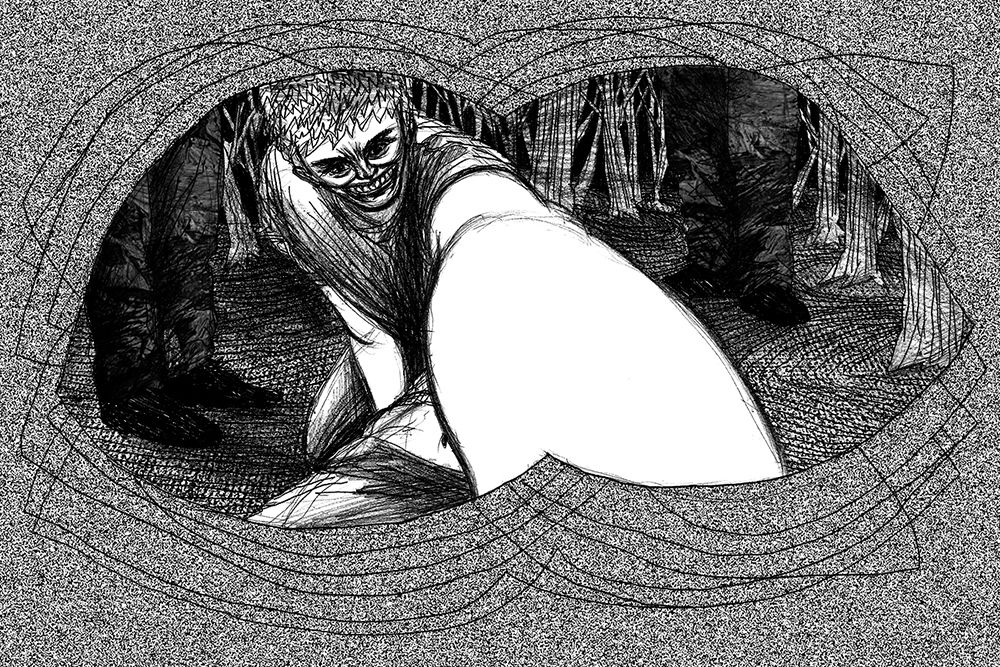
“In my youth I had a bad company,” she continues. - I fell in love with a man older than myself, and it all ended that he raped me. I don’t even really remember anything, only some kind of noise in my head-and that’s it. Nobody found out about this injury, I just could not tell. For the first time I spoke about this only at 26. ”
The reason for the development of PTSD is usually an event with which the human psyche cannot cope independently. The brain blocks information about injury, a person does not perceive the event whole, as if it were divided into fragments. That is why people who are faced with PTSD often cannot restore the sequence of traumatic events and, accordingly, cope with this experience, survive it.
Symptoms of PTSR in the girl began to appear at 20 years old. She slept poorly, was afraid of almost every shadow, experienced attacks of auto -aggression and constantly wanted to defend herself - therefore, trying to fall asleep, she always put a knife near her. In the head, Nastasya constantly scrolled the traumatic episodes, now there are fewer flashbacks, but in the nightmares there is a feeling of horror pursuing from the past. “I often dream that my heart stops. And in the morning it is sometimes difficult to understand whether I am at home or not. A piece of paper hangs over my bed - such a peculiar instruction for entering reality. I read that everything is in order, that pain is not forever, that you need to keep myself in my hands, and somehow I come to my senses. ”
The diagnosis of PTSD can only make a psychiatrist. A psychologist or psychotherapist can be directed to him (the border between these two specialties is almost erased in Russia), if they see this. But the patient can also contact him on his own.
The reason for the development of PTSD is usually an event with which the human psyche cannot cope on its ownFor the first time, Nastasya came to the psychiatrist at the age of 27, a year after she moved away from her parents .. Doctors sorted out many different diagnoses: anxious-depressive disorder, bipolar disorder and simply a nervous breakdown. In the end, PTSR was the most suitable. In the same way, the drugs were prescribed-antidepressants and tranquilizers, but she decided much faster to go to the psychologist: “We meet almost every week, we discuss everything that happened while we have not seen, I am talking about some of my experiences-and we are talking together where the legs grow.”
Despite the treatment that has been going on for two years, the symptoms still make themselves felt. Nastasya does not like to go to the subway and says that he does not like men, especially drunk. These are triggers that instantly remind of old injuries. Sometimes it can result in a panic attack, in the middle of the street or in the store, simply because a person who looked like a father was nearby.
“It’s also not easy for me to cope with emotions. Before taking medication, I have not cried for ten years, but now the roar of everything, ”the girl describes changes. “I remember that we somehow went to the beach and my friends, take a walk, and for me there were so many emotions and impressions around that I just chopped off, we couldn’t get in any way.” It is still difficult for her to communicate with people. Usually, the girl manages to remain calm in appearance, but often she fights with the desire to get up and leave the company immediately in the middle of the conversation.
Nastasya's parents moved from St. Petersburg to the region. She does not go to them, but usually calls up twice a day with her mother, a reminder of this hangs in the instructions over the bed. “I rarely manage to talk to my father, most of the time he is simply insane. But oddly enough, for some reason I feel more kinship with him. Last year, on March 8, he gave me a welding mask, I was just engaged in artistic welding sometimes. And for me there was no better gift. ”
Hooded plate
In 1979, the American psychologist Francin Shapiro proposed a new method that allows you to work with the injury. Having experienced a serious emotional state, she noticed that she spontaneously moves her eyes - and the intensity of the experiences is reduced. After conducting an experimental study on a group of veterans, Shapiro confirmed her hypothesis. Performing rhythmic movements with the eyes, the participants in the experiment felt their experiences: desensitization occurred (from the English Sense - a feeling, in this case, we mean the decreasing intensity of experiences), while they could mentally touch the injury and comprehend it - this was part of the necessary processing. The new method is called “desensitization and processing of eye movement” (DPDG/EMDR).
“Imagine a vinyl plate. If there is a deep scratch on it, then when playing it will constantly seize, ”explains EMDR therapist Nadezhda Gradovskaya. -In the same way, an unprofitable injury acts on a person with PTSD: feelings, bodily sensations and memories of some event are constantly invading his life. In the memory, an isolated network of neurons, a kind of hearth that begins to live its life, is formed, and any association that affects this focus causes a reaction. For example, a person cannot be in the place where the traumatic event occurred, he can sharply react to people who remind him of this experience. The task of the EMDR therapist is to help the client unlock the experience using special equipment and integrate him into his life experience. The goal should be-do not forget some episode, but to process it. ” The essence of the method is that during short sets the patient focuses on the memory, holding double attention on a moving stimulus (this can be uniform movements, behind which you need to follow the eyes, or patting hands). Thanks to this approach, a stressful reaction is allowed, the memory becomes less painful and the possibility of its comprehension becomes.
In 2013, WHO officially recognized the EMDR method as one of the most effective methods for the treatment of post -traumatic stress. “The difference from conversational therapy is that we can quickly go through painful experience without drowning in it. Unlike “conversational genres”, EMDR is called “accelerated” processing of injury. Of course, it matters what target we work with. If PTSD is caused by a shock injury, such as a car accident, then therapy can take about five sessions - this is an average. If we are dealing with PTSD caused by longer and severe stress, for example, participation in the war or prolonged violence, then therapy can take years, ”Nadezhda explains.
“In October-November 2017, a wave of #Metoo stories began, when hundreds of people on social networks talked about the experienced violence and harassment. This stream of other people's experiences provoked a wave of my own memories from me, which I had not attached any importance before, ”says Sergey Bondarev. - They were connected with Abuez (Abuse - psychological violence. - Approx. Aut.) From my Bayan teacher, from whom I was engaged in childhood, from ten to fifteen years old. Это не было прямое сексуальное насилие, но я помню очень сильное эмоциональное давление и неприятные прикосновения — это то, что вызывало у меня первые суицидальные мысли лет в одиннадцать-двенадцать».
Сергей и раньше сталкивался с тяжёлым эмоциональным состоянием. Был опыт депрессии, травматических отношений, зависимости. Но тут проявились новые симптомы: Начались частые панические атаки и бессонница, его преследовали сильные эмоциональные флешбэки. «Иногда мне казалось, что этому страху просто не будет конца, — точно так же я чувствовал себя и в детстве, на занятиях: обессиленным и одиноким. Но мысль, которая пугала ещё больше, — как защитить от этого травматичного опыта своих дочерей».
Интересно почитать Комплексное ПТСР может возникать вследствие тяжёлого длительного стресса, избежать которого было невозможно Через несколько месяцев одна из коллег Сергея упомянула в разговоре метод EMDR, который помог ей справиться с травматичным опытом. Сперва он не поверил в эффективность, но всё же решил проверить и начал изучать метод самостоятельно. «Я смотрел ролики по технике на Ютубе, пытался освоить её и заодно как-то поддержать самого себя. И в какой-то момент начало получаться, — вспоминает Сергей. — Но у этого была и другая сторона: мне начали открываться новые воспоминания, которые были связаны с тяжёлыми отношениями внутри семьи. Я хотел проработать и эти моменты, но понял, что нужно это делать правильно, поэтому решил обратиться к EMDR-терапевту».
Знакомая оплатила ему одну сессию у терапевта, который когда-то помог и ей. С порога он честно признался, что оплатить полностью курс пока не в состоянии, а помощь ему нужна. За полтора часа, что длился сеанс, терапевт поставил ему технику, и теперь Сергей точно знал, как правильно прорабатывать все травмирующие воспоминания, которые продолжали всплывать.
«Как-то в процессе работы я дошёл до очень тяжёлого момента из детства. Я вспомнил эпизоды сексуального насилия, которому подвергался со стороны своего дяди в возрасте пяти-семи лет. Когда мне открылось это в памяти, было очень страшно, тяжело и стыдно. Всю жизнь я не помнил об этом — эти эпизоды были словно стёрты из памяти, но теперь я мог понять причины своего заикания, начавшегося в десять лет, а также биполярного расстройства, которое диагностировали в 2013 году», — говорит Сергей.
Параллельно с практикой он стал читать книги о физическом и психологическом насилии в семье. Так Сергей наткнулся на информацию о комплексном ПТСР, диагнозе, встречающемся ещё реже, чем обычное посттравматическое расстройство.
О болезни говорится , что комплексное ПТСР может возникать вследствие тяжёлого длительного стресса, избежать которого было невозможно. Помимо трёх стержневых симптомов ПТСР — повторяющиеся навязчивые флешбэки, ощущение угрозы и избегание напоминаний о травмирующем событии, — человек с комплексным ПТСР испытывает большие трудности с контролем эмоций и часто может ощущать себя униженным и ничего не стоящим. Комплексное ПТСР внесено в проект МКБ-11, который был опубликован летом 2018 года. Вступить в силу это дополнение должно в 2022 году.
«Мне очень хорошо знакомы все эти чувства, — подтверждает Сергей. — Из книги американского психотерапевта Пита Уолкера „CPTSD: From surviving to thriving“ я как раз и узнал, что это расстройство может развиваться у людей, выросших в эмоционально незрелых семьях. Мне очень помогло знание языка, всю информацию об этом диагнозе я находил в иностранных источниках. Там же я узнал, что следствием К-ПТСР могут быть и другие расстройства личности, в том числе и биполярное расстройство».
Сейчас Сергей хочет пройти полноценный курс терапии и надеется, что если К-ПТСР официально внесут в международную классификацию болезней, российские психиатры и психотерапевты будут уделять проблеме больше внимания.