
Translated material
"The main thing is not to reach the embargo"
Georgian winemakers and exporters of wine - about the statements of Rospotrebnadzor about the deterioration of quality
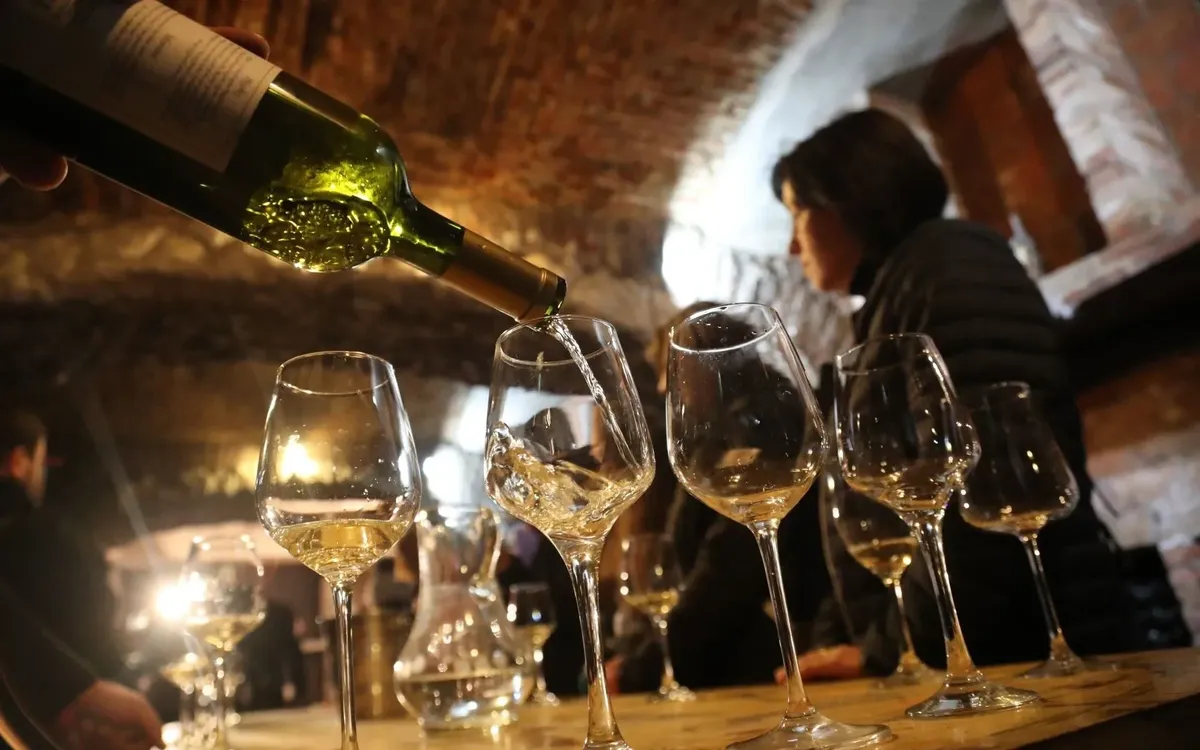
For more than a week, Georgians have gone to the parliament building in Tbilisi, demanding the resignation of the head of the Ministry of Internal Affairs (their rest are already partially satisfied). The Russian authorities react painfully to the protests of the neighbors: it turned out that it is now not only dangerous to ride Georgia, but it is dangerous and consuming its products. Rospotrebnadzor issued a press release that Georgian wine "in dynamics shows a deterioration in quality."
“From 2014 to 2018, the number of identified alcoholic products of Georgia, which is not complied by mandatory requirements, increased 2.9 times and amounted to 203 thousand liters in 2018,” the department said. The agency calls only eight manufacturers whose products were not missed to Russia. But the head of the Russian Association, Arthur Sargsyan, told BBC that "Russia is a garbage dump, which can be thrown away into Russia that they will not buy in other countries."
Georgian winemakers and exporters of wine hope that the embargo, as after the war of 2008, will not reach. But ready for everything. After seven years of the ban on the import of Georgian wine into Russia, Georgian winemakers have recovered: now they are the second in the Russian market after Italians. From 2013 to April 2019, 213 million bottles of Georgian wine were delivered to Russia, and quality control of 800 thousand bottles did not pass.
Alexander Novikov
Co -owner of the Bara Dadi, Tbilisi
- The quantity always harms the quality, but it cannot be said that the quality of Georgian wine really worsened. The lies that the Tresh is sent to Russia: here is the vineyard of 300 hectares, there is only one grap on it. There are laboratories that will easily identify if private winery will mix wild varieties - the simplest analysis will show this. Cheap wine is supplied to Russia, not because it is junk, but because production technologies are established.
We are engaged in the development of Georgian winemaking, help organic small winery enters the market. Our business is not tied to Russian tourists, there are 50% of their total number of visitors to the bar. It is easier to sell wine abroad, it is impossible to break into the Russian market, too many bureaucratic formalities must be observed. The main buyers of organic wine are Europe, Australia, Japan, America, Canada.
If suddenly the matter comes to the ban on import, the flows of the already produced wine, designed for the Russian market, will be difficult to redirect to Europe.
There, farmers will stand with protests, as Georgians are now: no one will say that they are racists, they will simply defend their rights. Transport companies will suffer as well.
Wine of a different format goes to Europe in general: organic, in restaurants, private stores. What is delivered to Russian supermarkets is not a poor quality, this is a different price segment. Although Georgian wine has successfully entered the Asian market ( in 2017, Georgia has concluded an agreement on free trade with China, 94% of Georgian products and services will be exported to the Chinese market without customs duties, with a zero tariff, including wine. * - Ed. *).
Our bar is five minutes from the parliament where the protests are going on, but we do not observe any unrest. Of course, after July 8 ( when direct air traffic between the countries will be suspended . - Ed. ) There will be fewer people. Moscow will still arrive, but Novosibirsk and Yekaterinburg will suffer, from there there were flights in Tbilisi every day. And in Georgia, the middle class will suffer from this and below: the adult population speaks Russian, they do not know English, so Russian tourism is an important earnings for them. Russians and Georgians understood each other all their lives, had fun together, drank. A foreigner will not buy a bottle of home wine from a simple peasant on the street or on the market - it’s a pity for ordinary people who will suffer. In general, Georgians are striking every summer for some reason, and in Russia only now they say that there was a danger to tourists.
Ilya Datunashvili
Winery manager Schuchmann Wines, Tbilisi
- We produce the same wine throughout the world, there is no segregation. There are some companies that produce wine for the mass market - 7 Lari per bottle of young wine, this is a good price and good quality. I do not think that Georgian winemakers will suffer if they suddenly ban the import of products into Russia. Already passed through this. In the short term - there will be problems, yes. But the popularity of Georgia and our products is growing in the world. I studied in 2003 in the UK: then no one heard there what kind of country this is. Now around the world, Georgian cuisine is becoming a trend. But we are waiting for Russian tourists, despite propaganda: show me at least one case when we offended the Russian guest. I think that in a month emotions will subside, and people will cease to be afraid to fly to Georgia.
Georgy Piradashvili
Founder of Winiveria winery, Tbilisi
- You have conversations in Russia that we send wine of different qualities to different countries - this is nonsense. There are products of different brands, different levels and different prices. Italy and France also produce budget wine! In general, the being is very subjective, pricing and the concept of taste are sometimes very subjective, depend on the human factor. Beer and vodka are also very expensive and very cheap, differ in filtration, and also marketing and advertising. We supply two brands to Russia - Winiveria, it is well known in Russia, and the second exclusive brand Chateau Mere, in the total number - 70–80 thousand bottles per year. The consumer himself chooses what kind of wine he would buy, with whom he will drink, for what holiday. But our products correspond to GOST. In Russia, pricing is complex: our wine in Georgia is sold 45 Lari per bottle, you are much more expensive, so it can be found mainly in restaurants and wine boutiques. Most of all we sell to Georgia - we think this market is the most stable.
Natia Gachechiladze
Coorganizer of the festival of young wine in Tbilisi
-Firstly, I want to note that Russia has been trying to weaken the Georgian economy for many years, and this decision is another reflection of Russian policy. As you know, Russia introduced the embargo on Georgian wine in 2006. Surprisingly, this positively affected the industry, our wines began to enter the foreign market. Various wine companies opened, family small business began to develop. The Russian embargo opened new borders for Georgian winemakers. Today in Georgia there are about 800 wine producers, most of them do not sell their wine to Russia.
The Russian market is considered unattractive for winemakers, Georgian winemakers prefer to diversify their sales. Demand for Georgian wine is growing in Europe, Japan and China. In 2013, UNESCO added a winemaking method in Kvevri (a large ceramic vessel) to her list of intangible cultural heritage of mankind, since then the reputation of Georgian wine has only grown. Thanks to this, in the world they heard about Georgian wine. Today, Georgian wines are presented in prestigious world competitions such as Institut of Master of Wine (2019) and Annual Competition of European Sommelier Awards (2018).
Accordingly, each producer of wine in Georgia works very hard every year to control and maintain the quality of their products. We understand the size of the Russian market. Nevertheless, European and Western markets are more promising and attractive for Georgian manufacturers, due to their stability and profitability.
It is not clear why the Russian side prohibits certain Georgian wines. I requested specific reasons, but did not receive an answer. Since the decision is very vague and not argued, the Georgian people have no doubt that the reason for this is political.
Georgian winemakers are not afraid of the ban on the import of wine into Russia. They see a challenge in this to start successful development. This will open new doors for them and will make it possible to enter other markets around the world.