
Translated material
A rare offshore article
How is Article 193.1 of the Criminal Code, on which the case was opened against the founder of Rolf, and who was attracted to it earlier
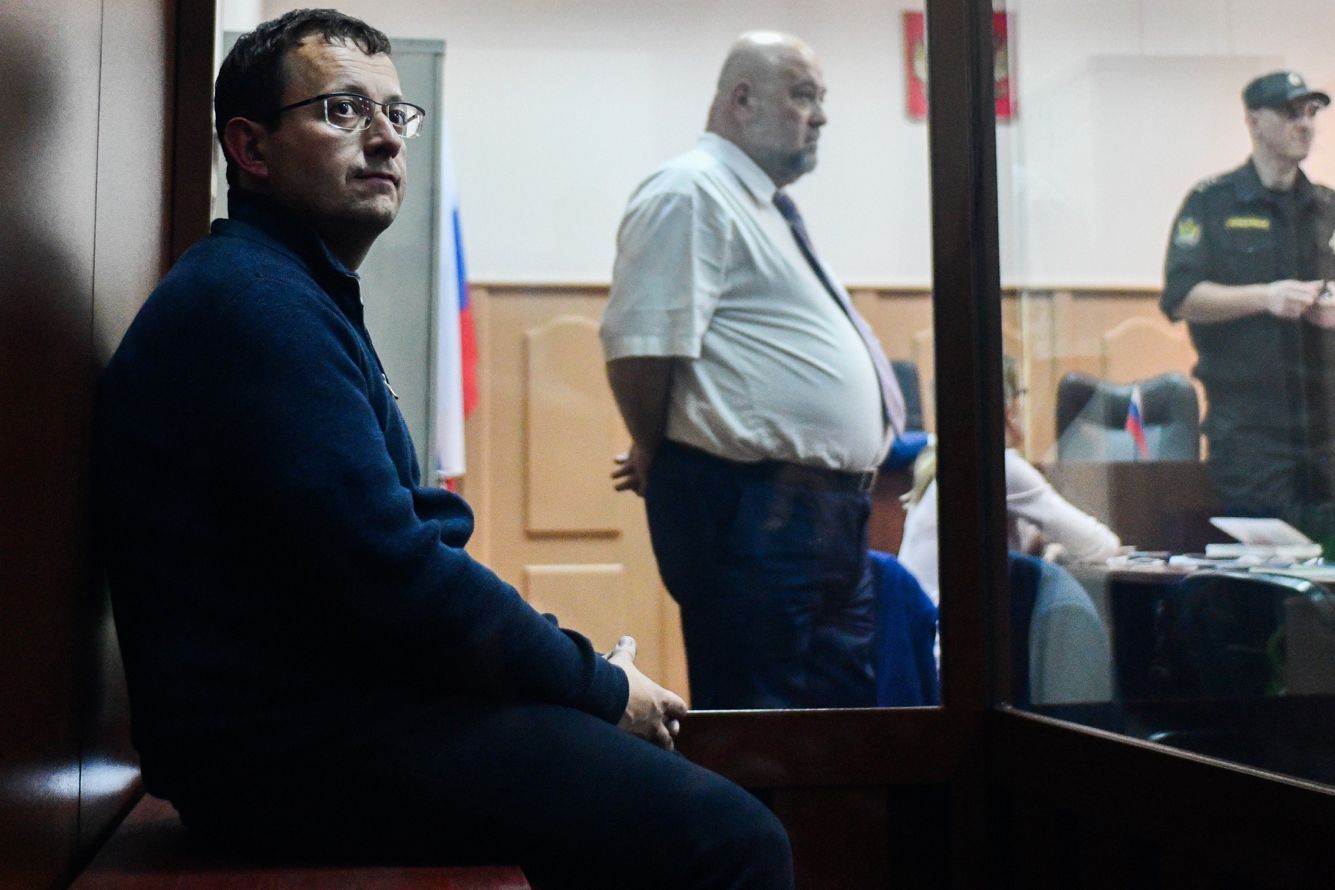
On June 28, the court appointed a house arrest a member of the Board of Directors of the Rolf-Assistant Anatoly Kairo, the only of the four top managers (including one former leader) who ended up in Russia at the time of the announcement of the criminal case. The founder of the company, the former State Duma deputy Sergei Petrov, who is now in Europe, said that he would not return to Russia until the criminal prosecution was discontinued, and compared it to the affairs of Ivan Golunov and Mikhail Khodorkovsky . The Investigative Committee believes that Rolfa leaders illegally withdrew 4 billion rubles from the country. An incriminated article is very rare. Medusa talked with lawyers about its application and remembered the latest cases of its use.
How often this article of the Criminal Code is used and why it is "heavy"
The criminal case against the founder of the Rolf-importer company Sergei Petrov and several top managers of the company was initiated under Article 193.1 of the Criminal Code (the commission of money transferring funds in foreign currency or the currency of the Russian Federation to the accounts of non-residents using false documents). It provides for up to ten years in prison. And this is a fairly rare article, even if you look at the data of judicial statistics formally. In 2018, 21 people were convicted of all parts of article 193.1. For comparison: for parts of the 159th article (part 5–7, dedicated to business frauds related to entrepreneurship), 107 people were convicted. And according to the 171st article (illegal entrepreneurship)-177 people. Although, in order to put pressure on businessmen, cases are often made according to articles that are formally not related to business: the most popular is fraud (parts that are not related to entrepreneurship). Throughout the 159th article (not only in the “entrepreneurial” parts), more than 17 thousand people were condemned in 2018. The FSO survey conducted by this spring showed that more than 84% of entrepreneurs consider doing business in Russia risky.
According to Konstantin Dobrynin, senior partner of the Pen & Paper Bar Assistance, the former deputy chairman of the Federation Council Committee on Constitutional Legislation, in the application of Article 193.1 of the Criminal Code of the Russian Federation “there is nothing surprising and unusual, because the article concerns capital export from Russia in current difficult times”. Dobrynin explains that the crime under this article involves the commission of criminal transactions with non -residents. “Therefore, the qualifications of it are most likely in relation to those business structures that carry out large-scale foreign trade activities. With a large number of trade contracts with foreign partners, law enforcement agencies, with their desire, is easy to see in some transactions violations of the legislation on foreign exchange control, ”says Dobrynin.
Lawyer Denis Puchkov calls this article of the Criminal Code of the “heavy”. “Especially the third part [is charged with Sergey Petrov], which states that the crime has been committed on a particularly large scale or organized by a group. You have probably heard about the organized group, probably the president’s speech that any board of directors can be brought under an organized group. He talked about an organized criminal community, but nevertheless the essence does not change, ”Puchkov argues.
He explains that this article is difficult for investigators: “According to articles on economic activity [entrepreneurs], they are not attracted as often as, for example, for theft of property, embezzlement, appropriation or fraud. Economic crimes need to be identified, control is required - tax, currency, from the license authorities. ”
According to Konstantin Dobrynin, the classic corpus delicti are applied to entrepreneurs, known for the criminal law for a long time. " The expert mentions, among them, the deception of counterparties (fraud, illegal receipt of a loan) or deceit of the state (tax evasion). However, sometimes the security forces want to demonstrate increased opposition to any “abuse of market participants”, which the authorities pay attention to. “A typical example is to activate the fight against cashing money led to an increase in cases of illegal banking,” he says. After the procedural legislation was amended by which the imprisonment on entrepreneurial compositions of crimes began to be applied limitedly, the investigation began to more often attract businessmen for the creation of a criminal community (Article 210). According to Dobrynin, Article 193.1 is unlikely to become fashionable for investigators: “Funds are still brought abroad and will not return to the country,” he concludes.
Against whom the article has been used recently
On June 28, Oleg Kuzmin, a former member of the Board of Directors of the European Express Bank, was arrested in Moscow for two months. He is considered a participant in the so -called Moldavian scheme of laundering of funds and their withdrawal from Russia. It was attended by two dozen banks and more than a hundred firms. Kuzmin is now charged with two articles: part three of Article 193.1 (the commission of foreign exchange transactions on a particularly large amount to the bank account of a non -resident with the submission of a credit institution of knowingly false documents) and Article 210 (participation in a criminal community using an official position).
On June 19, RBC said that two years ago the Investigative Committee and the Ministry of Internal Affairs in Novosibirsk checked the Minister of Open Government Mikhail Abyzov for the possibility of initiating Article 193.1. Investigators studied the legality of the 2013 transaction between Abyzov by Sibeko and the Cyprus company Blacksiris Tradeing Ltd. On the purchase of 100% of the shares of three repair and service companies in Siberia. According to the investigation, subsequently thanks to this and other transactions, Abyzov brought four billion rubles to Offshore. The minister detained in March 2019 was eventually charged under the “ordinary” article on fraud (159 of the Criminal Code) and under the article on the creation of a criminal community (210 of the Criminal Code).
In April 2019, the FSB conducted an audit, searches, and in May the Investigative Department of the Ministry of Internal Affairs in Kirov opened a criminal case under Article 193.1 - in relation to the manufacturer of Vyatka Kvass. The drink, which in 2014 became famous throughout the country after the press conference of Vladimir Putin.
The Chairman of the Board of Directors and the main owner of the plant Nikolai Kuragin explained to RBC that the claims arose due to the foreign company controlled by him, which in 2014 received dividends as one of the founders of the Kirov enterprise. In 2017, this foreign company was liquidated under the laws on deofshorization . At the same time, the Kirov plant itself, within the framework of the tax amnesty, gave information about all its income, and the dividends received by the already liquidated foreign company also got into special declaring. Kuragin called special declaring the reason for initiating the case, and said about the reason: “I think, after all, [there is] some kind of interest, and my first option is a raider seizure.”
Andrey Pertsev, Kristina Safonova