
Translated material
Breakthrough into parliament and colonial flag
What happens in Hong Kong protests covered
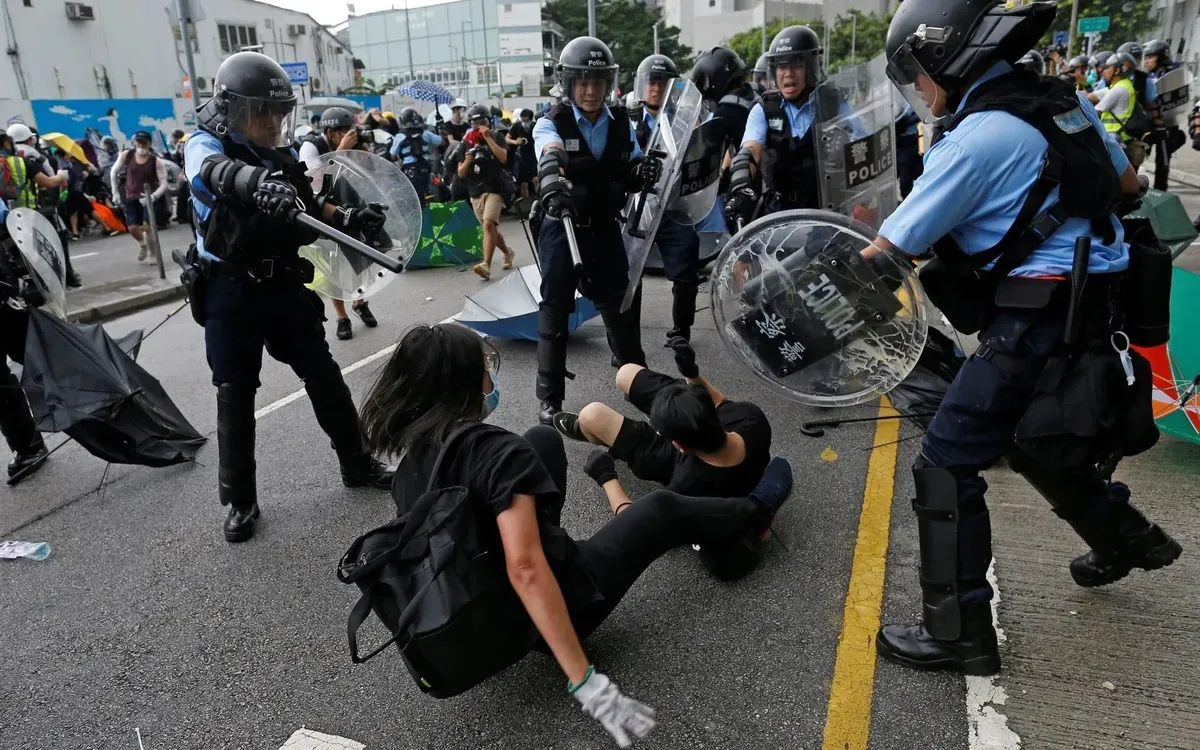
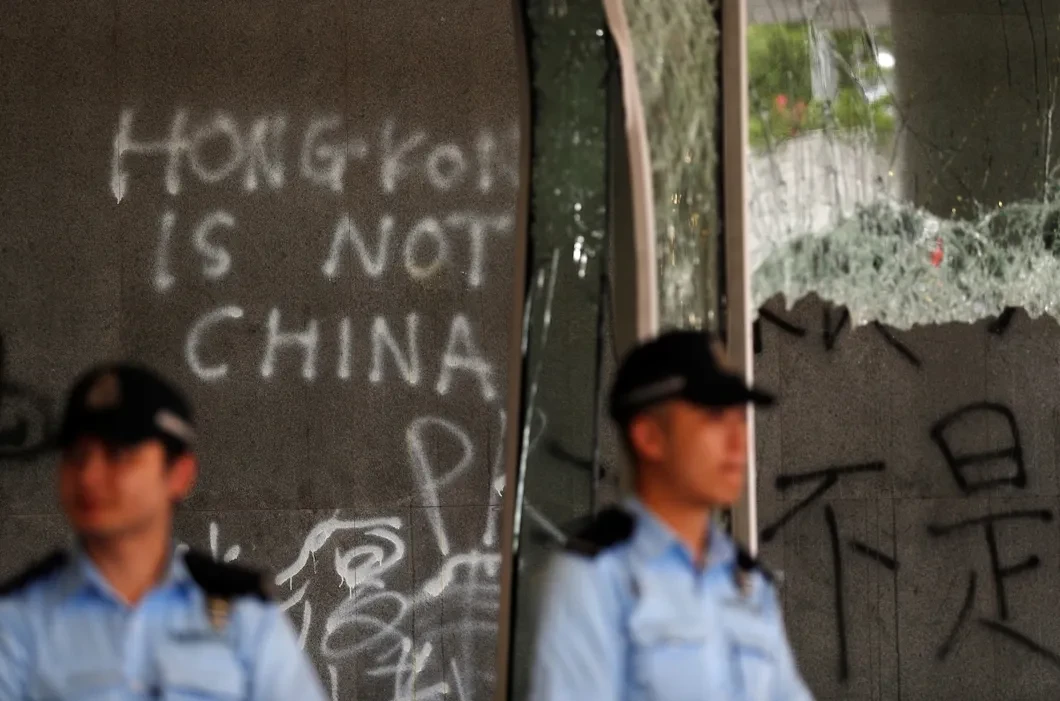
On the night of July 1 to July 2, several hundred radical young citizens of Hong Kong attempted to capture a complex of government buildings. It was a bright action: young people in helmets and gauze masks on their faces, breaking glass doors, penetrated the legislative council and hung a Hong Kong flag on the rostrum of the British colony.
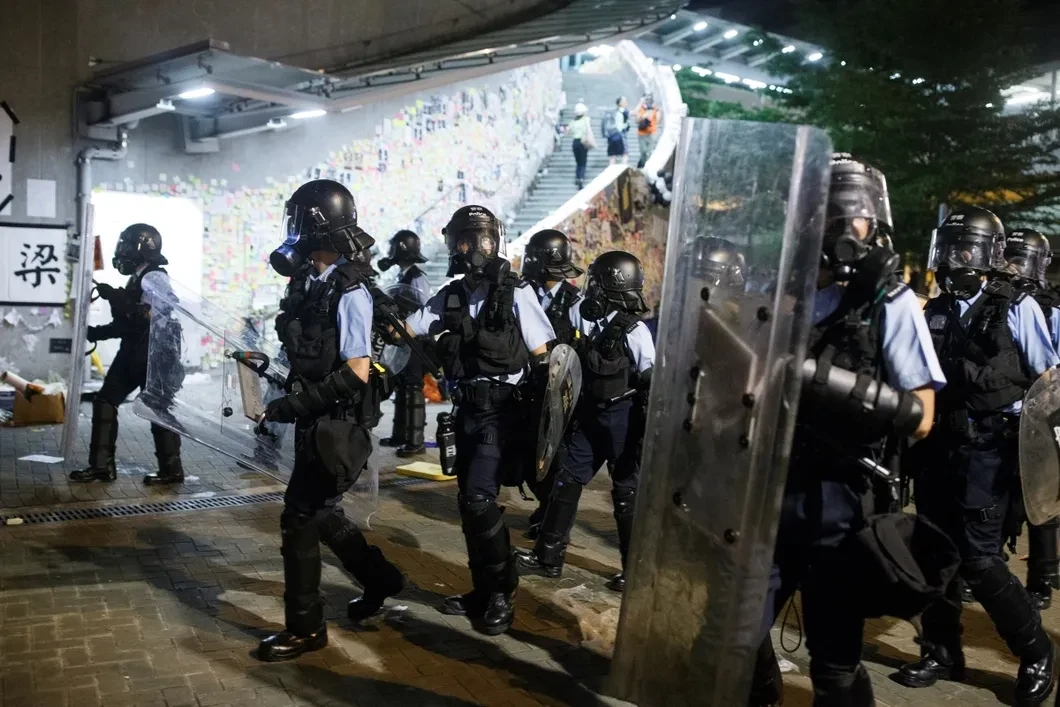
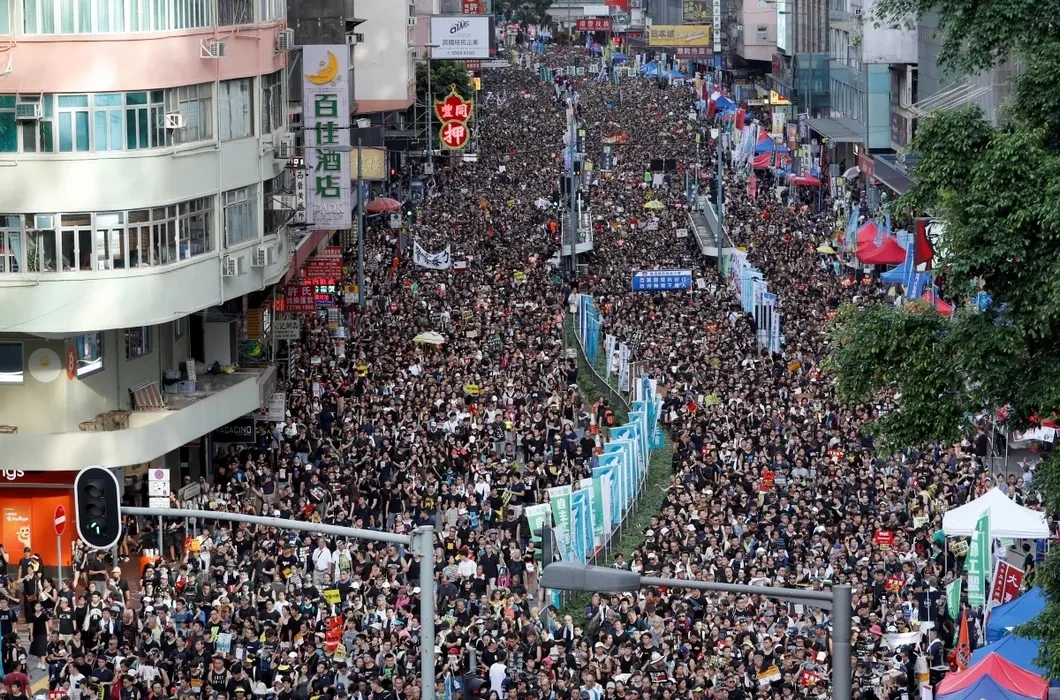
At the same time on the streets of the city, where on Monday the next anniversary of the transfer of rights to this former British colony was protested, about 500 thousand people were protested. Young people who occupied the quarter were going to take the building of the Legislative Council for a long time, which could cause a big blow to the prestige of the Chinese leadership and deploy the situation in Hong Kong by 180 degrees. However, the attempt failed: early in the morning the police gathered large forces and took a storm to storm a complex of government buildings, displacing young people from there.
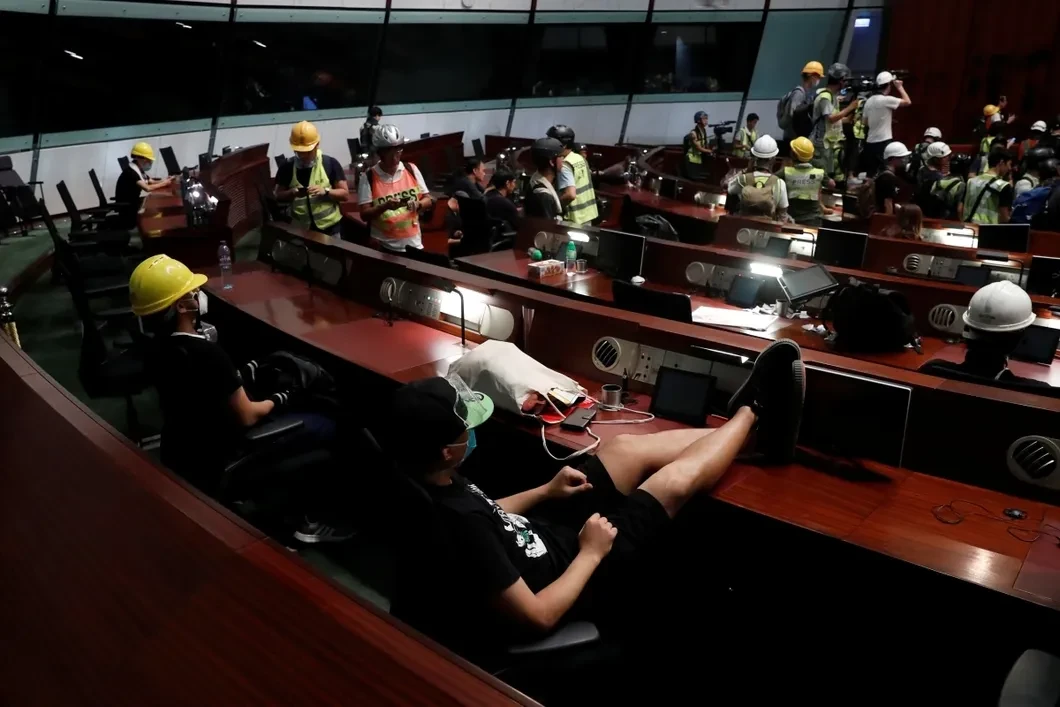
Now in Hong Kong there was a lull characterized by a certain balance of power. On Tuesday, the police unlocked the streets in the city business center, but Hong Kong authorities are still paralyzed: the legislative council will not work for several more weeks, and the government and the administration are going to temporarily move from the quarter covered by protest to another area. So far, it can be said that clashes in Hong Kong are not very cruel: 60 injured, seriously ill -wounded, so that both sides are still trying to behave correctly.
Being against Beijing’s policy demonstrates a tremendous mass, which previously unprecedented for Hong Kong and this region as a whole.
In recent years, protesters in Hong Kong have greatly radicalized. The previous wave of protests against the slow but steady attempts of the Chinese authorities to tighten nuts in a democratic Hong Kong was held in 2014. Then the demonstrators were soft and calm and became famous for the fact that after each manifestation they removed the garbage and almost washed the bridge.
But now the situation has changed: the constant offensive of the Beijing authorities to democratic freedoms has led to the fact that the vanguard of protesters - and this is student youth and high school students - are increasingly considering the transition to hard measures. So, in an interview with one of the Japanese newspapers
The named leader of the student movement with direct text stated that changes can be achieved only by violence, and without it, a peaceful protest is choked and does not give any result.
What are the residents of this former British colony? The fact is that British domination in Hong Kong is remembered with great nostalgia. In 1997, when Hong Kong entered the PRC on the rights of a special administrative district, he was guaranteed life according to the formula “one country - two systems”. The British judicial system, which had nothing to do with the system of continental China, freedom of speech, elected parliament, the right of private property and the free economy, still remained in Hong Kong. In a word, all that is still not in the PRC, or exists there in a very cut -out form and can be called into question and quickly slammed by the Beijing authorities.
It was this freedom in Hong Kong, and first of all, an independent court always attracted foreign capital there, which considered this enclave as a window for access to the giant Chinese market. Many Western businessmen feel uncomfortable in China itself, where much depends on whether they will be able to establish relations with the communist authorities, so they conducted many transactions through Hong Kong, considering this as certain guarantees for their capital.
This is partly the peculiarity of the current protests: if in 2014 protests demanding a wider access of the opposition to the Hong Kong parliament were not supported by business, now some of large entrepreneurs with sympathy are manifesting and even participates in them.
In the coagulation of freedoms and encroachment on the judicial system, business sees a serious threat, because foreign capital departure can cause a considerable blow to Hong Kong economics.
But not everyone thinks so: the richest part of the business community holds tightly for transactions with the continental part of the PRC and is ready to go with Beijing for any compromise.
Of course, Hong Kong is a kind of foreign body in the PRC, and the level of freedom of speech shows an “wrong” example of the whole country: in Hong Kong you can use Western social networks prohibited in the rest of China, and local media remain one of the main sources of independent information about China. So, in Hong Kong, a huge response was caused by history with the recent disappearance of the owners of five famous bookstores who traded literature criticism of the Beijing authorities. The protesting residents of Hong Kong are sure that Chinese special services stole them, and at the manifestations of the last weeks they require the authorities to investigate the abduction.
But the main trigger to the riots, undoubtedly, was a bill on deportation, which will allow you to send out from Hong Kong to China the wanted list or convicted citizens. Naturally, the issue is raised under the pretext of struggle crime and terrorism, but the participants in the demonstrations are convinced that its adoption will lead to the creation of the mechanism of repression and illegal deportation in the PRC of all the regime objectionable to the Chinese regime.
But why not just go to meet the protesters and abandon the bill? The fact is that, from the point of view of Beijing, Hong Kong and so goes to colossal concessions - at least because he did not slam all these manifestations with an iron hand. Instead, the head of the Hong Kong administration Carrie Lam, by the way, is also absolutely Project, after the first demonstrations announced that the consideration of the bill was suspended and will no longer return to its discussion. But this does not suit the protesters - they demand to withdraw the document from the parliament and never return to this topic.
So far, it remains a mystery to whether the Hong Kong authorities will be able to agree with the demonstrators, but only Beijing authorities are behind this decision in fact.
What is happening in Hong Kong is a tremendous blow to the prestige of the senior leadership of China and personally Comrade Xi Jinping, because according to all the rules of the party, he must suppress the rebels mercilessly.
But the leadership of the PRC is clearly afraid to resort to too hard measures. It is possible that the softness that Beijing is still shown is associated with the past G-20 summit in Osaka: Xi Jinping feared that the opposition could be a serious suppression of the performances of the opposition. But the summit passed, the Chinese leader very successfully talked with US President Donald Trump and achieved some success in weakening the trade war.
So, now the Beijing leadership can decide that his hands are completely untied.
Recorded by Julia Mineeva, "new"