
Translated material
Why make a movie on a film
Director Alexei Balabanov believed that a movie shot on a film chamber is a living substance that retains energy. All because the film is needed to make gelatin from cow bones. Today, “Cinema on Cow's Corpses” shoot expensive and painstakingly. However, this type of filming is still popular-the case of learning how to shoot on a 16-mm camera will be far out during the Moscow Experimental Film Festival (Mieff) this year. Egor Belikov at the request of Samizdat figured out why modern cinema could not yet refuse film and why this is a videoart.
A movie shot on film today, in the era of Instagram-Storis and Tiktoka, is an obvious anachronism and the past that is already leaving already into the coffin. New films shot on the film imply a protest against mainstream cinema (which, however, is also often shot on a film, for example, for IMAX cinemas, where bobbins are used for an ultra -quality projection).
Behind the film, there is still a philosophy and even the pagan movement of worshiping film with sacrifices of cows to the glory of cinema.
Is it possible to make a film film yourself
For a modern film, the choice of film as a carrier is a conscious remote from the final result, complication, creation of obstacles, creative self -restraint. It seems that it is not so difficult to make your film with friends with friends - it’s no more difficult than taking a film photo (here is a simple and understandable guide ). But it was no reason that the amateur cinema industry originated only with the advent of the first, still not at all perfect digital cameras: film shooting remains the lot (at least half-) of professionals.
The reel of the film in the fold will cost about 4,000 rublesThere is simply nowhere to buy a film. For film photography, there is a relatively established industry, but in order to purchase a new film, you need to either conclude a direct agreement with the Russian branch of Kodak, and it is quite expensive (in 2014 the cost of the film necessary for filming a full -length film was estimated at 35 thousand dollars, now it is more expensive), or to order about 4,000 rubles then), or you need to be a student VGIK, where the movement of film amateur cinema is still glowing.
To get at least a Soviet apparatus, they advise you to immediately look for acquaintances in the same VGIK or Mosfilm. However, without the formation of the operator, it is impossible to master the film chamber: you need to be able to charge the cassette there, so as not to light up (in the guides for beginners they offer to hire a mechanic for these purposes), before each breath, it is necessary to check the shutter (it is called the obturator in the movie camera) with a special flashlight and purge it from dust. The manifestation of the coil of a narrow 16-mm film costs about 8,500 rubles, and if the film is then scanned, then more than fifty thousand, but you can agree on discounts for students.
The field of experiments
A rare case to learn how to shoot on a 16-mm camera will be far out during the Moscow Experimental Film Festival this year. Within its framework, the workshop of the Vienna School of Independent Cinema Fridl Kubelka will be held, which was gained in advance of all participants - this topic turned out to be popular. Why is film cinema is considered experimental, because for filmmakers this is not progress, but a conscious regression, a return to the past?
The creator of the Moscow Experimental Film Festival, Vladimir Nadein, says that total digitalization certainly captured the movie that began with the film, but the experimental format so far involves it, unlike the industry, although this returns: “Film is a light, and it is alive, unlike the light of the phone screen. You can only watch a large layer of experimental cinema on the film, and nothing more. ”
Today, film is already an experiment itself, video art and an anti -Hip. Moreover, conservatives share film and digital cinema as different types of art and require those who pick up a new camera, look, respectively, of the new traditions of art, which should differ from the times inherited from filming times. A new generation of cinema should not be like what was shot in the 20th century, but the new aesthetics could not be found, and even the popular genre mainstream always inherits something among the predecessors. In search of a new digital semantic platform - without looking at the whole century, the development of film cinema - the avant -garde players create, for example, in the NOOZ style, use computer glitches (experts in the topic lead as an example of Director Jacques Perekont ). But in general, it is unclear what prevents the use of the same cinematic techniques, simply replacing the technique with a newer, digital one.
Cinema on cows
Operator Alexei Rodionov, known in the West with the film “Go and Watch” and joint work with the British director Sally Potter, admitted to me during the interview that he did not quite understand exactly how the digital camera works. Its mechanism is understandable empirically: here is the lens, here is the viewfinder, between them is a black box in which magic. And what happens between how the rays of light fall into the lens and we see the consequences of this hit on the playback is generally unclear.
"Go and look":
Due to the fact that the operator in digital cinema is always separated by an invisible wall from the shooting process, the Luddite movement of the film fans arose. In modern digital cameras - from professional smell to smartphones - the image after the lens passes a long path of computer filters and other improvements before appearing on the screenwriter screen. In the case of a film chamber, everything seems much easier: a chemically processed coil thirty times per second shows the world through a narrow hole in the cell, actually thirty photos per second are taken, and these photos during continuous projecting, say, are connected to the wall into one moving picture. In the digital chamber are static light -linked photodiods that converts light into electricity, and from it already into bats and bytes.
Other differences between the film and the number are mainly reduced to the observations of the Shaman character about the soullessness of the number, about its “coldness”. For example, the same Rodionov claims that “the quality of the transmission of the movement of most digital chambers is still worse than film. You may not even notice this, but it is physiologically, unconsciously annoying with prolonged viewing. This is not in the film. ” The same operator “Go and Watch” says about the restored digital version of Klimov’s picture: “The film was somewhat lost in emotionality. I believe that a cinema shot on a film has a degree of emotionality is always higher than that of paintings taken to the figure. How to explain this? Don't know. Psychologists, apparently, should do this. ”
Restored film "Go and watch":
Director Alexei Balabanov spoke in an interview with Medved magazine in 2004: “The movie is shot on the film. The film is made of cows - from gelatin. This is a living substance. She retains the energy you give. And the figure of energy does not transmit. “Kodak” grows special cows, a special variety, from which they then make a film. So I take it off on it. ”
To make a photographic gelatin necessary for any film, you need a gelatin that is boiled from cow bones and skins. The quality varies on the basis of the fact that the cows were used and what they were fed. For the late Balabanov, the use of film was akin to idolatry, sacrificing thousands of living cows to the cinema.
Philosophy of the film
If you forget about the cows and psychological effect of the film for a second, then the entire discourse boils down to the next technical difference with the number. Any analog film is heterogeneous: it uses silver nitrite grains distributed along the plane of the frame in random order for the photo effect. Why does this small noise arise in the frame, especially noticeable, if you look closely at the plain fragments of the frame: “running” in these places the points can help you guess that you are shown a movie shot on the film. It is this noise that is fetishized by filmmakers. Today, of course, with proper quality of projection, not a single synofil will distinguish a 4K coffee movie from the film on the eye.
You can hold a mental dispute with you about which cinema - film or digital - better, more precisely and closer to how the human eye sees, fixes reality. On the one hand, the cinema is a great illusion, and therefore, to create a film that distorts (for the better) what is happening in front of the lens, giving it a shade of unreality, is perhaps better. On the other hand, even from the pioneers of film documentary, from Jigi Vertov, the camera was called the “film-eye”, with the help of which a person captures reality around him, and for these purposes, the figure, of course, turns out to be a more impartial witness. Therefore, with the advent of digital cameras, a boom in the movie documentary occurred. Simply put, this is the transition from a physical cinema to the cinema virtual, and this transition is characterized by the metamorphosis of mankind, the departure of all meanings from physical perception on the Internet and virtuality.
In the case of the transition from film to digit, one can consider the relationship of filming/film, time and movement. Cinema is a type of art that fixes movement over time, this differs from its predecessors (theater, fine art, literature). Conceptively, it is important, the film philosophers explain, so that in technical terms, the filmmakers are engaged in the same, move in control with the movement in front of the camera. In this regard, film chambers seem to be suitable, but digital - no: the film is constantly moving in front of the lens, fixing the slightest drifts of reality. But this is no more than an illusion, an idea of vision: a film film is just a series of photographs taken sequentially, and only the mechanism of the projector, which scrolls the already manifest film, creates the illusion of the movement. However, there is no desired movement in the digital camera: all the magic occurs only in the cinema.
 The friend looks and recommends
Archives
However, in one area of the movie, no transition from film to figure occurred. For film experts who are looking for old lost films or recovering already known, the bobbins remain the only source of information: not all films have scanned, and some of the films are only in cinematics. Moreover, not all of them can be scanned due to the fragility of the source.
Each show from the same film does not look like the previous one: during the film stretches in the projector, it scratches, gets microwaves, and at the next show from the same bobbine the audience already watches the film as a little worse. Each film is such a poorly aging oil, which after centuries (in fact, already much earlier, in a few decades - the film is very fragile and sensitive to storage conditions) will have to be saved for descendants.
In modern cinema
The film "Odessa" Valery Todorovsky, shown at the opening of the Kinotavrav -2019, was shot on the film, and the use of the film on these shootings seems all the more unreasonable that you can never even think about the viewing of which source the film was shot (I, in any case, did not think until I watched). The image is clear and bright, no “film”, “warm lamp” image is visible. This is what Todorovsky said about this:
“I am Roma Vasyanov (operator, also known for the films“ Fury ”and“ Suicide Squad. ” - Approx. Aut.) Suggested that during the preparatory period make a film on the film. I began to laugh, because we had already broken up with the film. And he argued that the film may not be so [already] visible to the eye, this is not the case when [everyone will be noticeably] that it was taken to the film, but some nostalgic effect it wakes up. And I decided - perhaps the last time in my life - to go to it. I do not regret now that we shot the film on the film. But during the filming, of course, we suffered, because it was expensive, it was necessary to count duplicate, meters, and all the time there was a feeling that we would fly out into the pipe with this film. But - yes, it was the right decision. "
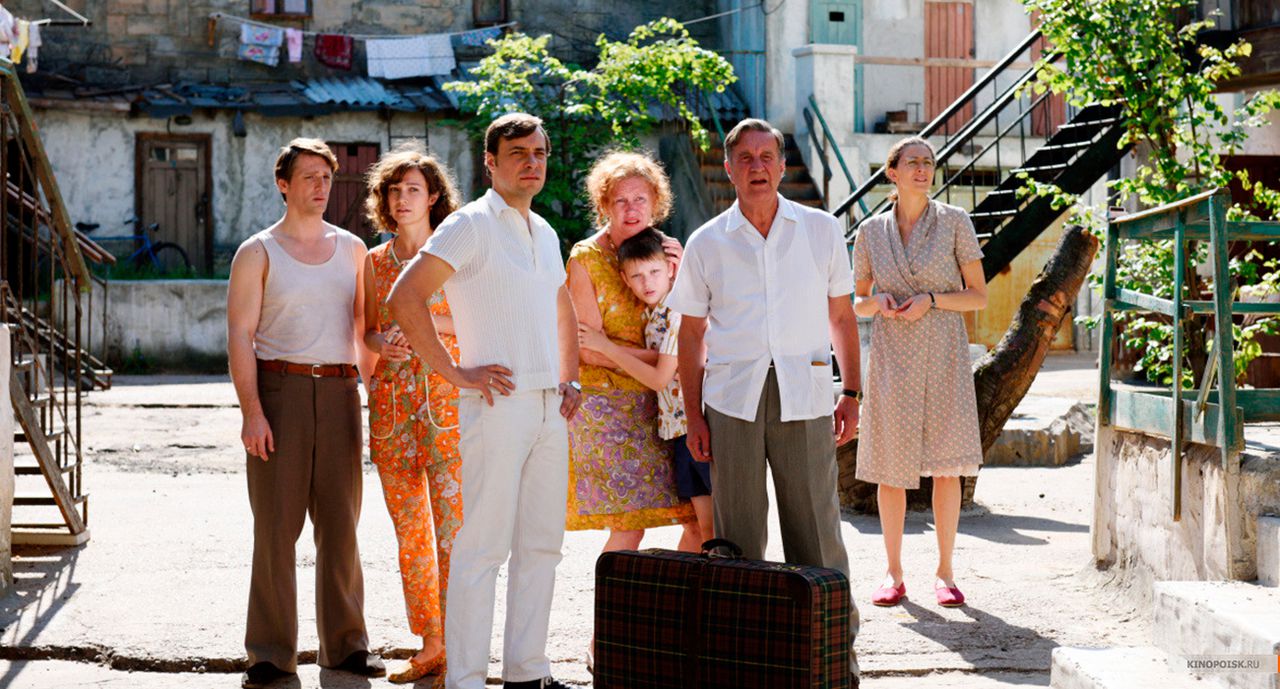
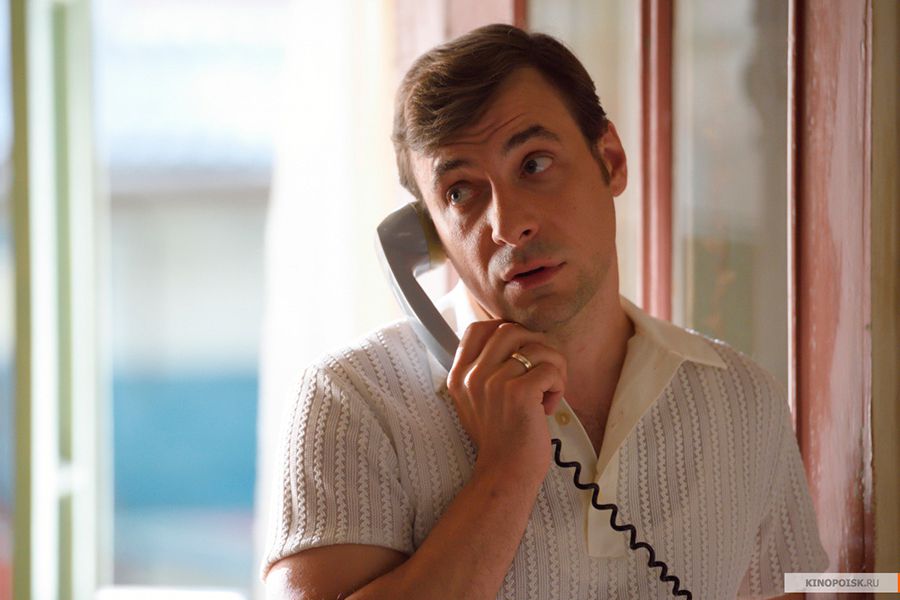
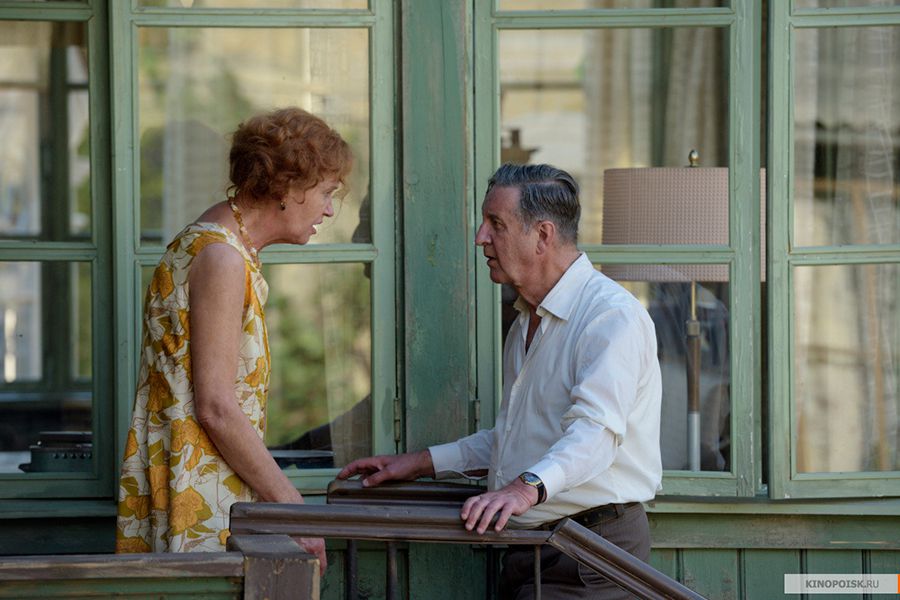
“Odessa” was removed from the desire to see the same film blur, halftones, softness, depth, or at least convince yourself that you felt a certain non -verbalized nostalgia, transmitted from the screen.
The film is still important to several directors who feel like the heirs of the cinema of the past, as a technique, an author's statement or position. Talking about the film, the directors give an example of a “disgusting eight” shot by Quentin Tarantino in 2015 for a wide film of 70 mm Ultra Panavision. In the same format, in their years, grandiose landscape films were shot, for example, “Ben Gur” (1959) or “Lawrence of Arabian” (1962).
On the same film, which especially for Quentin began to produce for the first time in many years again, Tarantino mockingly for an hour removes the tiny carriage on which the heroes go, and then the barn, where everyone shakes the truth and guts for a long time. For a great postmodernist, this move is an attempt to mock his own roots, because Tarantino gathered the whole aesthetics of his films from the old cinema, which watched in thousands while working in a video rental. He wants to say goodbye to the past to move somewhere further, and for this he uses just an authentic film and appropriate cameras. He is engaged in the same in the film that has not yet been released “Once ... in Hollywood”, already shown at the Cannes festival - 2019.
At the same time, Tarantino especially appreciates film screenings from the film. In Russia, the “disgusting eight” was only shown from 70 mm once, this became possible thanks to Alexander Zenin, the creator of a large collection of old film projects. For Tarantino, this was so important that he personally wrote him a letter with gratitude.
Sometimes the film is used not on the whole film, but only in a few scenes for stylization: it is easier to immediately shoot on the film, than later it is long and unconvincing to simulate it at post -production. Some scenes of the film “Summer” by Cyril Serebrennikov were stylized under the amateur filming of a manual film camera. This camera was used by the operator Vladislav Opelyants, which he mentioned when he received a guild of movie operators for the “summer”: “Thanks to my dad, I shot these 16 mm personnel on his camera.”
The film "Brotherhood" by Pavel Lungin, imitating the harsh perestroika movie in style, was shot on Kodak. With the same goals in the film “When the Stork” Danila Kozlovsky fell, dedicated to the Chernobyl accident (our answer to the Chernobyl series from HBO), which is now in production, will also be an episode shot on the film of 16 mm, the same Zenin, which helped Tarantino, is engaged in production. In general, no one is forgotten and nothing is forgotten.