
Translated material
Erected to a degree
Cycle " School of Life "
Erected to a degree.
Portrait of Viktor Sadovnichi, mathematics who did not miscalculate
Julia Lukyanova, with the participation of Roman Badanin, July 3, 2019
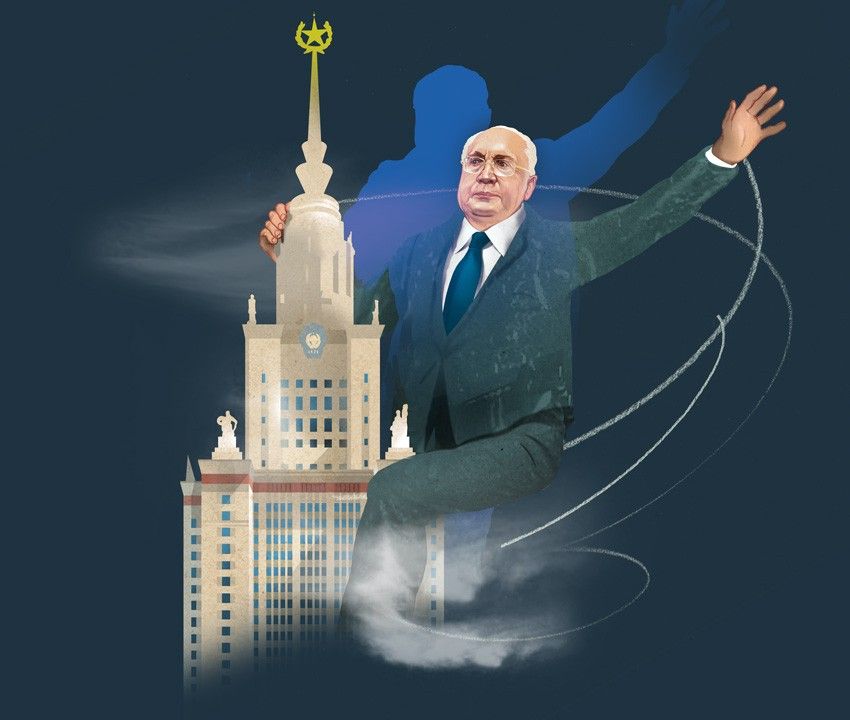
Victor Sadovnichi, 80-year-old rector of Moscow State University, should leave his post this year. For almost 30 years of managing the country's largest university, he provided enough personal and professional services to the Russian leadership, for which he possibly secured a comfortable life. However, there are questions to the scientific and ethical authority of the rector.
Jewish question
In November 1983, tenth graders of the 57th mathematical school in Moscow gathered at the birthday of a classmate. Between congratulations and jokes, they asked the question: where to go? “The admission to the mechmat was not even discussed,” recalls the birthday brother, mathematician Alexander Braverman. The fact that the children of Jews from the late 60s are not taken to the main mathematical faculty of the country, all the audience knew.
The future rector Viktor Sadovnichy was already a significant value to Moscow State University - since 1977 he headed the party committee of the university. In the early 80s, Professor Mehmat Sadovnichy was already working in the Central Administrative Commission (CPC) of Moscow State University. His duties included conversations with the concerned results of exams by his parents, a reaction to complaints. The Jews complained, and they had something to.
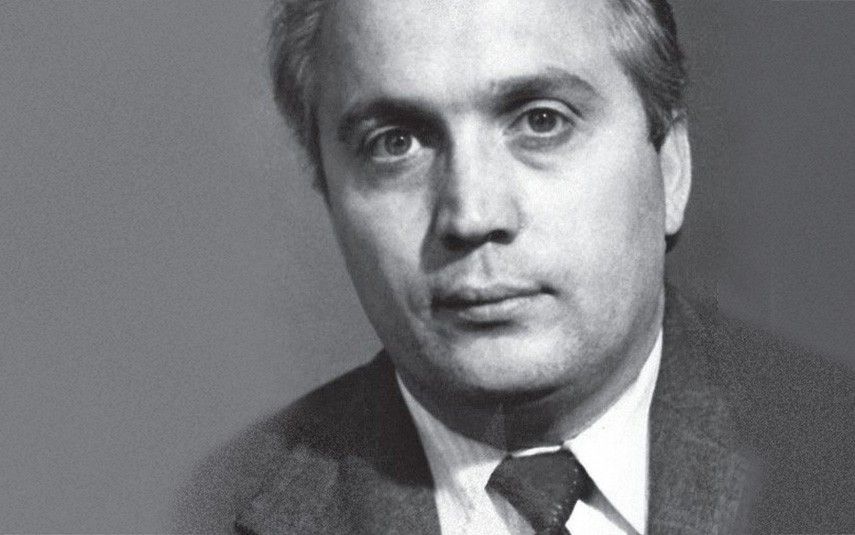
In 1982, a year before the child’s entering the university, the parents of the future of the world famous mathematician Mikhail Finelberg divorced, his mother returned to her girlish name. The reason was not problems in relations. Only in this way could a teenager choose the “suitable” surname and nationality for the Mehmat when receiving a passport at 16 years old. So Mikhail Finkelberg became Sorokin, and, filling out the questionnaire upon admission, just in case, attributed the same surname to his father, changing his Jewish patronymic.
But Finkelberg-Sorokin did not save. The applicant was too carefully monitored the interview protocol, as familiar mathematicians were instructed. The examiners were surprised, looked into his profile and found that the young man’s mother was working at the physical faculty. They told them that until last year the employee wore a Jewish name. Then Mikhail was overwhelmed: when he solved the problem in physics, the commission gave one more. This was repeated twelve times, the schoolboy did not master some tasks, and a “deuce” appeared in the protocol, says Finkelberg. As a result, Finkelberg went to study at the Institute of Oil and Gas, but, not yet graduating from it, entered Harvard's graduate school. In 2018, he became an invited speaker at the international congress of mathematicians, the most prestigious mathematical conference in the world, which is held every four years. It is there that the Fields medal is presented - “Nobel” for young mathematicians.
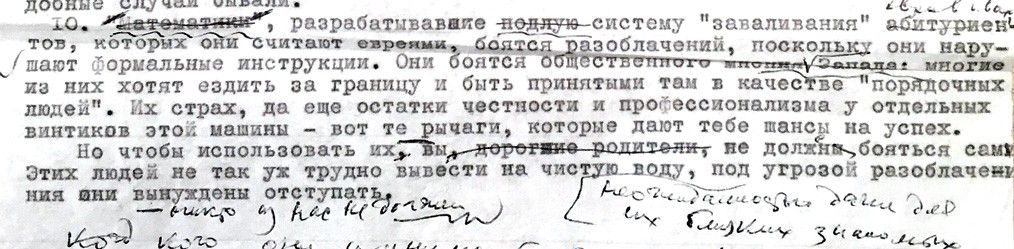
For most Jewish children, entrance exams usually ended already in mathematics. In 1980, teachers Valery Sentorov and Boris Kanevsky published an article “Intellectual Genocide” in Samizdat. It contains estimates for the entrance exams of Jewish applicants and the rest of the received: Jews, even the winners of the Olympiads, received only deuces and three. Later, mathematicians released a collection of tasks that were offered to the Jews on the introductory: they were recorded from the words of applicants directly at the exit from the exams. The Jews went, as they were later called, “coffins” were very complex or completely unusual tasks for schoolchildren.
Jews who wanted to engage in mathematics or physics accepted at the Moscow Institute of Transport Engineers (MIIT), the Institute of Oil and Gas named after Gubkina, Institute of Steel and Alloys (MISIS), construction universities. At the Moscow State University, the aviation (MAI) and the engineering (myfi) the passage was practically closed, it was slightly easier at the physical education (MFTi), the senior researcher at the Institute for Problems of Information of the Information of the Russian Academy of Sciences Alexander Shena, who graduated from Mehmat. Among the Jewish scientists were also infringed: they could forbid them to travel to conferences and print articles in mathematical magazines, one of them, Grigory Freiman, even wrote in 1979 in the New York Times newspaper.

“The Sadovnichy pursued this policy, he agreed with the professors who spoke or gave lists who need to be overwhelmed,” says physicist Mikhail Shifman, referring to Senderov’s stories. There is at least one documentary evidence that Sadovnichy, holding a post in the selection committee, not only knew about anti -Semitism, but did not fight him at least. The episode was described in 1980 in the article by Senderov and Kanevsky: “The undesirable applicant” (this formulation is most likely hiding the fact that the boy is Jewish origin) Alexander Trutnev, the winner of the Matolympiad, received “two” at the entrance exam, although all five tasks were correctly solved. The appeal in the faculty commission was rejected, saying that the applicant did not have “two purely solved tasks”. Then the Trutnev family went to the CPC and got to the gardener. He advised to take the application back to the faculty, saying that in the CPC in such matters they are “incompetent” and “completely trust specialists from Mehmat”. The scientist did not mention the fact that the Sadovnikiy himself - Professor Mehmat.
In 2015, the only time answering the question about the discrimination of the Jews on Mehmat, the Sadovniki, albeit confusingly, said that there was no manifestations of anti -Semitism during his work at the faculty.
“Project” sent requests for interviews to the gardener and three vice -rectors of Moscow State University, but did not receive an answer. Seven deans and presidents of faculties also refused to say anything about the rector.
From the memoirs of Bella Kerdman: Remember how, in response to the arrogant arbitrariness, repaired over the applicants-Jews at the MHCMA of Moscow State University, a secret was organized-in a private apartment-a press conference for foreign journalists accredited in the capital of the USSR? This was done by Julia Ratner and her husband Leonid Byaly-the parents of Misha Beatiy, the current doctor of mathematics of Tel Aviv University. Western reporters gathered then [in 1979] at their home. This Julia went to the reception of Mehmat Dean [Alexei] Kostrikin, a corresponding member of the USSR Academy of Sciences, by the way, asked him a simple question: “How to explain that Jewish guys, medalists and laureates of the Olympiads, failed in the mathematics exam?” And she received an unpretentious answer: “I will not allow any Jews or Tatars to my faculty!” The Academician-Anthusemite did not know that in the hand of an angry Jewish mother there was an on the tape recorder and that his shameless statement would be heard first at a home press conference in Moscow, and then would be voiced by “enemy votes” for the whole world.
Fearing, apparently, that the circles of stone, thrown into the rotten swamp of stagnation, will be too far away, the Jewish windoderkints quickly convened at Moscow State University to “re -explorer” and immediately enrolled.
The rector of the rector
- It's a shame. But hope dies the last. Maybe they’ll come to us to graduate,-these words in 2005 Sadovnichy answered reporters to the question of whether he was offended that Vladimir Putin’s daughters, as it was officially considered, did not enter the Moscow State University, but at St. Petersburg University. Only after 14 years it will become known that one of the daughters - Katerina Tikhonov (Putin) - studied incognito at the Institute of Asia and Africa of Moscow State University, and the rector hardly did not know about this. The whole career of Putin's daughter has since been associated with the Sadovnik.
In May 2019, the guards of the Institute of Mechanics of the Moscow State University were removed from the passing announcement with the inscription “Photos and video shooting in the institute’s building” is prohibited ”in front of the correspondent of“ Project ”. A couple of hours before, at the institute, with a large coincidence of the scientific public and two dozen journalists, the dissertation was defended-the candidate of physical and mathematical sciences in the specialty “Theoretical Mechanics” became the youngest daughter of Putin Katerina, who has long been surname from her grandmother’s middle name. “For” voted all 18 members of the dissoet, among whom were 17 doctors of sciences in the same specialty. Sadovnichy was one of the two scientific leaders of a young scientist. The day before the defense, the rector himself “defended” himself, receiving the Order “For Merit to the Fatherland” I degree from the hands of the father of his dissertant.
According to the rector, Japanist Tikhonov approached the gardener in 2009 after his seminar and said that she wanted to engage in applied mathematics, he told about this on protection. In the same year, President Dmitry Medvedev reassigned the rector, who had already reached the age maximum for this position, for a new term. For this, the university paid for its autonomy, said Mikhail Lobanov, assistant professor of Mehmat. The same position is occupied by the Opposition to the Receating community of students and employees “Initiative Group of Moscow State University”, which Sadovnichi was once knocked out : before the rector was chosen on a scientific council, but in 2009 the president changed the procedure with his decree. As a result, Putin's daughter graduated with honors from the MECHMAT, follows from the official conclusion of the dissertation council of Moscow State University, and laid a master's diploma in the dissertation. It is devoted to mathematical models of correction of the vestibular apparatus of a person. This can be useful, for example, to astronauts in zero gravity.
“If she came to me after Oriental Studies and said that she wants to write a dissertation on the vestibular apparatus, I would say: go to the biofac, start there,” says an employee of the Institute of Biological Problems, Vestibulologist Givi Gorgiladze. He defended his candidate on the vestibular apparatus back in 1964, the doctoral - in 1983. Gorgiladze was not allowed to defend Tikhonova, saying that he was not on lists, the scientist claims that he was recorded in advance. The “closed” defense is a generally unthinkable thing for the academic community, according to the rules, any listener can come to it, the press service of the Moscow State University’s passing system was explained by the “cluteness” of the Institute of Mechanics of Moscow State University, where the protection was held, and small sizes of the audience. The scientist criticizes the quality of the dissertation Tikhonova, noting that she does not have a single work written on her own, there are also no publications in which she would be the main author, that is, where her last name would stand at the beginning of the list of co -authors. Among the co -authors of Tikhonov, the last or penultimate is listed. According to Gorgiladze, candidate work is compiled from publications, on which the applicant worked in the process of writing it, while Tikhonova does not have independent publications.
To become a dissertation of the rector is a great success. Tikhonova is only the fourth applicant who led the Sadovnichy over the past ten years, and the only one whose master's diploma is indicated in the profile of the rector in the internal system of scientific works of Moscow State University. Sadovnichy “was assigned to her as an adult,” two high -ranking sources say. Back in 2012, that is, a year after the start of work on the dissertation with Sadovnik, Tikhonov became the co -founder and director of the National Intellectual Development Foundation (NIR), but later left the founders, now they have only Moscow State University. The Fund under the Innopractics brand, together with the Intaco company, develops the project of the so -called “scientific valley of Moscow State University” - this is a plan for developing with scientific buildings and housing of vast territory on the Sparrow Hills in Moscow. Now the Vorobyovy Gory project, estimated by the rector of 110 billion rubles, is at the stage of gathering money: the federal budget and the Moscow authorities have promised to invest.
Over time, a young researcher overgrown with university positions: without even being a candidate of sciences, she became deputy vice -rector, director of the National Intellectual Reserve Center and Deputy Director at the Institute of Mathematical Research of Complex Systems.
Tikhonova’s candidate title may be a springboard to get one of the leadership posts at Moscow State University (all vice -rectors have a degree, except for the vice -rector for capital construction - he came from business for this post). According to the version retold by a “project” a member of the Board of Trustees of the University and a government official, many perceive Tikhonov at Moscow State University as the future head of the university. The current term of powers of the already 80-year-old Sadovnichy ends in December 2019, all legal grounds for extending his powers have already been exhausted.
Sadovnichi Viktor Antonovich, 80 years old
Doctor of Physical and Mathematical Sciences (since 1974), professor of MECHMATE MSU (since 1975), rector of Moscow State University since 1992.
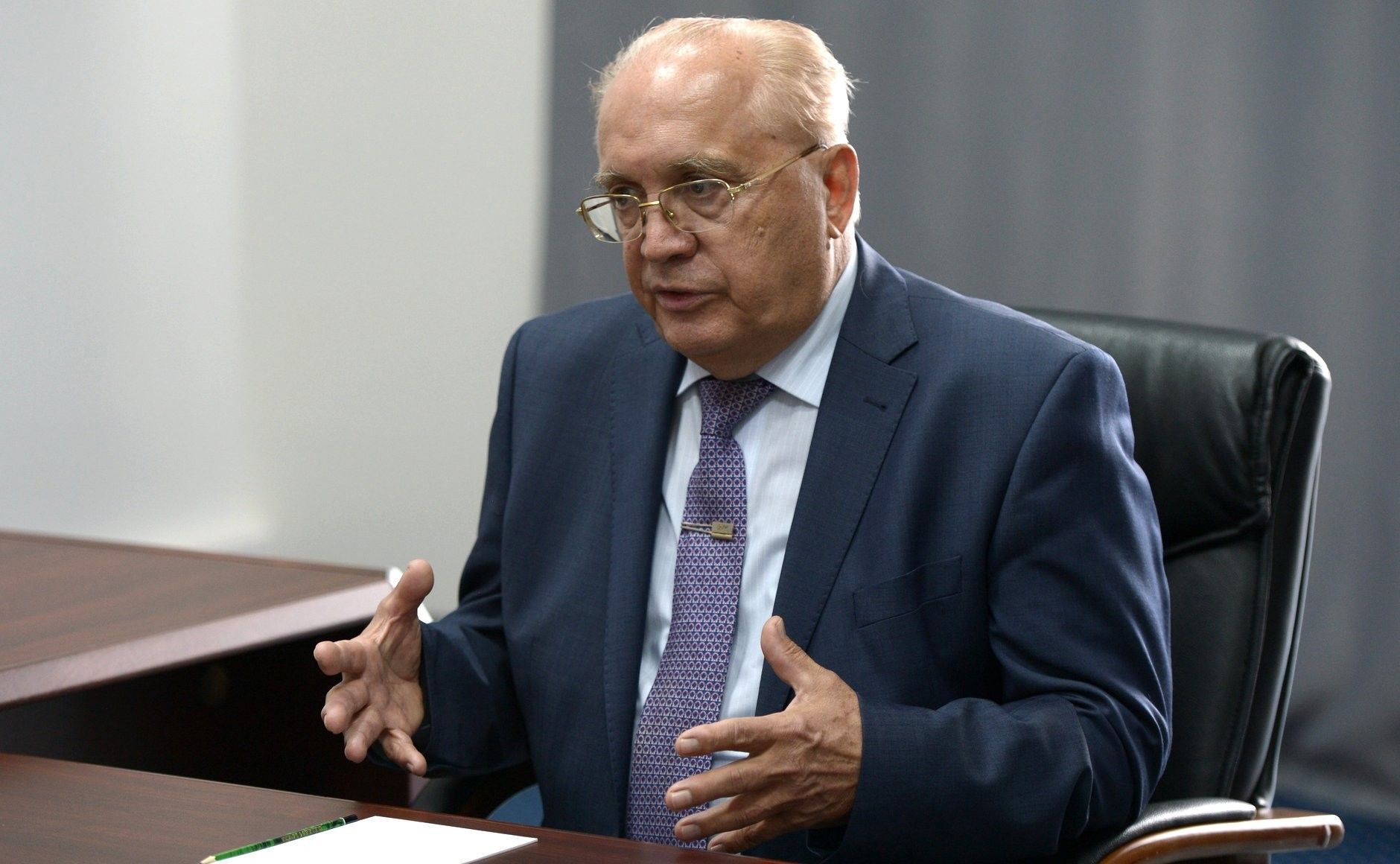
Merit:
766 articles , 190 books , 72 reports on conferences , 90 theses of reports , 23 research , 19 patents , 15 certificates of registration of Rights for Poe , 3 scientific reports , 2 awards , 9 members in the editorials of magazines , 86 members in the editorials of collections , 30 membership committees , 6 memberships in dissertation councils , 38 dissertations , 1 Diplomatic work , 17 training courses
Source: A website of the intellectual system of thematic research of granical data (truth) Moscow State University
Viktor Sadovnichi - a native of the little village of Krasnopavlovka, Kharkov region. After school, to get a passport, he worked for several years a slap in the mine. The future rector was going to study at the machine operator, but by the will of the chance he entered the MHCAM of Moscow State University. Yesterday's Shakhtar immediately began to move along the party and administrative ladder. At first, the headman of the course, then the chairman of the studio, the secretary of the Komsomol organization of the course, and later the faculty. Even in the student construction team, the Sadovnichy was a leader: he commanded a detachment of a thousand people. Having defended the diploma, the mathematician remained in graduate school, rose to the deputy dean of the Faculty of Mechanics and Mathematics, then to the first vice-rector of Moscow State University. In 1992, Sadovnichi won the election of the rector of Moscow State University, although the previous rector and the then Minister of Science, and even President Boris Yeltsin, were against the election of the Sadovnichny in the Partcomus, won against the elections of the rector. Academician has been heading one of the Mehmat's departments for 37 years, and the university itself is 27. In order for Sadovnichi to stay for the last two periods of five years, it was necessary to write a presidential decree and change the charter of Moscow State University.
According to information on the website of Moscow State University, Sadovnichy, the author of 770 articles, over the past 23 years, has not written a single mathematical work on his own. The scientist from the Faculty of Mathematics of the Higher School of Mathematics to write so many works on average would have been required for 405 years, calculated the “Project”, based on data from the Higher School. In international reviewed magazines of articles by the rector, the rector is an order of magnitude less: 216, while they referred to work infrequently - only 395 times, according to the international database of the American mathematical society Mathscinet. According to mathematician Alexander Sheny, Sadovnichy has more publications than many scientists known to the mathematics, while there are much fewer links.
Formally, a garden specialist in mathematical analysis is one of the oldest mathematical disciplines. However, starting at least from the mid-70s of his work, it is far from the front edge of this region-both thematically and in fact that it is noticeable, for example, by their very low citation index, especially among mathematicians who do not belong to the direct environment of the Sadovniy, approved by the professor of the University of Toronto and Scoltkh, the mathematician Alexander Braverman.
During the presidency of Medvedev, the rector even thought to be replaced. Among the applicants were called the then Minister of Education Andrei Fursenko, the former deputy chairman of the government Igor Shuvalov, vice -rector Alexei Khokhlov, says a high -ranking interlocutor in the field of higher education. The former official also knows the fact that the issue of the change of gardening was discussed under Medvedev. However, in 2009 - precisely when Sadovnichy became the scientific director of Tikhonova - he was again reassigned.
Saines Fikshn
When in 1992 the university first chose the rector for himself - autonomy appeared according to the Decree of President Yeltsin - the future voting winner of the voting, the first vice -rector Sadovnichy “was very proud that he knocked out new elevators for Moscow State University,” recalls the then Minister of Science Boris Saltykov. Sadovnichy always knew how to be friends with the state.
The rector belonged to the ruling party all his career, and in New Russia he decided on his choice for a long time. In 2002, he became a member of the political council of the Moscow branch of United Russia, a year later he headed the Moscow list of elections to the State Duma and was even elected, but refused the mandate. Now the rector is a member of the Party Supreme Council, and in the 2012 and 2018 presidential election, he acted as a confidant of candidate Putin.
Under Sadovnich, many system politicians found work at the university, for some of them entire faculties were created, the quality of science and education on which raises questions. The Faculty of World Politics was headed by a former deputy from United Russia Andrei Kokoshin, public administration - the current deputy of United Russia Vyacheslav Nikonov, the highest school of television - pro -government political scientist Vitaliy Tretyakov. На факультете госуправления раньше возглавлял кафедру тогда депутат, а теперь председатель Госдумы Вячеслав Володин, а глава думского комитета по международным делам Леонид Слуцкий, обвиненный в харассменте, до сих пор заведует на факультете политологии кафедрой международных отношений и интеграционных процессов.
Как подсчитал «Проект», у 11 факультетов сейчас нет деканов, вместо них — исполняющие обязанности. Родной для Садовничего мехмат живет без декана уже 13 лет, все это время обязанности выполняет Владимир Чубариков. Все дело в том, что в 2009 году ректор указом президента получил право окончательного утверждения деканов , раньше выбирать деканов должны были ученые советы факультетов, при этом уволить главу факультета может только ученый совет МГУ. Управлять и.о. гораздо удобнее: его можно назначить или уволить вообще без учета мнения совета , объясняет один из бывших руководителей университета.
Из чего складывается бюджет вузов в 2019 году, млрд руб.
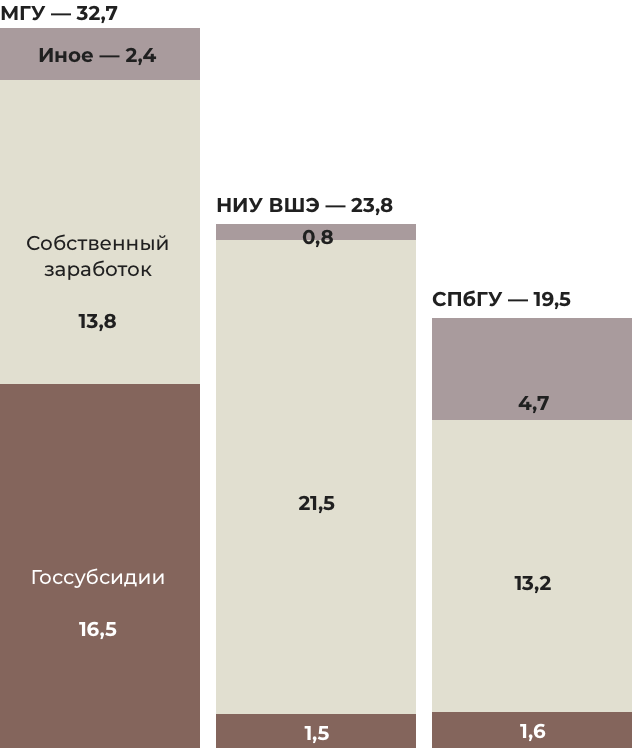
Источники: а) план финансово-хозяйственной деятельности МГУ на 2019-2021 годы; б) аналитические материалы к плану финансово-хозяйственной деятельности НИУ ВШЭ за 2019 год и плановый период 2020-2021; в) Отчет о финансовых результатах деятельности СПбГУ
Филиалы МГУ
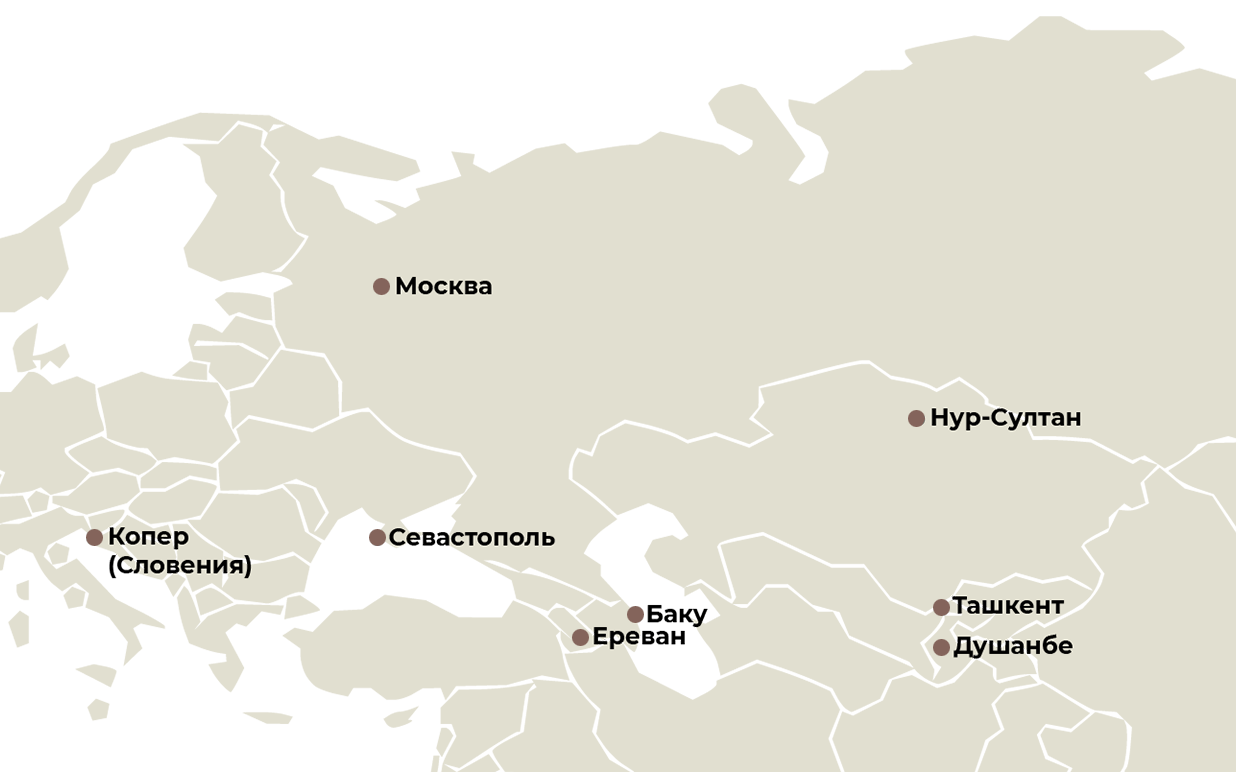
Филиалы МГУ
На «неполитических» факультетах, где для науки требуются не только ручка и бумага, ученым приходится придумывать способы борьбы с университетской бюрократией. Покупка оборудования и реактивов занимает уйму времени, рассказывает о проблемах коллег профессор МГУ биоинформатик Михаил Гельфанд. «Естественники» нашли выход из положения: при составлении заявки на грант как ведущую организацию они нередко указывают не МГУ, а научно-исследовательский институт РАН, где числятся , говорит Гельфанд. Испытывает затруднения и родной для ректора мехмат. «Если бы мехмат оканчивали сильные математики, они шли бы учиться в аспирантуры лучших математических факультетов мира или устраивались бы туда на работу. Но в последние годы такого не наблюдается, — считает профессор ВШЭ Михаил Финкельберг. С 2015 года ни один из российских участников Международной олимпиады по математике не поступил в МГУ , сказал «Проекту» тренер российской сборной Кирилл Сухов. Школьники выбирают СПбГУ, ВШЭ и МФТИ. Однако доцент мехмата Михаил Лобанов отмечает, что на мехмате есть заметное число сильных кафедр с сильными учеными, а ВШЭ не закрывает все области математики.
В социальных науках свои проблемы. Сооснователь «Диссернета» , сообщества экспертов, которые выявляют плагиат в научных работах, Гельфанд перечисляет сотрудников МГУ, которые защищали списанные диссертации, и даже диссертационные советы внутри университета, становившиеся фабриками «липовых» научных работ. «Фабрики» уже ликвидированы, но некоторые уличенные в плагиате ученые продолжают работать в МГУ. К примеру, нынешний и.о. директора ИСАА , одного из факультетов МГУ, профессор Игорь Абылгазиев часть своей работы предположительно списал из чужой диссертации, а часть — из публицистической книги про Китай , обнаружил «Диссернет».
Нередко ученые покидают МГУ из-за низких зарплат. В 2012 году доцент мехмата, доктор наук Иван Аржанцев увидел на сайте министерства образования статистику зарплат и написал в электронную приемную университета. «Хочу спросить, что нужно сделать, чтобы получать среднюю зарплату по МГУ?», — писал Аржанцев. Ответ дал проректор Алексей Хохлов: он посоветовал активнее участвовать в конкурсах научных проектов, «исследованиях по хоздоговорам», а также работать в «системе дополнительного образования МГУ». Аржанцев остался работать на мехмате и стал профессором, правда, теперь возглавив еще и факультет компьютерных наук ВШЭ.
Несмотря на все трудности, ученые МГУ перевыполняют заданный государством план в области науки во всех пунктах, а ректор получает вознаграждение.
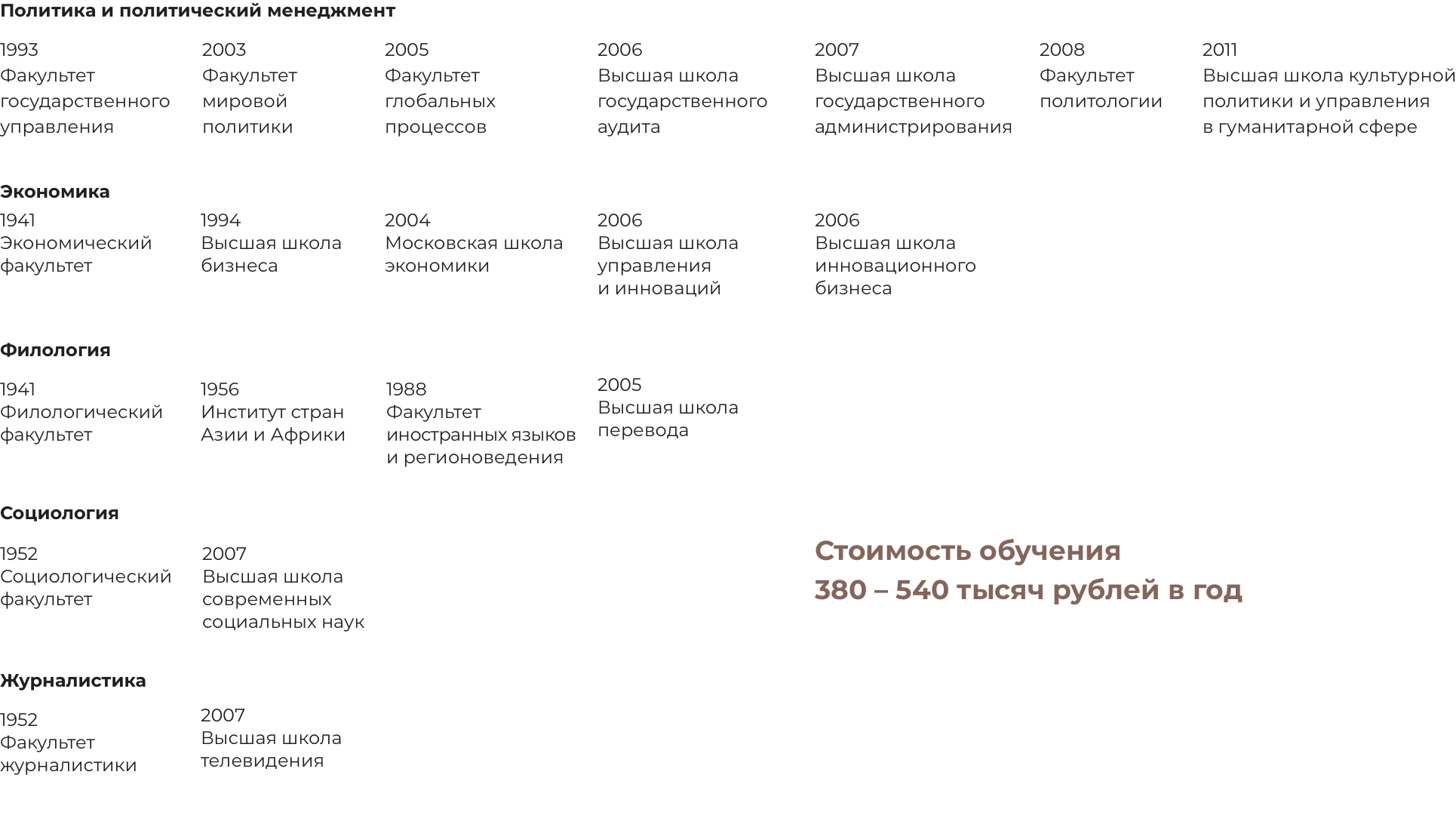
В 2000-х в МГУ стали открываться факультеты, отчасти повторяющие старые
На таких факультетах больше контрактных мест, чем бюджетных. На некоторых бюджета нет и вовсе.
Альма-патер
— Коллеги, я садовник по определению. У меня ничего особенного нет, но есть 15 соток в районе Апрелевки и сад — колоссальный сад… Вот, я вам принес по яблочку, — этими словами ректор открывал учебный год в конце августа 2018 года.
В декларации ректора действительно есть подобный участок — 16 соток записаны на его супругу. Но говоря, что «ничего особенного» у него нет, ректор лукавит. Как выяснил «Проект», два земельных участка, площадь которых указана в декларации академика, находятся на Рублевском шоссе, в кооперативе «Марина», неподалеку от правительственных «Горок». В 2003 году Садовничий владел 18 сотками, а через год добавил к участку еще восемь.
Второй участок сначала получил полный тезка депутата Госдумы от «Единой России» Александра Белякова, который тогда занимал пост председателя Комитета по природным ресурсам и природопользованию. Однако в тот же день землю переоформили на Садовничего , согласно выписке Росреестра. Об основании перехода права на землю в выписке не сообщается , “Проекту» не удалось связаться с Беляковым.
12 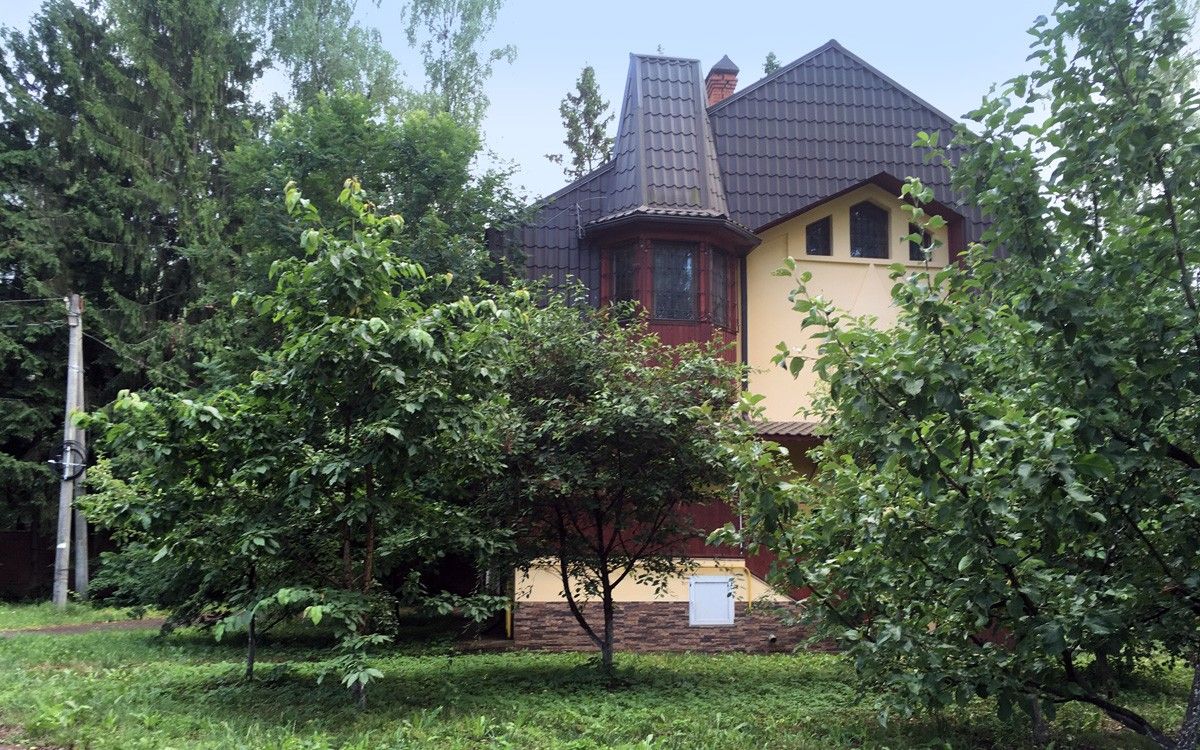
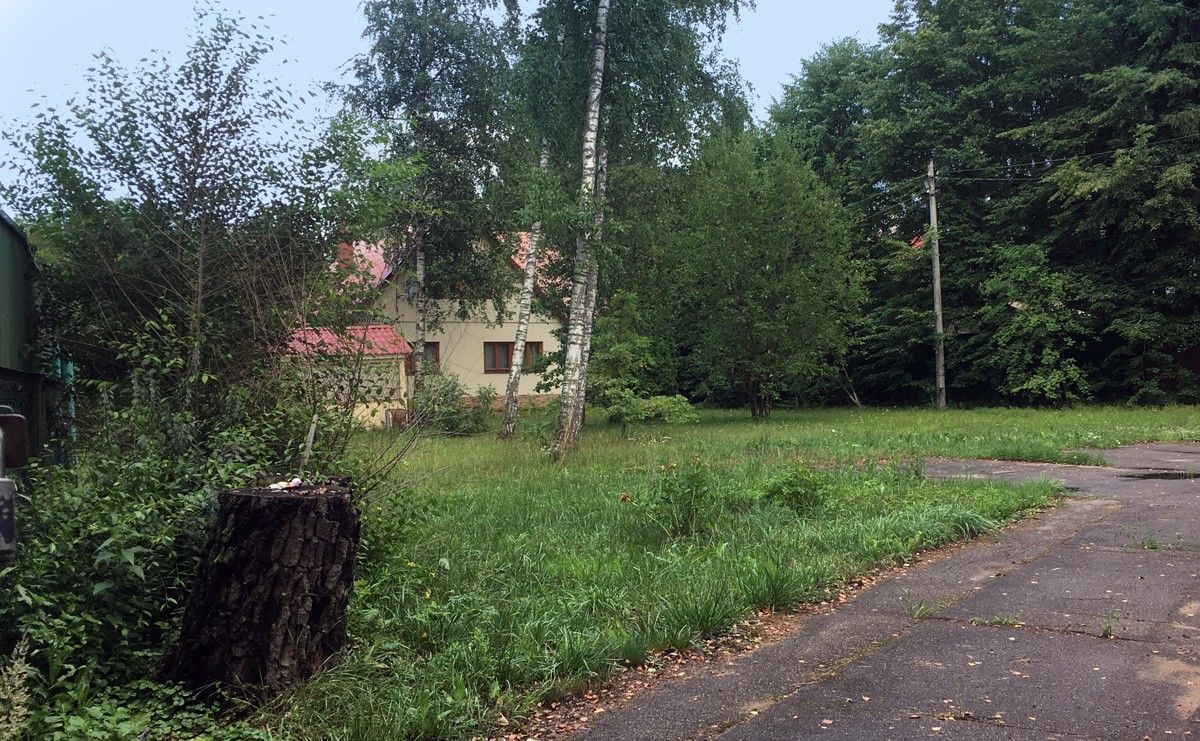
По пути на дачу к Садовничему по 1-му Успенскому шоссе встречаются сплошь дорогие внедорожники. На въезде стоит часовня Бориса и Глеба. В небольшом поселке два дома Садовничих едва ли не самые скромные, правда, в кадастровом реестре их нет. До 2014 года ректор делил забор с министром иностранных дел Сергеем Лавровым , его участок в 13 соток относится к ДНТ «Весна», а теперь земля принадлежит дочери чиновника Екатерине Винокуровой.
У Садовничего есть и еще один участок — в деревне Зеленково Истринского района. Там в 2008 году ректор получил 75 соток в садово-дачном товариществе Российской академии наук «Снегири». Поселок « строго охраняемый » и «финансируется Российской академией наук» , следует из сообщения о продаже на сайте ЦИАН. Круговая подъездная дорожка ведет к трехэтажному дому. Согласно кадастровой выписке, его площадь — всего 177 кв. метров, но если измерить этот объект на спутниковых картах, окажется, что такова площадь одного этажа. На участке есть еще одно здание, не поставленное на учет в кадастровом реестре. С высоты его площадь можно оценить примерно в 100 кв. meters. В декларации ректора есть и четвертый земельный участок, площадью 7688 кв. м. «Проект» попытался найти его с помощью сайта, показывающего все участки точно такого метража в Московской области, однако ни один из них, согласно данным Росреестра, академику не принадлежит. В соседях ректора не только академики — физик Жорес Алферов, умер в марте 2019 года; математик Юрий Осипов, экс-глава РАН и бывший член попечительского совета МГУ. О том, что Осипов больше не попечитель, «Проекту» рассказала его помощница — и банкиры, но и чиновники: там находятся участки полных тезок зампреда правительства по вопросам социального строительства Татьяны Голиковой, бывших заместителей главы Росимущества Юрия Медведева и Людмилы Придановой, сына бывшего главы Росимущества Валерия Назарова Андрея. А возглавляет садовое товарищество академик, и.о. декана факультета наук о материалах МГУ Константин Солнцев.
Точную стоимость недвижимости ректора оценить сложно, потому что нет точных данных о метраже домов. В «Марине» участок без построек, сопоставимый с наделом Садовничего, сейчас продается за 35 млн рублей. В Зеленково подобный ректорскому участок, тоже без построек, обойдется в 30 млн. До 2013 года зарплата ректора не публиковалась, в 2013 году она составила 2,3 млн рублей и с тех растет уверенными темпами.
Сколько зарабатывает Садовничий, млн руб.
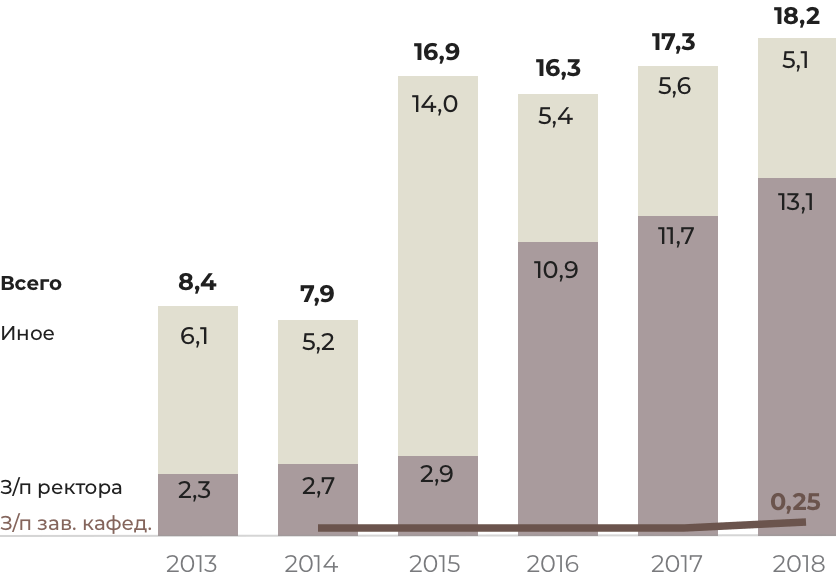
Зарплата ректора выросла на 390,68%
Зарплата заведующего кафедрой — на 4,37%
Примечание: в 2015 году ректор указал в декларации, что с разрешения правительства РФ он получил премию в размере 3 035 523,6 руб в 2012 и 2013 годах.
Источник данных: декларации Виктора Садовничего, выложенные на официальном сайте МГУ
За последние пять лет зарплата ректора МГУ выросла почти в шесть раз, в то время как зарплата завкафедрой в университете, которую Садовничий тоже получает, увеличилась только на 4% , следует из данных его деклараций. С доходами завкафедр Садовничий знаком не только по своей зарплатной книжке. Все трое детей ректора окончили мехмат МГУ и преподают в альма-матер. Старший сын Юрий — доктор наук, доцент, с 1995 года заведует кафедрой общей топологии и геометрии. Дочь Инна тоже доктор наук, профессор на факультете вычислительной математики и кибернетики (ВМК), завкафедрой фундаментальной и прикладной математики на новом ф акультете космических исследований (ФКИ). Вторая дочь, Анна , преподавала на экономическом факультете, а теперь читает лекции в Московской школе экономики при МГУ на кафедре финансовой стратегии. Финансовая стратегия или родство помогли Анне и вне университета: сначала она работала в Торгово-промышленной палате (ТПП) , рассказывает ее знакомый, в 2008 году стала замдиректора «Экспоцентра».
От «Экспоцентра» Садовничая в 2012 году села в кресло члена совета директоров банка Русской православной церкви «Пересвет» , «Экспоцентр» выступал соучредителем банка в 1992 году. Ее коллегами по совету директоров среди прочих были епископ Тихон (Зайцев) и троюродная сестра главы РПЦ Елена Холодова , выяснил «Дождь».
Как теперь утверждает бывший работник банка, Садовничая была «первой, кто заволновался», когда исчез председатель правления Александр Швец , позже станет известно, что он покинул Россию. Банк с дырой в более 100 млрд рублей рухнул, и спасать его пришлось «дочке» Роснефти — Всероссийскому банку развития регионов (ВБРР). Впрочем, в результате санации кресло в совете директоров Садовничая все равно потеряла.
* * *
В январе 2019 года аспиранта мехмата МГУ Азата Мифтахова арестовали по подозрению в изготовлении взрывчатки, а позже — как подозреваемого в нападении на офис «Единой России» в Ховрине. Свою вину Мифтахов отрицает. Академическое сообществоподдержало аспиранта: в открытом письме ученые просили прекратить пытки — Мифтаков утверждал, что его били и пытали шуруповертом —, сообщить местоположение аспиранта, которое силовики скрывали, и допустить к юноше адвоката. Под письмом подписались более 340 профессоров и научных сотрудников, включая философа Ноама Хомского и мировых звезд математики. «Проект» насчитал среди подписантов около 500 человек, упомянувших свою принадлежность к МГУ. Председатель студсовета мехмата Валерий Сенотов написал и ректору, ожидая, что Садовничий заступится. Отправленное через канцелярию письмо осталось без ответа. Тогда Сенотов дождался Садовничего возле аудитории, где тот слушал научный доклад. Ректор ответил: о ситуации ему не доложили, но он за законность, нужно, чтобы дело было рассмотрено по справедливости , пересказывает Сенотов. Никакого публичного заявления Садовничий до сих пор не сделал, обращение, переправленное трем проректорам и и.о. декана мехмата Чубарикову, также осталось без реакции.
Через два месяца после ареста Мифтахова ректор предложил Миннауки внести изменения в устав МГУ, чтобы студентов, привлеченных к уголовной ответственности, можно было отчислить. Но уже в мае после критики поправки передумал и предложение отозвал.
В конце ноября 2019 года, за месяц до того, как ректор Садовничий по закону обязан был покинуть свой пост, государственная дума приняла поправку, согласно которой президент может бесконечно продлевать полномочия ректоров МГУ и СПбГУ.