
Translated material
The fall of the fourth wall
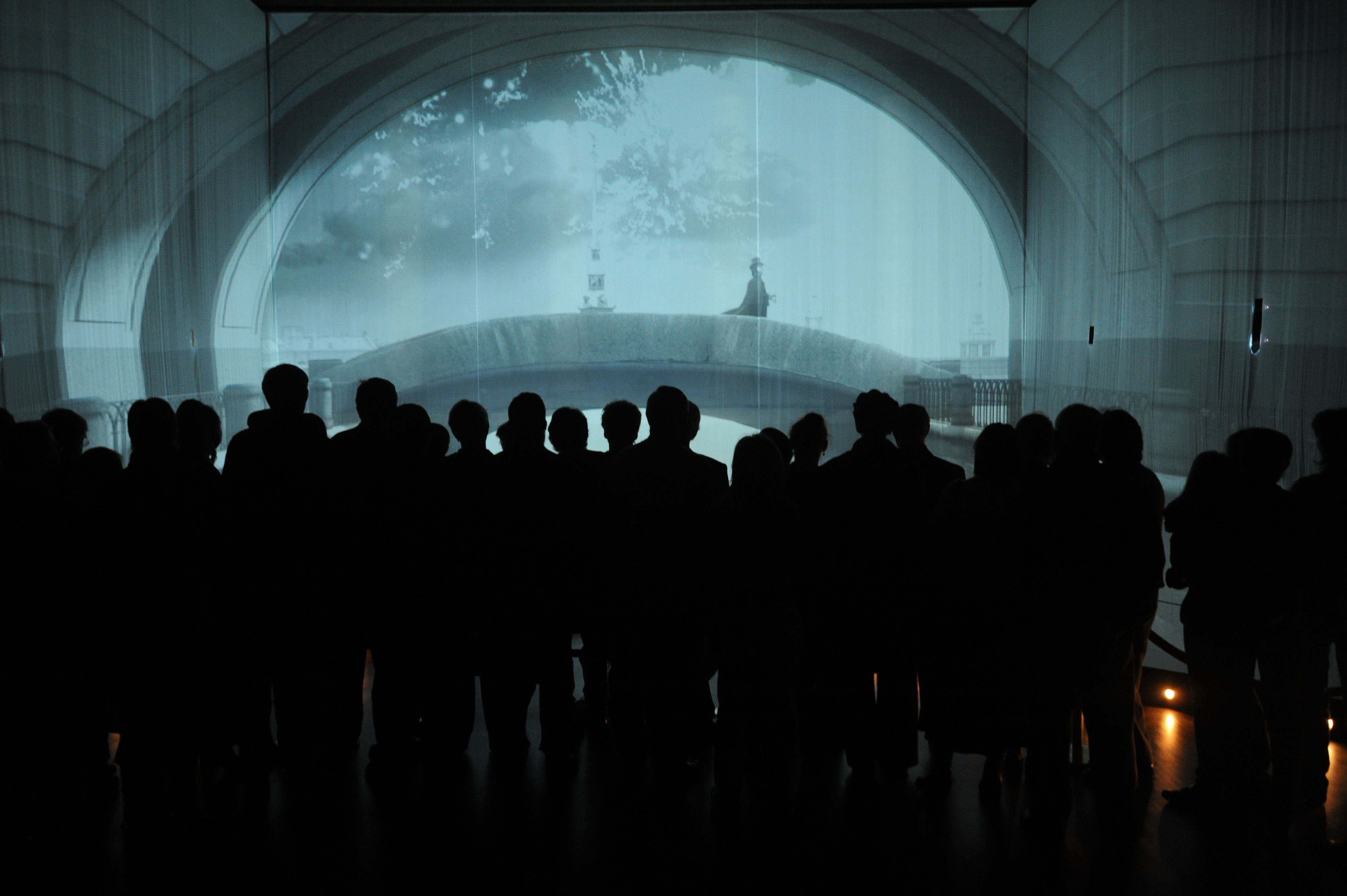
What is a postdramatic theater? On the air Elena Kovalskaya and Anton Khitrov
- Now more unusual theatrical formats are emerging, using multimedia technologies and new methods of interacting with the viewer.
- The post-dramatic theater of the future offers immersive and interactive performances, "fermentations" and the production of Site-Specific, multimedia and mixing genres.
- The presence of experimental genres does not cancel the existence of the theater in the old, classic sense of the word.
- In the modern theater, another space for the formation of civil society is created in conditions of adverse external environment for this.
Sergey Medvedev: The future came in 1989, when the Berlin Wall collapsed. But over the past time, another wall collapsed, the so -called fourth wall in the theater. After all, if there are three walls of scenery, then there is another fourth wall between actors and the viewer. Actually, all those theatrical experiments that have taken place in recent decades were limited to the fall of the fourth wall in one way or another, various forms of the interactive theater, the theater went out into the streets, various fermentations appeared.
Video version of the program
Correspondent: Theater performances using projections and media technologies have a long history. In 1922, the multimedia design of Friedrich Kisler for the Berlin production "Rossumsky Universal Robots" included dynamic elements - moving panels blinding the public with light, neon lights and projections of the video for a waterfall - creating a translucent effect and making this production the first in history to jointly combined a media project and water.
Modern technologies represent much more luxurious opportunities for the implementation of the most daring ideas that are already becoming whole performances-projects, harmoniously collecting dancing, music, actors, three-dimensional models and augmented reality. The new project of Mikhail Zygar is the Virtual theater application, where the city becomes a decoration, the sound complements reality, and the performance is played out in the imagination. The user selects one of the performances and comes to the location, launches the application, and the action begins. The first performance is “a thousand steps with Kirill Serebrennikov”, where the director himself acts as the narrator, telling about the streets and people in the area of Ostozhenka and Prechistenka, where he walked daily under house arrest.
Modern technologies represent luxurious opportunities for the implementation of the most daring ideas
Surprise and puzzling after such a performance is the result of a successful merger of audio art and new technologies. Massive decorations are leaving, giving way to three -dimensional compositions of the city, hostilities, space, and anything. VR glasses allow you to move around the stage, study the interiors and costumes of the actors, observe historical personalities or even form a second plot, for example, to see the dreams or fantasies of the hero. The technology of augmented reality, with which through the smartphone you can see an explanation for the plot, 3D models of characters or listen to additional sound support, creates a new reality, a new world.
Sergey Medvedev: In our studio, Elena Kovalskaya , Theater Critic, art director of the Meyerhold center , and Anton Khitrov , theater expert, theater critic.
A couple of years ago, the famous book of Hans-Tis Leman called "Stextmatic Theater" was published. And all these new formats: multimedia, interactive, and fermentation-permissional-this is the post-dramatic theater?
Elena Kovalskaya: I like the contrast between the traditional or conventional, as they say today, and the experimental theater. For me, the post -dramatic theater is an umbrella concept that itself is under an umbrella of another wider concept of a stage or theatrical experiment.
Anton Khitrov: The presence of multimedia, projection, VR figs and other attributes of a conditionally modern theater does not mean that we are dealing with the postdramatic theater. Still, the "post-dramatic theater" is a rather specific concept. If at the Drama Theater performances work to be told a story, then this is not the case in the post -dramatic theater. There may be plots, they can tell something there, but this is not the main task. Each element of the post -dramatic performance can be self -appropriate.
If, for example, to see the performance of Konstantin Bogomolov "The Magic Mountain" in the "Electr theater", then there are inserting novels written by the Bogomolov himself. This is somewhere a third of the performance, where the director and artist Elena Morozova himself play some scenes. But this is just one of the elements of the performance, and it is not the main one. Before this dramatic part begins, we listen to for 40 minutes how the actress coughs: she coughs for 20 minutes, then takes a break, reads the poem, then coughs again, then reads the poem again. There is a huge piece of the performance that has nothing to do with telling history at all.
Elena Kovalskaya: I would clarify that we are not talking about telling history, but about two elements: one is called "Text", and the second - "meaning". The text in the post -dramatic theater ceases to be central, the theater ceases to be the art of coloring the text.
Sergey Medvedev: The performance of Serebrennikov, "Mugller Machine" is all on plastic, this is a continuous kaleidoscope of human bodies.
Elena Kovalskaya: I would compare the two performances of Serebrennikova: “Martyr” is a drama theater, and “Muler Machine” is post -dramatic.
Anton Khitrov: "Mugan Muller" is still on the verge. This can be called a post -dramatic theater, but since we are dealing with theater studies, humanitarian science, these are all very vague things, and it is difficult to draw a border. "Muller Machine" is a border story, because this is still a performance in several plays.
Sergey Medvedev: Is there a classics of post -dramatic theater in Russia? Often called Vasiliev.
Elena Kovalskaya: Yes, of course, Vasiliev. If only he worked in Russia, we could be proud of this. He is the only Russian director who turned out to be mentioned in this book by Hans-Tis Leman.
Sergey Medvedev: And other experimental sites in Moscow, various immersive, walking performances? For example, one of our spectators and listeners could participate in the Promenades of Remote in Moscow or in St. Petersburg: you walk with headphones, and you are telling a certain story. Is this a typical element of postdrata?
Elena Kovalskaya: Yes. It can be certified differently, it can be called a new type of documentary theater, you can-a promenade, can be called a study, but the general umbrella concept is “post-dramatic”. The era of experimenters began at the beginning of the twentieth century with the advent of the profession of "directing", which was called by the new modern drama, and since then the theater should either be an experiment, or should not be at all. There are a number of criteria, and if we analyze them, it may turn out that one or another immersion performance is a traditional theater, it tells the meaning, entertains, does not give the audience any reason to generate meanings. And some conventional performance on the stage with red curtains in a house with columns can sometimes turn out to be a more radical experiment than a performance using multimedia or a gunner in the city.
For me, one of the important criteria of the experiment is how meaning is generated in the performance. The performance by Remote Moscow, in my opinion, manipulates us, not just physically manipulates, leading us around the city, but also tells us some reason that the whole world is one cunning manipulation of us. About the same work is done by Leo Dodin. The performance that offers me the circumstances, the situation where I endow the meaning of the meaning is more significant, more modern, more experimental. It is more difficult to do, easier to manipulate, inspire than to appeal to my imagination and mind, to build communications.
Sergey Medvedev: This is more modern and postmodernist. In the modernist tradition, the figure of the demiurge remains, the broadcast of the meaning when the viewer is faced with a choice.
Elena Kovalskaya: And the category of the future itself. If artists look into the future with enthusiasm and have arrogance or stupidity to predict, most likely they are in the modernist paradigm, for them the world is perishable.
Sergey Medvedev: What is the essence of the theater? What is what is happening in the theater differs from action, plastic performance, circus?
Anton Khitrov: Unfortunately, today we find ourselves in a situation in which we have to admit that the theater will be everything that the artist will call such. After all, if we try to give the theater some definition, we will immediately find a bunch of projects that participate in theater festivals, are created by theatrical institutions, people involved in the theater sphere, but do not fit into our definition. So this is the only way to determine the theater that is available to us today is simply through the will of the artist.
Sergey Medvedev: Maybe this is an institutional concept? "The theater begins with a hanger": you came, handed over your coat and galoshes, and, as a proletariat in the 30s, you join the beautiful.
Anton Khitrov: I urge spectators, producers, and directors to use the word "experience". You go to the Zygar project - you are offered some experience. How to call it: audio guide, performance, - what is the difference? This is something that will happen to you. There is an excellent word "Happing": something happens.
Elena Kovalskaya: For me, a strict definition of the theater is a meeting in the space of two bodies between which something happens. For example, in the performance of Remote Moscow, a man who walks in the headphones changes endlessly, I am a spectator, then a performer, then I'm in a crowd, then I'm personal. You gain the experience of realizing yourself in the crowd in which you walk every day. But this can happen only if there is another body nearby, other people. The same is here: we could consider the scope performances that create experience if there were only walls around?
Anton Khitrov: I was once in the installation of the artist Ksenia Peretrukhina and composer Dmitry Vlasik about libraries. The installation was dedicated to the scientific library, which was previously located in the same building. There were no people inside, but I definitely defined it as a performance. I go into a certain room, there are empty library racks around me, and a light bulb lights up in the distance, which invites me to go forward. I go ahead, wrap around the corner, there the same corridor of the racks, but objects, library cards, some dry twigs appear on these empty shelves. My movement, as it were, changes space. At the same time, as in animation, due to my movement, some kind of metamorphosis of the world around me occurs-this is a certain action, a certain plot. For me, the theatricality of what was happening was obvious, although even the authors did not define it as a performance.
Theater is still about contact with the physical world
In my opinion, the presence of people is not a criterion of the theater. If there is a criterion for me, then this is an art that requires your contact with physical, and not digital reality. This is if I need to be at some point, like a scrap, I need to come somewhere or interact with some real object: pour water, touch the table, something else-if the whole work fits into a computer or smartphone, it will be more difficult to attribute it to the theater, because the theater is still about contact with the physical world.
Elena Kovalskaya: If we take the classic work of Hainer Goebbels "Schitter's thing", then there is no person in it, this is an audio installation, but still she plays the absence of a person, that is, a person as a topic still remains. It seems to me that the added reality and other media that could and will be used in the theater will still be about a person, about his absence, for example, about his properties or status, but still about him.
Sergey Medvedev: How much, in your opinion, VR-technologies, digital technologies change the ontological status of the theater?
Anton Khitrov: For me, a fundamental thing in the theater is a physical presence. For example, director Robert Lepage has such a project-a virtual tour of the world libraries, but at the same time, in order to see it, it is not enough to buy a helmet and connect to a site on the Internet, we must come to a certain place, which is also arranged in a certain way, and only there we put on this helmet and begin to wander along digital locations. There is still interaction with a living environment, and this gives us the opportunity to call this theater.
Sergey Medvedev: That is, a person, apparently, should come somewhere to be a theater?
Anton Khitrov: Maybe not. For example, you can give you instructions when you are at home, but you will need to interact with your home environment: let's say, go to the washstand, open water, wash your hands, tie the laces, water the flower, and it still suggests that you are not only in the digital environment.
Elena Kovalskaya: For me, the generic property of the theater is its ritual origin. This is always a meeting of a man with a person, and not a person with a material environment, but people among themselves. That is, this is a rally, a meeting, an attempt to create a public contract, a joint experience of experience. Therefore, for me, the theater of the future (and this is his difference from other arts) is a meeting of people, mysterious, separate, uncontrolled, in which something happens outside of any manipulation
Sergey Medvedev: The immersion theater is also a fashionable thing: at one time everyone went, watched "Black Russian". There are also non -game immersive things.
Anton Khitrov: There was a performance in “Guests of Europe”, then there was a performance about the turnover of weapons. They work in this format. The question is how to determine the immersion theater. For most today's Russian spectators, the immersion theater is a very specific thing when you come to the mansion, they give you a mask, and then you go along the location. But the immersion theater can be determined much wider.
Elena Kovalskaya: At the beginning of the twentieth century, the theater and other arts knew that there is an opportunity not to imitate reality, but to be a reality. And this search for art, which would not imitate, did not imitate, did not grimace, did not pretend, but was continued today. In this sense, the immersion theater is one of the versions of the embodiment of this great utopia. This is the reason why the theater today is nothing. He endlessly goes beyond the limits of imitation, tries to be in different ways, and not imitate. There are excellent examples of the immersive theater, and there are those bourgeois imitations that imitate, including the effect of presence.
Anaton Khitrov: I have nothing against: it is wonderful that there is a new commercial genre. I generally in every way for pop art. Another question is that yes, it is already difficult to call an experimental, relevant theater - it is more likely such a Disneyland. Many examples of the immersive theater are as follows.
Elena Kovalskaya: It seems to me that the most interesting projects (today they are also called social, but there are also a lot of nonsense) are just trying to program reality and program the future. Today they create such experiments that are still impossible in reality, and tomorrow, perhaps, it happens, that is, reality runs after art and tries to imitate it.
In the center of Meyerhold, young artists made a project called Locker Room Talk. This is the formula that Donald Trump said when he was reproached for sexism, he said: Lord, I said all this in the locker room. One Scottish playwright gathered a whole catalog of sexist statements that men speak private, not publicly. And so they bodily try on these formulas that men invent for speaking about women. In one of the scenes, the audience is invited to join the sexist game and replay it, to renew the rules so that it ceases to be sexist. The entire hall turns on in this, men, women come out, change their minds of this game, thus recovering the world itself. In some performances, they manage to solve this, in some - no. We see how difficult it is to change our consciousness. In the last performance, this was perfectly succeeded, they brilliantly reeded it. There was a feeling that everything can be changed. Such a theater is very inspired by the theater of people where experiments are created, still impossible in today's reality. In this sense, the theater is unprecedented art.
Sergey Medvedev: How much that you say is a festival business, or can it be widespread in the capital's theaters at least in the capital's theaters? How much is the Russian audience ready for this post -dramatic theater, for the theater experiment?
Anton Khitrov: There is such a very good case - producer Fedor Elyutin, impressario, as he calls himself in an old way. This is a person who created Remote Moscow, then produced a number of non -game interactive performances, and not only interactive ones. Последний его проект на сегодня – это длинные гастроли спектакля "Зловещая долина" группы "Римини протокол": он совершенно не интерактивный – это просто моноспектакль робота. Самое интересное в работе продюсера Елютина – это то, что он научился продавать суперсовременное неконвенциональное искусство, зарабатывать этим. Это постдраматический театр, который сам себя кормит. Это удивительно, это то, во что никто не верил еще в начале 2010-х, когда я начинал заниматься театром. Тогда была всеобщая убежденность, что есть развлекательный театр, который зарабатывает, а есть экспериментальный театр, ни в коем случае не развлекательный, и они никогда не встретятся. И вот они встречаются! Есть пример увлекательного зрительского театра, который может себя кормить и при этом имеет прямое отношение к передовым театральным поискам.
Сергей Медведев: А насколько вообще театр может себя кормить в нынешней ситуации?
Елена Ковальская: И в нынешней, и в древней ситуации он практически никогда себя не кормил. Это планово убыточная отрасль. И чем лучше театр, тем вероятнее он нуждается в поддержке общества, государства, а еще лучше, если одновременно и общества, и государства. Я думаю, 4% населения страны ходит в театр. Если взять Москву, где 80 государственных театров, то из них три занимаются тем, что вы называете постдраматическим, и мы можем посчитать, какой мизерный этот процесс, но он постоянный.
Большая часть публики идет именно в тот самый театр с вешалкой, где дают культурный сеанс в старом, классическом смысле
Сергей Медведев: Насколько в этом сезоне в России звучат политические и социальные сюжеты? Конечно, на слуху Театр.doc. Насколько после ухода Греминой и Угарова сохраняется сильное социальное звучание этого театра? Насколько вообще российские театры способны поднимать эту проблематику?
Елена Ковальская: Театр.doc жив, у него появилась новая площадка на Павелецкой и еще один филиал, площадка на Казакова, которую он будет делить с Гоголь-скул, а еще один участник этой ассоциации – Содружество независимых, новый агрегатор независимого московского театра. Таким образом, можно сказать, что мечта Елены Греминой о том, что независимый театр в России объединится, к сентябрю должна осуществиться. Независимый театр осознавал какое-то свое единство, но единым не был, а теперь у него есть шанс сокращать издержки, быть вместе, работать на одной площадке. Это важнейшее событие.
На мой взгляд, театр – политический по своей природе, и для этого не обязательно поднимать политические вопросы. Если театр хороший, если он современен, то он дискутирует, а не навязывает ту или иную позицию, поэтому любая тема, которая забрасывается в зал для дискутирования, становится политической. Те же спектакли Константина Богомолова: в них никогда невозможно опознать, что думает о том или ином явлении современной жизни сам Богомолов, он провоцирует нас, забрасывает провокации, а дальше политический театр осуществляется в зрительном зале. Люди, например, по отношению к тому, как интерпретирован маленький эпизод из "Идиота" Достоевского, обнаруживают свои различия, и дальше гласно или негласно дискутируют эти различия в зрительном зале. Это и есть политический театр.
Антон Хитров: Вообще, дико интересно копаться в, казалось бы, неполитических проектах и обнаруживать там политику. Например, у режиссера Дмитрия Волкострелова есть спектакль "Хорошо темперированная грамота". Это спектакль по берестяным грамотам, по текстам, найденным археологами. Из всего разнообразия памятников древнерусской словесности Волкострелов берет не "Слово о полку Игореве", не любую другую историю о выдающихся людях, а бытовые переписки каких-то героев третьего плана той эпохи: кто-то признается в любви, кто-то жалуется, кто-то чего-то требует. Казалось бы, какое отношение это имеет к нам, к 2019 году? Но тут же речь идет о взгляде на историю. Кто для нас герои истории – это богатыри, князья, полководцы, святые, или это просто люди, которые живут своей частной жизнью, из частных судеб которых складывается эпоха? По сути, если говорить очень грубо, то этот спектакль – оппозиция государственническому взгляду на историю.
Елена Ковальская: Волкострелов принадлежит к тем художникам, которые делают так называемый горизонтальный театр, где художники находятся между собой во внеиерархических отношениях, где отношения между спектаклем и зрителем внеиерархические. Сейчас в театре пытается осуществиться попытка государственного переворота, где вертикаль пала, люди строят отношения между собой, договариваются, ведут бесконечные переговоры, обсуждают ценности, как будто бы никакой вертикали и не было. В тех проектах, где мы обнаруживаем осуществленность этой нашей встречи, горизонтальность нашей встречи, есть чувство, что ты оказался в этом прекрасном мире будущего, где несправедливость, тоталитаризм, иерархия побеждены.
Сергей Медведев: Театр как своего рода точка сборки гражданского общества, точка опознания граждан.
Антон Хитров: Мы все время говорим: театр – больше не театр. Но правильнее сказать: теперь у театра есть возможность делать еще и вот так. Это не означает, что более традиционные, привычные формы театра утратили возможность быть современными и живыми, это тоже может существовать. Может быть подражательный, имитационный театр, театр второй реальности, может быть театр в традиционном зале, и он тоже может быть актуальным и живым.
Сергей Медведев: Я думаю, что все равно большая часть публики идет именно в тот самый театр с вешалкой, где дают культурный сеанс в старом, классическом, мхатовском смысле.
Елена Ковальская: Разумеется, его никто не уничтожает. Даже когда Маринетти в 1909 году говорил в своем манифесте футуризма, что нужно сжечь библиотеки и разрушить музеи, он, разумеется, не призывал сжигать физически. Просто есть какие-то магистрали, и старинный подражательный театр не относится к этим магистралям. Разумеется, он будет, как живут бабушки, дедушки, стоят музеи, он просто перестает выполнять свое назначение.
Театр создает наследие будущего. Театр, который из года в год играет в традиционной форме дурно понятого психологического реализма традиционные пьесы, перестает быть театром и не создает наследия будущего, просто паразитирует на средства налогоплательщика. Поэтому в моем представлении его не должно быть. Общественность в твоем лице, Антон, должна приходить к этому театру и писать: этот театр не исполняет своего назначения, это общественный ресурс, который используется не по назначению. И мы должны орать и стучать об этом, призывать к тому, чтобы в этом театре что-то происходило.
Антон Хитров: Я категорически не согласен, потому что есть, например, спектакль Богомолова "Слава", абсолютно конвенциональный по форме, по способу актерского существования и вообще по всему, но при этом ставящий социальный эксперимент покруче любого "Римини протокола".
Елена Ковальская: Ты говоришь про одного и того же художника, задача которого – инкрустация в традиционном театре. Ты не называл ни одного традиционного художника, ставящего классические пьесы избитыми методами, о котором имело бы смысл поговорить в сегодняшней беседе. На мой взгляд, эти художники даром едят свой хлеб.
Сергей Медведев: В любом случае прекрасно, что у нас есть выбор. Мне понравилось определение Ксении Перетрухиной "Театр как репетиция свободы". Действительно, этот новый театр, театр будущего, театр постдраматический, и он создает совершенно новую структуру общения между людьми, между самими зрителями, между зрителями и авторами, между зрителями и актерами. В этом смысле создается еще одно пространство формирования гражданского общества в условиях, когда внешняя среда является для этого неблагоприятной.