
Translated material
Half aility for a hammer. Carpenter is a female profession
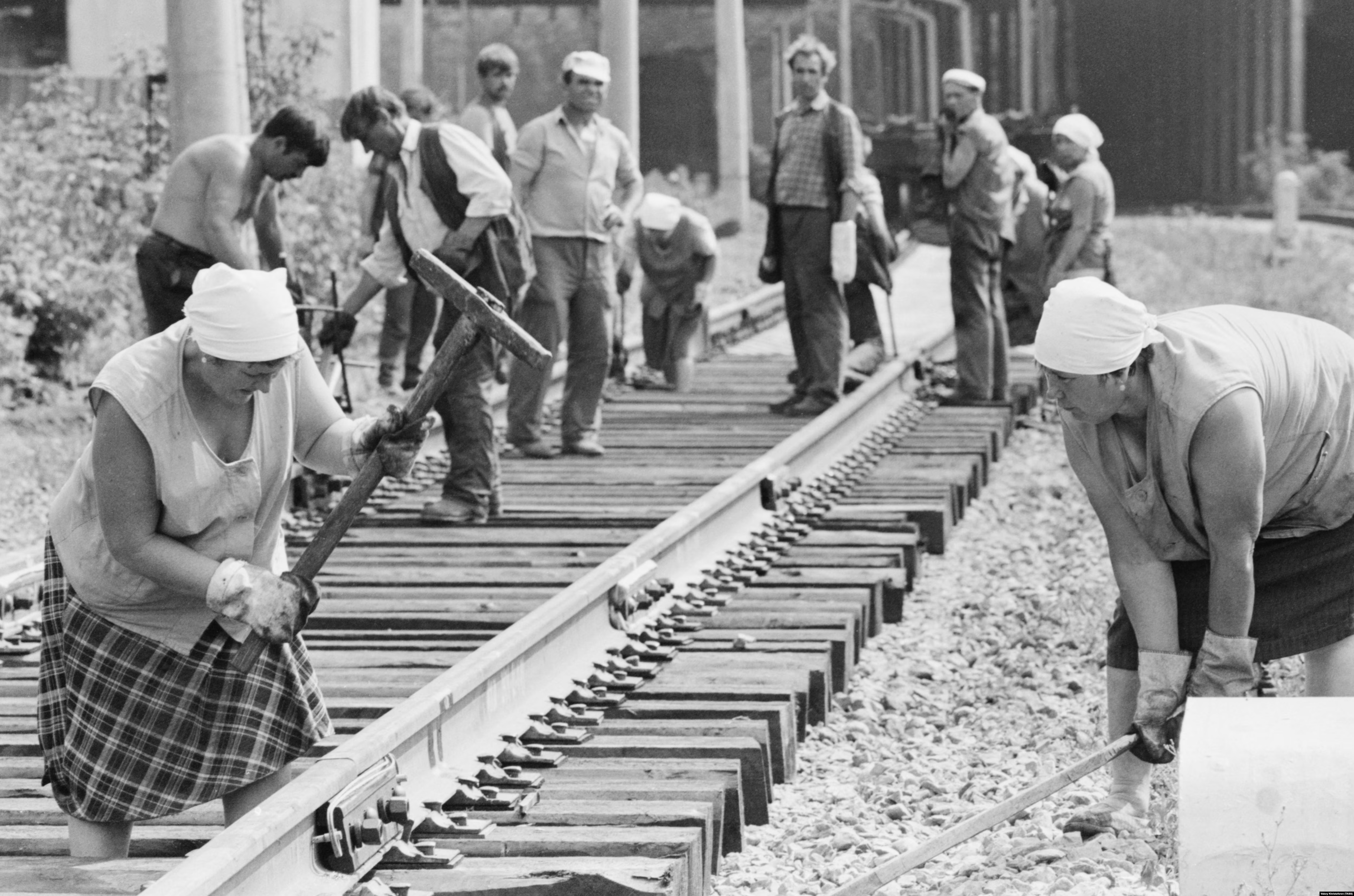
The Ministry of Labor of the Russian Federation decided to reduce the list of professions prohibited for women. The list will include 98 types of work on which female labor will be limited, while the previous version of 20 years ago included 456 professions. The updated document must enter into force since 2021. After that, women will be able, for example, to drive heavy trucks, serve on a ship, work as engineers of electric trains, car repairmen, machine operating machines.
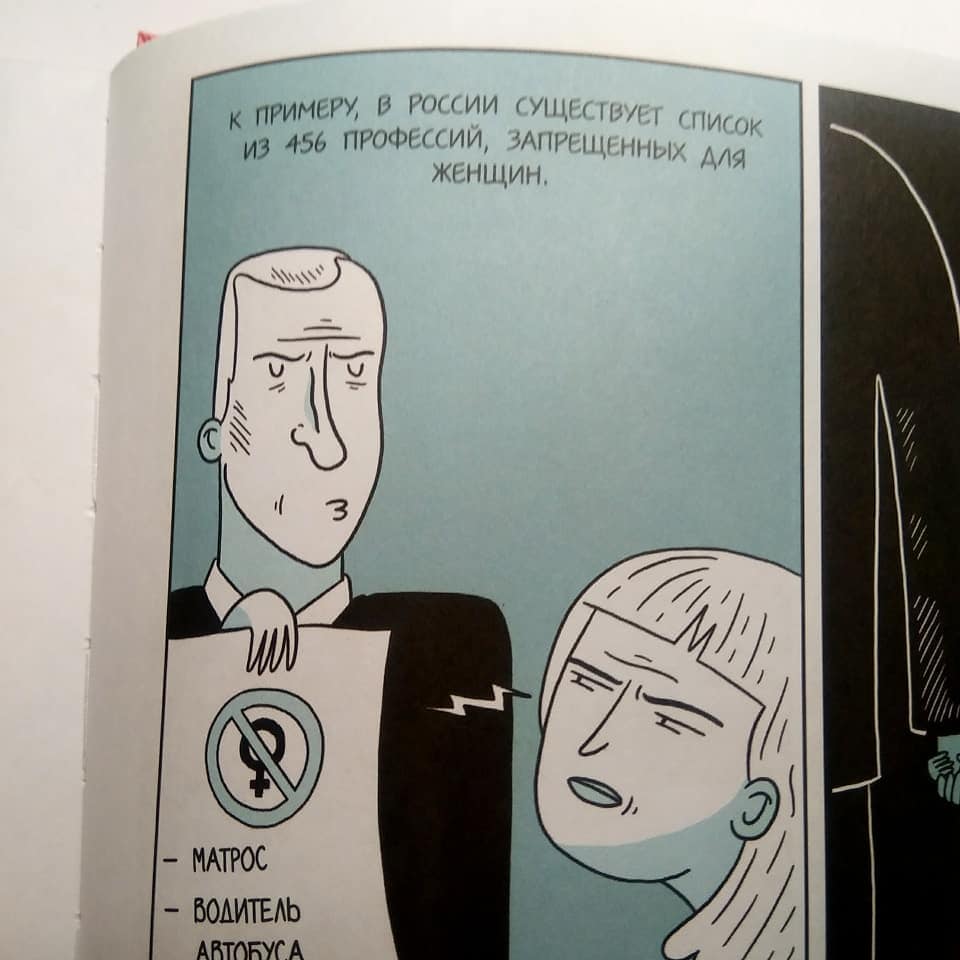
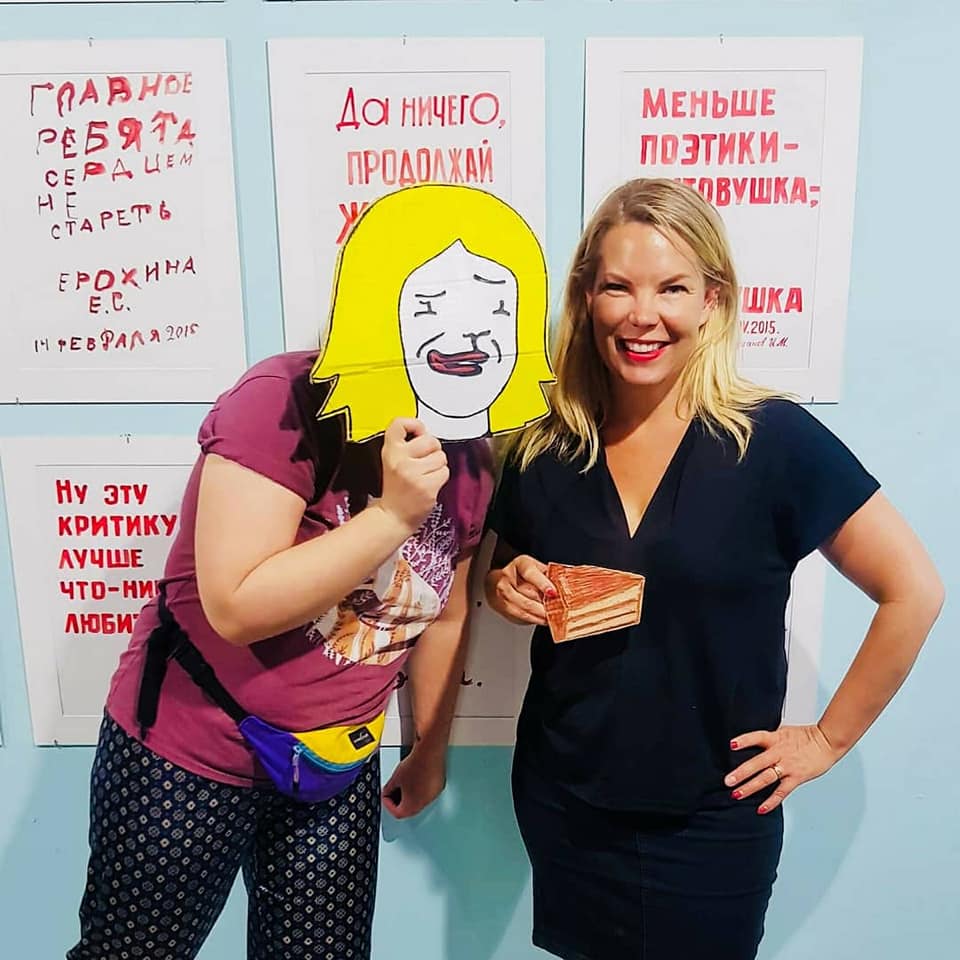
In June 2019, the Norwegian Marta Brin and Yennie Yordal visited Moscow. They presented the Russian -speaking edition of their book Kvinner I Kamp - "Women in the fight." A photo of the 117th page appeared in social networks-a strip about professions inaccessible to Russians.
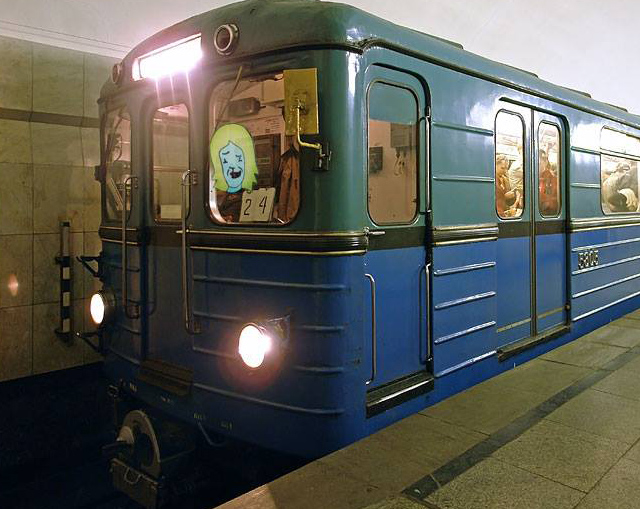
At a meeting with readers in the Gallery of Peresvetov Lane, Marta Brin said that she learned about the list of prohibited professions from the Cardboard Marta Instagram Protection (2017). The centenary of receiving the Russians of the right to vote, and a woman with a cardboard head, alter of the ego of Martha Brin, in honor of this went through Moscow, talking about radical ideas and the circumstances strange in honor of the Western activist. On March 22, 2017, she posted a photograph in which Martha’s head replaced the head of the metro train driver: “ Twenty -second Marthabrin. Yes, this is Photoshop! Because for Russian women it is possible to be a metro driver only in Photoshop. There is an official list of 450 works prohibited for women. And do not forget about unofficial lists .”
From the memorial report made for the #Alljobs4allwomen project, you can find out that in 2018 gender professional taboos operated in nine countries of the former USSR. Only recently they were canceled in the Baltic states, Georgia, Armenia, Ukraine. The number of prohibited professions depends on the availability of certain sectors of industry in the countries - and this is from 326 to 477 positions.
Women are everywhere prohibited work at an altitude of more than 10 meters
"... in the list of Moldova, there are completely lack of mining and mining industry, non -ferrous metallurgy, marine transport, almost entirely - chemical industry; oil refining, pulp industry; in the list of Russia there is no canning production ... In the list of Tajikistan - profession on river and sea transport, etc. In all countries, women are prohibited for driving a heavy car (more than 2.5 tons) on large ones) into large the distances of a long -standing bus, in which there are more than 14 places; Forestry - a collection of seeds from growing trees at an altitude of more than 4 m. In Belarus ... Women can not work "on the harvesting of fruits, medicinal raw materials from shrubs and growing trees (with a rise to a height above 1.3 m) .. "
Researchers from the Memorial indicate that the lists of prohibited professions violate the rights of more than 100,000 women. This is done by spreading the law to a whole class of society, at all women without exception, excluding age. Sometimes, for reproductive reasons, MTF people are denied work. Often, a taboo is based on a pseudo -render justification, as well as the opinion that only simple and non -self -state tasks are available to women, and the reproductive function is the most important and almost mandatory.
If a woman is born in Norway, the state recognizes the right to work with a carpenter. A Russian woman who dreams of such a profession, and even with a decent salary and social guarantees, will not achieve understanding in his homeland. In the current list of "carpenter" is indicated under No. 49. No appeals to international organizations and statements about labor gender discrimination will help.
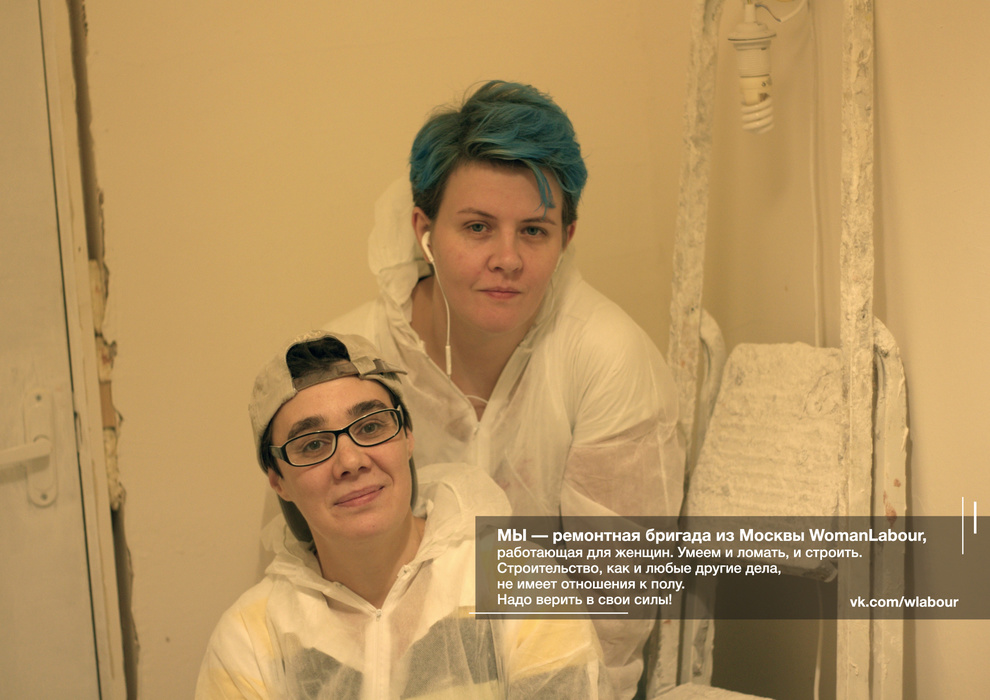
Martha Brin added information about prohibited professions in her book primarily because it was amazed at the existence of a similar concept in a country bordering Norway. In the homeland of Martha, women can be a carpenter since 1979, a train driver since 1982, firefighters since 1987. But even in developed countries, women who choose “atypical” professions are so few that they write about them in newspapers as something extraordinary. The first Norwegian woman-Strack Guri Brayen says that the men checked how hard things she can raise, how she will react if the sawing machine is glued with porn and that she will say to the offer to work in a bikini. “ The construction industry had a cowboy mentality. They boasted that they walk on the boards over deep pits, that they could work for forty minutes without gloves. I asked: is there anything to brag about and is it worth destroyed health? ” Brayen’s discrimination was suppressed by the male chief.
In one of the episodes of the author’s project, Anush Avetisyan “America. A big journey” tells how the woman builder Nicole Curtis earns, repairing abandoned houses in Detroit: “ Nobody hired me, so I decided to find a job myself. I posted an ad on the Internet:“ If you allow me to repair your house and take care of this process, I am ready to work for free . ” The hopeless situation has turned into a profitable business in different states of the country and the rescue of Detroit and Minneapolis’s houses, Nicole wants other women to know that her life is not perfect and should not cause envy.
Australian Haley Gwinnen has been working as a carpenter for more than twenty years, and she enters five percent of the Prince-leaf masters. Almost all Haley clients are women. And they like that the repair process turns into a process of struggle for rights.
It is wrong to relate to a woman, as if she is a person with disabilities
The most impressive story of modern female hires is reflected in the American documentary about the National Association Sisters in the Brotherhood ("Sisters in Brotherhood"). The heroines of the film are perfectly controlled with building materials, dangerous tools, complex machines. What do the "wrong" carpenters say? Since 2006, Sue Schulz has been working as an instructor in the training center for carpenters, Joseph J. D'aries Carpenters Training Center. Both men and women study from her, and any nationalities, although only white men were in the profession thirty -five years ago. The course lasts five years, during this time students manage to study all aspects of construction. Twenty years ago, Sue was the only woman at a construction site - among three hundred men. Nicky Sims believes that the work of a carpenter is the only thing she wants to do in life, and that it is wrong to originally treat a woman, as if she is a person with disabilities. For Shirin Kuattmani, difficult work is at the same time a large salary and independence, the ability to feel your strength, a way to change the worldview. Nancy here believes that physical activity has made it stronger and healthier: " I do not like to go to the gym, but I like to be in good shape ." Loren Tuoni , like many other heroines of the film, notes that without protecting the trade union, she would not have the opportunity to work as a carpenter. The trade union, for example, is fighting for equal (male in a similar specialty) wages for women, conducts a campaign against sexual persecution at work.
Women-seamers have no idea that they could work in the office and perform monotonous work in closed rooms-to avoid this, they are ready to cope with any difficulties. They have to spend days both in a chilling wind and on a hot asphalt. In winter, they wear three shirts, three sweaters, three pairs of pants. What to do if you die from the heat? Take a pause, drink water, return to work. But over your head there will be a blue sky, nearby - the best friends, and in your hands - a favorite hammer.
They believe that the patriarchal taboo on some types of activities is the problem of male expectations, which only men themselves can solve, getting rid of their stereotypes. Some do it perfectly:
John Maku, director of the center: " This is a good job with a good salary and bonuses, this is a good life, and I think women deserve it ." Another participant in the film recalls the long -term consequences of the possibility of free choice of profession: " A good salary means a good pension and benefits. This is an opportunity for life ."
Men turn a potential competitor into a wordless servant, reproductive slave, a pet, a stupid doll
Why do other men refuse to see in a woman only a colleague and require a secondary confirmation of professional acceptance? The depreciation of female desires to do hard work is not only in the emotional plane, has an economic foundation. To understand this thesis, we must recall the men who killed women who claimed jobs in the giving women of the Mexican Syudad-Huarez. These are the same men who paid a lesser salary to the Basque port loaders. These are the leaders of states that still do not pay dignily reproductive female labor. These are the same men who give women to women on the eighth of March and convince to maintain "femininity and weakness" because they are most afraid to be uncompetitive and lose their jobs, economic power. Surrounding with myths every moment of female professional life, men turn a potential competitor into a wordless servant, reproductive slave, a pet, a stupid doll. The consequences of patriarchal policy - economic, environmental, humanitarian crisis - we feel every day.
Women who have achieved recognition and success in the construction industry extend the hand of assistance to less resource sisters. They conduct educational lessons in schools, repair the houses of pensioners and disabled people, and help homeless women.
American Melinda Nichols has worked as a carpenter since 1972. By the time the Women4women Tiny Houses project appeared, its total experience in the profession was 45 years old, and the level was called Junior-Level Carpenter, that is, "a carpenter without a license for more than $ 500." Melinda was also the vice president of Low Income Housing Institute and knew that thousands of people wandering about Seatla without a roof over their heads. That women are in the most vulnerable position - not only on the streets, but also in shelters, they are subjected to a disproportionate risk of violence. The horizontally arranged community of the sisters in misfortune seemed to Melind Nichols the best way out of the situation.
In the USA, there are dozens of villages for stray men. Sisters-strokes decided to build a female village . Together with a physical education teacher and a lawyer of women who want to work in professions related to physical activity , Alice Locridge, Melinda created a facebook group. They invited professional volunteers, attracted investors and built a dozen “tiny houses” -Whittier Heights Village .
The project was very pleasant to the residents of Seattle - women of various professions took part in it: gardeners, plumbers, electricians, artists. As workers at the construction site, homeless people who previously worked in the industry were involved. For volunteers, a friendly atmosphere was created that contributes to training. Some men also came to the rescue. As a result, the ninth village for the homeless in Seattle and the first exclusively female village appeared. With multi -colored houses, decorated with paintings and plants.
For the first time in a long time, these women became participants in the team, they were able to smile again and joke
Over time, social services workers appeared in the Whittier Heights Village, who had the former homeless support: survivors on the street had to be socialized, gaining emotional balance, starting the fight against chemical dependencies, and returning custody of children. Unnecessary for anyone who fell on the streets in cardboard boxes, dying from hunger and cold, suffering from lack of access to hygiene and medicines, constantly at risk of being robbed, raped, killed for the first time in a long time, they became participants in the team, they were able to smile and joke again, and they took up their hands, and took them in their hands. Creative labor.
You are probably interested in what was the area and number of storeys of built houses, what was with the infrastructure and how much did you spend on the purchase of building materials? Each of the fifteen single -story houses with an area of 9 square meters. m cost $ 2500. The kitchen, bathroom and laundry are located in a separate building. In the summer of 2018, housewives settled in multi -colored houses. For security reasons, Whittier Heights Village fenced and invited the guards. Now residents may no longer be afraid to lose the few property that they possess.
Since the project turned out to be more successful than traditional shelters, Low Income Housing Institute won a grant andplans to create a new village , spending all the $ 100,000 on the construction of 20 houses and the needs of their inhabitants. Of the 500 initially planned Lihi houses, 300 have already been built.
Women make up 10% of 10.3 million construction workers in the United States
The master with forty years of experience Linda Romanovich attracted fifteen workers from Sisters in the Brotherhood to the project of a female village in Seattle . She says that women make up 10% of 10.3 million construction workers in the United States. A place at a construction site is more often obtained by brothers and sons of people who are already busy in construction.
The global Women Build initiative , also based in the United States, has since invites women who have not had construction skills since 1991, to restore or construction of houses. The team coordinates international programs, enjoys support at the highest state level. It was these activists who came up with the educational National Women Build Week, united thousands of women builders. The number of houses built is on thousands, the list of upcoming international projects is quite large.
The fact that women in developed countries have long achieved the right to choose a profession - the result of trade union work, which residents of the post -Soviet space will have to conduct decades. In December 2018, the first women's conference of the union of construction workers in Kyrgyzstan was held, where the issues of the international feminist agenda were voiced.
The Russians act against the forbidden list almost alone, although 15% of the construction industry workers are women and this is a great power. Women leaders are far far from the Western example, to unite with women workers into industry and even more intersectional unions, to demand the abolition of a shameful list of prohibited professions equal to payment men, worthy working conditions, freedom from sexual harassment. It is easier to believe that there is no discrimination.
Thanks to the Internet and the media, we know the names of those who can inspire the Russians with their example. So, in Russia there are a lot of female remarks . The most famous of them is Evgenia Markov . She says that modern equipment and conditions on trips are quite suitable for women, that Russian working conditions in the industry are much better than European. Eugene hopes that after the updated list of prohibited professions comes into force, the transport sphere will become more accessible to women. But he notes that mines, the Ministry of Emergencies, forests, the entire chemical and raw material sector remains under the ban.
Perhaps, who was dismissed after filming in the video Dakota and not the only woman in Russia in the female, Anna Spenova will continue to fight labor discrimination, and will help other women-fucked understanding the importance of the trade union association and the collective defending of rights.
My mechanic today is still on the list. But this does not prevent me from working
A resident of Samara Svetlana Medvedeva , a woman captain, who was fighting for labor rights in a European court, considers the cancellation of the list of prohibited professions vital professions: “ Many women still work on prohibited positions. My current position is still in the list. But this does not interfere with my work. Women under the Constitution have equal rights and opportunities on a par with men, but in the Russian Federation for strange circumstances, simply decrease in the Government выше Конституции. При этом РФ в КЛДЖ не представило ни одного доказательства, что моя профессия влияет на репродуктивное здоровье женщины. Также РФ не учитывает, хочет ли женщина иметь детей, может ли или вовсе прошла стерилизацию. Также данный список правительство любит выставлять как заботу о женщинах. Тогда давайте посмотрим, как социальное государство о них заботится. Какое пособие выплачивается детям и кормящим матерям. И забота правительства позорная, и список как таковой позорный. Сейчас РПСМ и КТР, да и многие другие организации принимают активное участие в пересмотре списка. Надеюсь, что в этом году его сократят ".
История женщин-плотников не такая узкоспециальная, какой кажется на первый взгляд, и может вдохновить женщин других запрещённых профессий. Посмотрев фильм "Сёстры в Братстве", Светлана Медведева написала на своей фейсбук-странице о необходимости создания женского морского профессионального союза: " К сожалению, в РФ нет такой поддержки. Да и собственно женских объединений. Когда только начиналось мое обучение, было очень обидно, что практически все парни ушли на практику на танкера, сухогрузы, толкачи и только ты одна на дизель-электроход, который по сути никуда не ходил. Затем другая большая практика на 8 месяцев, и все повторяется. Парни получают высокооплачиваемую стажировку, получают опыт работы в море, а ты опять на местном флоте, на мелких судах типа т/х "Москва", и перспектив после окончания техникума в принципе нет изначально. Я призываю всех женщин, работающих на водном транспорте, а также профсоюзы водного транспорта объединятся в профсоюзную организацию "Женское море" и добиваться равных прав во всех сферах, начиная с обучения и заканчивая выходом на пенсию".
Многие женщины даже не знают о том, что у них есть возможность зарабатывать много и быть успешными в "нетрадиционных" сферах, в том числе в строительном, морском, транспортном бизнесе. Если мы посмотрим на развитый мир, то станет очевидно: игнорирование политики гендерного равенства превращает государство в изгоя.