
Translated material
The unbearable wildness of being
What is common between an inverted catamaran in Dzhubga and an exploding fuel truck in the Urals
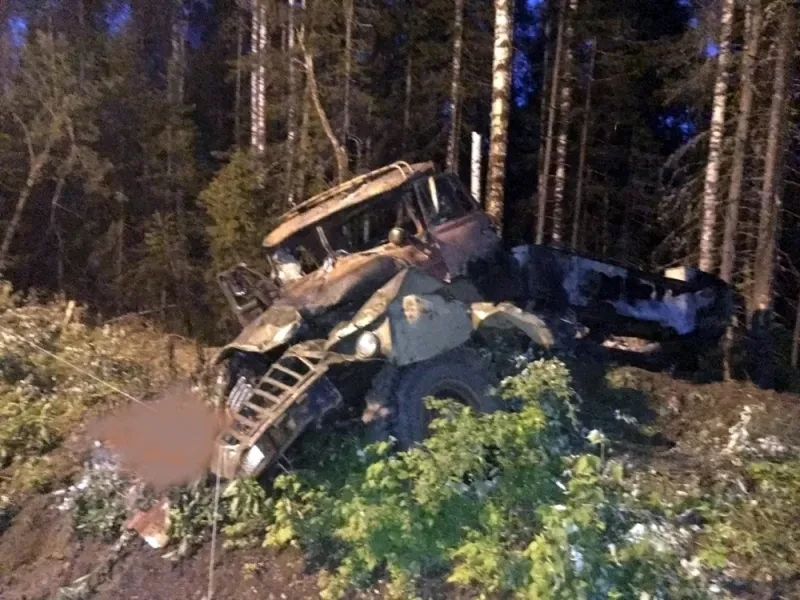
On July 5 and 6, two tragedies occurred in different parts of Russia.
First, in the Black Sea village of Dzhubga, a catamaran rolled over with 43 passengers on board 100 meters from the shore. Two died. And the next day in the north of the Sverdlovsk region on an industrial road leading from the Job plateau to the Karpinsk -Kytlym highway, the Ural gas industry exploded. Four dead, seven victims.
It would seem that in common between Dzhubga and the Job plateau? In fact, a lot.
The first question that you ask when studying the Black Sea and Ural tragedies: how did 43 be designed for a catamaran, designed for 12 people?
And in a car, in the cabin of which three or four people can hardly fit, were eleven at once?
Investigators are looking for answers now, but any Russian knows the main reason: the driver of the fuel truck, the captain of the catamaran, and their passengers hoped that they would “carry”.
In the case of a fuel truck, the calculation was on the verge of madness: eight out of eleven people rode right on the tank with gasoline.
The second common feature of tragedies is the lack of control that can prevent them. Is a crowded catamaran in Jubge an exceptional case? Tourists have been observing this for years on the Russian coast. And who released a drunken driver while driving a fuel truck? What control missed him? The prosecutor’s office, by the way, has already established that the car was technically faulty. But this is a post -fact, after the tragedy. How was the inspection conducted?
Well, the third common line: the dead and victims in both cases are tourists. But more about this.
Both Jubga and the Job plateau are not for the most wealthy people. Housing in Dzhubga, even in the season, can be rented for 1000-1500 rubles per day. Job plateau is a place for wild tourism. And there and there the infrastructure is close to zero.
According to VTsIOM, in 2018, only 6% of Russians rested abroad. The remaining 94% spent a vacation at home. We have few resorts with a developed and relatively safe infrastructure: the Imeretinsky district of Sochi and Elbrus come to mind. But these are expensive resorts, they are not available to the overwhelming majority of Russian tourists. Looking at the wallet, they make an ill -fated choice: go to Jubbu or stay at home. In this regard, the Urals have another option: you can go to the mountains.
But whatever choice a person does - he will be dangerous. Because if you are not ready to pay for Sochi or Turkey, then you are waiting for either a crowded catamaran or a completely wild plateau, where, if it happens, you can’t even call for help and you will be ready to get into a civilized space even on the roof of a fuel truck.
Wild tourism is certainly beautiful. But his wildness should be regulated. A good example is Canada.
In absolute unity with nature, you can only remain in separate sections of long routes (for example, Trans Canada Trail). But if you live under the mountain, you can be sure that she has a connection. The Job plateau is a place popular among residents of the Northern Urals, which is located only 20 kilometers from the village of Kytlym. But there is no connection on it.
Who would agree to go on the roof of a fuel truck, having the opportunity to call a taxi?
The difference between the Canadian and Russian wild rest is that in Canada you are making a choice consciously, and in Russia - you simply do not have the opportunity not to risk it.
The fact that the situation will not change until the well -being of Russians will grow especially sad, and their quality vacation will not become one of the priorities of the state. If a person is able to give good money for a boat trip - he will not allow the catamaran to capacity. If on the Job plateau it will catch a network and drive a taxi, you will not need to go on the roof of a fuel truck.
And such tourist tragedies caused by the formula “maybe it will carry” will become at least less. It remains to understand, the state needs it?