
Translated material
Symptoms of guilt
How law enforcement agencies make a criminal profession and what to do to patients when doctors protest
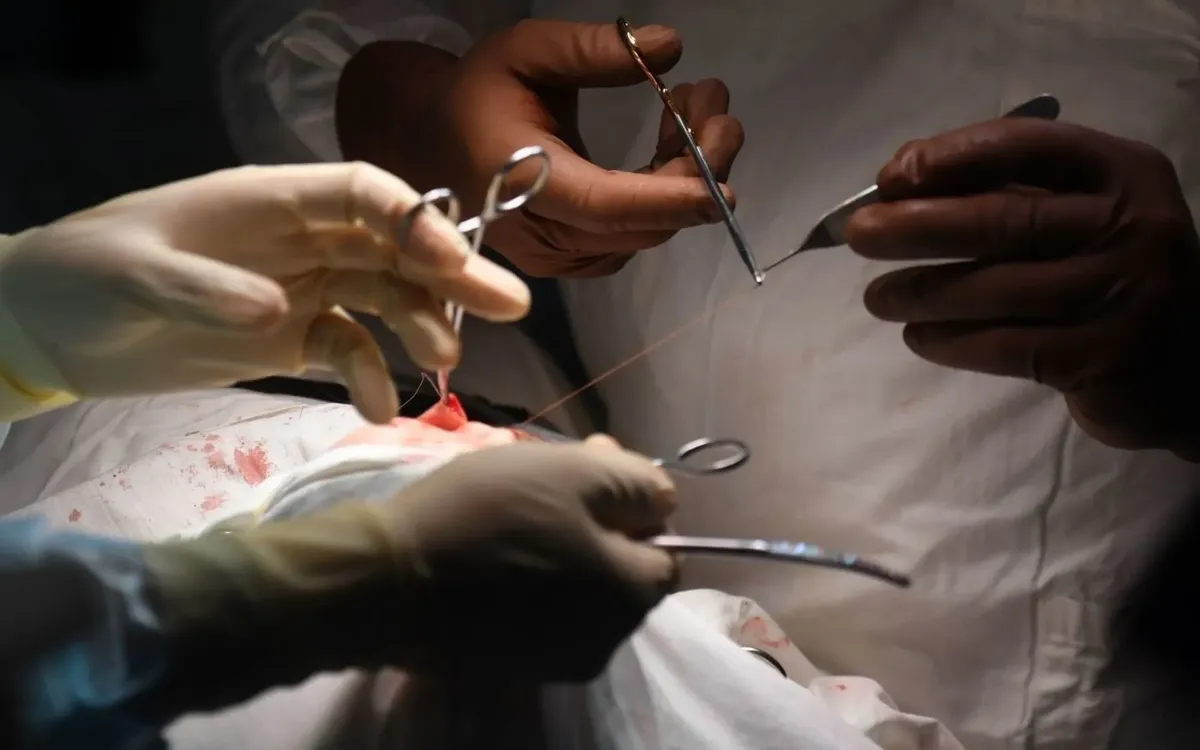
Doctors today are easy prey for the Investigative Committee of Russia. Firstly, in state medicine, which has long been not able to cope with the request of the population for high-quality treatment, it is easier to find guilty, read-criminals. Secondly, it is doctors, going to work every day, deal with human life. In the literal sense, it depends on them.
And this combination of terms makes it possible, having poked a finger in any episode of the death of the patient, to find almost without the exact actions of the supposedly real criminal. Chain: “I was sick - treated - died”, with an uncomplicated investigative interest, will give the direct culprit of this event - a doctor.
It is noteworthy that other risk factors - the severity of the disease, the age and condition of the patient, the hospital’s resource, are not taken into account. Moreover, in this logic, the “killer in a white coat” deliberately sought to ditch the sick. It is this connotation - “criminal intent”, and not “medical error” - becomes the main when it comes to unsuccessful medical action.
In fact, the efforts of the SK profession "Medic" in Russia becomes criminogenic.
In 2018, the investigating authorities of the Investigative Committee of the Russian Federation opened more than 2.2 thousand criminal cases related to medical errors. This is about 24% more than in 2017, when about 1.8 thousand criminal cases were instituted. Last summer, the head of the UK, Alexander Bastrykin, instructed to create a group in the forensic center of the department to investigate criminal cases in the field of medicine. Then it was decided that to conduct complex examinations, including on medical documents, the UK will be on its own-departments of forensic medical studies. The expediency and independence of the creation of such a unit, of course, were not taken out for a public discussion.
But the stormy reaction of society to a conviction in the case of a doctor Misyurina forced Bastrykin’s department to negotiate with the National Medical Chamber. Its President Leonid Roshal spoke out extremely clearly: "To blame the doctor for a mistake in a decision made by a great price is that it is completely killed by the profession." Several months of joint work of the National Medical Chamber and SK led to the conclusion “On the need to develop an approach to liable medical workers for improper medical care, which excludes criminal liability that allows you to satisfy the requirements of the victims based on the model of insurance of medical workers.”
This meant that for unintentional complications the doctor should not sit in prison. And this was officially stated by SK.
It would seem that the voiced presumption of innocence of the doctor in case of damage for the patient removes a medical error from under the Damoklov sword of the Criminal Code. However, the Investigative Committee did not give up positions so simply, and a new strategy was used - a medical miss to interpret as “causing intentional harm”. Just automatically present it in case of death or disability of the patient.
On several doctors, the method has already been tested. Some cases have become resonant, no one knows about some but the accused themselves. The new style of work of the SK is increasingly reminiscent of “Witch Hunting”. The next consequences, and doctors are already publicly stated-is a fear of treating serious sick: what if any of them will die after an operation that remains the only and risky chance? Then what - with things to exit? And from the profession and from the will? In fact, the protest of doctors today turns into a struggle for a profession in its high sense.
The case of hematologist Misyurina
This resonance story has a new round. Let me remind you that in January 2018, the court sentenced Elena Misyurin to two years in a general regime after the death of the patient in 2013. According to the investigation, "the doctor violated the technique of performing trepanobiopsy, due to which she caused the patient through the through damage to the blood vessels, as a result, he died a few days later."
The verdict caused a wide public outcry, and in April 2018 the Moscow City Court canceled the sentence. Due to the errors made by the investigation, the case was returned to the prosecutor's office. A year later, in April 2019, the Dorogomilovsky court decided-to conduct an exhumation of the patient’s body. The investigation believes that without this measure to establish the true cause of its death is impossible. The reasons for the defense of Misyurina, which 6 years after the burial, this measure was absurd, were not heard.
The case of a neonatologist Sushkevich
To date, the petition in defense of a neonatologist has collected more than 160 thousand signatures. It, in particular, says: “The child was born at the gestational age of 23 weeks and 3 days, which is the boundary of vitality (around the world the probability of survival of such immature babies without severe complications is no more than 5%) and lived about 5 hours. Within 5 hours, doctors, together with Elina Sushkevich, desperately tried to save the child’s life. ”
The Russian Society of Neonatologists (Ron) published on the official website an appeal in defense of an anesthetist-resuscitator emphasizing that “imposing a global idea of“ pesting doctors ”and its hysterical spread of the media is destructive for the whole society.
The next step is the mass persecution and criminal prosecution of doctors as the most legally vulnerable layer of the population of Russia. And after that does society expect to get high -quality medicine? ”
An open letter of the Russian doctors was sent to the UK demanding to stop the system injury of doctors in the country.
Hundreds of medical groups posted on social networks joint photos with the hashtag #Yaelynasushkevich.
The case of Chelyabinsk narcologists Vlasov and Tavakov
The head of the narcological clinic Andrei Vlasov and his subordinate narcologist Sergei Tavakov in early July was charged under Article 238 of the Criminal Code of the Russian Federation "The provision of services of inadequate quality, which entailed the death of the victim." The investigation lasted three years, and the patient died more than four years ago.
Doctors are accused of providing poor-quality services, which in April 2015 led to the death of a 33-year-old alcohol-dependent man. Tavakov arrived at the house of a man in a heavy binge. He examined and set a dropper. A day later, a man died of severe intoxication. None of the four examinations conducted during the investigation established the presence of a direct causal relationship between the death of the patient and the actions of doctors. The mother of the deceased demands compensation for moral damage in the amount of 15 million rubles.
The case of a psychiatrist Shishlov
Alexander Shishlov was sentenced to two years in a colony for releasing a patient suffering from schizophrenia from the department. The doctor was part of the medical board, who, having studied the story of a patient under compulsory treatment, decided to transfer him to outpatient treatment. A few weeks later, he killed the child and attacked the police. The doctor was accused of negligence that entailed the death of a person. Experts draw attention to the fact that the court is made by the court, and the responsibility lies with the doctor, who was supposed to observe the patient on outpatient treatment. Trade union activists demand to revise the court decision, as they consider the colleague innocent. The chief physician of the Saratov Regional Clinical Psychiatric Hospital named after St. Sofia, Alexander Parashchenko, is convinced that in such a situation a psychiatrist cannot be convicted.
“Unfortunately, there are such cases: we remove a person with forced treatment, and after some time he begins to behave criminally.”
It is characteristic that the enhanced criminal pressure on doctors from law enforcement officers added arguments and the most massive ambulance workers in recent decades. In May in Penza, more than 200 ambulances began an unlimited Italian strike, that is, they began to work strictly according to the standards - they stopped trials for calls as part of incomplete brigades and faulty cars. Two days later, the strike was suspended - the city authorities promised to delve into the problem. At the end of June - an even more massive protest. Andrei Konoval, the leader of the Independent Union of Major Workers, “Acts”, considers this protest unprecedented - during this time more than 800 people joined the Penza branch of the trade union. A few days ago, the new Minister of Health of the region promised doctors a phased increase in salaries.