
Translated material
Chernobyl in the Norwegian Sea
The Sovetskaya Premier League "Komsomolets" has become a source of radioactivity in the Arctic. The boat has been lying on the ground for 30 years
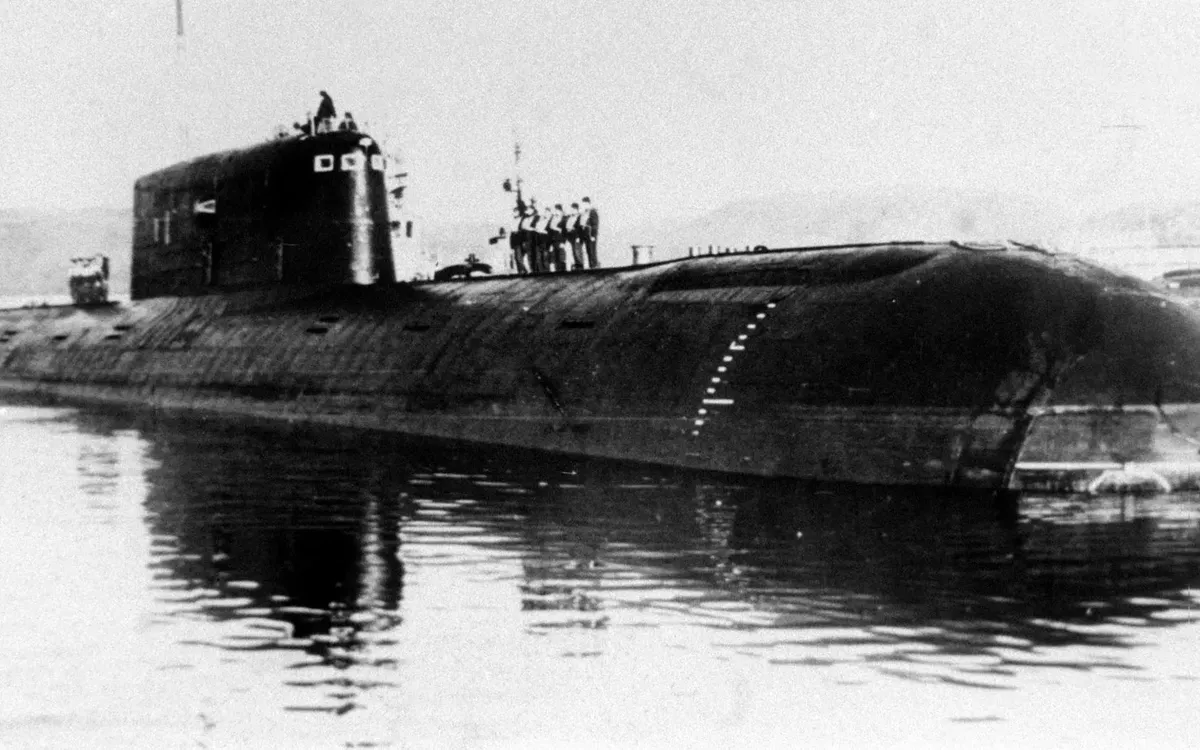
In the Norwegian sea, radioactive substances were found. Exceeding the norms of concentration is 100 thousand times. The source is the Soviet nuclear submarine "Komsomolets" (K-278), sunken south of the island of Medvezhy, between mainland Norway and the Svalbard archipelago, April 7, 1989.
Exactly 30 years, Komsomolets lay at the bottom of the Norwegian Sea, representing interest only for military historians: the causes of the fire at the best at that time of the Soviet Premier League were never made public.
“Komsomolets” was called the “goldfish” - it was inconceivably expensive project to compare with the projects of the space industry. The titanium building ensured the possibility of immersion on record depths, which, in turn, guaranteed the invisibility of the Premier League for radiors.
The history of the death of this ambitious project ominously resembles the recent death of "Horsary": the fire extinguishing system has lost the volumetric fire, the combustion products have fallen into the air supply system for hose respiratory systems. Inexpressible for the attack, elusive, powerful, completely new boat died, becoming a grave for sailors. 42 crew members were killed, 27 were saved.
10 years after the tragedy, the investigation was suspended with the wording: "It is not possible to establish the true causes of the fire and flooding before lifting the submarine." We never talk about the rise in the Premier League from a depth of one and a half thousand meters - history does not know such operations. The reactor, according to official messages, was automatically drowned out during the fire.
Since then, Komsomolets regularly examined domestic specialists - using the Mir deep -sea devices. The reports came down to the fact that the Premier League did not pose an environmental threat. True, small leaks of radioactive substances were recorded, including cesium-137. However, in a small amount.
Therefore, the tweet of the Norwegian nuclear security agency on the detection of high concentrations of radioactive substances near Komsomolz became not only a sensation, but also a reason for panic.
The report of the joint expedition of Norwegian and Russian scientists who studied the boat using a remotely controlled deep -sea apparatus, an exceeding the concentration of 100,000 times compared to the norm is indicated.
The Norwegian TV channel TV2 quotes the head of the expedition Hilde Heldal: "The level that we found here is 10 Beckerels per liter."
Russian media immediately wrote about the prohibitive radiation emanating from the boat, obviously becoming a victim of the difficulties of translation.
Norwegians are not about excess of radiation, but the concentration of radioactive substances - and this is a big difference.
“To begin with, we are not talking about radiation at all,” explains Andrei Zolotkov, director of the Bellona ANO. - Radiation is a particle flow, and we are dealing with certain substances dissolved in water. A meter from the place of taking the samples may not be at all. At a depth, in the water column, 10 Beckerels are diluted a thousand times - this is an insignificant indicator. Another question is that this is an occasion to think about the reasons. This is a bell. At the bottom lies the flooded Premier League, on which corrosion processes are underway. Meanwhile, if there is a practice of lifting boats from 100-200 meters in the world, then no one raised from one and a half thousand submarines.
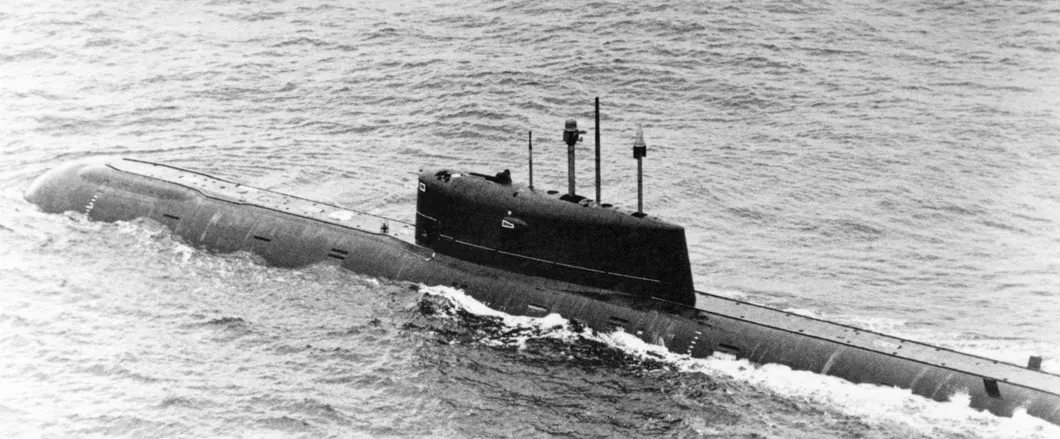
Zolotkov is an unconditional expert in the field of radioactive pollution, a professional nuclear holder who knows everything about the radioactive objects of the North-West. He recommends paying attention to what conclusions the Norwegians will unveil, summing up the final results of the expedition. The main question is what substances are found in samples? If we are dealing with isotopes of cesium and strontium, it means that phonit is really a reactor installation. And this challenge will be the most difficult for the world. It will be the first to feel the fishing industry, which makes up a significant part of the economy of the northern countries, including Russia. The idea of pure Arctic will also have to say goodbye. However, infection with radioactive isotopes of the oceans is unlikely to remain a local problem.
The Soviet boat can become the second Chernobyl, only slow - it will kill at the rate of metal corrosion.
The Russian side is clearly trying to reduce reputation losses. The media quote the military expert Alexei Leonkov, who accused the Norwegians of the fact that they allegedly violated the tightness of the durable body of the boat, "plays the role of the sarcophagus, as in Chernobyl," as well. " Here it is worth recalling that there was no nuclear explosion on the boat, which means there is no sarcophagus, this is, firstly, and secondly, the strong corps of Komsomolsa lost tightness during the fire-because, in fact, the submarine, which the crew managed to raise to the surface, ultimately sank. Well, thirdly, the Norwegians, of course, did not penetrate anywhere and did not drill any holes in the body of the boat.
However, perhaps Alarmist sentiments are not at all by the time. The reactor can be quite sealed, other submarines can be a source of isotopes in theory.
“Other equipment on a boat that has the so -called induced radiation can corrode,” says Andrei Zolotkov. - As a result, radioactive isotopes are formed.
The expert recommends not to panic, but to wait for the examination conclusions. But, regardless of details, the published information is already unambiguously indicated about the new task of jokes - to solve the problem of Komsomolsa. The construction of a sarcophagus at a depth of one and a half thousand meters is a fantastic goal, an operation to rise is no less complicated and also a risky idea. And something suggests that it will not be Russia, but Scandinavia, to save the world from the drowned Soviet boat, inventing unique projects and allocating funding.