Translated material
As I saw the dark side of Japan
Why is it not customary to wear shorts in Japan, which means the “four fingers” sign and to whom it is shown, why an ordinary person becomes a recluse, how the ninja is discharged by industrial secrets - about these and other traditions, into which it is not customary to devote foreigners, the orientalist and Japanist Sayan Chimidov, who lived in the country for several years, told Samizdat.
Once, before my next trip to Japan, my father asked me to get to the temple of Usa Hatimanga and pray there to the god of war. I was very surprised: my father was never particularly fond of Japan, and I was there only once, back in Soviet times. In addition, our family was quite far from religion - why would it be suddenly? Then my father said that my great-grandfather made a promise to the Plenny Japanese, with whom he was sitting in a camp in the Far East, to go to Japan and pray for him in the Assele of Hatiman. My great-grandfather was convicted under the 58th article . He could probably have perished in logging, where he was originally distributed, but by a happy coincidence he was in the accounting department and eventually began to manage the entire financial part of the camp. By the genus of activity, he often contacted former Japanese officers who were responsible for observing order and the work of Japanese prisoners of war.
As a reward, the Japanese promised the great -grandfather of one of the relics in the treasury of the temple belonging to his family. The great -grandfather did not work out. Like grandfather. The Father's route through Usa-Hatimanga also did not pass. Therefore, we can say that not only education and work, but also karmic duty, associate me with Japan. If you believe in karma, of course.
The white monkey will not understand
Studying at the university, I came to Japan every year for two to three months. Gradually burning there, began to notice some things that seemed strange to me. For example, why do the Japanese do not go in shorts? More precisely, they go, but only very few. Summer, heat, the sun is mercilessly shooting, you roll up the legs, wipe your legs with wet napkins, but still you walk in trousers the whole season.
When I raised this topic, the Japanese answered monosyllabic: “I just don't like it” or “I don’t know.” Maybe wearing shorts indecent, as in Chechnya and Muslim countries? But here there is a Japanese in leather panties and boots knee -deep along the street, and this is absolutely normal, but they don’t go in shorts. Well, it’s strange? By “absolutely normal” I understand that the Japanese are not customary to intervene in the personal life of another person. As you express yourself, this is your personal business, as long as you do not violate the rules of behavior. Once I noticed that next to me there was a girl in pink jeans, who had only the front part, and shook her head, and my grandparents, standing nearby, made me a remark: they say, I violate decency.
Since I am drilling and my appearance is Asian, I was often mistaken for my own. Therefore, the requirements for my behavior, table etiquette and other public conventions were higher than to my classmates with a European appearance. They could make a remark and even scold me on the street, if I behaved somehow wrong, because at first glance it was not clear that I was a foreigner.
In this text , we tell how the social and corporate system of the country of the rising sun pushes its own citizens to suicide.
Once because of this, I got into history: I was carefully beaten by Yakuza. Even the nose was broken with a golf club. Yakuza foreigners are not touched, but because of my appearance and lack of accent, they took me for a very daring Japanese. I walked in my beloved Tokyo district of Kabuki-Te. I always liked this place: along the shops, where drugs are sold, prostitutes walk calmly, dogs are walking without leashes, there is always fun and noisy there, the police do not go there by agreement with Yakuza. In other words, such an island of mud in sterile Tokyo.
On a narrow street behind me there was a car beep. I was drunk, so I did not immediately remember that ordinary Japanese would never signal. I did not appreciate the tinted Black Mercedes, on which Yakuza usually ride, who do not respect the Japanese auto industry. He did not take into account a shabby Japanese in a black suit who got out to figure out why I did not go aside when they signal me, and even yokes for him. I already appreciated two Japanese with clubs crawling out of the car, but it was too late. I think that then I easily escaped: everything could end much sadder.
Foreigners in Japan are called Gaikokudzin (literally “man from another country”), however, among the majority of the indigenous population, another term - Gijin , that is, “man from the outside” or “not our man”, is spreading. It is difficult to live and work, while maintaining calmness and a calm look when the client, hearing your name, asks: "Are you not a Japanese?" - And, having received a negative answer, it hits the phone.
Despite the fact that the Japanese, constrained by the framework of several levels of politeness, will never call you in the face of a Haijin, for them you will forever remain a stranger. This is the main difficulty in the life of a foreigner: he will never become a Japanese. Some accept the rules of the game and even use the connivant attitude towards Hijing in their favor. Foreigners are forgiven for mistakes for which an ordinary Japanese can be punished: for example, you can not pay for travel when you mixed up the stations, walk along the street in a T -shirt, ride a bicycle together, speak loudly and so on. However, for others, a feeling of constant alienation becomes unbearable flour.
On the other hand, even though the Haijes are discriminated, they are treated, rather as unreasonable children, unable to understand the whole depth of Japanese culture and traditions. If the visiting man does something wrong, they will not make comments. All the same, the white monkeys simply will not understand this, or did not fit Hairy barbarians know about this. They will snort, spit, mutter something under their breath or complain about their stupidity to an imaginary interlocutor. The maximum will call the guard or the police. A foreigner will never beat or rob. If a person looks like a stranger, of course.
Usually the Japanese do not allow themselves to be close not like foreigners, but even their compatriots. On taboo topics, no one will talk to you either. I do not know how I managed to get this information from my Japanese friends. I did not make any special efforts for this, the knowledge of the Japanese mentality, too, it seems to me, did not help. Maybe over time, after several years, they just began to trust me more. Or maybe such a person and people want to be sincere with me. Or they just have no other choice.
White monkeys - Japanese calling
History One: Ridd Riddle
This story was told to me by my friend Suzuki Isao. He was an unusual Japanese: he did not listen to Jay-Pop and Jay Rock, he did not fundamentally drive Japanese-made cars and could answer “No, I don’t want to go somewhere.” So that you understand, the Japanese never answer “no, I do not want” to go somewhere to go somewhere. They say: “Well, we’ll see”, “uh, well, let's see” or “well, I don’t know”, sometimes close to us: “I have plans, but we will see”-in other words, they politely refuse. Isao has not fundamentally worked as a Sarahmane , a typical office employee, and did not show off his personality, as the Japanese love to do.
And the most interesting - Isao calmly walked in shorts.
- Why, of all our friends, only you go in shorts? I asked him somehow.
We knew each other for four years now, traveled all over Japan, spent a lot of time together, once even fought with homeless people under the bridge somewhere on the outskirts of Osaka.
Then he thought for a long time. Usually, on an uncomfortable question, he did not think, just joked or answered immediately.
“You know, I think it's even good.” I can afford it: I do not like heat and stuffiness.
I did not understand anything of what he wanted to say, but he said clearly seriously, so I decided to put pressure on.
- Come on, I don’t need this Japanese garbage.
He thought a little more and said:
- In the past, unclean could not wear pants below the knee. Therefore, now shorts for many are a symbol of what you are Buraka.
We were told about Burakumins in pairs on the history of Japan. A peculiar caste of untouchables, people engaged in labor, incompatible with the ritual Japanese concept of purity. Workers of Scotoboin and funeral services, tanners, garbage cleaners were considered unclean.
- Well, you know, these are the Japanese who marry foreigners, most often Buraku. Just pure Japanese women will not marry them. The family will not allow, and children may have problems. Nobody wants it.
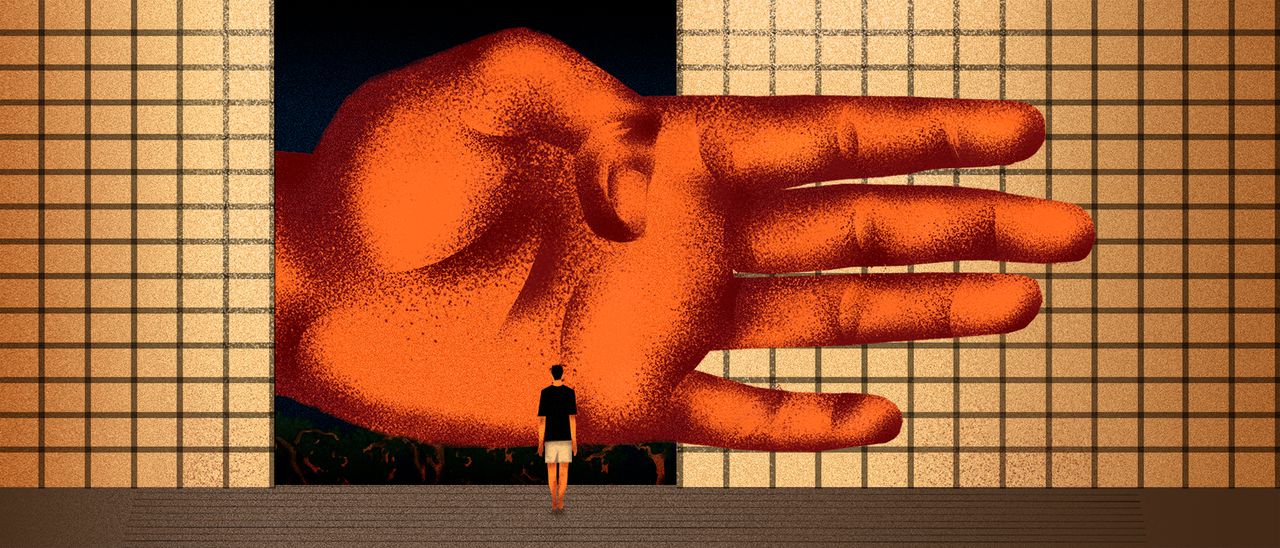
Then I learned about the lists of Burak, which is provided at the request of the largest universities and companies at the request - it is still difficult for descendants to be untouchable to get into a prestigious educational institution or get a job in a large company. About private detectives who find out whether you are Burakumin or not, and about an offensive gesture with four protruded fingers - he is shown to a person as a sign that he is an animal and walks on four legs, and Burakumin is such an animal. About humiliating leaflets: if Buraka settles in the house where pure Japanese live, sheets with calls appear on the building and on the closest pillars with rhetorical questions: “Is it a person Burakumin?”
- As a child, I was not particularly humiliated, because I lived in the area where unclean ones historically settled. But then, when I entered the university, I had to hard. That's why I went to study in Russia: even if they do not like Asians there, but living is easier than in the environment, where they treat you in this way. With me, the Japanese may not observe their rules, they can pay for me, although I myself invited myself. They do not humiliate openly, they simply do not consider me equal.
The Japanese can humiliate very subtly. There is such a concept to Icevar -something like a bullying, except without physical violence. Over a colleague in the office, they are mocking, loading it with an impossible amount of work, or give completely stupid and humiliating tasks. Offective words are written at the desk in disgrace: “Freak”, “Fat”, “Dylda” and the like. A student who is obliged to follow the purity of his desks, erases these inscriptions every day. There are more inscriptions. Then they appear on the board, in a cabinet for replaceable shoes, in a home mailbox. The case is not limited to inscriptions in one: they can, as it were, accidentally shed a glass of water into a replaceable form. An accident repeated from day to day turns into a systematic, leisurely and cold -blooded psychological destruction.
There are things worse when a student can ignore the whole class for months. As if it does not exist. Every day, the victim discovers flowers or a bowl of rice on his desk with sticks stuck in it - this is how the offers are made dead. For the Japanese, extremely social people, this attitude is death. There is nothing worse than being expelled from society. Adult sacrifices to Isivaru often end the life of suicide. Children are usually transferred to another school.
I think Suzuki suffered very much, as he wanted to be the same as everyone, but he was not allowed. And he had no other option left but to be different. In a civilized country with the highest standard of living, with smart toilets and seismic -resistant skyscrapers, in a country where everything is done for people. Not for all people.
History Second: go to the recluses
My friend Sakai Ko was also not quite an ordinary Japanese. He was impudent and arrogant. The Japanese are instilled in respect for senior and officials, and he did not respected anyone. Once he came to our campus, and the concierge made him a remark that he was behaving too loudly. The concept of Maivak - one cannot cause inconvenience to others - very firmly strengthened in the minds of the Japanese. But Sakai answered the remark very rudely. It was a shock for us, the Japanese usually do not behave like that. You can not be rude to senior and officials, and the concierge is a official person. No, do not understand wrong, he did not call names, did not rude directly, but he talked as you could not talk.
- Yes, I understood, I understood, well, loudly, yes, I understood. Are there any more comments?
- You have not signed up for a visit to the journal.
- Yes, sorry, please, now I will correct.
He left the building and returned a few minutes later with a package from the “combi” (a special type of small round -the -clock supermarkets in Japan). From there I took out a set of markers for a white board and huge hieroglyphs wrote his name to the entire page of the magazine, thereby crossing out all other records.
“The surname, dude, is important,” Sakai reasoned, painting the page. - Tanaka, Yamada - what is this name? Such names, and also Sato, were allowed to take the descendants of Korean immigrants. Here Minamoto is good, this is the present. Everyone loves Yoshitsune, but I think that a real hero is Yoritomo . Surname - this is important, and people with surnames like Tanaka should be embarrassed.
He always talked a lot and loved to boast.
- Here, look, I am destroying my rivals at the cando tournament.
Combines are a special type of small round -the -clock supermarkets in Japan.
Tanaka and Yamada are one of the most common Japanese surnames.
Minamoto is the surname of the first dynasty of the shogunov. Minamoto Yoritomo and Yoshitsune are two brothers who became rivals in the struggle for the place of the first shogun.
Kando is Japanese fencing.
Sakai entered the most prestigious University of Japan and was absolutely sure that he was waiting for a wonderful future. According to his stories, he was a descendant of an ancient samurai family. His goal was a political career. He admired Tomomi Inad , who defended two Japanese officers in court, who somehow decided to arrange a competition, who will quickly cut down a hundred prisoners of Chinese. Later, Tomomi Inada became the Minister of Defense of Japan.
- The Chinese and Koreans make us apologize for the war. I do not understand why we must apologize all the time - we are warriors. I am for Japan to have an army. I am for us to calmly pray in Yasukuni.
I must say that many do not really understand why Japanese politicians visit the Yasukuni sanctuary , where they worship the souls of the soldiers who gave their lives for the emperor and Japan. The leadership of China and Korea systematically expresses protests and demands to remove the names of Class A criminals, sentenced to execution in the Tokyo process . I consider this a complete unwillingness to understand the Japanese culture and the principles of Shinto. If you exclude political games, of course. Yes, and how to remove a few names from the scroll in which there are thousands of them.
That year I lingered in the hostel a couple of days longer than my classmates, as I decided to go to the port by car, and not by bus and train. Sakai came in the evening. He was upset.
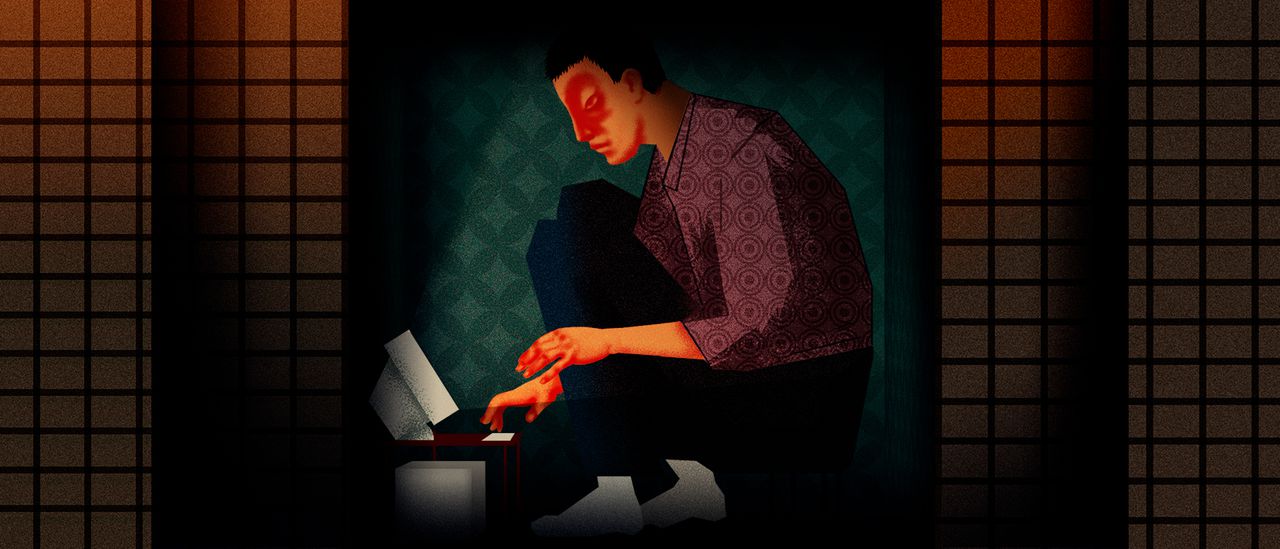
- I was the last in the list of performance. This is a shame. I try, study, do everything possible. You see, my last name is on the last line. I tried to calm him down, but he firmly decided that he was disgraced. Nobody is doing Sappuka now, but some disgraced descendants of the samurai choose a different method of suicide - social suicide. They become Hikikomori , recluses interrupting all contacts with the outside world. So did Sakai. He could not stand stress and locked himself in his room. Seven years have passed, but he was sitting there. Trying to earn money on the Internet, but still most of the costs were taken by parents.
Today, Hikikomori is one of the most acute problems of Japanese society. Young people who have not found the goal in life go into their themselves, stop all contacts with the outside world and live in full parental support. They do not work, do not do household chores, but only bite, as they say in Japan, the analogue of the Russian proverb “sit on the neck”). The situation accepts the grotesque turn: unable to conduct any social activity, Hikikomori cannot even declare the death of their guardians or sometimes do not notice this, continuing to live in an apartment with corpses , as happened in 2018 in Yokogama.
History Third: Ninja Victim
My other friend, Sato Ken, was the most ordinary Japanese. I listened to the same music as everyone, dressed like everyone else. I did everything like everyone else. His room could decorate the article “The most ordinary room of the most ordinary Japanese”, like himself. When we asked him about where he would dream of working, he replied that he wanted to be a simple Sarahmane. He was very popular among girls and always introduced us to them. We often made fun of that the girls were like a template. Everyone dressed the same way, looked the same, which, in principle, was characteristic of Japan, but sometimes their same seemed directly fantastic. We did not distinguish them elementary.
The Japanese are generally prone to buy fashionable things. If some bag has become popular, then everyone will buy it. At the end of the zero, the guys had a rectangular bags-shaped bags that wore over their shoulder, and Sato also wore such a bag.
Despite his success with girls, Sato went to prostitutes. In Japan there are special places where you can sit at a table in the company of girls: host clubs or host-bars. The girls working there are called hostes. They entertain you, drink with you, you choose which one you like more, and you can pay for her services to spend time alone with her: walk, have dinner in good places and so on. Секс только по взаимному согласию, которое обычно подкрепляется очень дорогим подарком типа сумки известного бренда или даже машины.
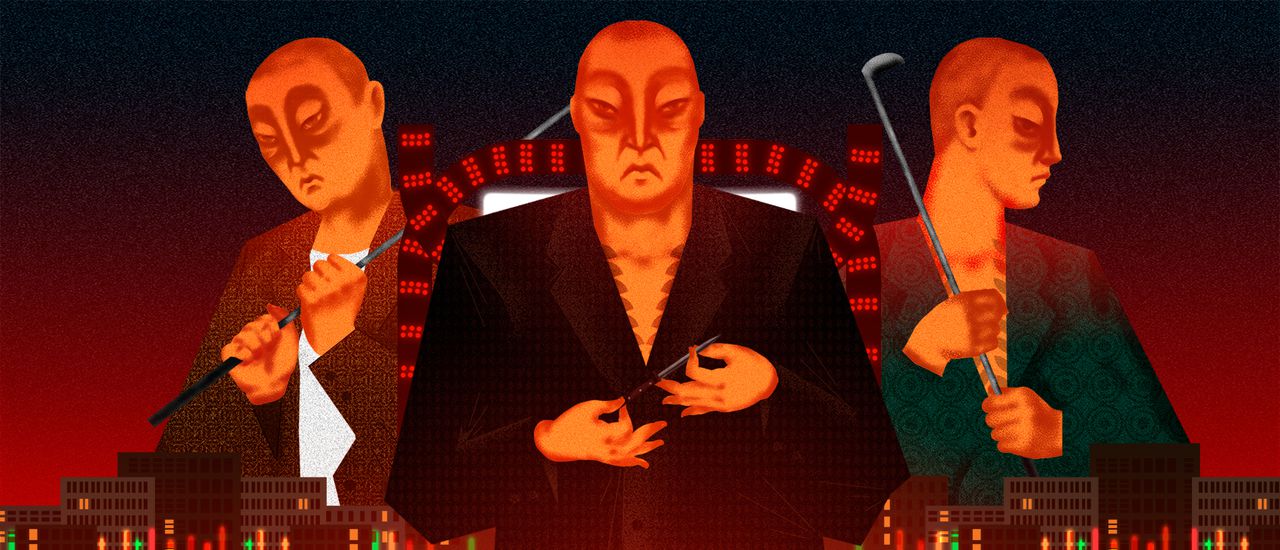
А есть такие же места, только с проститутками. Вот туда Сато и ходил. Обычно это тёмные бары с огромными диванами и маленьким столиком с выпивкой. К тебе по очереди подходят проститутки, но не ведут с тобой беседы, не пытаются тебе понравиться, а лишь стараются выжать из тебя как можно больше денег на выпивку, пока ты не выбрал одну из них, чтобы уединиться в отеле неподалёку. Он говорил, что такое времяпрепровождение нормально и вполне его устраивает. В чём я нисколько не сомневался.
Сато не скрывал, что он обычный и хочет быть обычным. И жизнь у него такая же — обычная, скучная японская жизнь. И он любил эту жизнь.
Однажды он познакомил нас со своей новой девушкой. Одета она была по тогдашней моде: джинсовые шорты, жёлтая блузка с цветочным узором и плетёная шляпка. Вела себя как обычная японка, абсолютно так же, как все, смеялась и так же разговаривала, однако что-то в ней было не так. Позже я понял: у неё был непривычно живой и цепкий взгляд. Это было очень странно, казалось, что никто вокруг не замечает этого кричащего отличия её ото всех остальных.
В чём было дело, мы поняли позже.
Однажды Сато позвонил и попросил у меня денег в долг. С таким поведением японца я, в принципе, столкнулся впервые. Как сарариман, он зарабатывал довольно много, тем более что и работал в одной из крупнейших фирм в Японии.
Оказалось, что его уволили. Девушка уломала его сфотографировать чертежи нового ковша для экскаваторов, который разрабатывала фирма моего друга. Чтобы вы понимали, компания ТОТО , к примеру, 15 лет училась обжигать унитазы, прежде чем начать их продавать. Форма ковша для экскаваторов может разрабатываться десятилетиями, пока не достигнет совершенства формы и функциональности. Конечно же, эти чертежи были коммерческой тайной.
— Слушай, неужели ты никогда не замечал её взгляд? I asked him. — Неужели он не показался тебе странным?
Не показался. Может, потому, что японцы избегают смотреть друг другу в глаза.
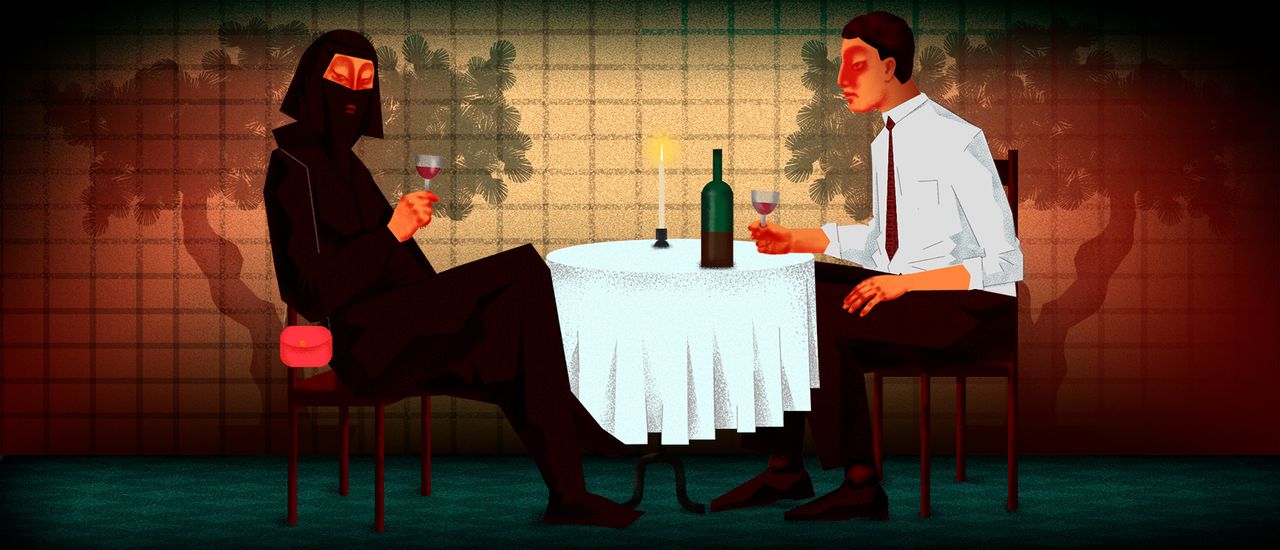
Тогда он и рассказал мне про ниндзя.
Прежде всего они были шпионами, разведчиками. Термин «ниндзя» — собирательный, у них существовало много специализаций, под каждое конкретное задание своя. В кланах ниндзя готовили прежде всего разведчиков и диверсантов для «спящих ячеек», как это называется в мире шпионажа. В детстве эти люди проходили подготовку и затем устраивались в дома богатых и влиятельных людей по всей Японии в качестве уборщиков, садовников, рабочих и так далее. Затем однажды приходил заказ от клана, и «спящая ячейка» выполняла свою работу. Данные собирались непрерывно, но заказ мог подразумевать как сбор конкретной, порой особо секретной информации, так и убийство. Оружие ниндзя поэтому и маскировалось под рабочие или сельскохозяйственные инструменты: нунчаки — орудие для отбивания мешков с рисом, кусари-гама — серп на цепочке, сай — приспособление для разрыхления земли, а сюрикен (не та растиражированная Голливудом метательная звёздочка, а бо-сюрикен — продолговатый клинок круглой огранки) — приспособленный для убийства гвоздь или клин, иногда ножницы. Ведь простолюдинам нельзя было иметь оружие. Но всё же основное оружие ниндзя — это яды и умение выжидать.
Физическая подготовка и навыки выживания в дикой природе нужны были ниндзя для того, чтобы уходить от погони и скрываться после выполненного задания. Если же ниндзя не получал задания, то мог всю жизнь провести в доме своей потенциальной жертвы. Кроме тех случаев, когда поступал другой приказ. Порой ниндзя шпионили в стане врага, докладывая о расстановке и численности войск, а также об уловках, которые собирался использовать противник, ведь география Японии с её реками, холмами, лесами и горами отлично для этого подходила. Некоторые ниндзя шпионили в Китае, пересылая информацию в Японию.
Кланы ниндзя выполняли роль военной разведки.
— Я влюбился и даже не думал, что всё, что ей от меня нужно, — это чертежи. Она говорила, что у меня самая интересная в мире работа и что я делаю великое дело, что хочет быть частью моего мира и моей жизни. Просила прислать ей фотографию с моей работы, показать какие-нибудь чертежи. Этим сейчас, как я понял, и занимаются синоби . Industrial espionage. Говорят, что потомки синоби живут в Китае, работают на китайских производствах, даже в китайском правительстве. Смогли сохранить своё искусство.
Я слушал его и пытался успокоить. Но как успокоить человека, мир которого рухнул? Сейчас он работает машинистом электропоезда.
Синоби — одно из названий ниндзя.
Думаю, преемственность поколений в Японии, стране, переварившей все внешние влияния и западный уклад жизни так, что традиции от этого только выиграли, сохранилась. Но именно эта преемственность и породила обратную сторону, которую не принято показывать туристам, далёкую от цветения сакуры и чайной церемонии. Дискриминация одних групп населения и привилегированность других — часть культуры, формирующей страну, это нельзя игнорировать или отрицать. Для японцев подобные традиции — такая же данность, как и традиция бусидо. Потому они и не зациклены на своём прошлом: для них это и не прошлое вовсе.
Что же до моего обещания отцу, то в храм я съездил и помолился, а вот реликвию не забрал. Мне очень сложно представить, как бы я это сделал. Однако мне приятно осознавать, что в одном из главных храмов Японии, в сокровищнице, где многие артефакты служат культурным достоянием страны, есть что-то моё. Пусть и всего лишь кармически.