
Translated material
Crippled at the dream factory
The Chekhov festival with the tour came to Giselle - the ballet of Akram Khan
The performance of the famous British dancer and choreographer is on the new stage of the Bolshoi Theater on July 11-14. This is far from his first tour: at the Chekhov festival of 2017, Moscow saw “while the Lions are silent” - one of the main productions of Akram Khan. I also saw Dervish’s dance under the sacred tree, Silvi Gill Gill in the choreography of Akram Khan - part of the farewell world tour of the great ballerina in 2015.
In the "Giselle" of the English national ballet and Akram Khan, the title party is dancing Alina Kozhokar - one of the leading ballerinas of the early 21st century.
But the point is not the splendor of the names and biographies of the choreographer and soloists. This cruel phantasmagoria of the London factory outskirts is not a familiar romantic ballet born in 1841.
Not the "Giselle" in which Nizhinsky took off over the imperial scene under the gaze of the Dowager Empress Maria Fedorovna.
The music of Vincenzo Lamanyi (he was the author of the score “while the Lions are silent”) - created based on the ballet of Adolf Adan. A dirty and rough factory wall - the back of Giselle: a suburban train thunders behind it, machines clang menacingly. The wall is dotted with prints of girlish palms - traces of those who tried to move it.
But this is impossible: here the viewer did not lie the classic “Giselle”, a romantic fairy tale of 1841. Between the sewing factory in an industrial outskirts where migrants work (and Giselle - one of them) and a millennial brilliance of a large London - a wall. In three human heights, about three about three generations.
The resourceful Hilarion is busy and jealous - the factory bridegroom Giselle in the Asian Kosovrot and the noise of a truly British pot of pot. The wall is slowly and terribly rises, the concrete plate of the “social ceiling” hangs over the almost ethereal tribe of the “factory”.
The procession includes - the owners of these places, their friends, the bride of their son Batilda - in the vast white Crinoline, parodying the most crazy court outfits of the 18th century. Those, defiantly wide, unusable to nothing but slow walking among admiring views, two -meter “skirts in the hoops” of Maria Antoinette. (Their era, as you know, was followed by many unexpected shocks. And even the outfits became much more democratic).
The magnificent and static figure of Batilda is similar to the white chess queen, to the evil Krok to Alice Carollah. Yes, and all this procession of the nobility (as aliens from another world and another London are called in the libretto) - a thin collage of visual images of old Europe and old Britain: with black -golden cloaks of the times of Henry VIII and beaded scales of ballroom dresses of 1910, with red velvet frock fruits, so similar to hunting tails.
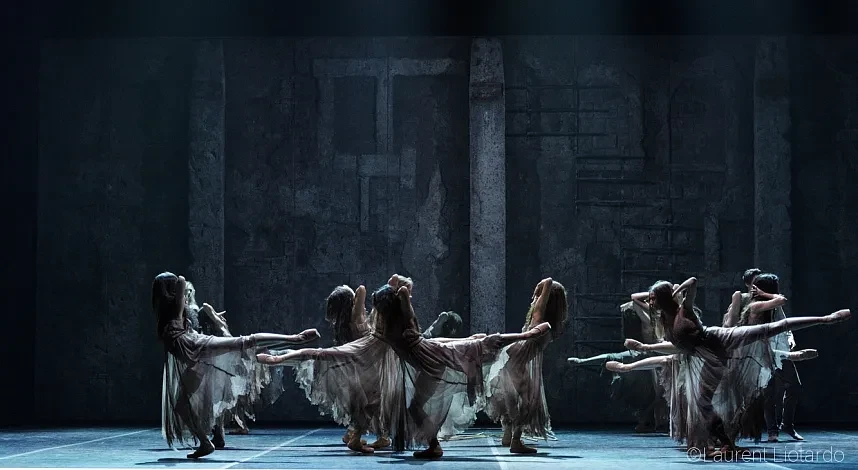
For them, in the inflamed light of the lanterns of the city outskirts, the “factory” dance - and the motives of the traditional Indian dance Kathak are woven into the choreography of Akram Khan. According to their sign, guards in red frock coats with the dexterity of hunters who are ready to finish the driven animal, - Giselle dragged from her lover Albrecht, the prince of the “old world”, who loved the seam from the immigrant suburbs.
An eternal fairy tale about Cinderella in a big city, eternal hope to overcome the wall of social, religious, educational (et al., Etc., etc.) Contradictions in the take -off of love - collapses for a thousandth time. A small, flexible, dressed in a white dress, saturated with a factory soot, - Giselle beats in the hands of the guards. Desperately, like the same driven animal. He also beats in the crowd of “his own”: the troupe of Akram Khan is weaving a huge “human network” to hold the distraught.
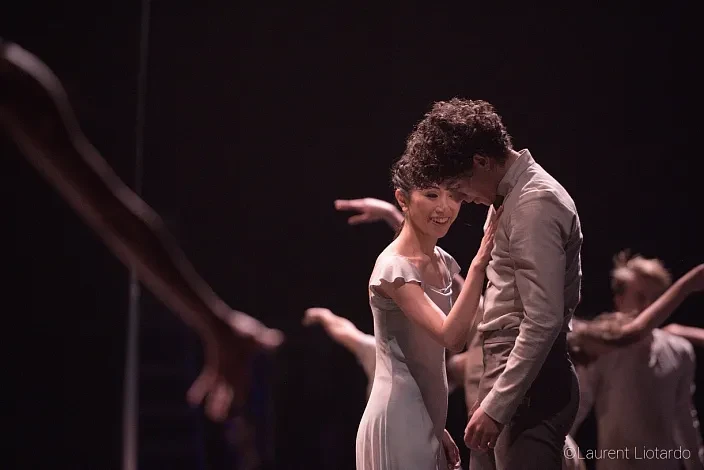
But everything, a well -known business, ends with agony on peace and death. And again the wall rises to release Albrecht and "know" into their world.
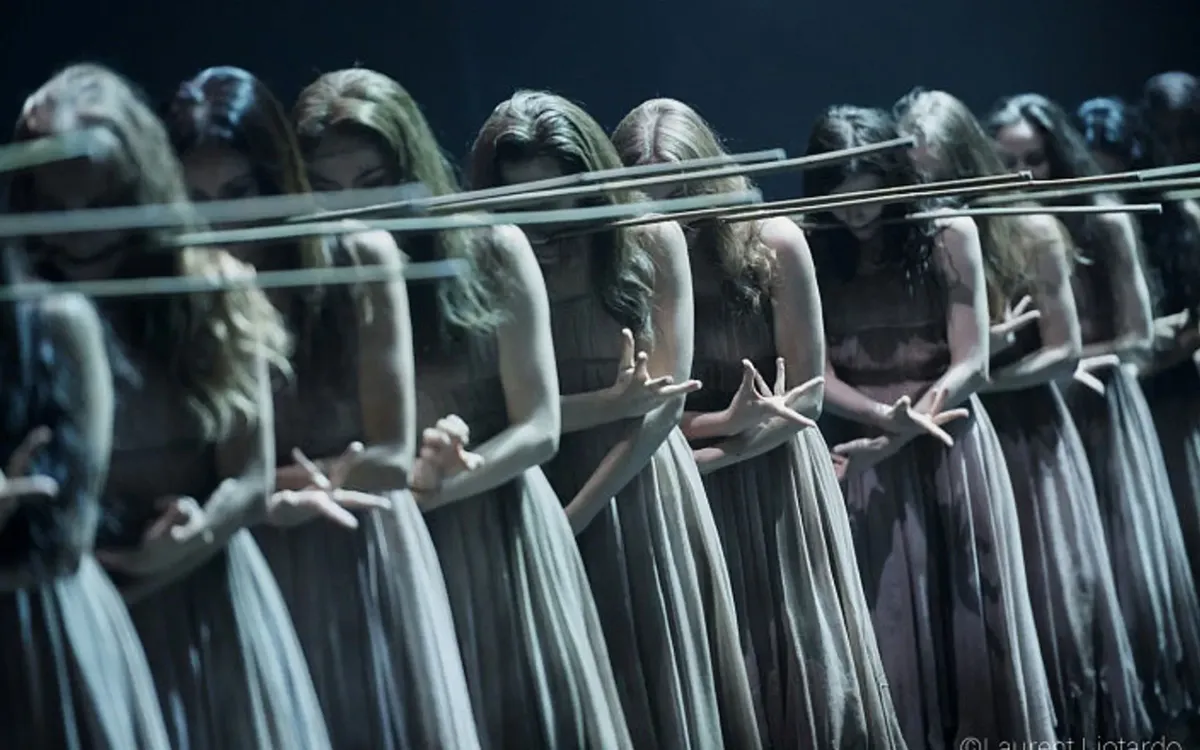
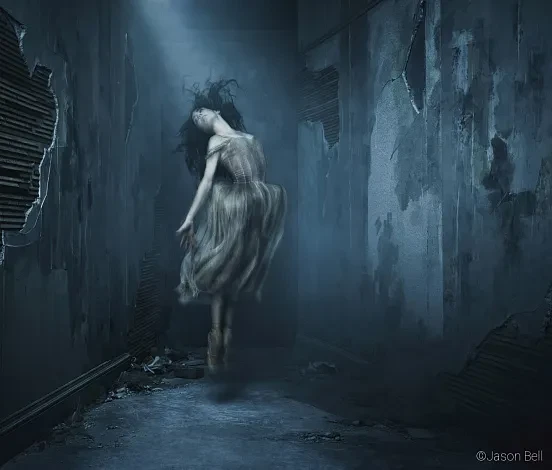
Thunderstorm and dark second act. The Willis of this “Giseli” is not the brides who died before the wedding, but the 21st century girls, who were killed - one way or another - a large and alien city. Tall brass rods ring in their hands: either tribal spears, or poles of nightclubs. And the tall Mirta, leading them, is similar to the goddess of revenge.
“This work is distinguished by intelligence, power, beauty and - the most pleasant lie in this age of lies, damned lies and politicians - amazing honesty”,
- wrote the British site www.artsdesk.com after the premiere of Giseli.
And in this - the “Giselle” of Akram Khan stands in a long row of European performances at the beginning of the 21st century. Performances about tectonic shifts taking place here and now. The fact that instead of a blessed “end of history” there is a new resettlement of peoples. And thousands of its private plots give the sharpness of genuine poverty and shame that are already forgotten in Europe, impossible at the end of the twentieth century, about insurmountable-as in the time of Maria Antoinette-social walls between people in Europe. The plots of "Giselle" and "outcasts", "crimes and punishment", Shakespearean chronicles and the Old Testament.
This is a really long row. In it - and the whole Avignon festival of 2013, dedicated to Africa. And a longtime already, one of the first in the row, the fearless and merciless “Wojutsek” Thomas Ostermayer, where the action was transferred to the immigrant suburb of the “zero”. And the “bunches of anger” of the Persianal Luke, in which the outcome of the ruined American farmers of 1930s from the Earth turned into a today's procession of “new people” in Europe. And the smartest documentary performances of the Swiss Milo Rau (in particular - why they do not take root in Europe, in the "new homeland" and leave to fight the grown children of immigrants to the Middle East). And the recent Ivo Van Hove, according to Louis Cuperus’s novels about the meeting of the Dutch with Indonesia and the slow, soft, irreversible defeat of the “white man”.
And the best festivals of Europe, the performance of Romeo Castelcucci “Go Down, Moses” (2014) - about the new “Egyptian slave”, a secretly giving birth to a child in a dazzlingly clean, with her own hands, toilet of a five -star hotel, to leave the baby in the garbage tank. About the polite and tired "priests of the pharaoh" - police, doctors, psychologists - who interrogate her. About the frenzied scream of a little dark -skinned woman in a shaped robe of a cleaning lady, saturated with maternity blood: my son will grow up and lead his people! And the sea will part in front of us!
The European tour of the performance of Castelpucci about Moses fell on just those days - 2014-2016. - When the Mediterranean Sea parted in front of the refugees.
That is why, by the way, international theater festivals, the tour of the best performances of the Modern West in Russia (and some of these productions were shown with us) - not the whim of “Westerners”, not a social event - but a complex system of mirrors. Reflecting the modern world. And the articles of analysts presented to the viewer for understanding, thoughts, if they read them) - and acute shock what is happening, which only art can give.