
Translated material
Attack of Soviet Kamikadze. Myths of the battle of Prokhorovka
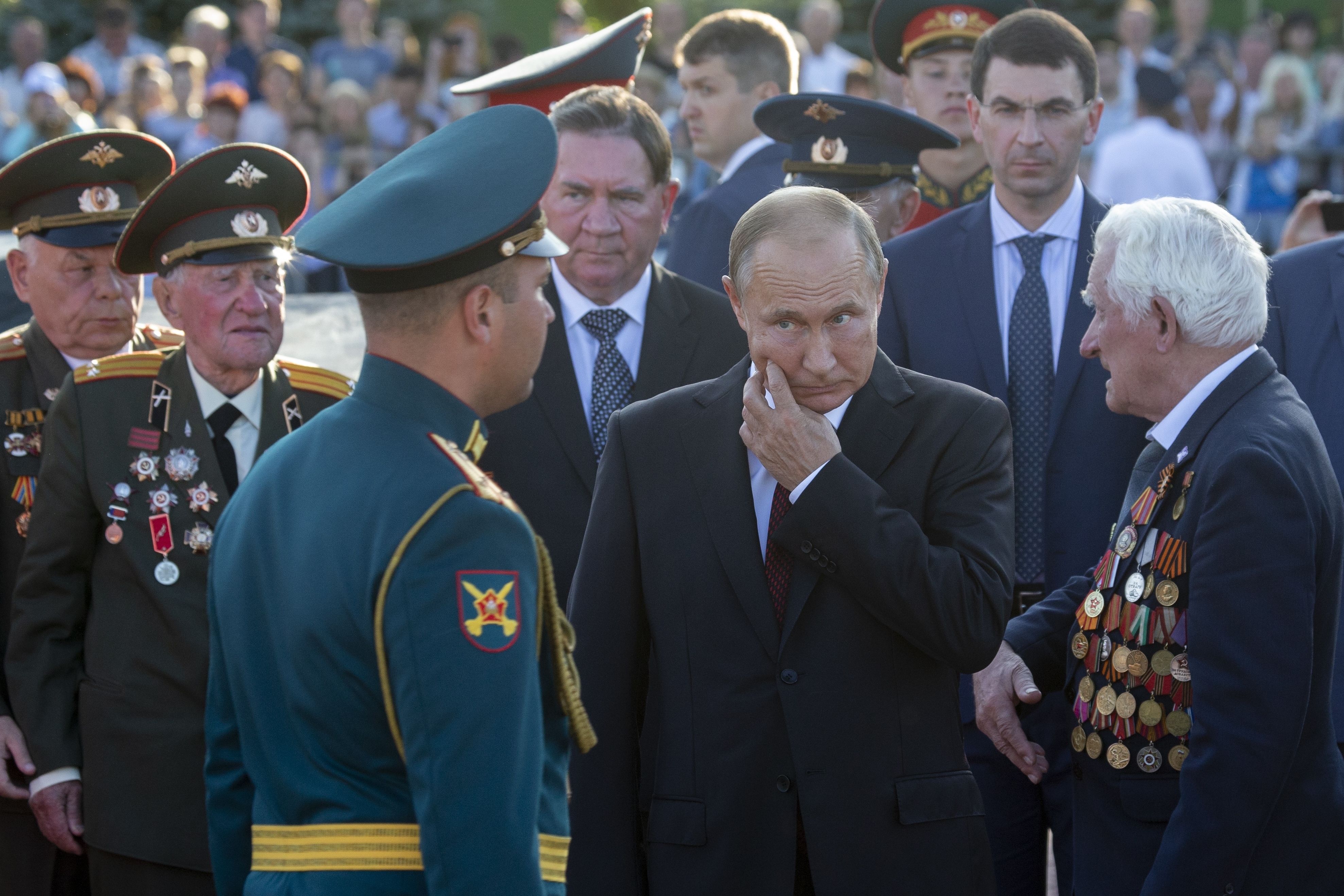
On July 12, on July 12, the 76th anniversary of the largest, according to the official version, oncoming tank battle of the Second World War between Soviet and German units near the Prokhorovka station of the Belgorod region, will be again pomp . Shortly before this date, the German edition Die Welt published an analytical article that states that the battle under Prokhorovka is actually difficult to call the “battle”, and even more so “victorious”. More and more reliable historical documents appear, from which it follows that in fact, Prokhorovka became one of the most nightmarish defeats of the Red Army during the whole war. This publication, and even in the German newspaper on the eve of the celebrations, caused a flurry of hysteria and the most angry comments among Russian lawmakers and in many media .
Events under Prokhorovka remain one of the most important historical and propaganda myths of both the Soviet and present time in Russia. However, in domestic and foreign military-historical publications, it was always, not only now, surprisingly different descriptions of this battle and data on losses on both sides-from several cars to hundreds of tanks and self-propelled guns. Hundreds of works and articles in encyclopedias are written on this subject, feature films have been made.
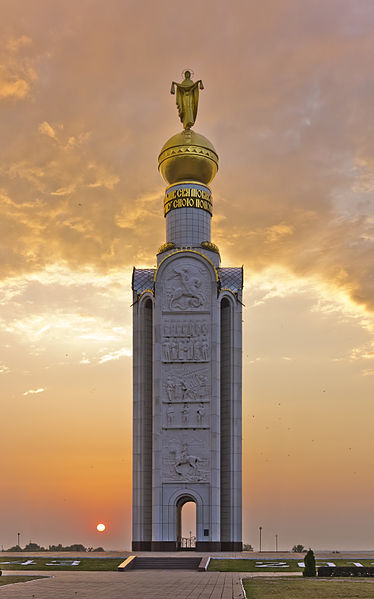
Prokhorovsky field as a place of battle today is officially considered the third military field of Russia, after Kulikovo Paul and the Borodino field. In 1995, in the Memorial complex "Prokhorovskoye Field", the main local monument of Victory, a belfry of 59 meters high with a golden figure of the Virgin, ail bell, pylons and bas -reliefs of the Holy Apostles Peter and Paul, on the marble walls of which the names of 7 thousand Soviet soldiers who were killed in Prokhorovsky battle (actually there were actually a lot of them, appeared. more).
The other day, the authors of the publication in Die Welt, based on those discovered by German and British historians (such as Karl-Hinz Friser and Ben Witley ) photographs of the Wehrmacht air intelligence and other documents, wrote that the Russian authorities would actually be demolished these memorable structures-because on July 12, 1943, there was not only no victory for red Army, but in general the whole day ended for the Soviet side with a complete disaster:
"Judging by the latest studies based on real photographs of that time, there was neither a Soviet victory, nor any major tank battle at all. In reality, about 200 tanks of the 29th Soviet tank corps on that day simply made a useless suicide attack in the Kamikadze style. According to the many years of the Soviet-Russian version of this fight, on July 12, when it was going The strategic offensive operation "Citadel", 850 Soviet and 800 German tanks converged in the forehead, according to the Soviet propaganda, about 400 of the Wehrmacht were destroyed. with an area of only a few square kilometers. "
The authors of the publication in Die Welt write that the Soviet General Pavel Rotmistrov , who commanded the 5th Guards Tank Army , did not notice on the field the anti-tank moat dug-up by the Germans almost 5 meters deep, because of which Soviet tanks stuck in front of the only narrow bridge through it, becoming excellent motionless targets for the two battalions from the 2nd tank corps. SS.
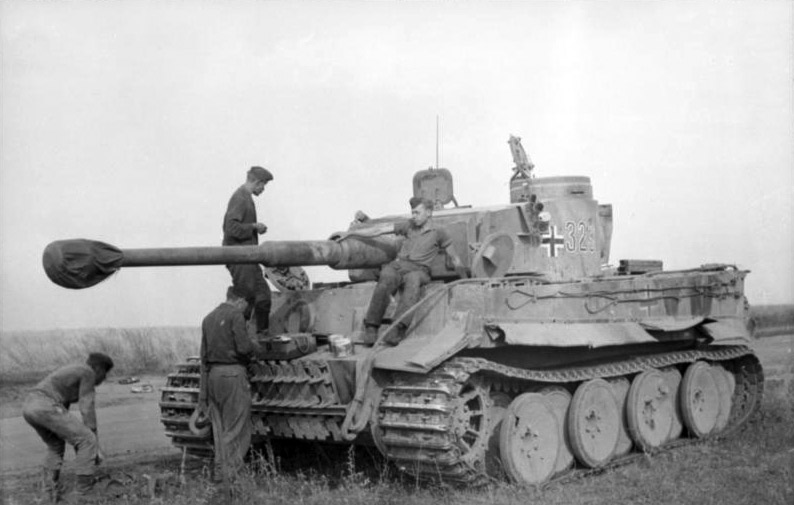
In the battle of Prokhorovka, the son of the Nazi foreign minister Joachim von Ribbentrop, 22-year-old commander of the tank company Hauptsturmfuhrer SS SS Rudolf von Ribbentrop (who had just died in May 2019), who received a knightly cross of the Zhelezny Cross. In his memoirs, he wrote that by the middle of the day, Soviet tank columns became "hell of fire, smoke, charred corpses and burning T-34 tanks." There was also the most famous and effective German tank of the Second World War, Michael Wittmann , his detachment of four Tiger tanks of the 1st SS Panzer Division Adolf Hitler, from engineering prepared positions, destroyed or greatly damaged 55 Soviet tanks and self-propelled guns.
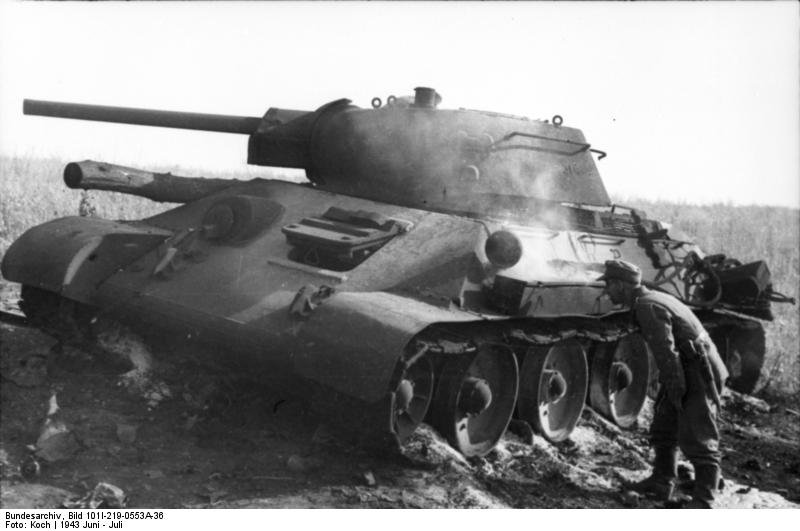
"Obviously, the German generals could not believe the reports of their own officers about such unexpected success and after the battle were sent to the air reconnaissance area. Photos taken on July 14 and 16, 1943, as well as in early August, now discovered and analyzed the British historian Ben Witley . They only have more than a hundred broken Soviet middle tanks between the anti -tank moat and a height of 252.2. The T-34 and the T-70 , as well as the SOU of the Sovetsky 29th Panzer Corps, to the northwest, Witley was able to find 55 more of the Vittmann of Soviet tanks: 32 T-34 tanks, 12 T-70 tanks and 11 Churchill tanks delivered to the USSR from the UK Lend-Lisa. "
Here's what the independent Russian military historian Boris Sokolov thinks about the battle of Prokhorovka - in general, fully supporting the point of view of the German Die Welt, although his data on the losses of the parties on July 12, 1943 in that battle are somewhat different from the German publication in the publication:
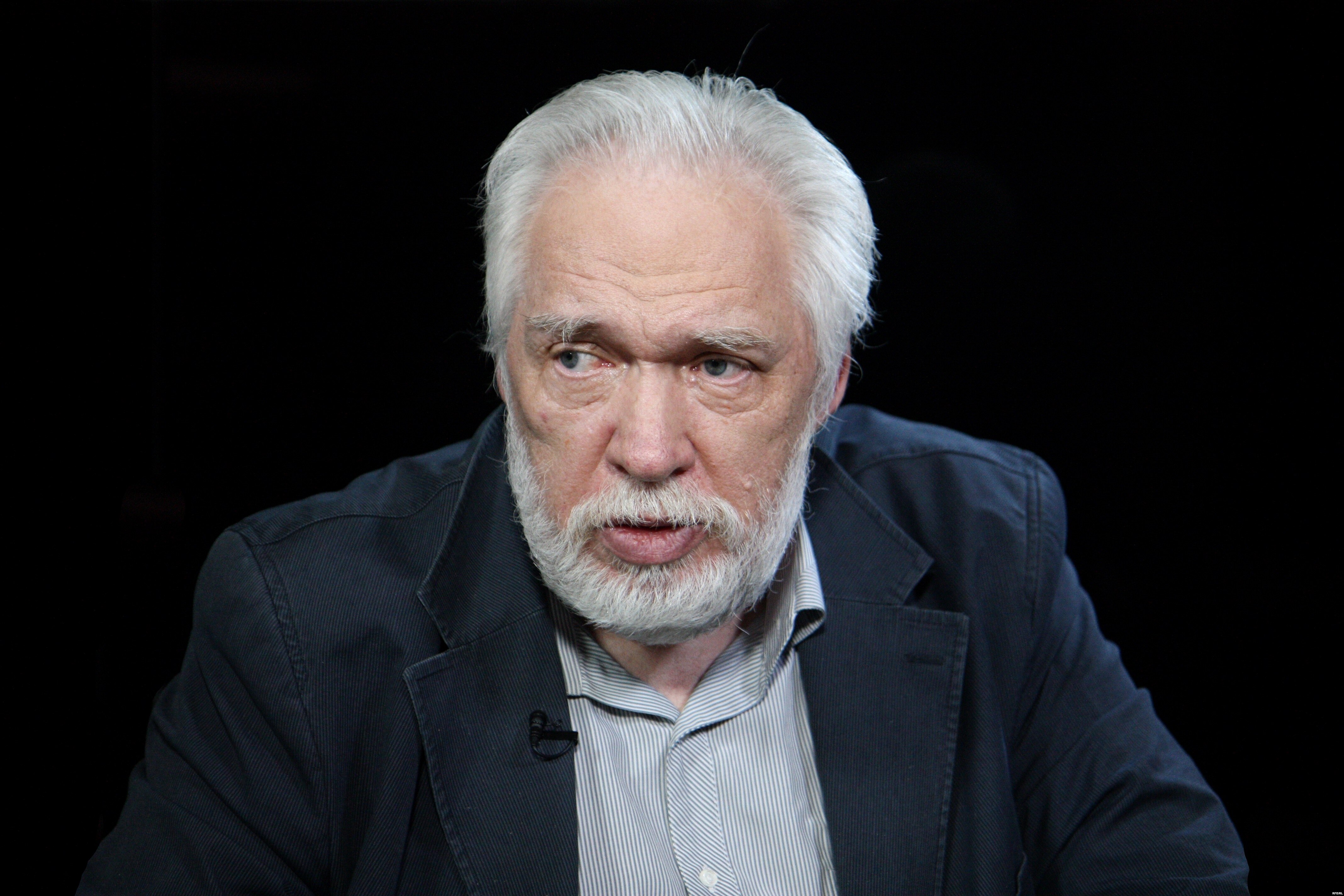
- Soviet official historiography always presented the battle of Prokhorovka as an undoubted victory of the Soviet army. Can we talk about anyone's victory on this day? I am also familiar with such opinions that it was generally an accident. The Germans took on the frontal counterattack the maneuver of the Soviet units, which simply wanted to go to the rear of completely different German formations. And the Soviet generals, supposedly, for their part, this offensive of German tank divisions oversleep.
- Indeed, there was a Soviet blow under Prokhorovka. But the Germans on this day simply, by chance, just did not advance in this direction. Actually, what is usually called the "counter-tank battle under Prokhorovka" was the battle of one 7th tank company of the 1st SS Panzer Regiment "Leibstandart Adolf Hitler", commanded by Rudolf von Ribbentrop, and two Soviet tank brigades. Ribbentrop personally built into the Soviet column and destroyed 12 tanks, for which he was then given a knightly cross.
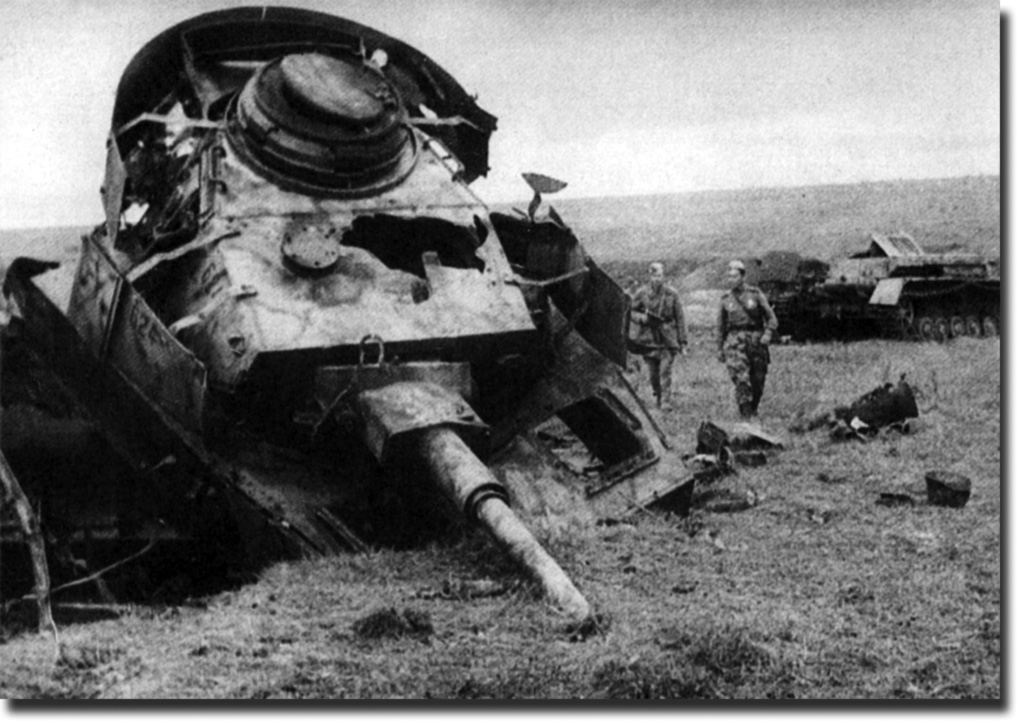
Otherwise, that day in this area there was not an oncoming battle, but Soviet attacks. Mostly they were beaten off by the guns of German anti -tank artillery. Then some counterattacks of German tanks had some counterattacks. The Soviet counterattack ended with a catastrophic result for the 5th Guards Tank Army, General Pavel Rotmistrov and supporting it of the 5th Guards Army, General Alexei Zhadov. The Germans irrevocably lost only three tanks and about 55 more tanks and assault guns damaged, that is, to be restored. And Soviet troops lost only 334 tanks irrevocably.
- In various sources, very foggy loss figures are given on both sides, in technology in the first place. Where did these numbers with large zeros come from, including when it comes to losses from the German side? What, these were just propaganda fabrications when, later, in the 60s, 70s, the generals began to recall dozens, and then about hundreds of destroyed units of German equipment?
-These are fabrications, and they were supported in every possible way after the battle by the commander of the 5th Guards Tank Army of the Rothmisters and the then representative of the rate on the Voronezh Front Marshal Alexander Vasilevsky. Since Stalin was very outraged by losses and appointed a special commission led by Georgy Malenkov for the investigation.
Data on German losses was investigated by the German historian Karl-Hinz Friser, the former head of the Bundeswehr Military Historical Institute , located in Potsdam. According to the documents of the German Army Group, South found that three tanks were irrevocably lost in the battle of Prokhorovka and around it, including two from the 1st Panzer Division of the SS SS Adolf Hitler. In the latter case, we are talking about the only truly counter -combat combat company Rudolf Ribbentrop with Soviet tanks, as the latter writes in memoirs. These were the modernized German PZ tanks. IV. And on that day, 55 German cars - 43 tanks and 12 assault guns - were damaged. The whole battle did not come down to the battle of Ribbentrop with the Soviet tank brigade! His company destroyed only 14 Soviet tanks. And the total Soviet losses that day are 390 tanks, of which 334 are irrevocably. This can be seen in Soviet, now almost all published archival documents. By the way, on July 12, 2013, Karl-Khinz Friser published his article about this in the same in the Die Welt newspaper, dedicated just to the battle of Prokhorovka. It was translated into Russian and also appeared on the Internet.
- If we talk about German archival documents and memoirs of that time, could German front -line commanders deal with falsifications?
-The data in question, still exist not only in the German reporting documents of 1943 from the Eastern Front. German losses should be set according to German archives, and Soviet - in Soviet ones. This is the only way. Not a single tanker can be sure: he knocked out or did not hit some kind of tank, and even more so-did he destroy? After all, the commander of the 5th Guards Panzer Army, Pavel Rotmistrov, reported about 390 tanks about the loss of about 390-why can't he believe him? Like German commanders?
-Still, from 1941 to 1945, is it possible to recall cases when Soviet tankers and commanders of tank units would have won victories not due to quantitative superiority, but due to military art and the correct calculation of forces?
- There are almost no such battles that tanks go against tanks, as in the film "Liberation". You can recall the only unsuccessful counterattack of the 48th German-Romanian tank corps near Stalingrad. There the Germans had two tank divisions, about 140 cars, partly Romanian, partly German, and then they could not stop the Soviet offensive. But they still beat not only on tanks, but also in the infantry. How much can this be called a oncoming purely tank battle? But some cases of personal heroism and skill, especially in 1941–42, when the Soviet side had a relative high -quality superiority in tanks, is a lot.
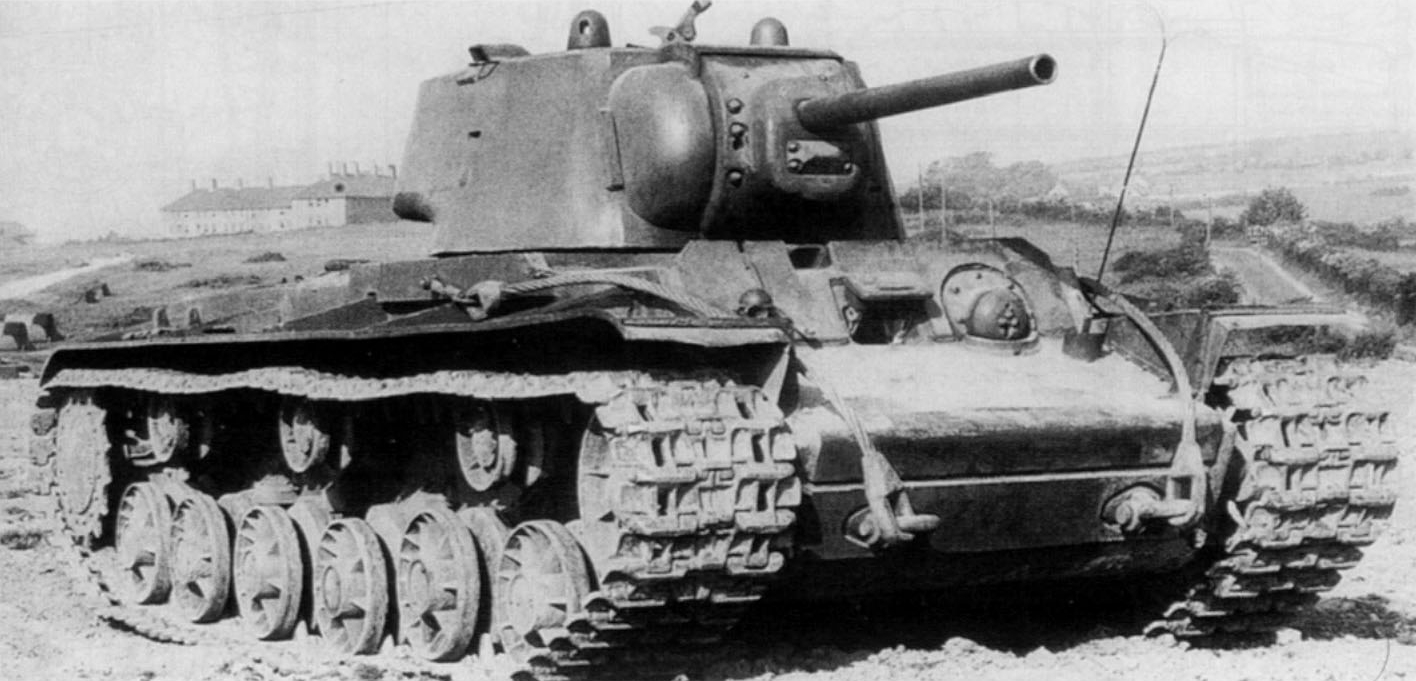
For example, a battle near the Lithuanian village of Raseynyai , for two days, June 24–25, 1941, in the first moments of the war. It is described in sufficient detail in the memoirs of the German General Erhard Raus, who then commanded the Wehrmacht 6th Tank Division. The Soviet KV-1 tank occupied an important crossroads near the village and immediately set fire to 12 trucks. The Germans, who, because of one Soviet tank were cut off from the rear, could not send their wounded back and get ammunition. They tried to apply 50 mm anti-tank guns against him. But this turned out to be useless, they got into this tank eight times, but not a single hit pierced his armor, and the tank destroyed two guns with return fire! Then they put the famous 88-mm anti-aircraft gun, but he also managed to destroy it before it fired. And only then, pulling up several more 88 mm guns, they finished off the four shells of this KV, and then they also threw anti-tank grenades. The Germans found six bodies of Soviet tankers and buried them with military honors. Only two names of these heroes are known: Ershov and Smirnov. Later, a reburial was made at this place and the Soviet obelisk was delivered. This is one of the completely reliable cases of heroism and, in general, an amazing victory of Soviet tankers.
-If we talk about the battle of Prokhorovka as a symbol of Soviet military-historical propaganda, why did Prokhorovka become the most famous? And not any other real battle, where impressive victories were really won, for example, by some tank breakthrough?
- Several factors have developed here. Firstly, immediately after the pro-Chief on this day, Soviet troops went on the offensive on the northern front of the Kursk arc. It became clear that the German offensive failed. In addition, it was the largest concentration of Soviet tanks in the Kursk battle on one section of the front. Plus, the role also played that everything happened on the Voronezh Front, and there was just Nikita Khrushchev. He was a member of the military council, and increased attention was paid to this front. And, of course, General Rotmistrov (naturally justified) claimed that he allegedly won a great victory to cover his defeat. Together, all these factors played a role in creating a myth.
-


Alexander GOSTEV
The editor of the RS information service, international observer, author and editor of the heading and podcast "Atlas of the World"
Gosteva@rferl.org