
Translated material
If you dig deeper ...
How dangerous is it to build a motorway in the south of Moscow over the radioactive waste burial ground?
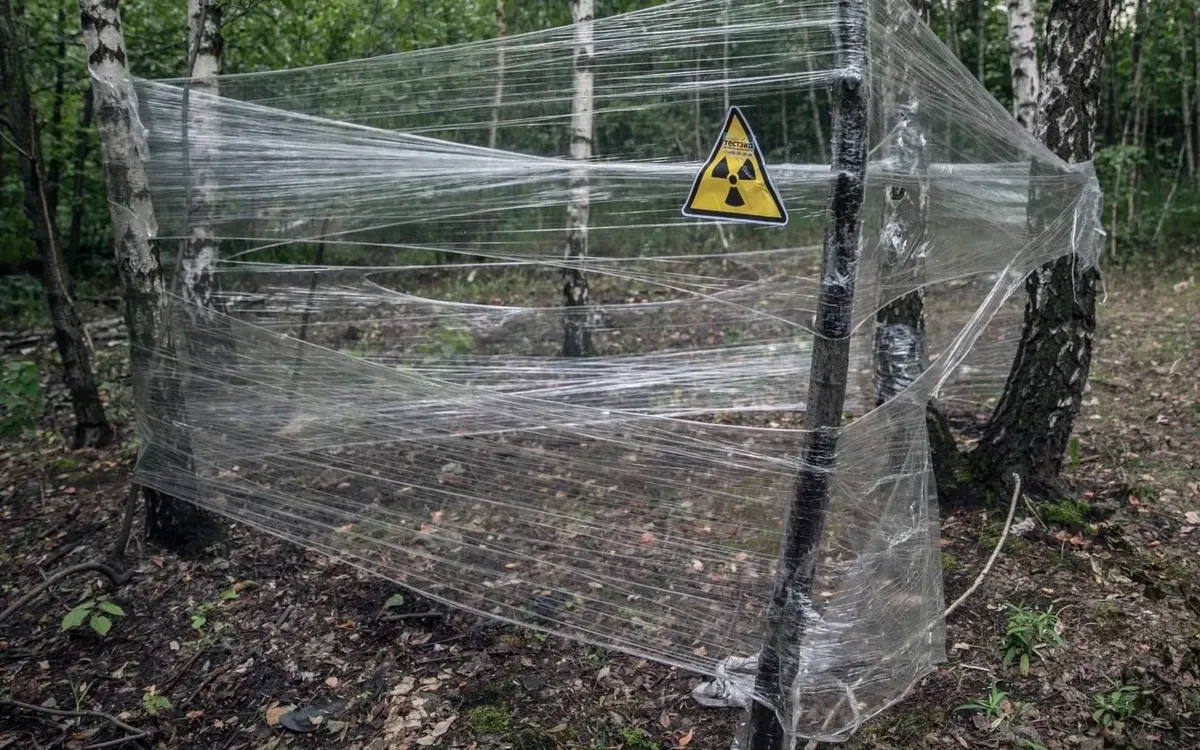
“Then I can’t go with you,” says Rashid, simultaneously showing me how to use a dosimeter. - We have a certain regulation to visit such places, and why should I be there once again?
- And for today I am going there for the second time, and over the past two days - the third! - exclaims Sergey, who has called for showing us the way.
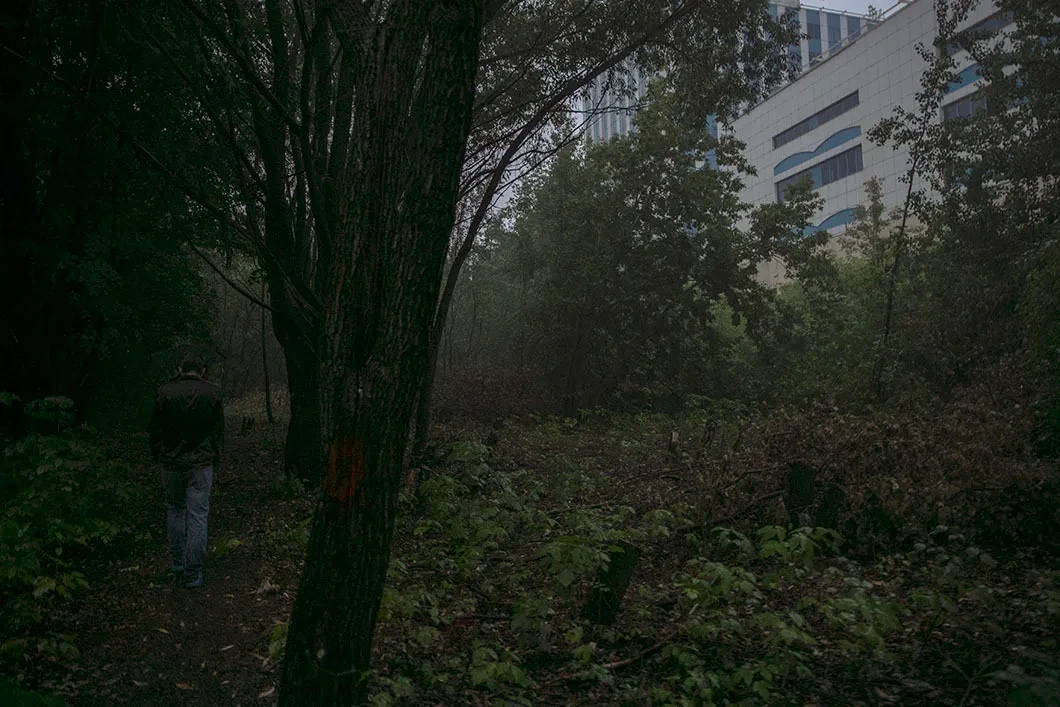
Wearing gloves, shoe covers and after drinking a couple of iodine tablets (as it turned out, absolutely in vain), we are advanced into the hill in search of a radioactive waste burial, located on the slope of the Moscow River, right behind the Kolomenskoye park.
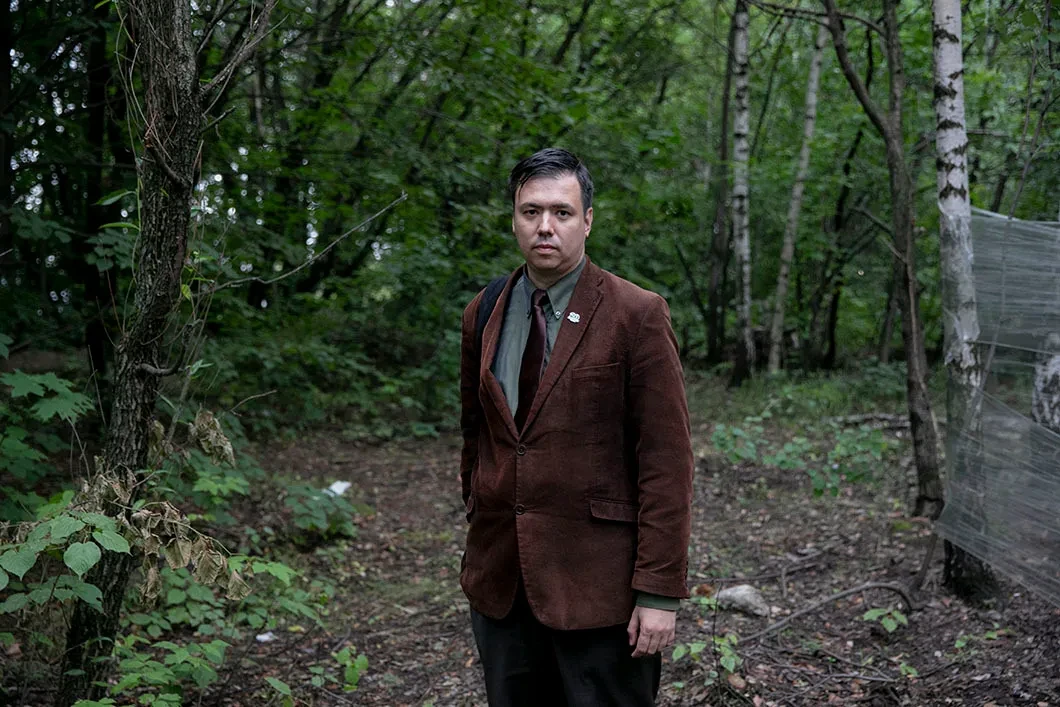
Rashid Alimov, the head of the Greenpeace Russia Energy Program, has known about him since the 2000s and regularly talks about its danger. Sergey Vlasov, the municipal deputy of the Pechatniki district,-the existence of the burial ground began to worry since Moscow officials conceived the construction of a southeastern chord-a huge highway, some of which will pass close to the infected territory.
The story of one burial ground
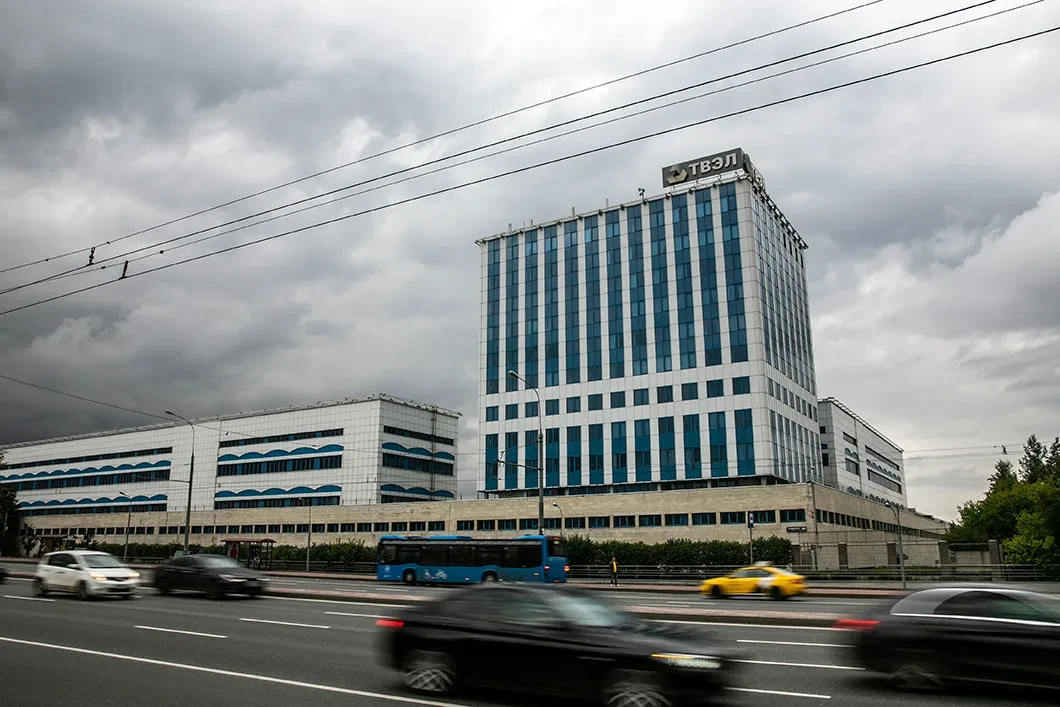
The Moscow Polymetallov plant (MZP) appeared in the south of the capital in the 30s. Until the 1970s, the enterprise worked with ores containing Uranus and Toria, and radioactive waste was “buried” right beyond the territory of the plant, sprinkling them with land. There was no official information about the scale of the landfill and methods of disposal of those times, and therefore the state corporation Rosatom - the current owner of the plant - had to cope with the Soviet radioactive heritage almost blindly.
In 1999, by order of the Moscow authorities, the State Unitary Enterprise Mosnpo "Radon" (specializes in the treatment of radioactive waste, controlled by Rosatom) examined the territory and discovered more than 40 foci of pollution there. After that, Radon took 425 cubic meters of waste to the training grounds, and by 2006 the MZP reported that the enterprise is safe for both staff and residents of Moscow. However, the radioactive foci behind the fence of the plant still remained: so, in 2017, Radon found eight sections of pollution on the banks of the Moscow River and is now conducting work on their decontamination annually, exporting 15 cubic meters of radioactive waste.
But the scale of the problem seems to be much larger.
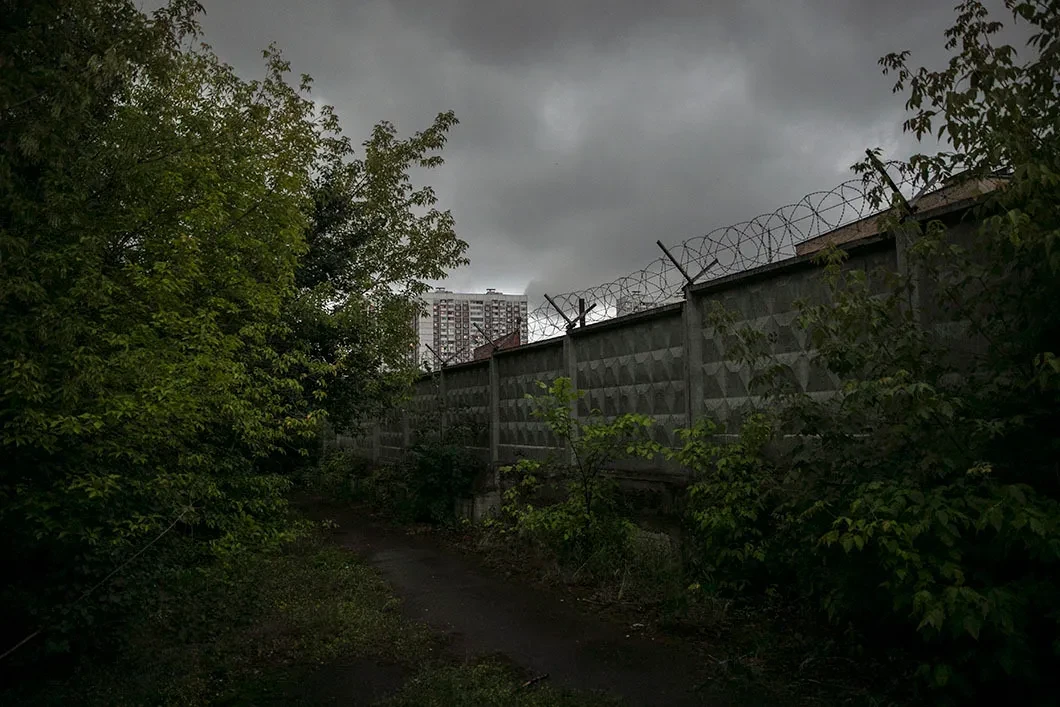
Back in the mid-2000s, the chief engineer of Radona Alexander Barinov said that “tens of thousands of tons of radioactive soil” remain polluted, and it is “unrealistic” to take it out of the slope, first of all, because “very expensive”. In April 2019, against the backdrop of anxiety of local residents of the Ministry of Emergencies and Radon, they again inspected the slope and found at least two foci of radioactive pollution there, on one of which
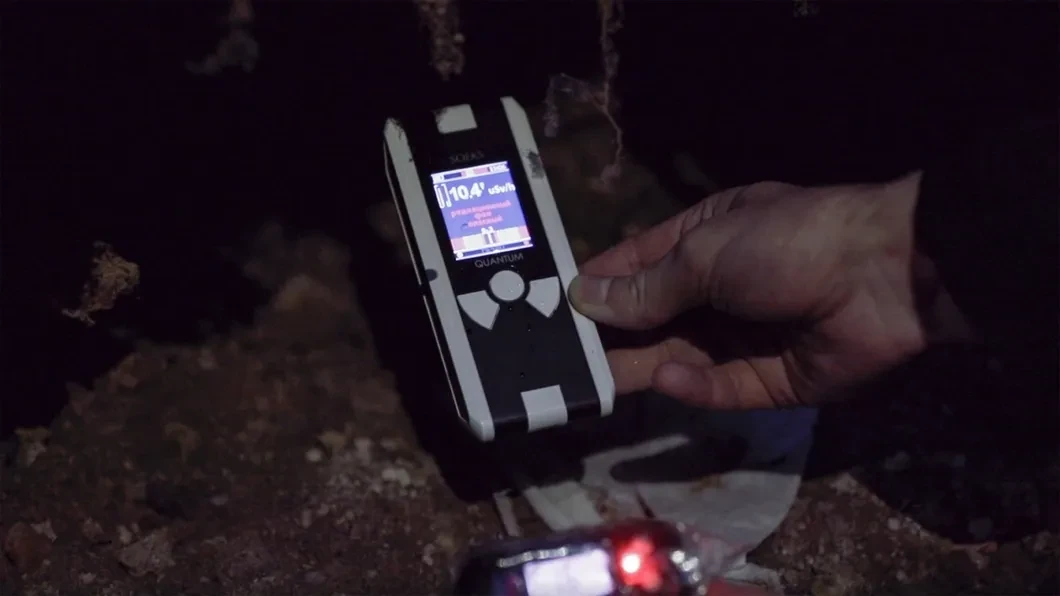
The level of gamma radiation exceeded the permissible norm of hundreds of times-61.4 μSv/h with a normal radiation background of 0.2 μSv/h.
- “Radon” says that they constantly carry out work here, call it “therapy”. In the spring, a layer of pure soil slides from the slope, polluted soil is exposed, and they have to sprinkle all this, ”explains Rashid. - They themselves admit that this is not a solution to the problem. But is it possible to solve all this in principle is unknown to the end.
"Build a bridge without touching the slope, is impossible"
- Here - real pollution in the place where the chord will pass. Right here, ”the Mundep Sergei Vlasov shows under his feet and draws a line through the air to the railway bridge.
He stands on the hill near the fence of the polymetals factory, in his hand the dosimeter breaks out of the squeak for the last 15 minutes.
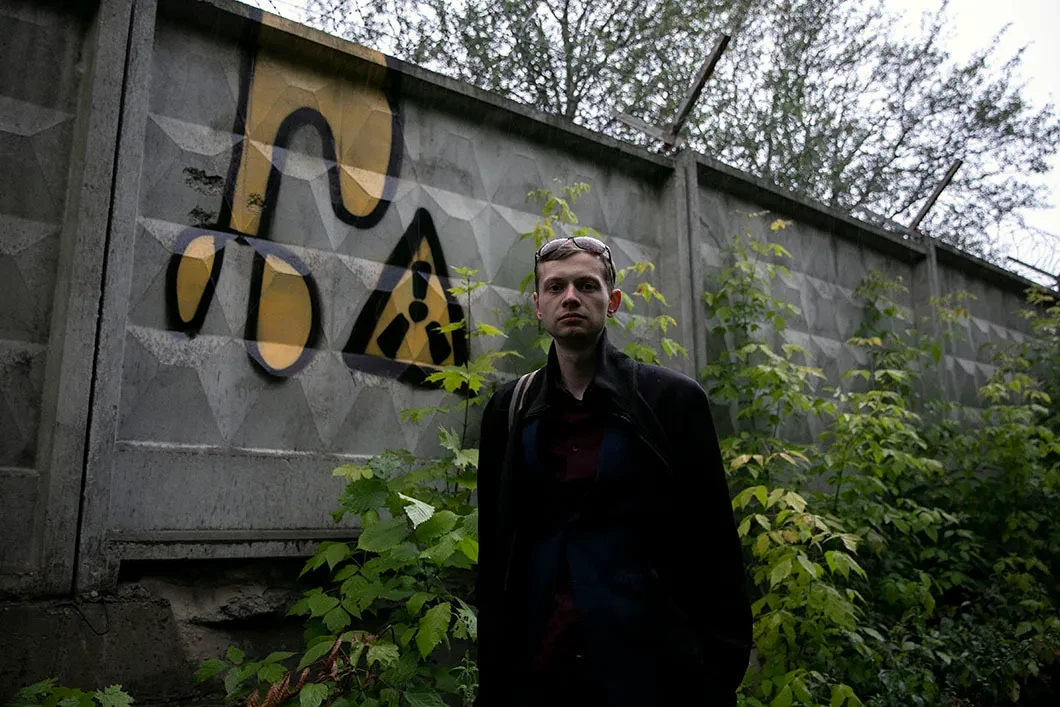
Since the beginning of 2019, Sergey and hundreds of other residents of the South of Moscow have been actively opposing the construction of the southeastern chord. Muscovites are concerned not only to the prospect of the appearance of a highway under the windows of houses (according to the plan, the chord will pass through 10 districts of Moscow, and its length will be about 36 km), but also the neighborhood of the road with a radioactive burial ground. Judging by the project of the bridge across the Moscow River and the multi-level interchange on the Kashirsky highway, the highway will pass close to the infected territory.
- There will be technical structures of infrastructure of the bridge that are planned by the project. But, without affecting the slope, without disturbing these soils, it is impossible to build a bridge! - the deputy is indignant.
Going down
Sergei deftly puts his hand in a hole dug in the slope: the device fixes a value of 10.7 μSv/h, which is 50 times higher than a normal radiation background in the city.
For comparison: in the alienation zone in Chernobyl there are spots from 1 to 7 μs/h, in some places the values reach 20 μSv/h.
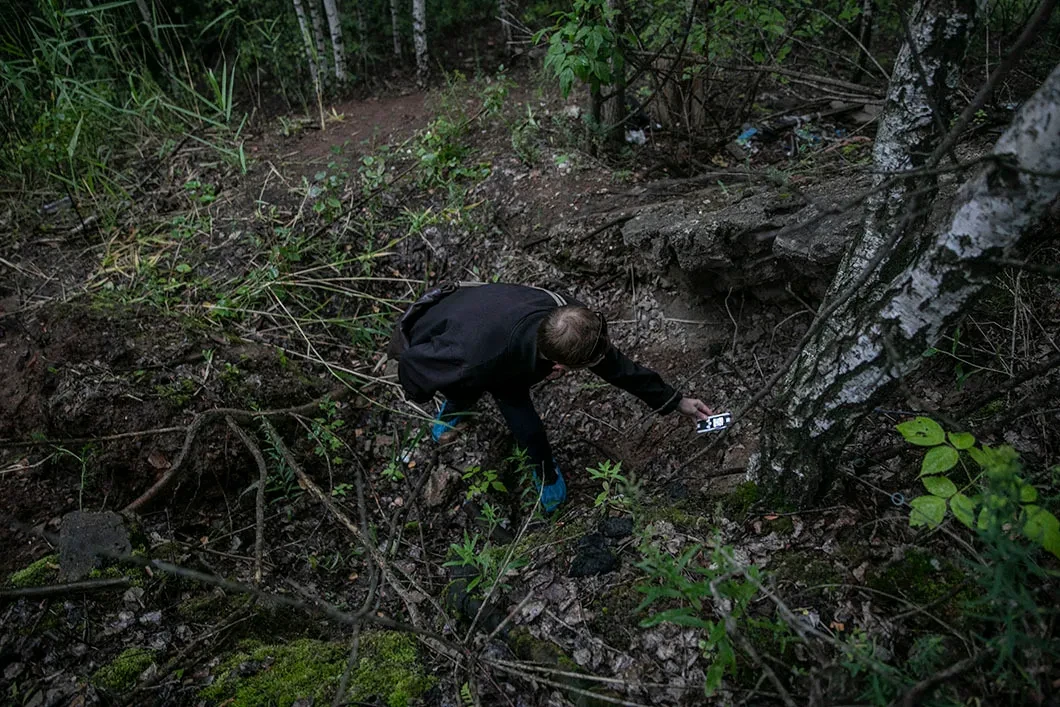
-The biggest threat is that soil sliding can occur and then dust will spread throughout the city simultaneously with construction equipment, which contains alpha particles. The shore is very steep, and if you start the excavation of the soil, then all this can “go” and get into the river, ”expert Rashid Alimov emphasizes.
There is no doubt that the capital’s authorities are aware of the complex radiation situation with this segment of the future highway.
In the Moskomarchitecture, which, together with the Institute of General Plan of Moscow, is engaged in the design of the chords, confirm that at 250 m from the current railway bridge there are “areas with special environmental conditions”, and part of the site of the Moscow Polymetals factory enters the boundaries of the construction work project where construction work will be carried out. However, the capital's officials argue that the route itself will not pass through the infected areas, and the development of design documentation provides for engineering surveys, research and assessment of the radiation situation.
It is curious that they do not know about the plans of the metropolitan authorities for certain at the enterprise itself. In Rosatom (the document is at the disposal of the editorial office) they say that officials did not initially agree on the design boundaries from the MZP. Only at the end of 2017, the leadership of the MZP was invited to a meeting to the Moscow Construction Department, at which they "brought information on the conduct of design and survey work." The territory itself is subordinate to the city, but the alienation of this land from the MZP for the construction of a denouement in the decree of 2015 is not provided. So far, Rosatoma is shrugable: “Until the completion of design work, it is not possible to reliably determine the location of the denouement in relation to the territory of the MZP.”
Hearing for the dead
Since April of this year, the initiative group of 11 districts collects signatures, writes appeals and holds spot protests.
- I have already applied 12 times for a rally against Horda. And I was refused 12 times under various pretexts: either holidays, then subbotniks, ”the Vlasov Mundop complains.
"They even ask me United Russia: Seryog, when is the rally against Horda?"
According to the deputy, in printers a public hearing on the construction of Horde turned into a farce: two hours before the event, the administration of the administration and deputies from United Russia scored, and at the entrance “the head of the council stood up and did not let anyone in”. As a result, the activists watched the listings on the video broadcast. About problems with access to public hearings in another area - textiles - told Kommersant: there
Residents even found signatures in the protocols on behalf of the deceased relatives.
So far, all sections of the route are under the development of planning projects. But a few weeks ago, Vlasov discovered construction equipment on the opposite bank of the river.
The inspection for the control of the improvement of urban territories was explained by “preparatory work in the framework of the construction of the southeastern chord”, and in the State Inspectorate for Real Estate “the recess of the cultural layer in the construction of the bridge supports”.
- In a word, we either build a chord on radiation, or we do not build it at all. That's why we are fighting now, ”says the deputy.
The right to the answer
Comment of the Moscow Polymetall Plant
The radiation situation on the territory of the Moscow Polymetals Plant (MZP JSC) comply with all sanitary norms and rules. MZP JSC on an ongoing basis conducts radiation and ecological monitoring, which includes observation of ground and surface waters, soil layer and air basin. In 2018, the next examination was carried out, according to its results, the power of the equivalent dose of gamma radiation was 0.15 +/- 0.03 μSv/hour, which corresponds to the natural background of the city of Moscow.
We do not consider it possible to comment on information about the radiation and environmental situation outside the industrial site of the Moscow Polymetals Plant (MZP JSC), since this territory is not in our jurisdiction.
Comment by FSUE "Radon" (published with abbreviations)
Employees of the enterprise conduct a radiation survey and decontamination work in the territory located on the right bank of the Moscow River <...> in the southwest. Reporting documentation is provided to the customer and to the territorial bodies of state power of the City Council of the city of Moscow.
Additionally, we report that in the framework of the above agreement, FSUE Radon annually conducts radiation and ecological monitoring of the territory of the city of Moscow, including in areas adjacent to the indicated slope of the right bank of the Moscow River.
<...> According to radiation and hygienic passporting of the territory of the city of Moscow, the radiation situation in the city is evaluated as satisfactory and is characterized by stability.